

Representatives from several provincial education and training departments suggested that the authority to approve textbook selection should be returned to the department directors.
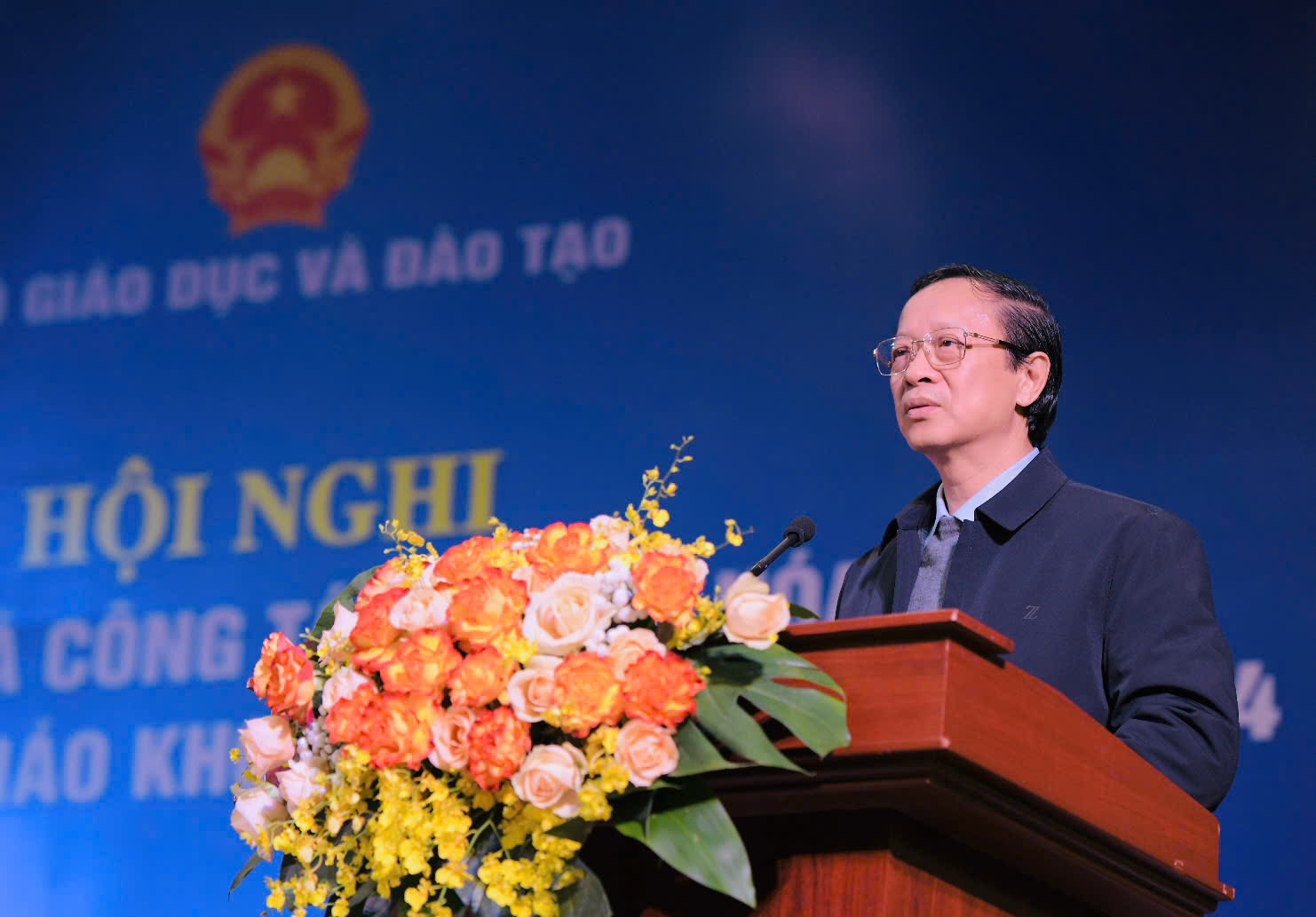
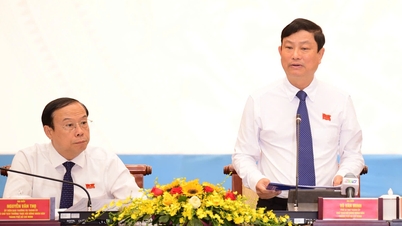
Mr. Pham Ngoc Thuong, Deputy Minister of Education and Training , chaired the conference - Photo: Ministry of Education and Training
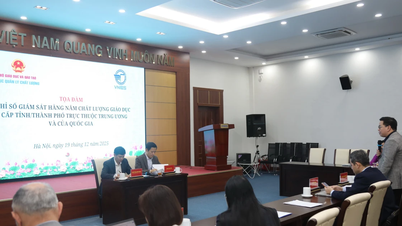
At the conference on evaluating the compilation of socialized textbooks according to the 2018 general education program, organized by the Ministry of Education and Training on December 12th, Mr. Thai Viet Tuong, Director of the Department of Education and Training of Quang Nam province, suggested that the authority to approve the list of selected textbooks should be adjusted and transferred to the director of the department of education and training instead of being given to the chairman of the provincial People's Committee as it is currently.
Were adjustments made as suggested by the local authorities?
Mr. Tuong's reason was that delegating the task to the department would streamline procedures, allowing for earlier provision of textbooks to students before the new school year.
In fact, the list of selected books is compiled by the Department of Education and Training from the opinions and suggestions of schools and teachers to advise the provincial leadership.
Mr. Tran Tuan Khanh, Director of the Department of Education and Training of An Giang province, also expressed the same view as the leaders of education and training in Quang Nam province, wishing for the authority to approve the list of textbooks to be transferred to the provincial level to ensure the streamlining of unnecessary procedures.
Regarding this matter, Mr. Nguyen Xuan Thanh, Director of the Department of Education and Training, stated that regulations on textbook selection are stipulated in current legal documents and therefore cannot be adjusted as requested by the locality.
Previously, according to Resolution 88, the right to choose textbooks was left to the schools, decided by the principals of general education schools. However, in the Education Law, the power to approve the list of textbooks is now given to the provincial People's Committees.
However, Deputy Minister of Education and Training Pham Ngoc Thuong later stated that, in the current context, it is indeed unnecessary to have so many intermediaries, and therefore the Ministry will certainly propose amending the law in accordance with the suggestions from the provincial education departments regarding granting the authority to approve textbook selections to the provincial education and training departments.
Teachers have to "owe" money for textbooks so that students can have them on time for their studies.
Coming from a very disadvantaged province like Ha Giang, the representative from the Department of Education and Training shared that Ha Giang has many particularly difficult communes, and a very large percentage of students benefit from government policies.
In this policy, eligible students receive new textbooks free of charge. However, due to complex procedures, the funds for purchasing textbooks are often unavailable before the start of the new school year.
To ensure students have textbooks, the education sector has to "owe" money for textbooks to the supplier, or even use funds from other sources to pay for them in order to get the books to students on time.
The problem is that some mountainous communes have now been recognized as new rural areas, so many educational policies have been cut. Students in these areas, despite still facing many difficulties, no longer receive free textbooks.
Every year, the education sector has to scramble to solicit textbooks for students from benefactors. However, because textbooks are selected from many different sets, collecting used books is difficult, as sometimes the donated books are not the same as those selected.
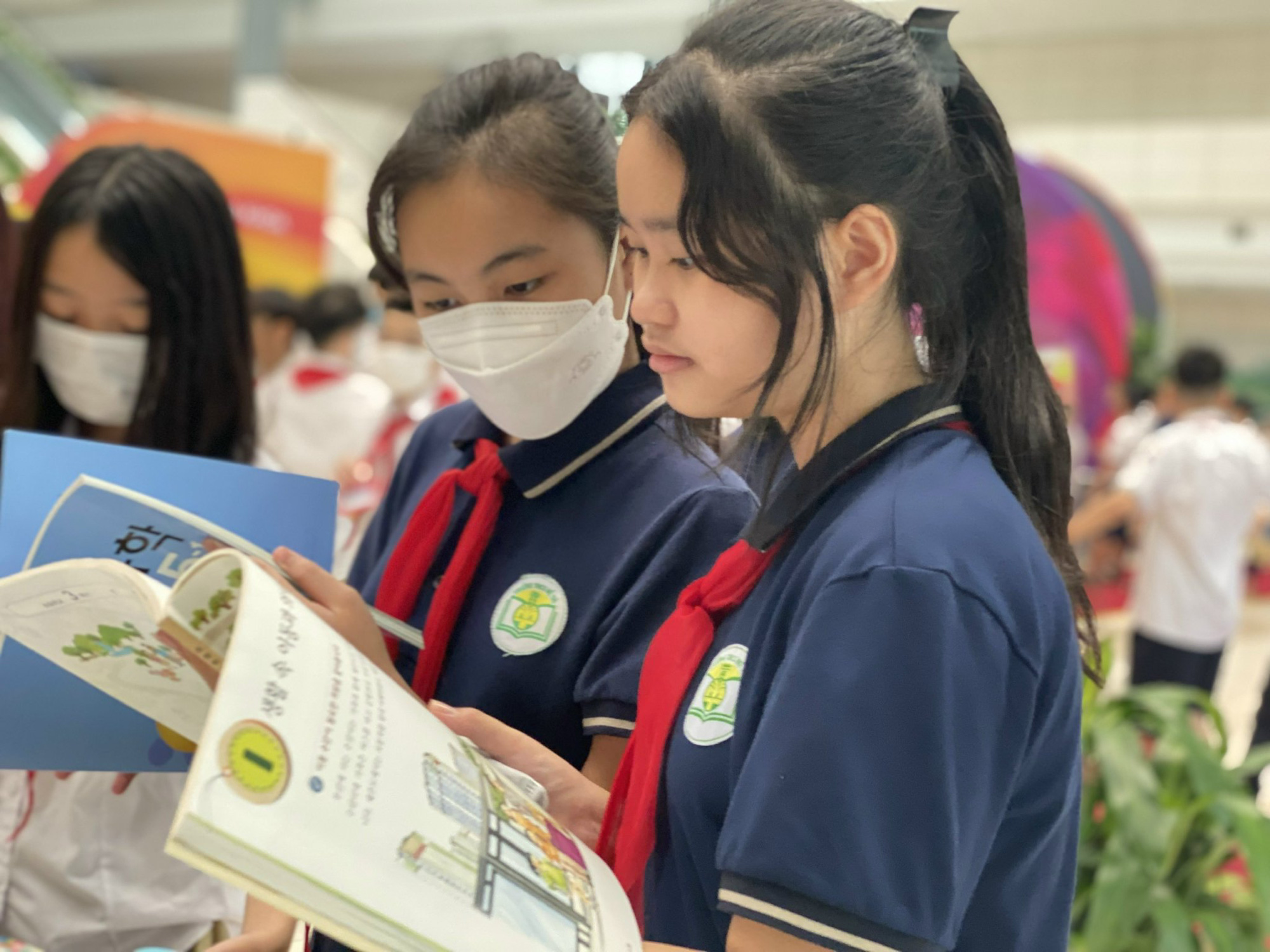
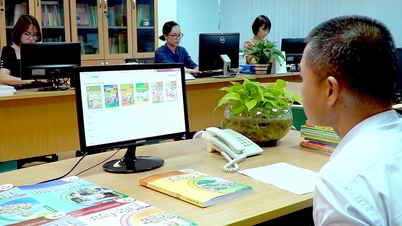
To date, new textbooks are available for grades 1-12. Seven publishers and twelve joint-stock companies participated in compiling and supplying the textbooks. - Photo: VINH HA
Ministry of Education and Training: Textbook prices have decreased.
At the conference, the Ministry of Education and Training requested that publishing units strengthen their social responsibility, including supporting students and schools in disadvantaged areas, ensuring that no student is left without textbooks before the new school year.
At the same time, the ministry's leadership also requested that units continue to streamline production and business processes to reduce the cost of textbooks.
It is necessary to diversify distribution channels to educational institutions, students, and parents, and to expedite the supply of textbooks at least one month before the new school year so that teachers and students have time to read and understand the curriculum before teaching begins.
In its report at the conference, the Ministry of Education and Training stated that the two ministries (along with the Ministry of Finance) had reviewed the pricing plans for textbooks submitted by various institutions and requested that these institutions maximize cost reductions in general expenses to lower textbook prices.
We request that all units fulfill their social responsibility by providing free textbooks for shared libraries, for students in disadvantaged areas, and for students from socially disadvantaged backgrounds.
In 2024, the Vietnam Education Publishing House declared a price reduction of 9.6% - 11.2% for reprinted textbooks, depending on the specific set of books.
According to the General Statistics Office, the proposed textbook pricing scheme contributes to an annual increase in the Consumer Price Index (CPI) of approximately 0.05 percentage points.
According to the 2023 Price Law, which came into effect on July 1, 2024, textbooks are classified as goods whose prices are determined by the State, with the Ministry of Education and Training setting the maximum price.
However, the price of textbooks remains a concern for society and parents because it is still higher than the price of textbooks from the old curriculum. Meanwhile, the choice of different textbooks means that not all parents can reuse old books for their children.
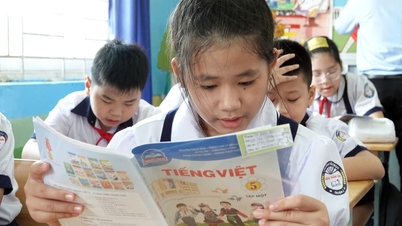
One limitation identified by the Ministry of Education and Training is that some of the materials included in textbooks for certain subjects, such as Vietnamese language for grade 1, literature for grade 6, and natural science for grade 6, still present differing viewpoints, causing concern among the public and users.
Textbook selection is challenging in some areas and at certain times. Teacher training on textbook use for some subjects is conducted online, limiting two-way interaction.
The Vietnam Education Publishing House, which used to distribute 100% of books, now holds only 71.8% of the market share.
According to a report by the Ministry of Education and Training, as of now, there are 7 publishing houses and 12 joint-stock companies participating in the compilation or co-compilation of textbooks.
According to the Ministry of Education and Training, compared to the 2006 general education program, the number of authors involved in compiling textbooks for the 2018 general education program is three times greater.
To date, the Ministry of Education and Training's statistics show 826 book titles. Among these are titles with multiple textbooks compiled and approved by different units.
The selection of textbooks follows a process of soliciting opinions from teachers and subject departments at the school level. Based on the compiled list of textbooks selected by the schools, the Provincial People's Committee approves and sends the textbook supply requirements to publishing units.
After three years of implementation, the distribution ratio (market share) among publishing units has changed. Vietnam Education Publishing House, which previously held 100% of the market share, now holds only 71.8%.
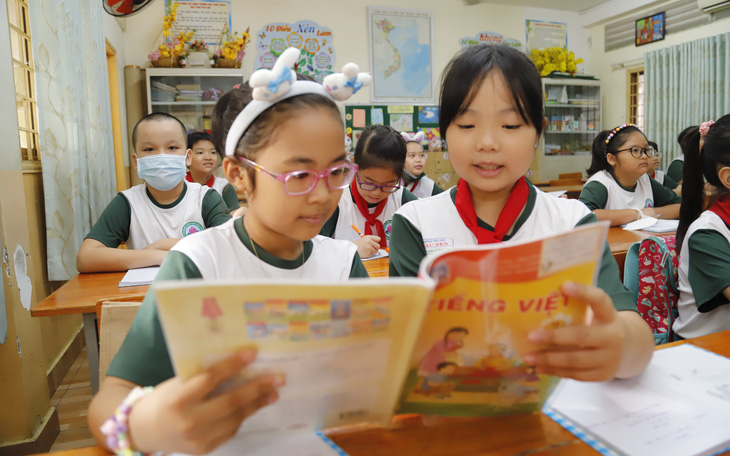 Warnings about a lack of transparency in textbook selection.
Source: https://tuoitre.vn/chon-sach-giao-khoa-quyen-phe-duyet-cua-giam-doc-so-hay-van-chu-tich-tinh-20241212111457102.htm


![[Photo] Prime Minister Pham Minh Chinh attends the Conference on the Implementation of Tasks for 2026 of the Industry and Trade Sector](/_next/image?url=https%3A%2F%2Fvphoto.vietnam.vn%2Fthumb%2F1200x675%2Fvietnam%2Fresource%2FIMAGE%2F2025%2F12%2F19%2F1766159500458_ndo_br_shared31-jpg.webp&w=3840&q=75)






















































Comment (0)