

Sofas are frequently used pieces of furniture and occupy a central position in the home. Therefore, in addition to choosing a suitable sofa shape, you should carefully consider the upholstery fabric.
According to Mr. Thanh Sang, the owner of a sofa manufacturing workshop, before choosing upholstery fabric, homeowners need to analyze their family's lifestyle. Does the sofa primarily serve the family's needs, is it a frequent gathering place for a group of friends, or is it also a sleeping place for pets?
Do you have babies in your family? What are the personalities of the people in your family like? Answer these questions before deciding on the type of upholstery fabric for your sofa.
Cotton
Cotton is a popular fabric in clothing. It provides a comfortable feel for the wearer. Besides everyday clothing, cotton is also a suitable fabric for manufacturing sofas.
According to experts, cotton fabric is breathable, providing comfort to users on hot days. Therefore, in tropical climates, cotton is a popular fabric for sofa production.
Cotton is also relatively easy to clean, as most cotton mattress covers are removable and machine washable.
However, cotton does have some drawbacks. If your sofa is placed in a location that receives a lot of sunlight, the cotton fabric may be damaged over time and fade in color.
In humid climates, cotton fabrics are susceptible to mold, which can compromise hygiene and overall aesthetics.
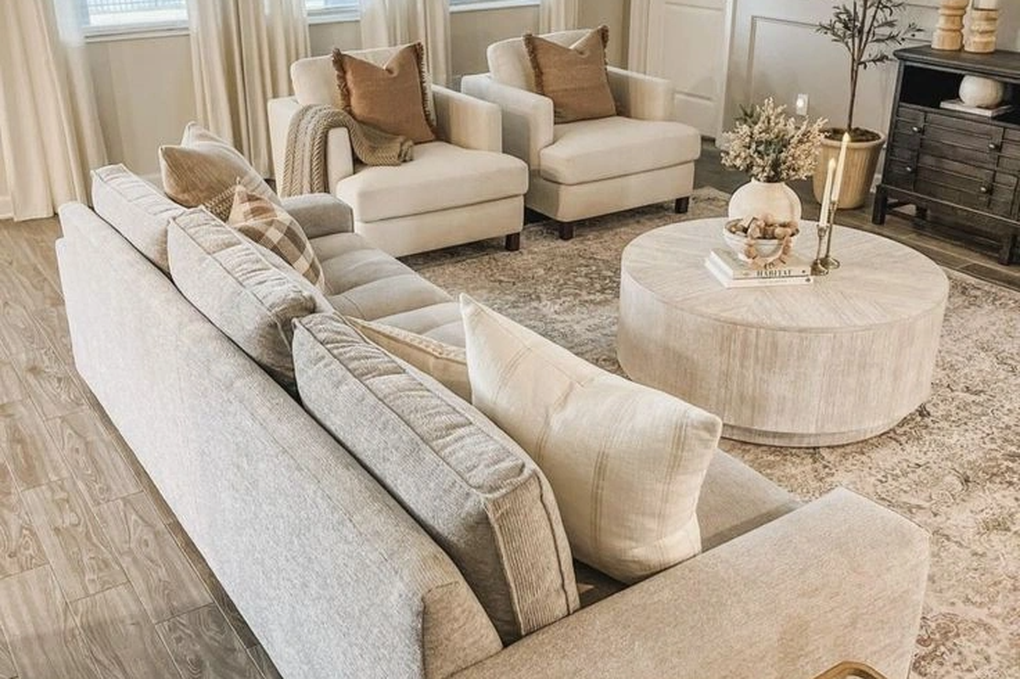
Cotton fabric sofas are suitable for places with warm climates year-round (Illustration: Pinterest).
Linen
Linen is a lightweight, eco-friendly fabric that is quite popular in sofa manufacturing. Linen is easy to clean, making it an ideal material for designing sofas for families with young children and pets.
On the plus side, linen fabric is breathable and less prone to mold, making it suitable for hot and humid climates or for people with allergies. Additionally, linen fabric is quite compatible with various dyes and printing inks, making it ideal for those who want to print designs onto the fabric for a unique sofa.
Additionally, like cotton, linen sofas are often easy to disassemble and clean.
However, linen sofas have a drawback in terms of aesthetics. Linen fabric is thin and not very sturdy, so the overall look of the sofa may seem unstable and not very neat.
Velvet
Velvet is a popular fabric in sofa design and manufacturing. Velvet sofas offer a warm and luxurious feel. Additionally, velvet feels soft to the touch, providing comfort during use.
Currently, to increase the durability of velvet fabric, manufacturers are producing a higher-quality velvet fabric specifically for sofa production. This type of fabric is easier to clean than traditional velvet and has greater durability.
On the downside, velvet fabric is difficult to wash, heavy, and easily stained. Therefore, velvet sofas are not suitable for families with young children or pets.
Additionally, velvet fabric is quite thick and stuffy, making it unsuitable for hot climates.
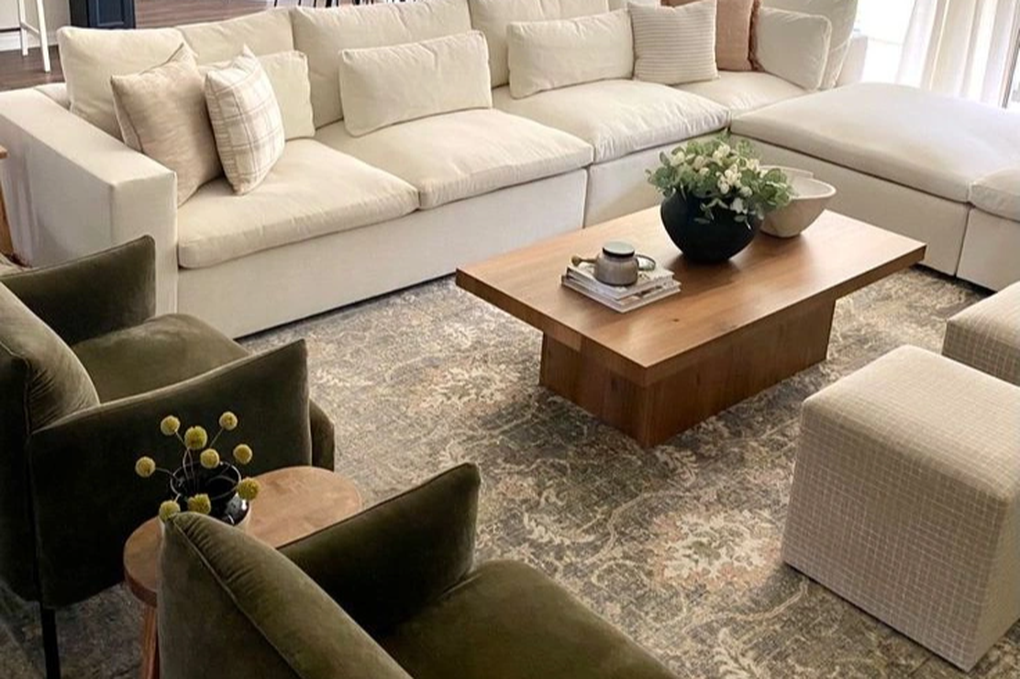
Velvet sofas can be quite hot, stuffy, and difficult to clean, but they offer a luxurious feel (Illustration: Pinterest).
Genuine leather
Genuine leather is a classic material for sofas. It's a high-quality, durable material; even as it ages, genuine leather retains its enduring beauty.
Leather is an easy-to-clean fabric. After some use, genuine leather will develop a patina, giving the sofa a more antique look.
Leather is easy to clean, easy to maintain with basic moisturizers, and can withstand wear and tear. Therefore, it is a suitable material for families with young children and pets.
Genuine leather has the disadvantage of feeling quite cold to sit on in winter and stuffy in summer. Besides that, the biggest drawback of this material is its high price. According to experts, even the cheapest genuine leather sofas are more expensive than those made from other materials.
Artificial leather
Sofas made from faux leather have the biggest advantage of being stain-resistant and easy to clean. For simple stains, you can easily remove them with a damp cloth. In addition, faux leather sofas are more scratch-resistant than real leather.
However, for many people, the feeling of using a sofa made from genuine leather provides a perfect experience. Therefore, a sofa made from faux leather will leave them feeling incomplete.
Faux leather is not as durable as real leather and tends to crack over time. Faux leather is also not as breathable as real leather. Over time, faux leather sofas tend to develop an increased sheen.
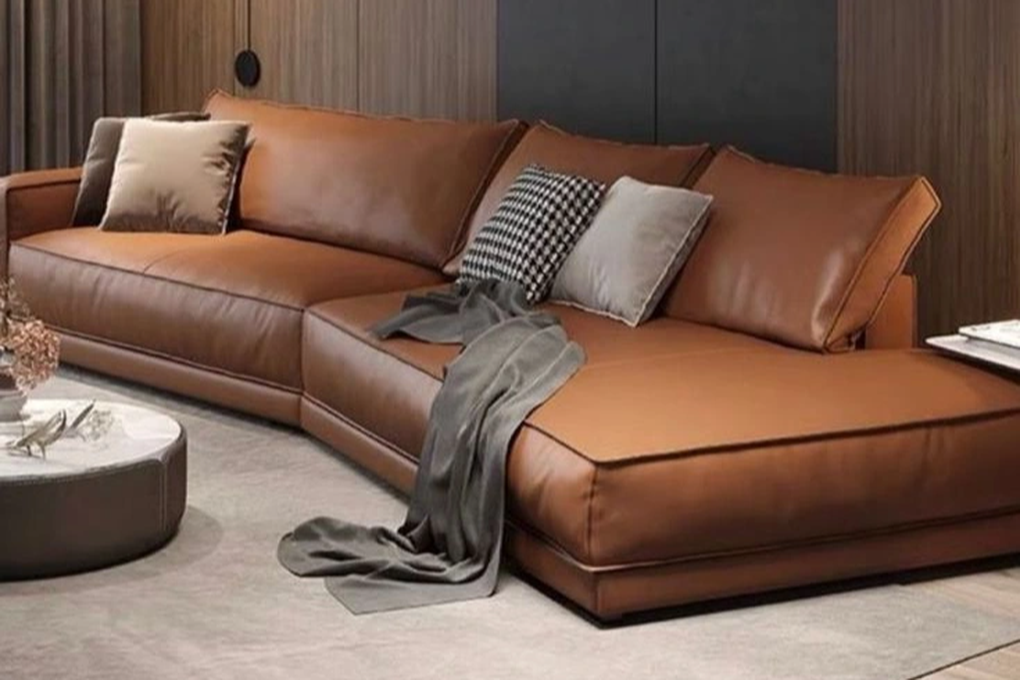
Faux leather sofas are easy to clean and maintain, but they tend to become shiny over time (Illustration: Pinterest).
Synthetic fabric (Microfiber)
With its affordability and durability, microfiber is a popular upholstery material for sofas. Microfiber is especially favored by families because of its stain-resistant properties and ease of cleaning.
The fine fibers retain color well. This is a great option for families who don't clean their sofas very often.
Although it's a stain-resistant fabric, microfiber easily traps dust and hair. Additionally, microfiber sofas can feel stuffy and uncomfortable in hot weather.
Source




![[Photo] Opening Ceremony of the National People's Council Conference on the Implementation of Directions and Tasks for the 2026-2031 Term](https://vphoto.vietnam.vn/thumb/1200x675/vietnam/resource/IMAGE/2026/05/28/1779939257690_ndo_br_bnd-1991-jpg.webp)






























































































Comment (0)