

Design products according to market needs.
The joint organization of a Famtrip tourism survey program for Japanese travel businesses by Hanoi , Ninh Binh, and Quang Ninh is an important activity for promoting destinations and fostering cooperation. This step demonstrates the increasingly proactive, systematic, and in-depth approach to international market promotion by northern localities in the context of increasingly fierce competition to attract international tourists.
Instead of introducing each destination individually, the three localities chose a collaborative approach, building a complete experiential journey that gave their Japanese partners a comprehensive view of the northern tourism ecosystem. From the thousand-year-old cultural depth of Hanoi, the heritage spaces and unique ecological landscapes of Ninh Binh , to the beauty of the islands and high-class resort services of Quang Ninh, everything was connected into a highly complete inter-regional product.
One of the program's notable aspects is the shift in focus from promotion to co-creation of products with partners. For many years, numerous tourism promotion activities have focused on showcasing resources, scenic spots, or existing products. However, this approach is insufficient for the Japanese market. Japanese tourists are typically interested in authentic experiences, reliable services, well-planned itineraries, unique cultural elements, and convenient transportation. Therefore, directly inviting Japanese travel agencies for on-site surveys allows localities to listen to market needs from the outset, rather than simply presenting what they already have to offer.
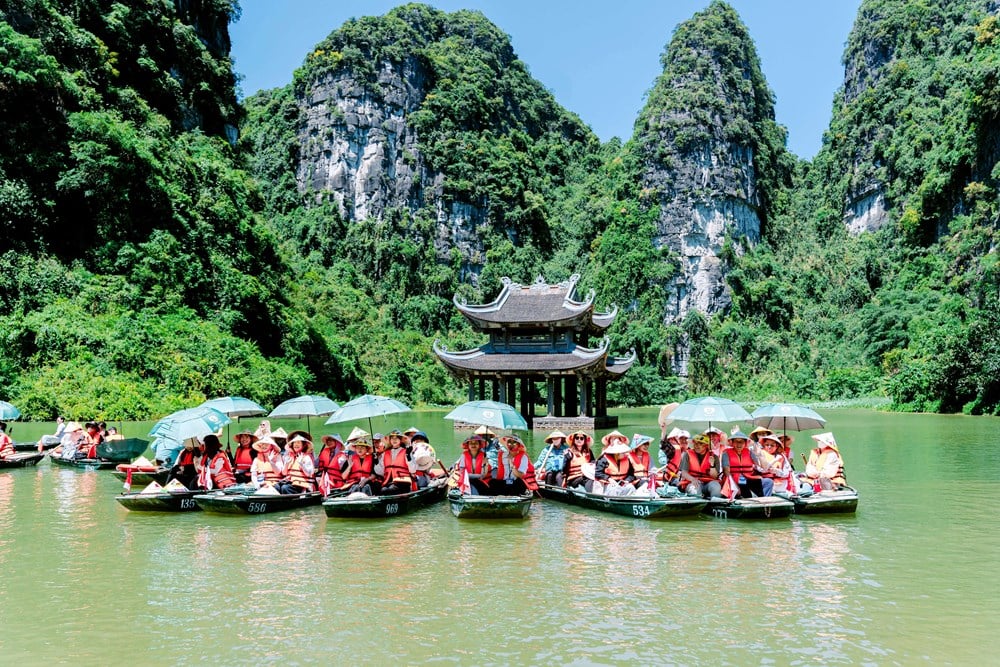
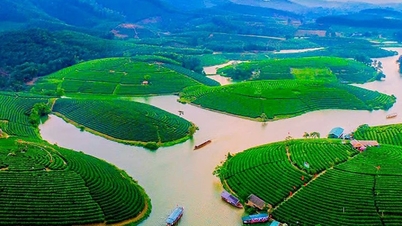
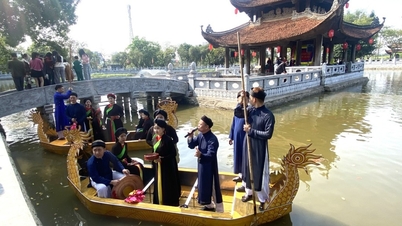
During this trip, the Japanese Famtrip group experienced many unique products such as making West Lake lotus tea, exploring Hanoi's Old Quarter by cyclo, visiting the Temple of Literature - National University at night, experiencing pottery villages, touring Trang An, relaxing at Kenh Ga Resort, and exploring Ha Long Bay by cruise ship. These experiences reflect the efforts of local authorities in developing products based on values that Japanese tourists care about, especially products containing elements of traditional culture, heritage, health care, high-quality relaxation, and experiences with a strong local identity.
This direction also aligns with Japan's new tourism trends, as more and more tourists seek slower-paced, experience-rich journeys with cultural depth, unlike before when they focused solely on visiting famous landmarks.
Networking is key to expanding the market.
If the survey activities are the "visible" part of the program, then the business networking sessions are the most valuable part. In the tourism industry, an attractive destination is not enough to generate a stable flow of tourists. It is crucial to establish a network of distribution partners in the source market.
Through these working sessions, Japanese businesses have the opportunity to directly access the systems of products, services, accommodation, transportation, and experiential programs in Hanoi, Ninh Binh, and Quang Ninh. Conversely, Vietnamese businesses also gain a better understanding of the requirements, consumer trends, and service standards of the Japanese market. This connection helps shorten the gap between service providers and product sellers, while also creating a foundation for the development of specialized tour packages specifically for Japanese tourists. This is a crucial factor in transitioning from promotion to actual product sales.
Another highlight of the program is the clearer definition of the Hanoi - Ninh Binh - Quang Ninh tourist route for international visitors. In this route structure, Hanoi plays the role of a gateway for international visitors and is a center of unique culture; Ninh Binh is a destination of heritage, ecology, and relaxation; and Quang Ninh boasts a coastal and island area with world-renowned natural heritage. These three destinations complement each other rather than compete.
This approach is being adopted by many countries to extend the length of stay and increase spending by tourists. For the Japanese market, where tourists tend to plan meticulously and prioritize highly connected itineraries, this regional linkage model significantly enhances the attractiveness of Vietnamese tourism products. Instead of just stopping in one location, tourists can fully experience cultural, natural, and recreational values all within a single trip.
This Famtrip program demonstrates a noteworthy trend in Vietnamese tourism: shifting from a fragmented approach to regional cooperation, from showcasing resources to developing products, and from image promotion to building long-term partnerships with international partners.
For Hanoi, Ninh Binh, and Quang Ninh, this is an opportunity to solidify their position on the international tourism map. For Japanese businesses, it's a chance to directly access new products, new experiences, and reliable partners in Vietnam.
Source: https://baovanhoa.vn/du-lich/chu-dong-mo-duong-don-khach-nhat-ban-233241.html














![[Photo] Reception to welcome General Secretary and President To Lam and his wife on their State visit to the Philippines](https://vphoto.vietnam.vn/thumb/1200x675/vietnam/resource/IMAGE/2026/06/01/1780295488620_vna-potal-chieu-dai-chao-mung-tong-bi-thu-chu-tich-nuoc-to-lam-va-phu-nhan-tham-cap-nha-nuoc-toi-philippines-8798060-7855-jpg.webp)








































Comment (0)