

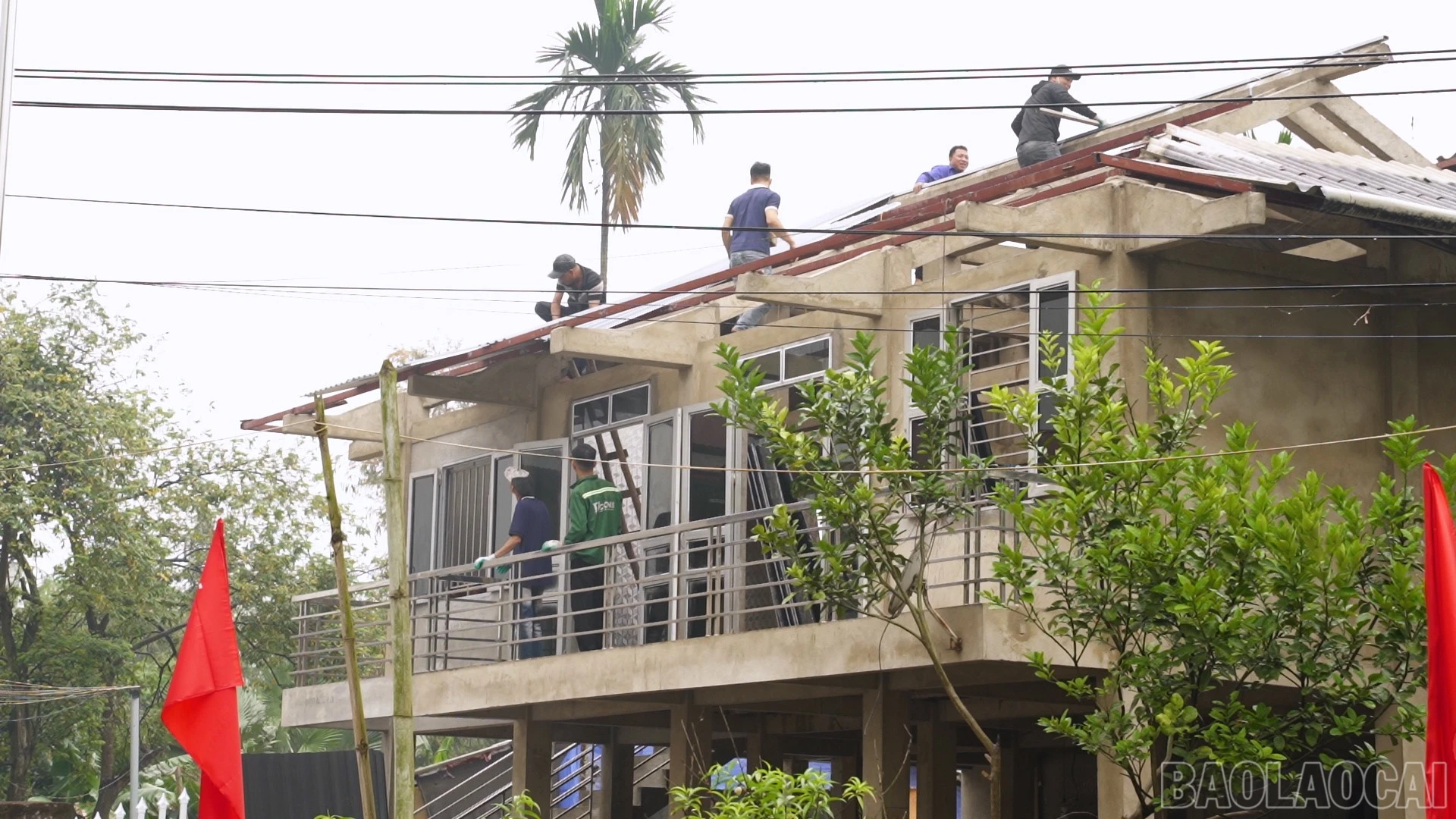
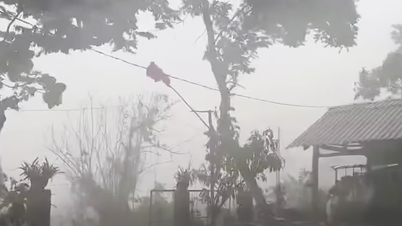
At approximately 4:40 PM on March 29th, a storm formed and moved rapidly through the Nghia Lo area. In a short time, strong gusts of wind accompanied by heavy rain caused thousands of houses to lose their roofs, trees toppled, and the power system and many other public facilities to be damaged. Cau Thia ward was the hardest hit, affecting over 2,300 households, with hundreds of houses suffering roof damage ranging from 50% to 100%.
Having witnessed the devastation of the natural disaster firsthand, Mr. Hoang Van Trang, from Ban Duong residential area, Cau Thia ward, is still in shock as he recalls: “The tornado came very quickly, my family had to run under the floorboards for shelter. In a short time, the entire roof was blown away, and the surrounding households also suffered a lot of damage.”
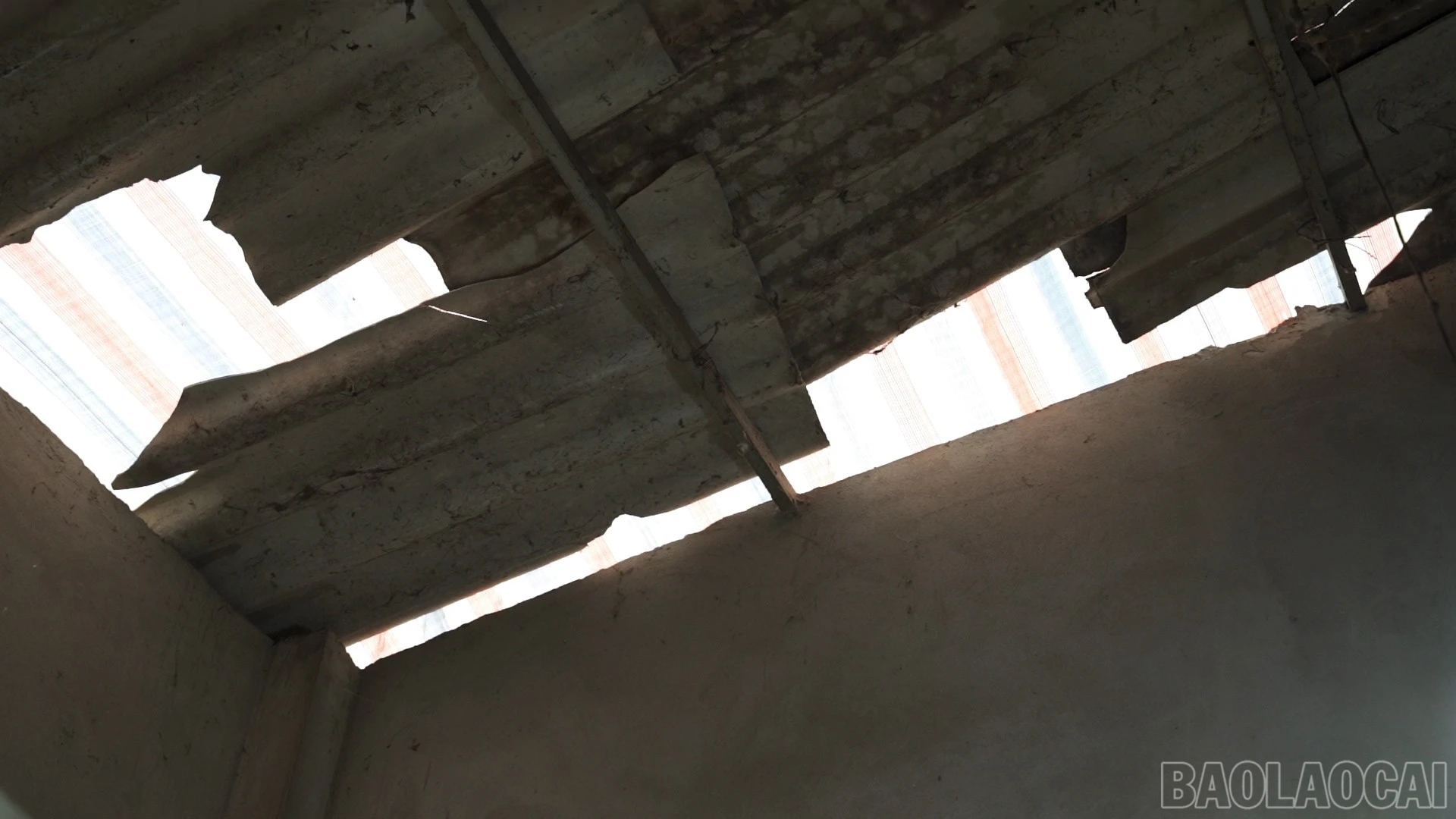
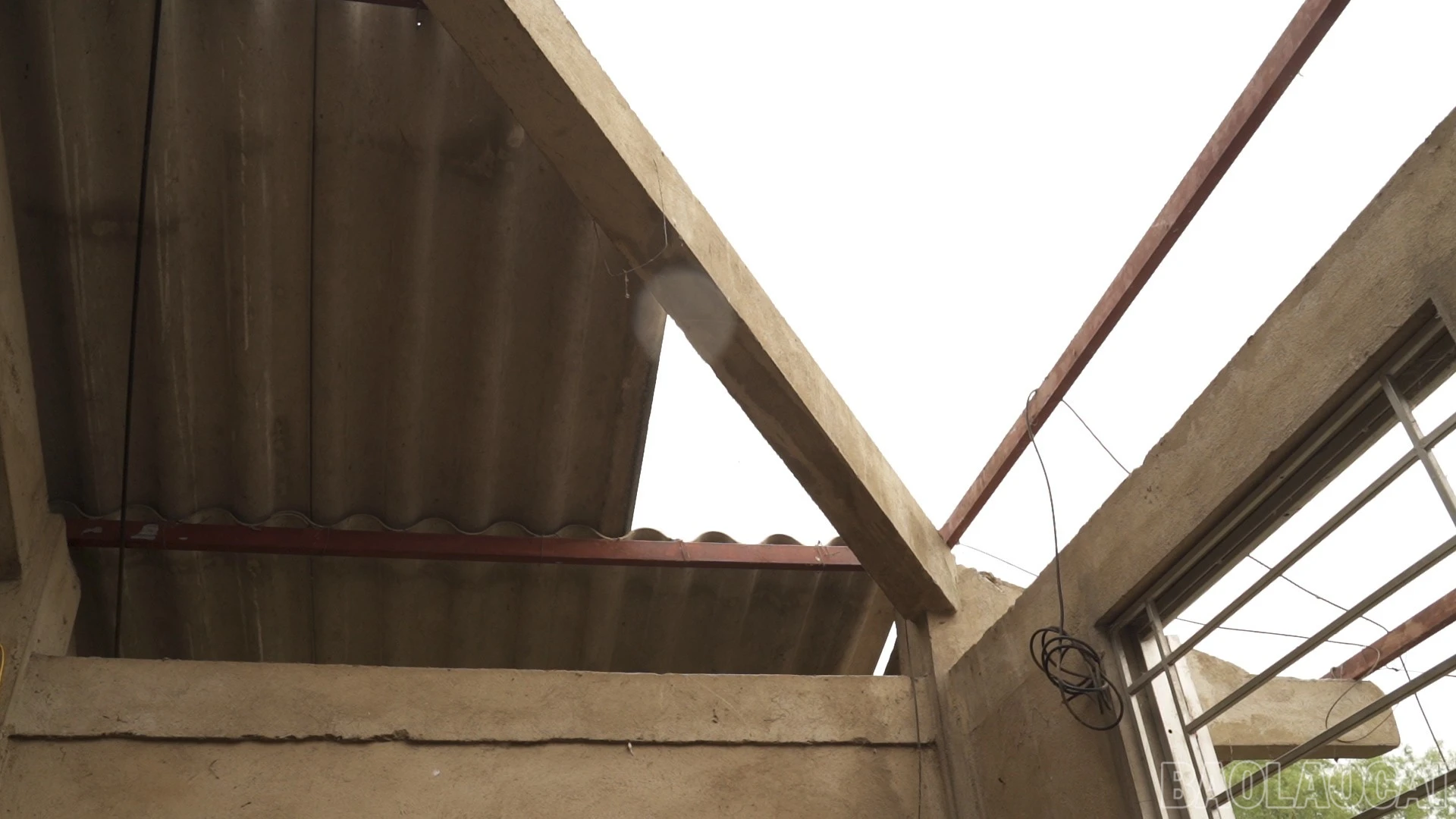
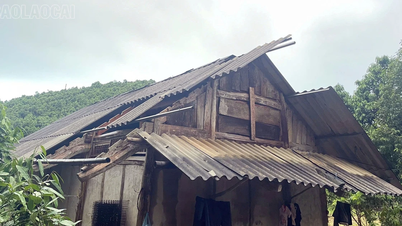
After the storm, many areas were devastated: corrugated iron roofs were twisted, power poles were tilted, and many household items were damaged. Numerous families faced hardship as they lost their homes and their lives were disrupted. However, the proactive and urgent actions of the local authorities and relevant agencies helped minimize damage and quickly stabilize the situation.
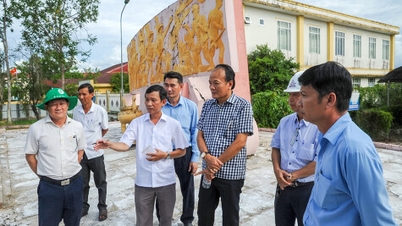
Immediately after the natural disaster occurred, Cau Thia ward activated its response plan based on the "four on-the-spot" principle, mobilizing all forces including militia, local police, neighborhood committees, and support from reinforced units. Damage assessment and statistics were urgently implemented, prioritizing assistance to severely affected households.
Mr. Chu Tien Dung, Vice Chairman of the People's Committee of Cau Thia Ward, said: "Immediately after the natural disaster occurred, the local authorities mobilized forces according to the 'four on-the-spot' principle, including militia, local police, and support forces. At the same time, with the support of more than 60 officers and soldiers from the Provincial Military Command and Defense Zone 4, we quickly helped people overcome the consequences. To date, most households that suffered heavy damage have had their roofs repaired and have stable housing."
Beyond simply addressing the aftermath, local authorities proactively allocated funds and provided essential supplies, especially to poor and disadvantaged households, ensuring that no one was left homeless. The spirit of community support was also evident, with many organizations and individuals joining hands to help people quickly stabilize their lives.
In Nghia Lo ward, the storm also caused significant damage, with 572 houses damaged to varying degrees. Based on this experience, the local authorities are reviewing all aspects of disaster prevention and control, identifying shortcomings and limitations in order to find solutions for improvement in the future.
Mr. Nguyen Cong Cuong, Head of the Economic , Infrastructure and Urban Planning Department of Nghia Lo Ward, said: “In the coming time, the locality will strengthen propaganda and mobilize people to raise their awareness of proactively preventing and combating natural disasters. At the same time, we will encourage families to replace old roofing sheets with more durable materials to minimize damage when storms occur.”
The experience from the storm at the end of March shows that natural disasters are becoming increasingly complex, unpredictable, and not following traditional patterns. Extreme weather phenomena such as thunderstorms, hailstorms, and flash floods can occur at any time, with strong intensity and wide-ranging impact. In this context, improving disaster prevention and control capacity is not only the responsibility of the government but also requires the proactive participation of the entire society.
One of the important lessons learned is the role of forecasting and early warning systems. If information about weather developments is conveyed to the public promptly and accurately, the ability to proactively prevent and mitigate damage will be enhanced. In addition, the inspection and reinforcement of houses, especially temporary structures and those with weak roofs, should be carried out regularly before the rainy and stormy season.
Furthermore, strengthening the response force at the grassroots level and improving the situational handling skills of officials and citizens are also key factors. The "four on-the-spot" principle has proven effective in practice, but to maximize its effectiveness, thorough preparation in terms of human resources, materials, and specific action plans is necessary.
In the long term, urban planning and infrastructure development need to take into account adaptation to climate change. High-risk areas should be warned, and the construction of permanent housing should be restricted or appropriate technical solutions implemented to mitigate risks.
Experience shows that natural disasters are an objective and unavoidable factor, but damage can be controlled with proactive preparation from an early stage, starting at the grassroots level. Lessons learned from recent storms and tornadoes, along with raising public awareness of disaster prevention and the decisive and timely guidance of authorities at all levels, will create a solid "shield" against unpredictable weather patterns.
Proactive storm and tornado prevention and control is not only a short-term solution but also a long-term requirement, linked to the goal of sustainable development. When every citizen raises their awareness of self-protection, and each locality prepares response plans, damage caused by natural disasters will be gradually minimized, contributing to ensuring the safety of lives and property and the stability of social life.
Source: https://baolaocai.vn/chu-dong-phong-chong-dong-loc-post897765.html

![[Photo] The heat at the fireworks display site on the opening night of the Da Nang International Fireworks Festival 2026](https://vphoto.vietnam.vn/thumb/1200x675/vietnam/resource/IMAGE/2026/05/27/1779889741485_ndo_br_z7872039145157-fecaba5112f39e8352544099d7ef4738-5140-jpg.webp)

![[Photo] The courage of new recruits of Brigade 144 on the training ground.](https://vphoto.vietnam.vn/thumb/1200x675/vietnam/resource/IMAGE/2026/05/27/1779881651341_anh-man-hinh-2026-05-27-luc-18-32-52.png)

























































![[Photo] The courage of new recruits of Brigade 144 on the training ground.](https://vphoto.vietnam.vn/thumb/402x226/vietnam/resource/IMAGE/2026/05/27/1779881651341_anh-man-hinh-2026-05-27-luc-18-32-52.png)




























Comment (0)