

Preserve the forests to preserve the lifeblood of the vast wilderness.
From the sprawling natural forests in the east to the distinctive deciduous forests in the west, forests play a vital role in the ecological environment and livelihoods of the people of Dak Lak province. Therefore, protecting and developing forests is not only the responsibility of specialized forces but has become a shared responsibility of many levels, sectors, and communities.

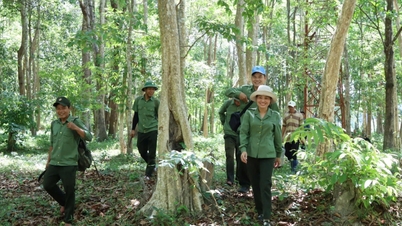
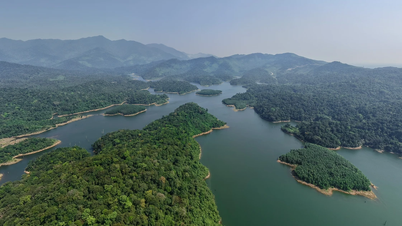
Forests play a crucial role in protecting the ecological environment, water resources, and sustainable development in Dak Lak. Photo: Pham Hoai.
Dak Lak is currently one of the provinces with the largest forest area in the Central Highlands region, with over 743,000 hectares of forested land, of which more than 530,000 hectares are natural forests. Besides creating landscapes and conserving biodiversity, forests also play a role in regulating water resources, protecting soil, mitigating the impacts of natural disasters, and contributing to climate change adaptation.
In the context of increasingly complex climate change, the value of forests is recognized not only as a forestry resource but also as a crucial resource for sustainable development. Therefore, protecting and developing forests is identified as a long-term task requiring the joint efforts of the entire society.
According to Mr. Nguyen Quoc Hung, Head of the Dak Lak Provincial Forest Protection Department, preserving forests is not only about protecting natural resources but also about preserving resources for long-term development. Therefore, forest protection and development is always considered a regular task by the forest protection sector, linked to raising the responsibility for forest preservation at the grassroots level.

Forest rangers, along with other units and localities, participated in planting trees, contributing to increasing forest cover and improving the ecological environment. Photo: Pham Hoai.
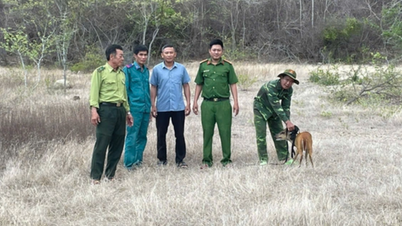
Working alongside local authorities and forest owners, the Dak Lak Forest Protection Department plays a core role in advising, guiding, supervising, and disseminating information, contributing to connecting responsibilities among different levels, sectors, forest owners, and the people in the management, protection, and development of forests. Through this, awareness campaigns are regularly implemented at the grassroots level, contributing to spreading the responsibility of forest protection within the community.
Transform the responsibility of forest conservation into a community force.
Through the advisory, guiding, and supervisory roles of the forest rangers, the responsibility for protecting and developing forests has gradually spread to all levels, sectors, forest owners, and the people. This joint effort has contributed to positive results in forest development in the province.
During the period 2021-2025, the entire province planted more than 51,813 hectares of concentrated forest, achieving 125% of the plan. This includes approximately 1,346 hectares of protection and special-use forests and more than 50,467 hectares of production forests.
Besides the concentrated forest plantations, the province has also planted more than 8.29 million scattered trees in residential areas, schools, offices, transportation routes, and many public areas. These results not only contribute to increasing forest cover but also create more green spaces to serve people's lives and improve the ecological environment.

Forest restoration and development contribute to protecting the ecological environment, responding to climate change, and creating a foundation for sustainable development. Photo: Pham Hoai.
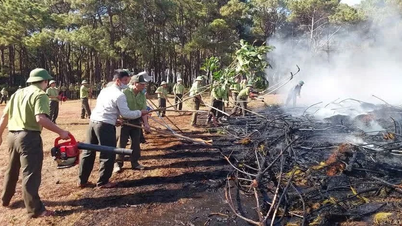
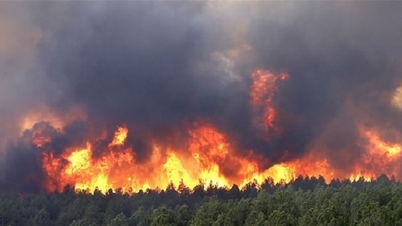
However, forest development efforts still face challenges such as encroachment on forest land, the impact of extreme weather events, droughts, floods, and limited investment resources. This requires even stronger concerted efforts from the entire society in protecting and developing forests.
Based on the results achieved so far, Dak Lak aims to plant nearly 28,648 hectares of concentrated forest and more than 272,000 scattered trees during the 2026-2030 period. These are important goals to further increase forest cover, improve the ecological environment, and contribute to achieving sustainable socio -economic development.
Amidst increasing pressure on forest resources, the Dak Lak forest rangers continue to play a core role in advising, guiding, and supervising forest protection and development at the grassroots level. This is a long-term task aimed at maintaining the ecological environment, water resources, and the foundation for sustainable development of the locality.
Source: https://nongnghiepmoitruong.vn/chung-tay-bao-ve-rung-vi-phat-trien-ben-vung-d814424.html



![[Photo] General Secretary and President To Lam presides over a meeting on preparations for the review of one year of operation of the three-tiered government system.](https://vphoto.vietnam.vn/thumb/1200x675/vietnam/resource/IMAGE/2026/06/02/1780391821195_a1-bnd-4595-9717-jpg.webp)










![Transforming from Resolution 57: [Part 2] Businesses Lead the Way](https://vphoto.vietnam.vn/thumb/402x226/vietnam/resource/IMAGE/2026/06/02/1780399668663_5332-dsc09931-2-235637_295-235639.jpeg)



























































Comment (0)