


The dark side of the "virtual world " and its real-life consequences.
Currently, Vietnam has over 85 million internet users, more than 127 million active mobile subscribers, and approximately 79 million active social media accounts. The rapid development of digital technology in recent years has profoundly changed the way people communicate, receive information, and participate in social activities. With just a smart device connected to the internet, each individual can become a "media center" with significant influence on the community.
The cyberspace has therefore opened up many opportunities for cultural and economic development. Many cultural heritages, images of Vietnam's land and people have been widely promoted to international friends; educational activities, artistic creation, and online business have also been strongly promoted.
However, this space also harbors many dark sides. Videos promoting deviant lifestyles, offensive trends, or uncivilized behavior online risk negatively impacting the perceptions and behaviors of a segment of young users. Many people, upon entering the virtual world, tend to behave completely differently from their real-life counterparts. Attacks and insults are rampant in posts and videos, even leading to serious psychological trauma for those involved.
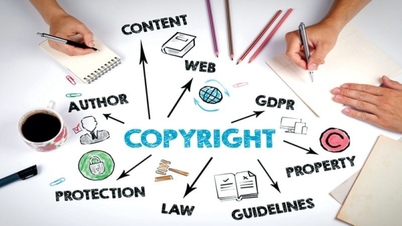
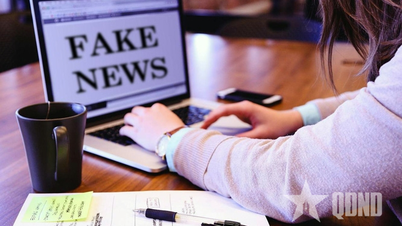
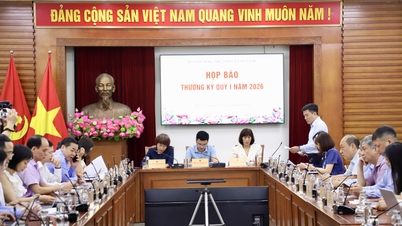
From a state management perspective, Mr. Le Quang Tu Do, Director of the Department of Radio, Television and Electronic Information (Ministry of Culture, Sports and Tourism), believes that, alongside opportunities for connection and the dissemination of positive values, the online environment also presents many worrying issues such as fake news, misinformation, harmful content, offensive behavior, intellectual property rights violations, and negative impacts on the community, especially young people.
According to Dr. Dang Vu Canh Linh, Deputy Director of the Institute for Cadre Training, Development and Scientific Research, Central Committee of the Vietnam Fatherland Front, the current situation shows that the information environment has both positive and negative aspects. A significant amount of misinformation appears, leading to inappropriate statements, even violations of the law and cultural values. Furthermore, there is the phenomenon of information being manipulated and influenced, negatively impacting public opinion.
Building immunity and taking responsibility starts from each individual.
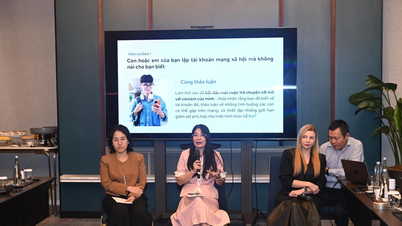
In this context, building a culture of appropriate behavior in cyberspace is no longer solely the responsibility of regulatory agencies or technology platforms, but has become a shared responsibility of the entire society. Recently, the Ministry of Culture, Sports and Tourism issued the Code of Conduct for Cultural Behavior in the Digital Environment. This is considered an important guiding framework for shaping digital culture in the current context.
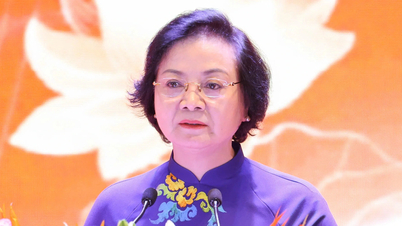
According to Ms. Nguyen Thi Thanh Huyen, Deputy Director of the Department of Broadcasting, Television and Electronic Information, the Code of Conduct was developed to enhance responsibility, transparency, and coordination among stakeholders in handling violations in cyberspace. For individuals and influencers, the Code requires them to uphold social responsibility, verify information before sharing, respect copyright, and not exploit public trust for personal gain.
Mr. Nguyen Xuan Bac, Director of the Department of Performing Arts, emphasized that the Code of Conduct should be considered an important reference document for units to incorporate into their production and content uploading processes, thereby strengthening censorship, warnings, and reducing the risk of violations due to unintentional mistakes or lack of understanding. At the same time, the management agency needs to develop a clear warning mechanism, and appropriate sanctions should be imposed for repeated violations.
Building a culturally rich online environment is a long-term process that requires the collaboration of regulatory bodies, technology companies, and the entire population. When each individual knows how to behave civilly, respect ethical standards, and spread positive values, the online space will truly become a healthy networking environment, contributing to the sustainable development of society in the digital age.
From July 1st, 2026, the 2025 Cybersecurity Law will officially come into effect. With the motto "putting people at the center, security as the foundation, and sustainable development as the goal," the 2025 Cybersecurity Law is expected to contribute to building a truly safe, reliable, healthy, and humane cyberspace in Vietnam, effectively serving the cause of national construction and defense in the new era.
Source: https://daidoanket.vn/chung-tay-xay-dung-moi-truong-so-lanh-manh.html
![[Photo] The heat at the fireworks display site on the opening night of the Da Nang International Fireworks Festival 2026](https://vphoto.vietnam.vn/thumb/1200x675/vietnam/resource/IMAGE/2026/05/27/1779889741485_ndo_br_z7872039145157-fecaba5112f39e8352544099d7ef4738-5140-jpg.webp)






































































































Comment (0)