

Over 60 years ago, when Binh Tuy province was first established under the Republic of Vietnam (1956), according to old documents, in La Gi town alone, several "scenic spots" were recorded on the local territory map.
The writings, with their seemingly "warm" descriptions, portray these places as heritage sites and treasures bestowed by nature. These include Da Dung Dam, Doi Duong Hill, Hon Ba Island, Tam Tan Cliff… These place names are entirely based on natural advantages: the green of the forests, rivers, streams, and the blue sea. Later, Cam Binh Beach, Doc Trau, and cultural relics such as the Thầy Thím Shrine and the Vạn Mausoleum were added…
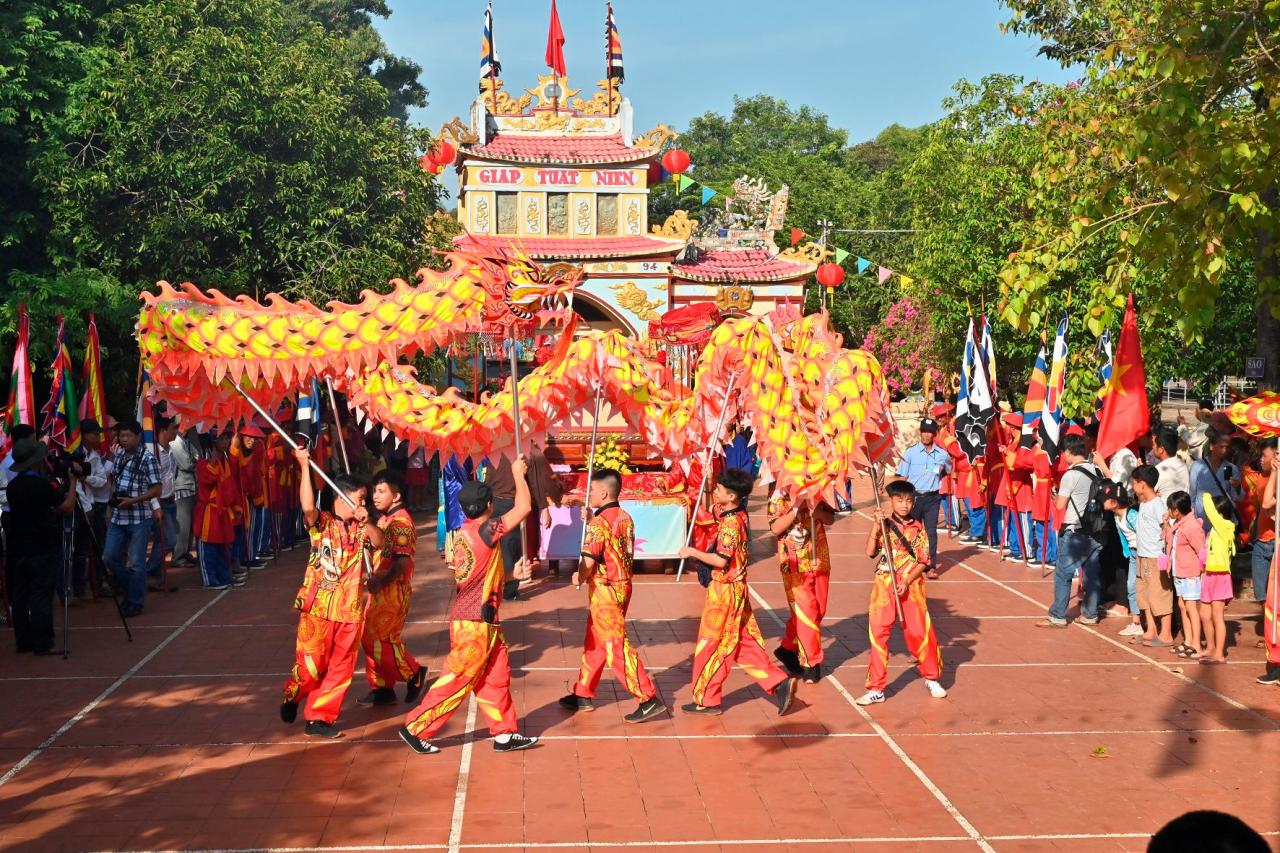
A stretch of casuarina trees, planted in the 1930s, extends along a 7-kilometer arc-shaped coastline on undulating sand dunes from Tam Tan to Tan Long. Hon Ba, considered the "Pearl Island" of Tien Sa, boasts a temple dedicated to the goddess Thien Y A Na, with stunning scenery just 2 kilometers from the shore, yet it stands alone. Despite the prominent logos promoting the "National Tourism Year" and the "Green Convergence" event, Hon Ba remains a place not visited by tourists for sightseeing or worship, having been closed for the past 20 years… Tam Tan, with its coastline bearing the footprints of a legendary era, features a cluster of isolated rocks near the beach where flocks of seagulls gather to bask in the sun.
It's a pity that the Đá Dựng dam, with its majestic natural landscape and man-made structures, was built in 1958 right in the center of Bình Tuy provincial capital and also in the middle of present-day La Gi city. The two ends of the dam, nearly 120 meters long, on the right and left banks of the Dinh River, were previously green parks with trees like cherry blossoms and many flowerbeds and climbing vines… which existed until the liberation day of April 23, 1975. In the early years, the government had many other important tasks to attend to, but later these areas were abandoned, and worse, these lands became privately owned, the trees were cut down, and the land titles were transferred to individual households. People petitioned, the press reported, and the issue was raised at meetings of the District and City People's Councils… Ultimately, the matter was abandoned and gradually faded into oblivion.
La Gi can be considered one of the places with the earliest opportunities for developing coastal tourism, second only to Mui Ne. Adjacent to it is the coastline of Ham Thuan Nam district, with Ke Ga, Thuan Quy, and Hon Lan, which at that time were still undeveloped and remote areas. Meanwhile, since 2002, the former Ham Tan district had 58 tourism projects and 3 community tourism areas: Nganh Tam Tan, Doi Duong-Hon Ba, and Cam Binh beach along 49 km of coastline. By the time La Gi town was established in 2005, at the investor conference, only 31 projects stretching along 28 km of coastline had been approved by the province. Perhaps this was a "red carpet" opportunity for many individuals to hastily set up companies and jump in with a few acres of land. There were not many businesses with real financial capacity and professionalism, leading to the situation of holding onto land for resale, which remains a problem to this day. Furthermore, land management at the commune level is lax. When the province approves investment and allocates land, it is hampered by land disputes with local residents and complaints. The clearest example is the nearly a dozen projects in the Cam Binh tourist area (Tan Phuoc commune), where prolonged disputes are the cause, and also the reason why businesses lack the capacity to implement construction, using the land for resale as an excuse to stall. Every year, provincial inspection teams conduct checks, and extensions are granted, but it seems to be a case of "raising a hand to strike lightly," becoming a familiar pattern, with things remaining unchanged. Regarding the reasons for stagnation, every project has its own justifiable reasons; the important thing is whether the relevant departments recognize them or not! Therefore, why is it that land allocated to many coastal tourism projects in La Gi remains untouched, with residents even freely planting trees, erecting fences, and scrambling to obtain land titles? Not only are there land disputes awaiting resolution, but even the 50-meter-wide planned road to the sea is brazenly used for setting up eateries and building guesthouses, as seen in Tan Phuoc. Even the Cam Binh community tourism area, despite having an on-site tourism management board, has allowed the beach to become a fish market, with stalls haphazardly set up, losing the true purpose of a community beach.
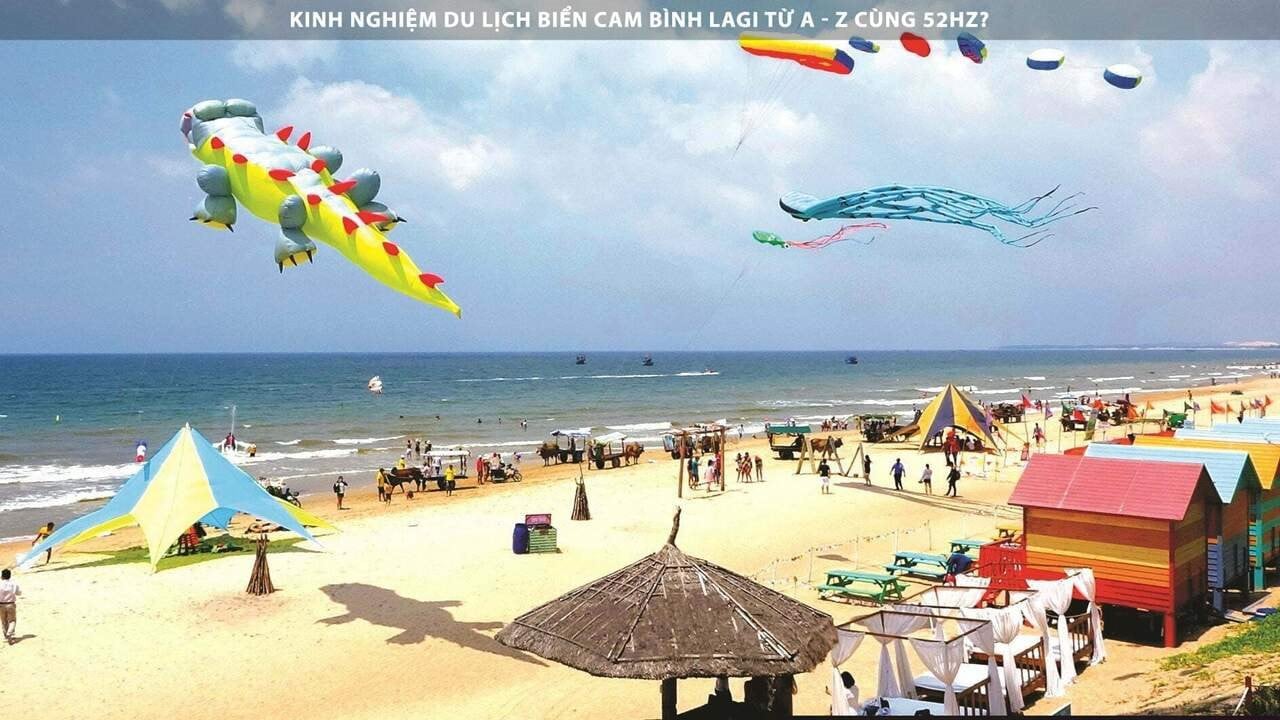
Speaking of the large-scale Saigon - Ham Tan Tourist Area project, covering 255 hectares, it received investment licenses between 2004 and 2008. Adjacent to this project is the Binh Tan Blue Sea project (Viet Thuan Company) on over 11 hectares, followed by projects named Song Thanh, Thai Thanh, Trung Hieu, KT. Thanh Doan, An Viet, and Doc Trau (Tan Tien), sharing nearly 5 km of the most "prime" coastline. This area was originally a casuarina forest planted with pine trees in the early 1930s during the French colonial period to prevent coastal erosion of the rice fields and residential areas of Tan Ly and Bau Doi villages. The area was formerly known as So Duong 1 and So Duong 2, guarded by a forest ranger station. Since the development of these projects and the exploitation of titanium minerals, the land has been left in ruins. The two major projects, Saigon - Ham Tan and Binh Tan, have seen sparse construction of only a few hotels and bungalows, mostly in rough construction, left unfinished and abandoned. As the Binh Thuan newspaper specifically mentioned the largest project in La Gi, Saigon - Ham Tan, in a headline titled "Golden land for tourism project abandoned for 10 years" (October 26, 2018), followed by an article titled "Why has a tourism project dragged on for over 16 years?" (Binh Thuan, February 10, 2020). Regardless of the reason for not having to reclaim the land, it's regrettable that a green hillside, densely covered with ancient trees nearly 90 years old, has been wiped out. Furthermore, a community tourism area (Doi Duong) has remained undeveloped for nearly two decades without an investor, which is unusual. Only about 10 households have spontaneously built shops and guesthouses on this land, living in uncertainty, resulting in a messy landscape. Yet, it has become the "ideal" beach for tourists flocking to the tourist city of La Gi.
Recent news reports about measures to resolve the backlog of stalled "dormant" projects in the province have highlighted tourism projects in La Gi such as Whal Hill, Eden, Thu Hang, Lang Tre LG, Song Thanh, Mui Da, Viet Cham, and the large Saigon - Ham Tan project… But the reality is different. What about projects like Dai Duong (APEX), Tan Binh (Viet Thuan), Mom Da Chim Expansion, Ba Mien, Binh Tuy…?
According to news reports, at a conference on June 20, 2023, the Chairman of the People's Committee of Binh Thuan province, Doan Anh Dung, directed specialized agencies to review all coastal projects. He emphasized the need for decisive action against projects that are delayed without justifiable reasons, and stated that the province will revoke their licenses. This is a necessary measure to address the inherent obstacles hindering the province's tourism development, especially in La Gi, an area with significant opportunities for developing the southern coastal tourism landscape of the province.
La Gi's road system connects to the North-South Expressway, linking it to the southern tourist areas of Phan Thiet, Tien Thanh, Thuan Quy, and Ke Ga. National Highway 55 from Ba Ria-Vung Tau province, and the coastal tourist routes of Long Hai and Ho Tram are also close to La Gi… New opportunities for La Gi to develop coastal tourism are opening up with many advantages. With decisive leadership from the province, the stagnation of tourism projects in La Gi over the past years will surely be revived.
Source





![[Image] Hanoi Police officially crowned champions of V-League 2025/2026](https://vphoto.vietnam.vn/thumb/1200x675/vietnam/resource/IMAGE/2026/05/31/1780244769054_ndo_br_039d561b692be875b13a-jpg.webp)















![[Photo] The General Secretary, President and his wife begin their state visit to the Philippines.](https://vphoto.vietnam.vn/thumb/1200x675/vietnam/resource/IMAGE/2026/05/31/1780230559452_anh-man-hinh-2026-05-31-luc-19-28-11.png)
























































Comment (0)