

Don't wait until you're sick to go to the hospital.
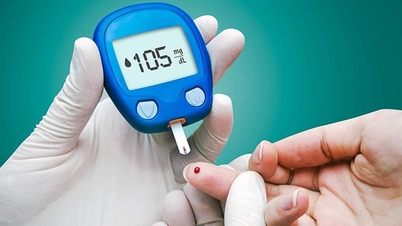
On April 25th, Tu Son General Hospital admitted a critical case with three severe complications: ketoacidosis due to hyperglycemia, acute renal failure, and acute pancreatitis. The patient, HTM, a 40-year-old woman from Bao Yen commune ( Lao Cai province), was admitted in a state of severe dehydration, vomiting, and abdominal pain, with alarming indicators: blood glucose soaring to 47.2 mmol/l, white blood cell count high at 35.2 G/L, creatinine very high, and severe metabolic acidosis.
The on-call team immediately deployed intensive resuscitation: placing an emergency central venous catheter to administer fluids, correct electrolytes, regulate blood glucose, and balance acid-base levels. Thanks to close monitoring, the patient overcame the critical condition, vital signs gradually stabilized, and kidney function recovered.
 |
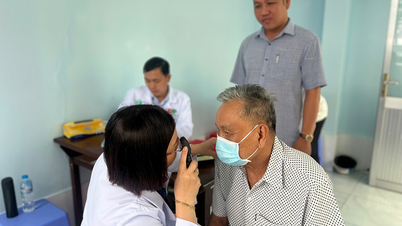
Dai Dong Health Station, in coordination with hospitals, organized a health screening campaign for people aged 40 and above. |
According to Dr. Nguyen Thi Thanh, Head of the Intensive Care, Anesthesia and Surgery, and Hemodialysis Department at Tu Son General Hospital, this is a typical case of life-threatening complications if metabolic diseases are not detected and controlled early.
"People shouldn't wait until severe symptoms appear before seeking medical attention, because treatment will be prolonged, expensive, and put a great strain on the emergency system. Regular health checkups and early screening for non-communicable diseases, especially diabetes, are key factors in early detection and timely intervention," advised Dr. Thanh.
In reality, many dangerous diseases begin with very subtle symptoms in daily life. In mid-April 2026, Ms. Dinh Thi Q. (60 years old, Que Vo ward) went for a check-up because of persistent bloating and gas, without pain or fever. After examination and ultrasound, the doctor discovered an ovarian tumor measuring approximately 150 mm.
Dr. Nguyen Hoa Hai Ngu, Head of the Obstetrics and Gynecology Department at Que Vo General Hospital, said: “If not detected early, the tumor can cause torsion, rupture, necrosis, or even malignancy. This case was detected in time because the patient proactively sought medical attention despite unclear symptoms. Women should have regular gynecological checkups every 6-12 months to screen for dangerous diseases early.”
Proactive disease prevention
One of the core tenets of Resolution 72-NQ/TW dated September 9, 2025, of the Politburo, "On some breakthrough solutions to strengthen the protection, care, and improvement of people's health," is to shift strongly from a mindset focused on medical examination and treatment to proactive disease prevention, emphasizing comprehensive and continuous protection, care, and improvement of health throughout the life cycle.
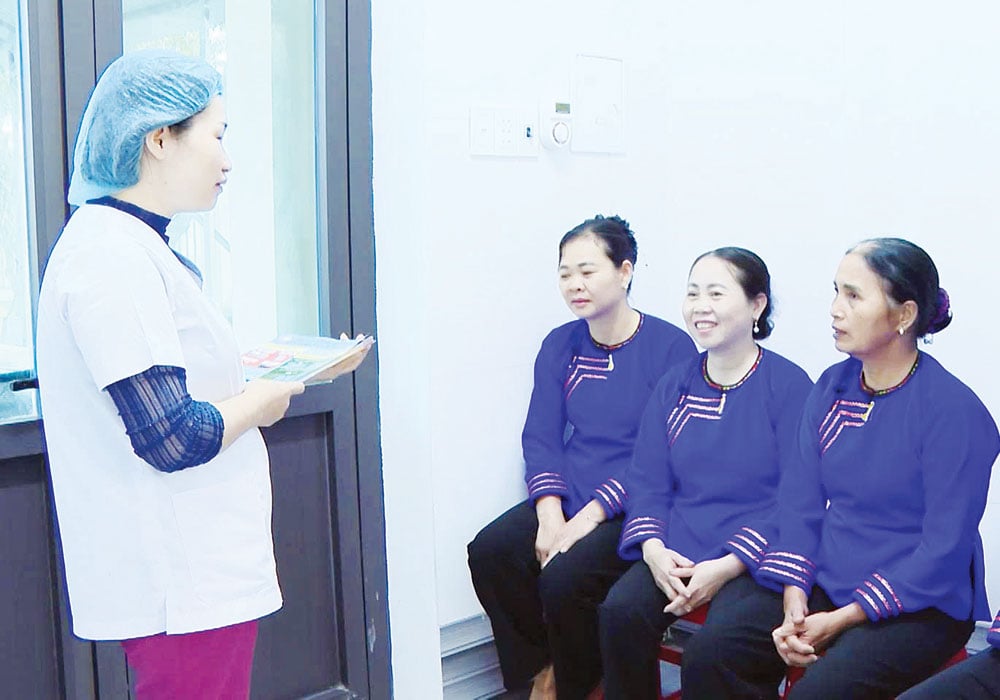 |
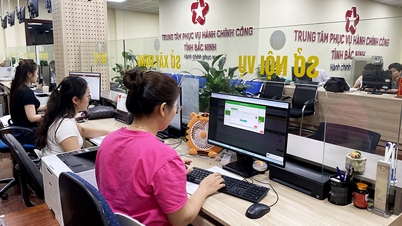
Health communication and education for women at Dong Ky Health Station. |
Adhering to that focus, Bac Ninh's health sector is shifting its strategy from treating illnesses to providing comprehensive healthcare, from a passive to an active approach, from fragmented to integrated, with the people at the center. Dr. To Thi Mai Hoa, Director of the Department of Health, stated: "This requirement demands that healthcare facilities innovate their leadership thinking and implementation, and raising community awareness should be considered fundamental."
Another important solution is to strengthen public health management, organize regular check-ups, screen for non-communicable diseases, and implement a family medicine model. In reality, non-communicable diseases are on the rise, but most are only detected when severe complications have already developed, making treatment complicated and costly. Meanwhile, if screened and detected early, these diseases can be effectively controlled at a lower cost, reducing the burden on patients and the healthcare system.
| In reality, non-communicable diseases are on the rise, but most are only detected when severe complications arise, making treatment complicated and expensive. Meanwhile, if screened and detected early, these diseases can be effectively controlled at a low cost, reducing the burden on patients and the healthcare system. |
Therefore, shifting to disease prevention is not just a medical solution, but a strategy for developing a sustainable healthcare system. From the grassroots level to hospitals, many models for screening and managing non-communicable diseases have been implemented, gradually concretizing the goal of early disease prevention.
In early April, in response to National Health Day, Dai Dong Health Station collaborated with hospitals in the province to organize free health check-ups for the local people.
According to Dr. Nguyen Thi Tham, Director of Dai Dong Health Station, the area has 3 industrial zones, a large and complex population, and people from many regions. However, awareness of regular health check-ups is uneven, especially among the working-age population. Despite this, with coordinated efforts, 100% of the villages (18/18) have now had health check-ups organized; the number of elderly people participating reached 3,324/6,129 (54.23%), and 184 people in the 40-59 age group have initially been screened.
Through this activity, the station has detected and managed many cases at risk of non-communicable diseases. Specifically: 376 people with pre-hypertension and hypertension (of which 18 cases have been admitted for treatment), 87 people with pre-diabetes and diabetes, and 256 people with dyslipidemia. The station is gradually establishing individual health management records, monitoring, and providing long-term treatment advice for the people.
"The local disease pattern is showing an increasing trend towards non-communicable diseases, which develop silently but have many dangerous complications. Therefore, early screening and continuous management at the grassroots level are extremely necessary," Dr. Tham emphasized.
Similarly, Thuan Thanh Health Station is also stepping up its efforts in managing non-communicable diseases in conjunction with proactive prevention. Dr. Nguyen Van Lieu, Director of the station, said that the station is currently managing nearly 4,000 people with non-communicable diseases, with hypertension accounting for the highest percentage at nearly 2,100 cases.
From the beginning of 2026 to the present, the health station has coordinated the screening of non-communicable diseases for more than 800 people aged 40 and above. In 2026, the unit aims to screen 17,387 out of 19,581 people in this age group, striving to basically complete the target in the second and third quarters. To achieve the set goal, Thuan Thanh Health Station will continue to strengthen coordination with all levels and sectors, enhance propaganda and mobilize people to participate in screening, thereby expanding coverage, early detection and effective management of diseases right at the community level.
The shift from "treating" to "preventing" disease goes beyond simply controlling non-communicable diseases; it encompasses everything from prevention and early detection to continuous health management for every individual. When the healthcare system operates in a coordinated manner, and people change their health care habits, disease prevention will become a sustainable foundation for improving quality of life and reducing the burden of treatment.
Source: https://baobacninhtv.vn/chuyen-manh-tu-duy-tu-chua-benh-sang-phong-benh--postid445514.bbg
![[Image] Nearly 125,000 Hanoi students completed the Literature exam for the 10th grade entrance exam.](https://vphoto.vietnam.vn/thumb/1200x675/vietnam/resource/IMAGE/2026/05/30/1780117233041_ndo_br_thiet-ke-chua-co-ten-2-png.webp)




























![[Photo] Admire the coral "masterpiece" amidst the million-year-old heritage of Dak Lak province.](https://vphoto.vietnam.vn/thumb/1200x675/vietnam/resource/IMAGE/2026/05/30/1780107638639_y25-jpg.webp)













































































Comment (0)