

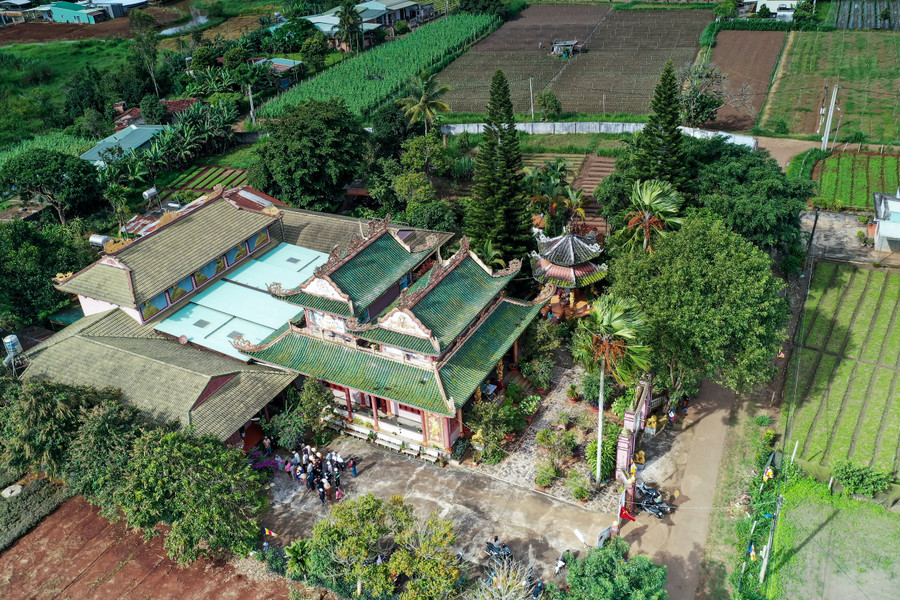
The imprint of the people of Binh Dinh on the plateau.
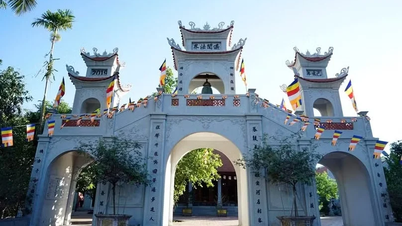
On an autumn afternoon, the bells of An Thanh Pagoda resonate amidst the vibrant meditation garden, revitalized after days of rain. This small pagoda, nestled among vegetable gardens and rice paddies in Hamlet 2 (New An Phu Ward), is a tranquil place of meditation, deeply connected to generations of people in this mountain town.
But few people know that this is the first Buddhist temple for women to be established on the Pleiku plateau, associated with the migrants from Binh Dinh who came to clear land and establish villages from the 1920s.
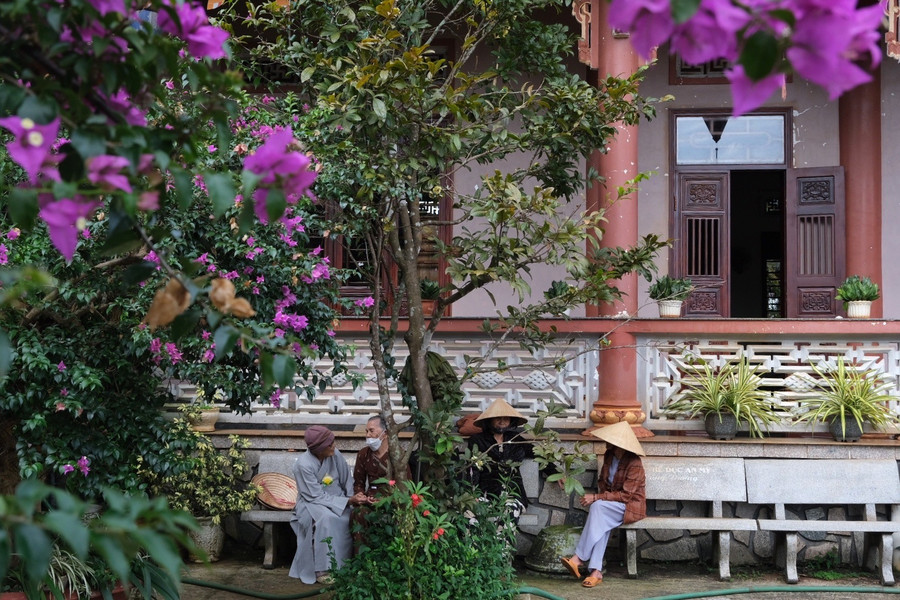
Nun Thich Nu Hanh Thien, abbess of An Thanh Pagoda, recounted: Initially, this place was just the simple house of Mr. and Mrs. Nguyen Mai Luat and Tran Thi Hanh (from Phu My, formerly Binh Dinh province). Childless and devout Buddhists, they transformed their home into a place of worship and a gathering place for Kinh people who had migrated from the lowlands to this red basalt land.
After the couple passed away, the Buddhist followers invited Venerable Nun Tam Hoa, the abbess of Tam An Pagoda (Quy Nhon), to An Phu to continue spreading Buddhist teachings, growing vegetables and rice, expanding the pagoda's land, and gradually forming a village pagoda in this fertile area.
To date, Venerable Nun Hanh Thien is nearly 90 years old, the longest-serving member of the first nun's temple in the Pleiku plateau. Sharing her feelings beside the ancient yellow apricot blossom trees she planted to ease her longing for Venerable Nun Tam Hoa, Venerable Nun Hanh Thien softly said: "Every spring, the apricot blossoms seem to bring back the image of my former teacher. I also see the image of my homeland, Binh Dinh, in the golden color of the apricot blossoms."
An Thanh Pagoda is not only the earliest Buddhist relic in the highland city, but also the first piece in the history of the settlement of Vietnamese villages in Gia Lai . According to Dr. Luu Hong Son, an official at the Pleiku Museum: "This is a place that brings together information, memories, and culture of one of the first Vietnamese villages in Pleiku, clearly showing the spiritual life, beliefs, and culture of the Kinh people when they first set foot on this new land."
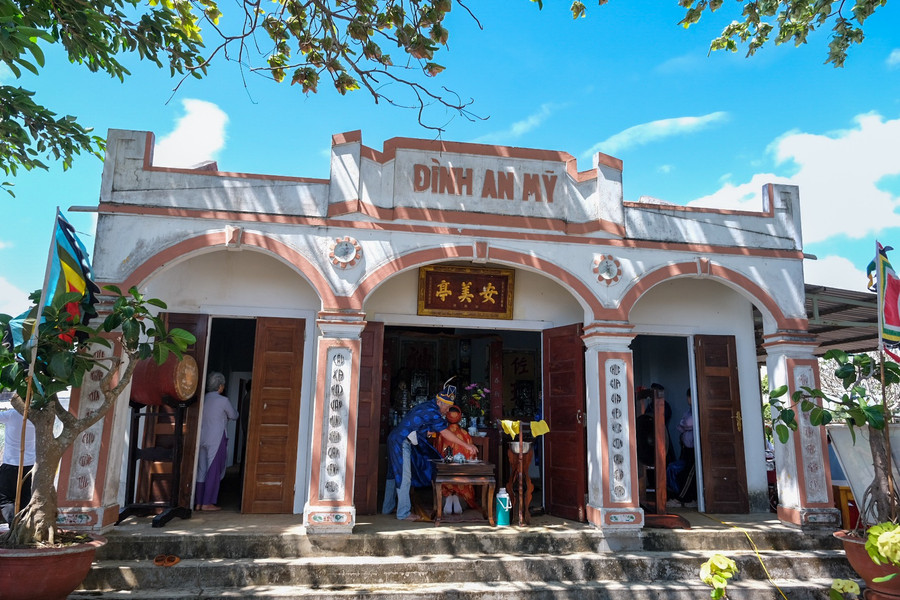
Not far from An Thanh Pagoda is An My Village communal house—another relic of the pioneers who settled this land. Built in 1920, the communal house received royal decrees from the Nguyen Dynasty twice. Every year, during the Spring and Autumn festivals, the people gather here to commemorate the merits of those who opened up this land.
A connection forged from the past to the present.
For over 100 years, from the pioneering generation who settled the land, the people of Binh Dinh have created a stable community, shaping a unique cultural identity in this fertile land at the gateway to the city of Pleiku. Among the later generations of founders, one cannot fail to mention Mr. Doan Tien Quyet - the father of businessman Doan Nguyen Duc (Chairman Duc).
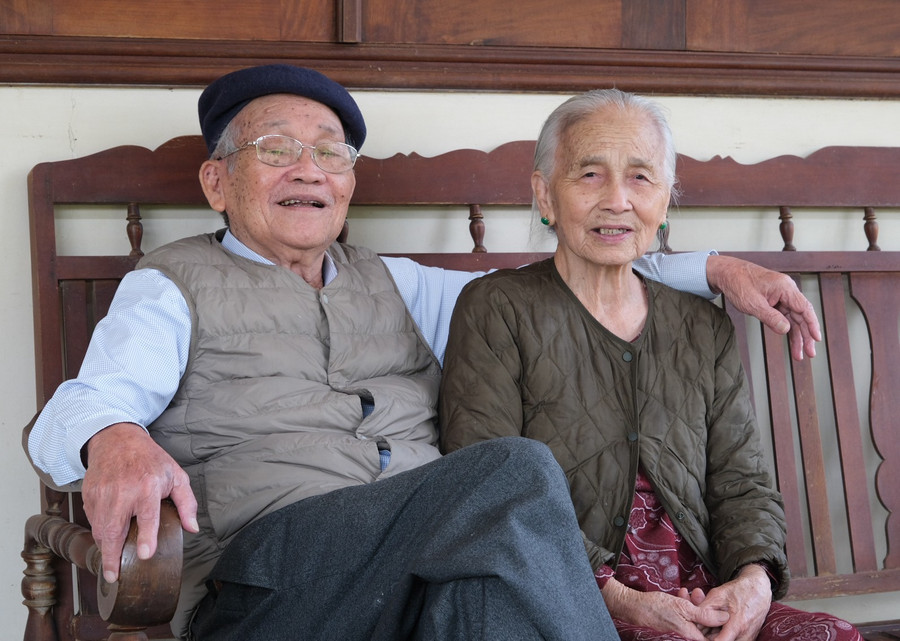
Mr. Quyet has a cheerful smile and a hearty way of speaking with a distinctive "Nẫu" accent. In 1965, he brought his wife and three young children from Nhon My (formerly An Nhon, Binh Dinh) to the An Phu area with "three no's": no house, no money, and no documents.
As the son of Heroic Vietnamese Mother Nguyen Thi Nhi, and bearing the identity of a revolutionary, he had to live quietly at the gateway to the town occupied by American soldiers. He recounted: Living in a new land but surrounded by people originally from Binh Dinh, he heard stories with the flavor of his homeland every day, so he always felt a sense of familiarity.
The people of An Phu still affectionately call him "Uncle Six Quyet." His name is associated with the changes in An Phu, from healthcare and education to cultural institutions. In particular, he laid the foundation for the tradition of valuing education in this region.
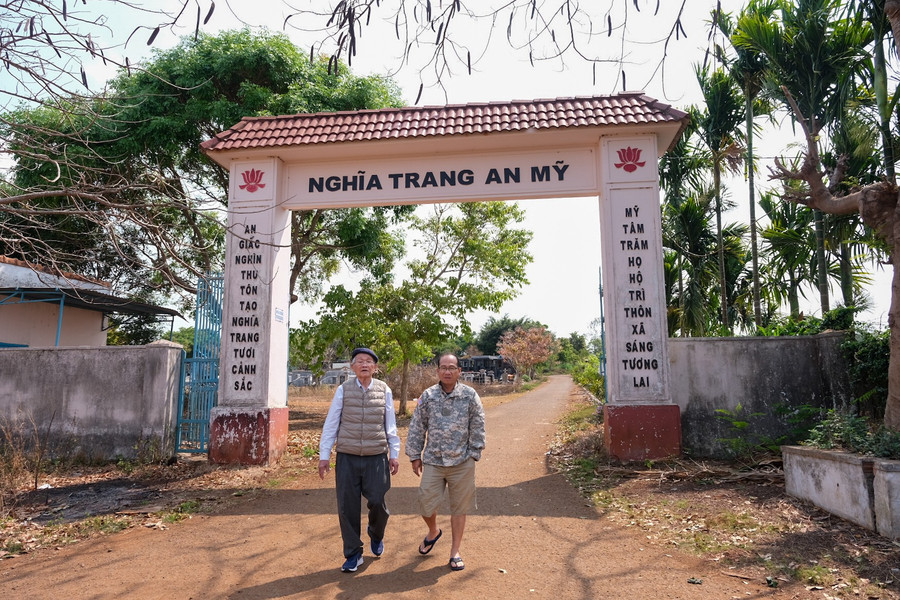
He served as the first head of the An Phu commune health station after liberation for 20 years. When the An My communal house was destroyed during the war, Mr. Quyet mobilized his descendants and relatives to donate money to rebuild the main hall and restore the old communal house. In front of the communal house gate, he placed a pair of couplets: "Restoring the old communal house, forever remembering the pioneers who opened the land / Renovating the old gate, forever remembering the founders."
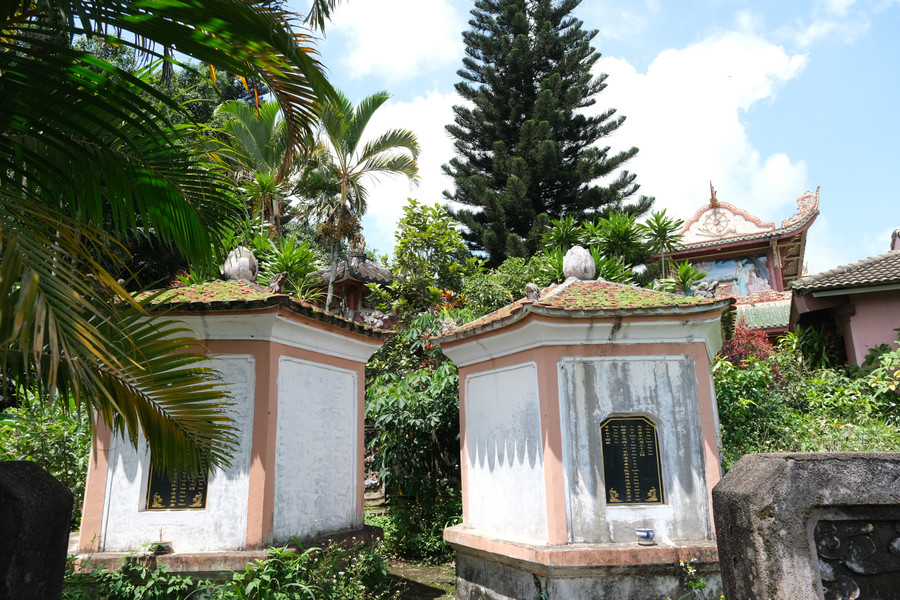
Not stopping there, he also raised over 2 billion VND to redevelop the An My cemetery, planting flowers, erecting gates, and building proper fences. His generosity is inscribed in another couplet: "Peaceful rest for eternity, the cemetery is beautified with vibrant scenery / A virtuous heart protects the village, bringing a bright future."
Normally, people tend to return to their roots, to where their ancestors are buried. But Mr. Sau Quyet did the opposite, moving all the ancestral graves of himself and his wife from Binh Dinh to An My cemetery.
Leading us through the rows of tombstones beneath the trees, he mused, "Now, I rest in peace in this land. People say that foreign lands have become home, but An Phu has become the flesh and blood of countless generations of people from this region for hundreds of years."
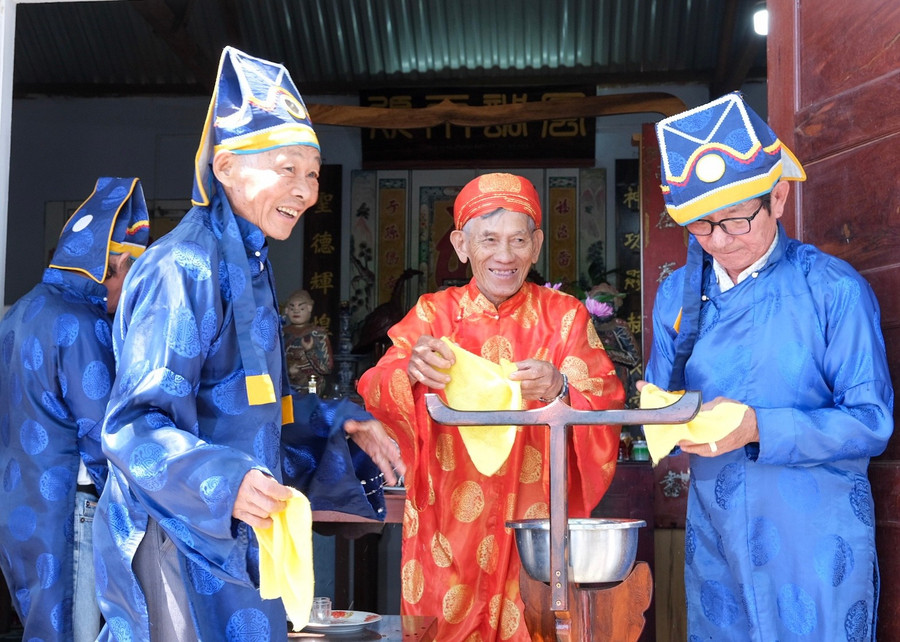
Mr. Quyet also established the Doan Dao Scholarship Fund (named after his father), promptly rewarding studious children and grandchildren. Many members of his family and lineage have become masters and doctors abroad. This spirit has spread throughout the region.
The elders here say that most of the people from Binh Dinh who came here were poor and only focused on working. However, An Phu today is a shining example of promoting education in the entire province, thanks in large part to Mr. Quyet's efforts.
Mr. Doan The Nghe (Hamlet 2, An Phu Ward) shared: “From the village temple and cemetery to education, the mark of Mr. Sau Quyet can be seen everywhere. People saw him going from house to house campaigning for the scholarship fund, which raised awareness about this work. A person like him doesn't need to do such arduous work. But that's just his nature; he has always lived with kindness and generosity since his impoverished days, not because his son is a billionaire as some people say.”
An Phu, once a rice-growing area, is now the largest vegetable and flower producing region in the western part of the province. After merging with Chu A commune and Thang Loi ward, An Phu ward has expanded its space and taken on a new appearance. But deep within the red soil of this place, the memories of the "pioneers" who came from the sea remain intact, as an integral part of the region's culture.
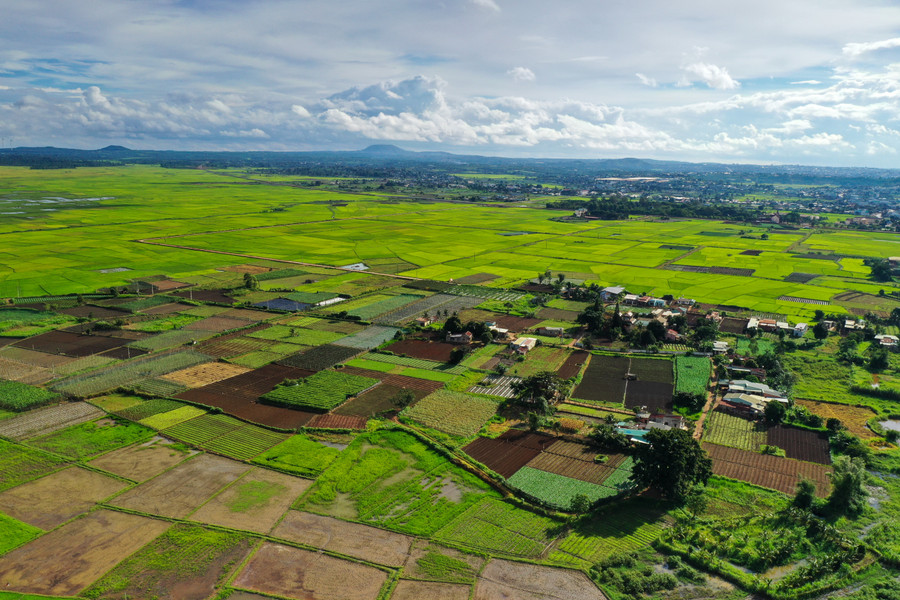
Thanks to the diligent hands of the "saltwater" people more than a century ago, the barren land has been transformed into villages and towns. In the new rhythm of life in this unified land, An Phu stands as a vibrant museum of memories, where every communal house, temple courtyard, and row of trees tells the story of the union between forest and sea, of the pioneering spirit deeply ingrained in the plateau's soil. And from that underlying current, Gia Lai stands firm on its journey forward, built upon a strong cultural foundation rooted in the past.
Source: https://baogialai.com.vn/chuyen-nguoi-binh-dinh-lap-lang-tren-cao-nguyen-post562818.html




























































Comment (0)