

Besides the quantity of food, the timing of meals is also an important factor affecting your health and weight.
In the United States, dinner is typically the largest meal of the day. Conversely, for Spaniards and some other Europeans, lunch is the largest meal. This difference continues to motivate scientists to investigate how meal times and meal timing might affect health, according to The New York Times.
Avoid making dinner the biggest meal of the day.
Dr. Nour Makarem, from the Mailman School of Public Health at Columbia University (USA), stated that numerous studies demonstrate that people who consume more calories in the evening tend to have an increased risk of obesity, type 2 diabetes, high blood pressure, and inflammation levels.

Eating a large dinner can easily increase the risk of obesity.
Dr. Frank AJL Scheer, director of the circadian rhythm medicine program at Brigham and Women's Hospital in Boston, explains that in the morning, your body is ready to process a large meal, absorb nutrients, distribute them, and metabolize them into energy for the day's activities. But as the day progresses, metabolic organs, such as the liver and pancreas, gradually become more responsive.
If you eat two identical meals, one in the morning and one in the evening, your blood sugar will spike and remain high for a longer period after dinner, says Dr. Scheer.
Professor Marta Garaulet, a physiology professor at the University of Murcia (Spain), also confirmed that melatonin—a hormone that signals bedtime—rises 1 to 2 hours before sleep begins, inhibiting insulin secretion from the pancreas and making blood sugar difficult to control.
Experts also point out that eating large meals at night increases fat storage during sleep; increasing the risk of high blood pressure, chronic inflammation, obesity, and type 2 diabetes due to consistently high blood sugar levels.
From another perspective, those who consume the most calories at breakfast or lunch tend to lose slightly more weight than those who consume the most calories at dinner. People also feel less hungry throughout the day when their largest meal is breakfast compared to dinner.
Prioritize a nutritious breakfast and choose healthy foods.
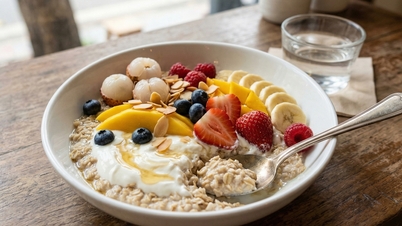
Alexandra Johnstone, a professor of nutrition at the University of Aberdeen in Scotland, advises us to prioritize a nutritious breakfast, including protein-rich foods such as Greek yogurt, eggs, or beans.
Dr. Nour Makarem suggests finding ways to consume more calories early in the day, avoiding eating late in the evening. If you must eat late at night, steer clear of processed foods and those high in sugar and sodium.
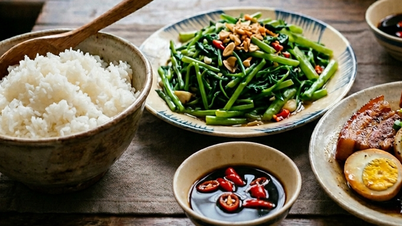
Instead, prioritize lower-calorie foods that keep you feeling full without raising your blood sugar, such as beans, grilled fish, chicken breast, vegetables, fruits, and whole grains.
Experts suggest that eating a hearty lunch will reduce hunger in the evening and make you less tempted by late-night snacks.
Source: https://thanhnien.vn/co-nen-an-it-hon-vao-buoi-toi-185250216195424407.htm

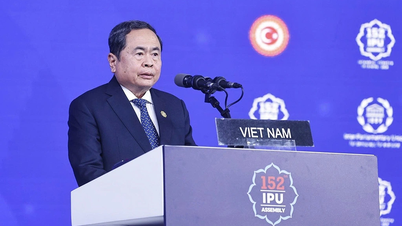
![[Photo] National Assembly Chairman Tran Thanh Man attends the policy seminar to promote Vietnam-Türkiye cooperation.](https://vphoto.vietnam.vn/thumb/1200x675/vietnam/resource/IMAGE/2026/04/16/1776351415367_vna-potal-chu-tich-quoc-hoi-tran-thanh-man-du-toa-dam-chinh-sach-thuc-day-hop-tac-viet-nam-tho-nhi-ky-8705791-jpg.webp)

















![[Image] Bridges and roads connecting the eastern part of Ho Chi Minh City](https://vphoto.vietnam.vn/thumb/1200x675/vietnam/resource/IMAGE/2026/04/16/1776328595108_ndo_br_bh-vt5-jpg.webp)




























![[Infographic] Details of the Hanoi-Quang Ninh High-Speed Railway Project](https://vphoto.vietnam.vn/thumb/402x226/vietnam/resource/IMAGE/2026/04/16/1776338188424_anh-man-hinh-2026-04-16-luc-18-16-10.png)

![[Photo] National Assembly Chairman Tran Thanh Man meets with the Speaker of the Georgian Parliament](https://vphoto.vietnam.vn/thumb/402x226/vietnam/resource/IMAGE/2026/04/16/1776338494029_anh-man-hinh-2026-04-16-luc-18-21-21.png)


















Comment (0)