

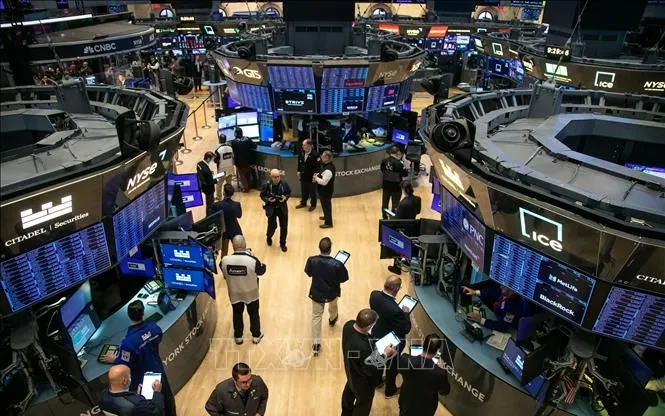
Bank stocks led the decline on Wall Street.
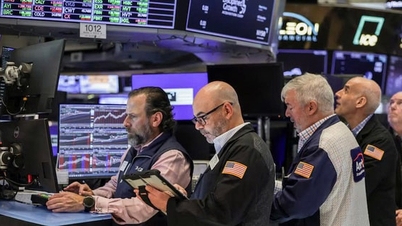
US stocks fell on January 13th, as financial and banking stocks came under pressure amid President Donald Trump's proposal to cap credit card interest rates and the prospect of the Fed not cutting interest rates anytime soon.
Wall Street closed in the red, led by declines in bank stocks. The Dow Jones index fell 0.8%. The S&P 500 lost 0.19%, while the Nasdaq declined 0.1%.
Market sentiment was influenced by US inflation data for December. The consumer price index was lower than expected, but still at a high level, not enough for the Fed to have grounds to continue cutting interest rates in the near future. This led to a revision of expectations for a rapid easing cycle.
The financial sector is also facing additional pressure from policy risks, as the White House proposed a 10% cap on credit card interest rates. This proposal raised concerns about the profit margins of major card-issuing banks, including JPMorgan Chase, causing bank stocks to reverse course after a period of strong gains.
JPMorgan Chase CEO Jamie Dimon stated that the US economy remains "resilient." However, the investment banking giant's performance fell short of expectations, and analysts questioned JP Morgan's plans for large-scale capital spending.
Bank stocks and credit card companies have been under significant pressure following President Donald Trump's recent proposal to cap credit card interest rates at 10%. This is one of several surprising market announcements made by Trump recently.
Pat Donlon, an expert at the Fiduciary Trust Company, believes the market is disoriented by President Trump's statements. He says the current situation is similar to April 2025, when tariff announcements caused significant volatility, forcing investors to constantly monitor Trump's posts on Truth Social.
Source: https://vtv.vn/co-phieu-ngan-hang-dan-dau-da-giam-pho-wall-100260114095038668.htm



























![[Photo] Reception to welcome General Secretary and President To Lam and his wife on their State visit to the Philippines](https://vphoto.vietnam.vn/thumb/1200x675/vietnam/resource/IMAGE/2026/06/01/1780295488620_vna-potal-chieu-dai-chao-mung-tong-bi-thu-chu-tich-nuoc-to-lam-va-phu-nhan-tham-cap-nha-nuoc-toi-philippines-8798060-7855-jpg.webp)




























































Comment (0)