

Tens of thousands of bridges are "aging".
The Francis Scott Key Bridge has stood for 47 years, and in that time, it has never suffered a major shock that would have made anyone think the bridge would collapse.
But when Dali, a container ship weighing over 100,000 tons, crashed into the Francis Scott Key, the bridge collapsed in less than a minute.
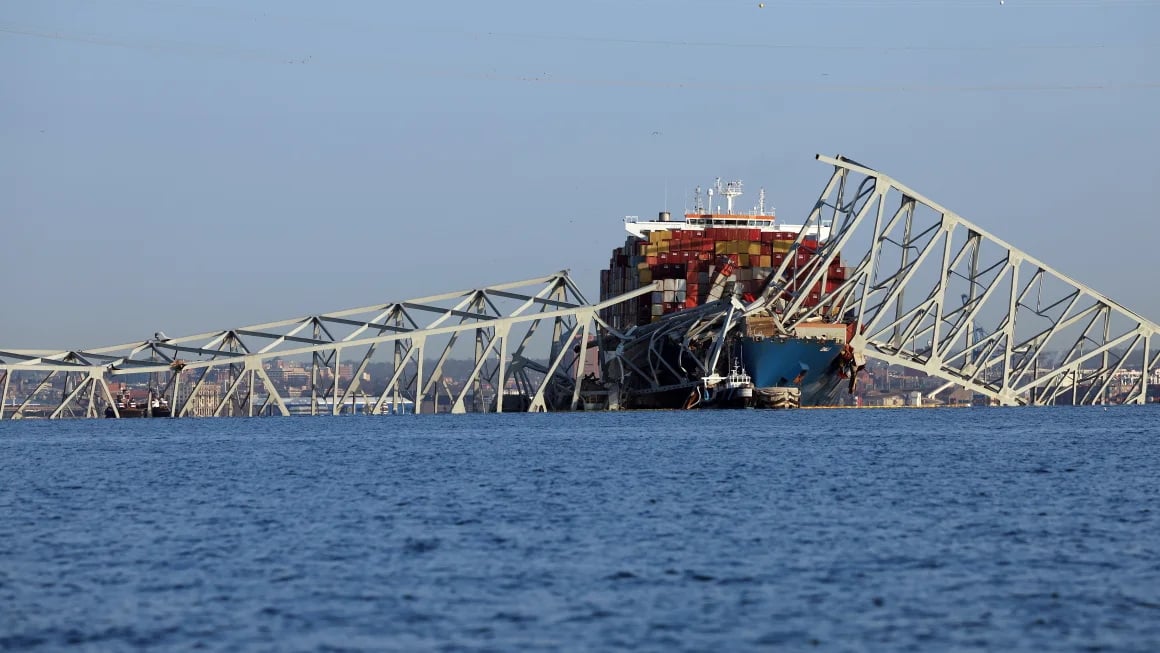
The Francis Scott Key Bridge completely collapsed after being struck by a container ship on March 26. Photo: CNN
While such a catastrophic collapse may not have been entirely predictable, bridge collapses due to collisions are not unprecedented and are preventable.
Recent federal safety inspections of the Francis Scott Key Bridge found it to be in “stable” condition, and the Maryland governor said maintenance of the bridge was “fully compliant.” But thousands of other bridges across America are in dire straits.
According to the American Society of Civil Engineers (ASCE), in the United States, 46,000 bridges are structurally outdated and in a state of "deterioration," and 17,000 bridges are at risk of collapsing after just one impact.
Engineers and other infrastructure experts say extreme weather events, increasingly heavy trucks, and collisions from larger container ships pose significant risks to American bridges.
According to the latest infrastructure report from the American Society of Civil Engineers (ASCE), released in 2021, approximately 46,100 of the 617,000 bridges across the United States, or 7.5%, are considered structurally unsound and in poor condition.
Factors that threaten bridges
Many older American bridges are vulnerable to extreme weather events, such as earthquakes or hurricanes. According to a 2021 ASCE report, nearly 21,000 bridges were found to be at risk of foundation damage during extreme weather events.
A 2016 report by the U.S. Congress indicated that the seismic resilience of the U.S. highway system has improved in recent decades thanks to investments in new infrastructure.
However, not all highways are being upgraded, and there is still no way to build infrastructure that is both cost-effective and able to withstand the most severe earthquakes, the report added.
Furthermore, the bridges are also being negatively impacted by heavier trucks than at the time they were designed. The ASCE report states that these heavier trucks, which can exceed 40 tons, risk overloading bridge components, causing fatigue and metal cracking, and reducing the bridges' lifespan.
Outdated infrastructure, harsh weather, and larger vehicles aren't the only concerns. More than 17,000 bridges are at risk of collapsing after just one impact, known as bridges at "critical risk of failure."
This means that if subjected to sufficient force in the right place, a large section or the entire bridge could collapse, as was the case with the Francis Scott Key Bridge.
What are the possible protection solutions?
Experts say there is an urgent need to improve or protect older bridges against increasingly larger, modern ships. The Dali, which struck the Francis Scott Key Bridge on Tuesday, was 300 meters long — nearly twice the length of the ships used when the bridge was built in the 1970s.
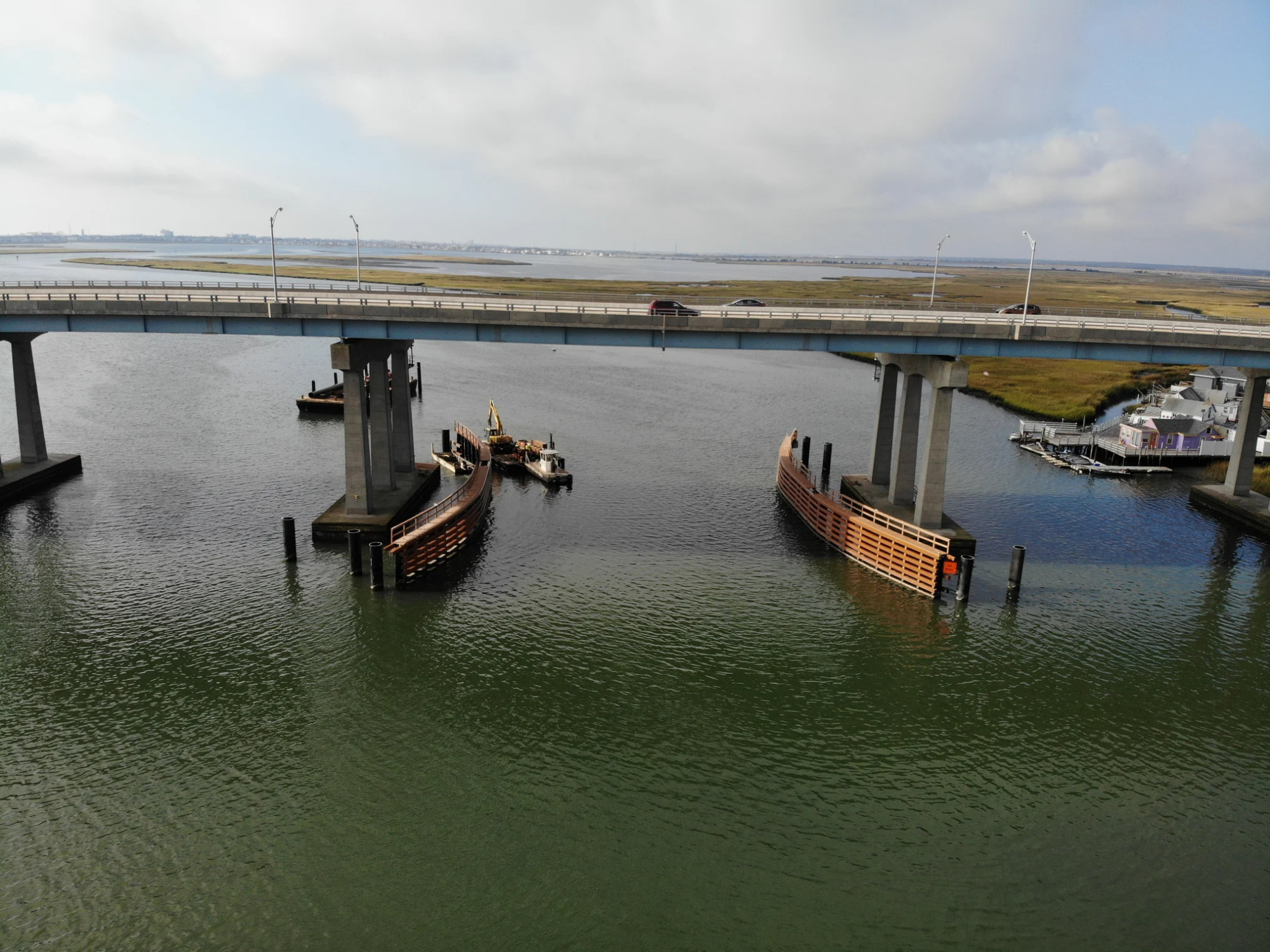
Fenders are built to protect the bridge piers. Photo: CCG
According to a 2018 report by the International Association of Waterway Infrastructure (PIANC), between 1960 and 2015, as many as 35 major bridges across the planet collapsed due to collisions with ships or barges, resulting in 342 fatalities.
In the first three months of this year, in addition to the collapse of the Francis Scott Key Bridge in Baltimore, a bridge in southern China was cut in half and a section of a bridge in Argentina also broke after large commercial ships collided with them.
“The ships are getting bigger and bigger, and container ports are focusing on increasing cargo handling,” Ananth Prasad, president of the Florida Transportation Builders Association, told CNN. “But in addition to encouraging larger container ships, we also need to protect the bridges in these one-off situations.”
According to Mr. Prasad, to minimize the possibility of ships colliding with bridges, it is necessary to build them with safety contingency plans and protective measures around the dangerous points of the bridge.
These could be rows of wooden or steel piles driven into the seabed or riverbed and connected above the water to form a rigid barrier protecting the bridge; or "mudguards." These structures surrounding the bridge piers are designed to deflect certain forces.
Mr. Prasad stated that adding these protective measures would be faster and more cost-effective than building a new bridge, and even more so considering the tens of thousands of bridges in the United States that are deteriorating or in unsafe condition.
Nguyen Khanh (according to CNN)
Source


![[Photo] Prime Minister Pham Minh Chinh presides over the conference announcing the establishment of the International Finance Centre in Vietnam.](/_next/image?url=https%3A%2F%2Fvphoto.vietnam.vn%2Fthumb%2F1200x675%2Fvietnam%2Fresource%2FIMAGE%2F2025%2F12%2F21%2F1766309817714_ndo_br_dsc-3400-jpg.webp&w=3840&q=75)
![[Photo] Prime Minister Pham Minh Chinh presides over a meeting on private sector economic development.](/_next/image?url=https%3A%2F%2Fvphoto.vietnam.vn%2Fthumb%2F1200x675%2Fvietnam%2Fresource%2FIMAGE%2F2025%2F12%2F20%2F1766237501876_thiet-ke-chua-co-ten-40-png.webp&w=3840&q=75)






























































































Comment (0)