

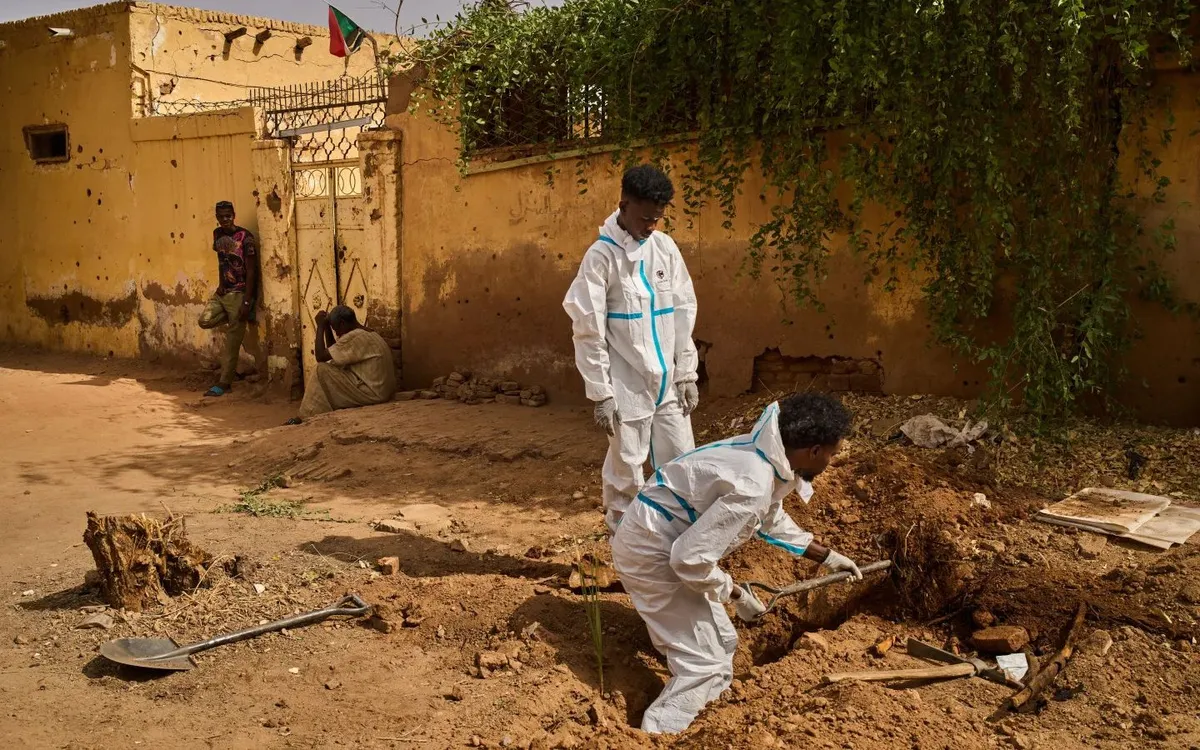
Forensic workers exhume the body of Mohammed Alsawi in Omdurman, Sudan, on April 20, 2026. (Photo: AP)
The war in Sudan has left more than 8,000 people missing, according to the International Committee of the Red Cross (ICRC) – an international humanitarian organization dedicated to assisting victims of conflict and disaster. Behind this number lies the pain of many families, who do not know whether their loved ones are alive or dead.
Azaher Abdallah still remembers her husband's last phone call. Fahmy al-Fateh said he had finished his work for the day and would stop by the market before going home. But he never returned. At the time, he was serving in the Sudanese army in the fighting to retake the capital Khartoum from the Rapid Support Forces (RSF) – a paramilitary group fighting in the Sudanese conflict.
According to Abdallah, her husband was last seen leaving a military base in Khartoum on a motorcycle. For over a year, she has searched the entire city, visited hospital morgues, and sought assistance from the military. Their three-year-old son still shouts with joy whenever he sees a motorcycle pass by, thinking his father has returned.
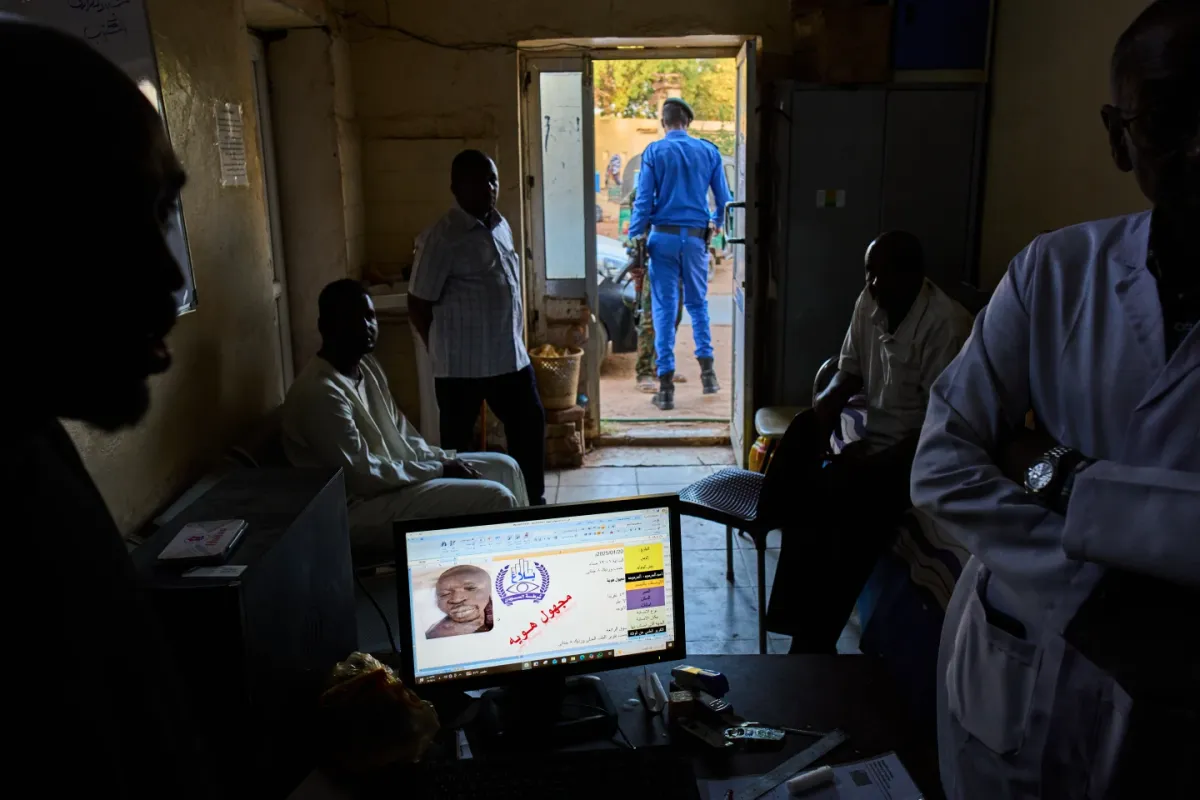
A screen displays the profile of an unidentified body at Al Nao Hospital in Omdurman, Sudan, on April 18, 2026. (Photo: AP)
"I would feel more at ease knowing something. That would be better than not knowing what happened to him, not knowing whether he is alive or dead," she said.
The ICRC stated that over 1,000 missing person cases have been resolved, but did not disclose how many are alive or deceased. Experts believe that the uncertainty surrounding the whereabouts of loved ones can cause lasting psychological trauma for the victims' families.
In Khartoum province, many missing people are believed to be buried in unmarked graves. During intense fighting, transporting bodies to cemeteries became too dangerous, forcing people to bury them temporarily near their homes, on sports fields, or along roadsides.
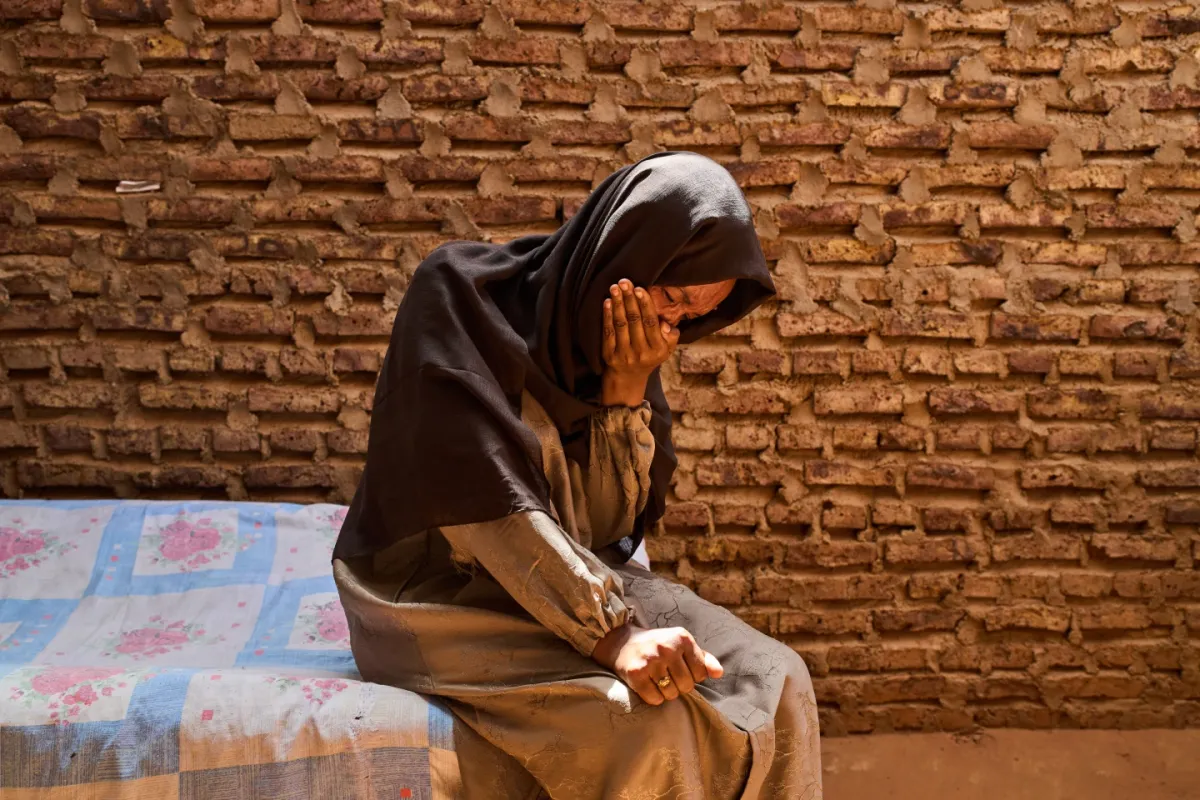
Azaher Abdallah was visibly emotional as she recounted her journey searching for her missing husband in Omdurman, Sudan, on April 19, 2026. (Photo: AP)
Khartoum officials said nearly 30,000 of the approximately 50,000 bodies have been removed from temporary burial sites. About 10% of the reburied bodies remain unidentified. Local forensic authorities are collecting DNA samples from these bodies, hoping to match them with relatives in the future.
For many families, finding the remains of a loved one doesn't always end the grief. Abubakar Alswai had to wait over a year to move the remains of his 73-year-old brother, Mohamed, from a temporary burial site in front of their house to a public cemetery. He said that at least now his brother has a proper resting place.
Source: https://vtv.vn/cuoc-chien-o-sudan-khien-hon-8000-nguoi-mat-tich-100260522132834556.htm

![[Image] Hanoi's urban life under the challenge of a "scorching hot" environment](https://vphoto.vietnam.vn/thumb/1200x675/vietnam/resource/IMAGE/2026/05/25/1779706979265_nang-nong-t5-2026-minh-duy-7-4636-jpg.webp)


![[Image] Close-up view of the interchange connecting the two expressways and Long Thanh Airport.](https://vphoto.vietnam.vn/thumb/1200x675/vietnam/resource/IMAGE/2026/05/25/1779703378210_ndo_br_z7863716673926-224453a31600126cce10622af6290afd-4549-jpg.webp)




































































Comment (0)