

In the future, technology and national security will be inseparable in a divided world .
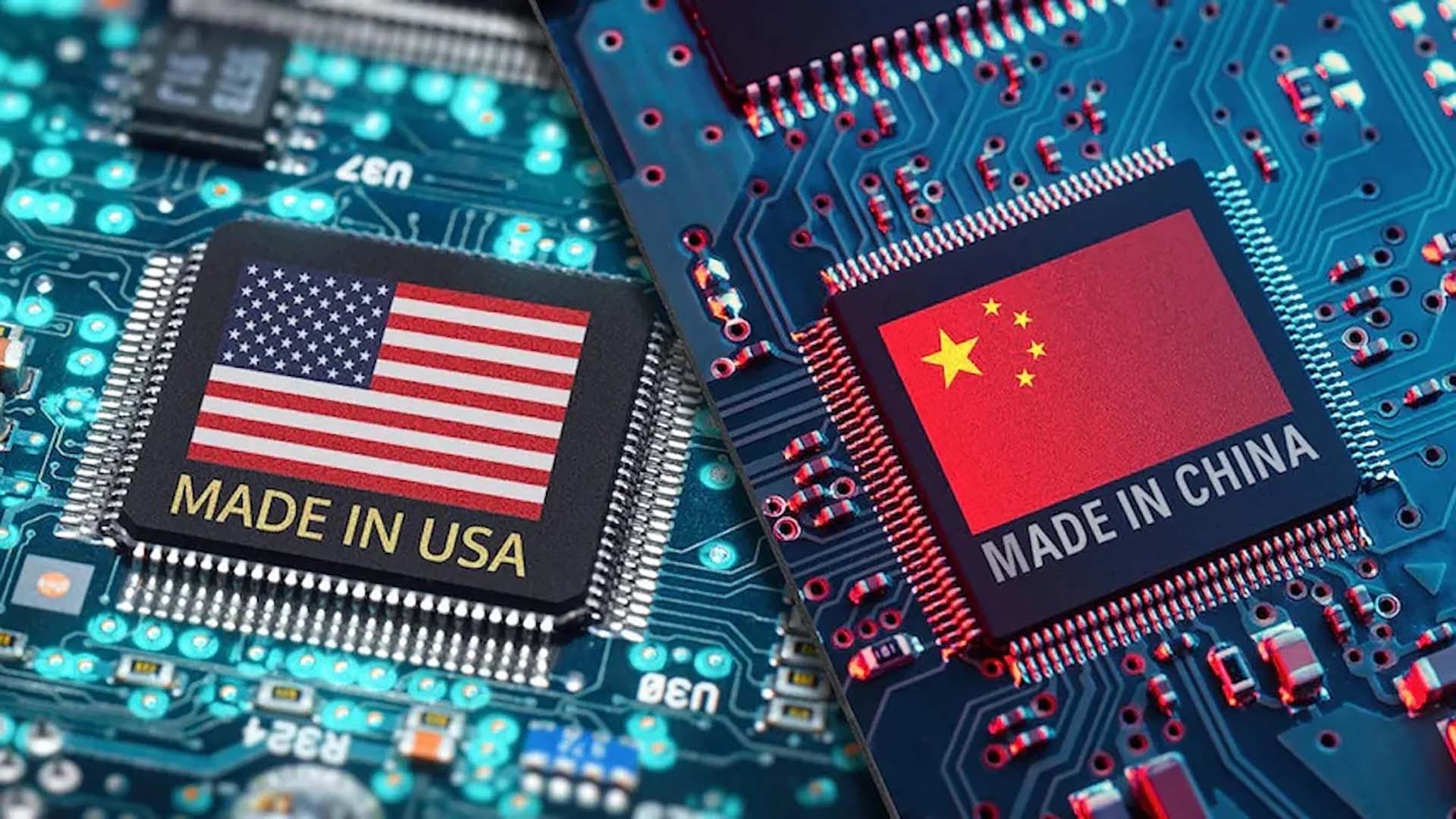 |
| The competition for dominance in the semiconductor industry between China and the United States is becoming increasingly fierce. (Source: pressxpress.org) |
China is striving to establish itself as the world's leading science and technology superpower as part of its comprehensive national security strategy, launched in 2014.
Semiconductor chips are central to economic security strategy, as they are essential for all civilian and military technologies. Semiconductor chips will help determine whether Beijing achieves its geoeconomic and geopolitical goals in the coming decades. Competition between China and the West in this field will continue to intensify in the future.
The US is increasing restrictions.
When U.S. President Joe Biden took office in 2021, there were growing concerns that new Western technologies were helping China become a formidable military rival, capable of quickly surpassing the U.S. to become the leading artificial intelligence (AI) superpower.
Over the past decade, the West has witnessed increasing disruptions to the supply chains of medical equipment, semiconductors, and critical raw materials. Against this backdrop, the U.S. has taken decisive steps to limit China's influence in these sectors.
In August 2022, the US enacted the CHIPS Act, or Semiconductor Manufacturing Incentives Act, aimed at shifting some of the production of semiconductors from overseas back to the US and increasing international competitiveness, reducing dependence on imports and supply chain disruptions. The CHIPS Act planned to invest $52 billion in developing manufacturing in the US and over $24 billion in related tax incentives.
Two months later, the White House announced a series of sanctions and control measures aimed at protecting U.S. intellectual property and national security, while making it difficult for China to obtain or manufacture advanced chips of 14-16 nanometers or smaller. The U.S. also banned the supply of advanced graphics processors from Nvidia to Russia and China, which are used in the construction of supercomputers. By March 2023, the CHIPS Act had tightened its grip on China, with a ban on investments in the production of chips with a topology smaller than 28 nanometers located within China.
Currently, the US holds 10% of the global semiconductor manufacturing market share, but dominates 39% of the value chain, while Japan, Europe, South Korea, and Taiwan (China) hold 53%.
While the US leads in upstream integrated circuit design, the Netherlands and Japan hold a strong position in midstream integrated circuit manufacturing, as well as packaging and testing. Taiwan (China) produces 92% of the world's most sophisticated chips, ranging in size from 3-5 nanometers, and 80% of those 7 nanometers or smaller.
The US has also stepped up cooperation and coordinated sanctions with Japan, the Netherlands, and other countries to strengthen export controls on high-performance semiconductor manufacturing equipment. For example, in 2018, the Dutch company ASML agreed to supply advanced EUV lithography equipment to the China Semiconductor Manufacturing International Corporation (SMIC). With extreme ultraviolet (EUV) lithography technology, transistors can be created at nanometer (nm) sizes. Under pressure from the US, the Dutch government subsequently withdrew from the agreement.
Recently, Japan also imposed controls on 23 types of chip technologies that Japanese companies can export to countries like China. Japanese companies are not as prominent as ASML of the Netherlands or TSMC of Taiwan, but they dominate several stages of the chip manufacturing process.
However, export controls in both the US and Japan do not restrict the supply of older generation chips to China. Therefore, Chinese chip manufacturers can still use outdated technology that is considered several generations behind their rivals TSMC of Taiwan and Samsung of South Korea, according to gisreportsonline.com.
China's reaction
Since 2015, Chinese President Xi Jinping has called for a national strategy to achieve self-reliance by reducing dependence on imports of critical technologies and components from the West. Beijing's "Made in China 2015" strategy set a target of increasing chip self-sufficiency from 10% to 70% by 2025. However, this has not been achieved. According to Topwar.ru, in 2022, this figure was only 16%. The target was then adjusted to 75% by 2030.
In 2023, Beijing imported record quantities of semiconductor equipment from the Netherlands, Singapore, and Taiwan (China) before the US implemented new export restrictions. Last summer, the country added $41 billion to the China Integrated Circuit Industry Investment Fund, launched in 2014 to boost the chip industry.
In total, Beijing is believed to have invested around $150 billion in the semiconductor industry to date, including research and development facilities – more than any other economy since 2015. In 2020, many reports suggested that SMIC would need seven years to catch up with Western companies currently leading in the technology. However, SMIC and Huawei have progressed rapidly, producing advanced 7-nanometer chips by 2023.
In response to US sanctions, China not only boosted domestic chip research and production but also banned imports of products from the American memory chip manufacturer Micron for critical infrastructure and other domestic sectors starting in May 2023 due to "serious security risks." In 2022, Micron produced a quarter of the world's DRAM memory chips, and China accounted for nearly 11% of its sales.
By July 2023, China restricted exports of two key rare earth metals, gallium and germanium, widely used in microelectronics, which are essential for the production of high-tech weapons, as well as batteries, displays, and many other high-tech products. China currently produces about 80% of the world's gallium and 60% of its germanium. Therefore, China's export restrictions significantly limited access for some foreign manufacturers to these critical materials and drove up prices due to few alternatives.
While seeking to improve its bargaining power with the U.S. in the short term, these policies also reflect China's efforts to become the most important supplier of many key raw materials and refined products. However, export cuts could also prompt the U.S. to accelerate projects to bring manufacturing back to the U.S. or shift production to friendly countries.
Since 2023, China has expanded the scope of its anti-espionage law to address unidentified “national security threats.” This program requires state-owned companies in the financial, energy, and other sectors to replace foreign software in their IT systems. These companies include more than 60 of China’s top 100 listed companies.
In late December 2022, Huawei, one of China's largest private companies, announced it had mastered a microchip design method previously monopolized by the West. This success opens up the prospect that China may finally be able to begin domestically producing some of the smallest and most powerful microchips, mastering a crucial chip manufacturing process. While it remains to be seen how far Huawei can challenge Western sanctions, China's ability to overcome bans and restrictions to develop an advanced semiconductor chip manufacturing industry is causing headaches for the West.
According to gisreportsonline.com, it's only a matter of time before China catches up with the US, even if it faces new sanctions. However, SMIC has been able to procure spare parts and technical services to maintain its 7-nanometer chip manufacturing base, despite increased US export controls. Furthermore, Huawei and SMIC are planning to produce the advanced 5-nanometer ASCEND 920 chip, narrowing the gap with Western 3-nanometer AI chips and potentially even 2-nanometer chips.
China's policies aimed at self-sufficiency and decoupling from the West, coupled with increased sanctions and export controls by the US and its allies, are escalating the global battle for the world's most advanced semiconductors and chips. However, this fierce competition presents an opportunity for China to break through and become a true "chip superpower" in the not-too-distant future.
Source: https://baoquocte.vn/khoa-hoc-cong-nghe-cuoc-dua-chua-hoi-ket-277478.html





























































































Comment (0)