

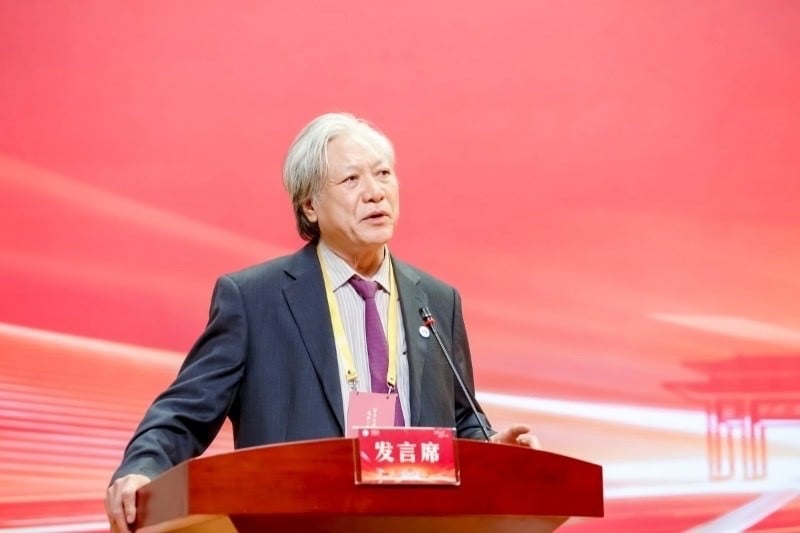
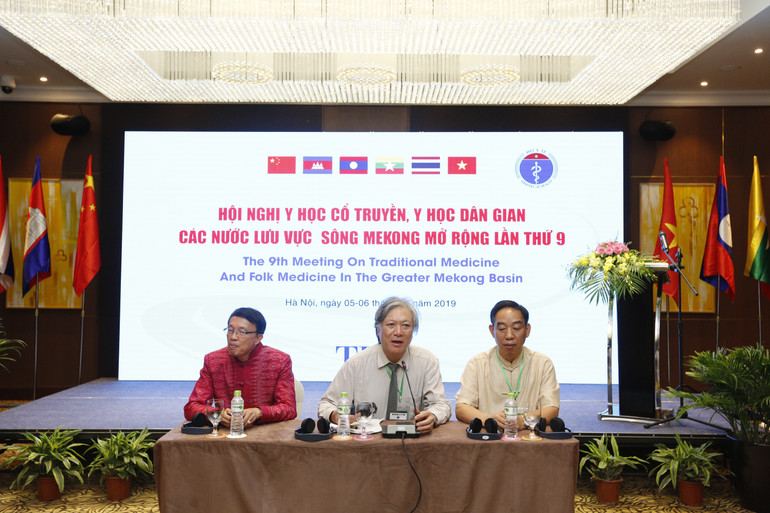
After graduating from the Military Medical University, Dr. Pham Vu Khanh was assigned to a unit. After a period of practical experience, around the mid-1980s, he continued his studies in Traditional Medicine at the Central Hospital of Traditional Medicine. There, he had the good fortune to study under and work alongside the renowned physician Thien Tich, Chairman of the Central Association of Traditional Medicine of Vietnam (1990-2000).
The next stage involved further education, in-depth treatment, participation in teaching and research, and the defense of a doctoral degree in China, followed by serving as the Director of the Department of Traditional Medicine - Ministry of Health for many years… We will only highlight the main aspects of the author's career path to show that this book was written by a physician who has held many professional, managerial, training, and scientific research positions. Therefore, this book contains conclusions and assessments of the actual situation in the field of Traditional Medicine in particular and healthcare in general, possessing significant practical value.
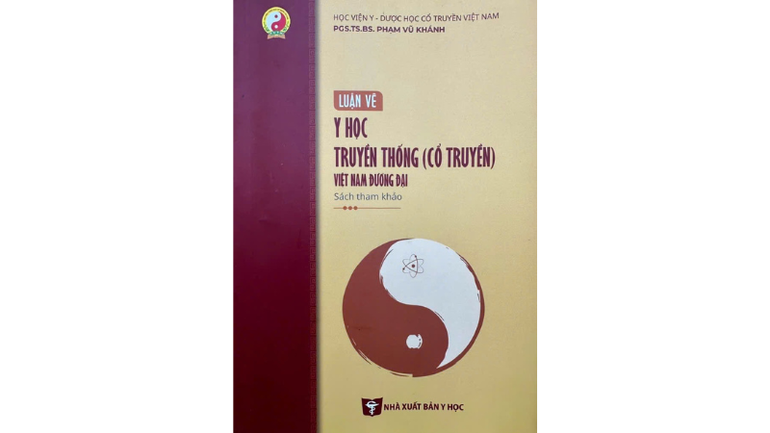
"A Treatise on Contemporary Vietnamese Traditional Medicine" (Medical Publishing House, May 2025) consists of 10 chapters, with 163 pages presented by topic, not delving into theory but directly addressing current shortcomings with the high responsibility of doctors and those in training and managing this field.
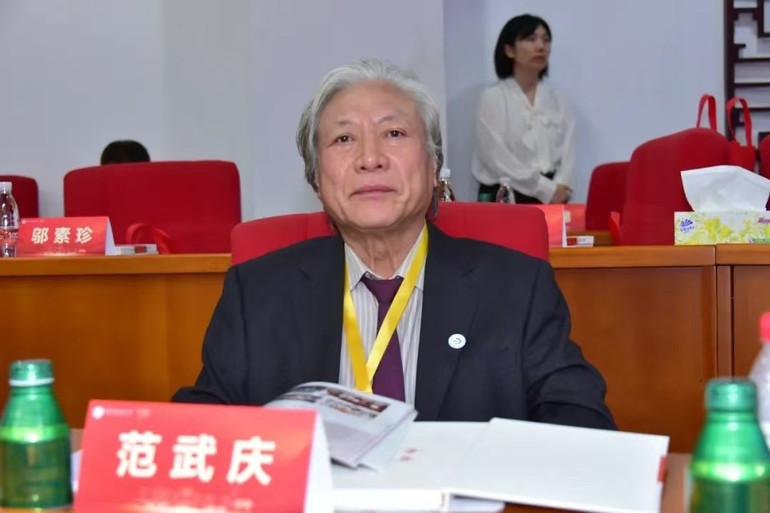
Chapter 1 briefly discusses seemingly simple concepts that are actually fundamental issues facing professionals in the field. How should we define traditional medicine, folk medicine, traditional folk medicine, traditional pharmacology, traditional medicine, traditional medicine, traditional pharmaceuticals…? How should we correctly understand Eastern (Vietnamese) medicine and Western medicine? Then there are the concepts of indigenous medicine, alternative medicine, complementary medicine, health supplements, functional foods… that have emerged later. Thus, in this new phase of integration, medicine is having to accept many new concepts and products directly related to public health.
Chapter 2, titled "Southern Medicine for Southern People" and "Traditional Eastern Medicine for Eastern Diseases," not only emphasizes the teachings of Tuệ Tĩnh but also clarifies the contemporary medical philosophy of his teacher, the renowned physician Thiên Tích, and highlights misconceptions regarding the combination of Eastern and Western medicine.
Chapters 3, 4, and 5 respectively present the current state of training, the fading fundamental concepts in the theory of Yin-Yang and the Five Elements, and the work of inheriting traditional medicine. Indeed, the more these points are raised, the more the reader realizes the immense amount of work that awaits.
Chapter 6 is dedicated to revealing a little-discussed traditional spirit: Buddhism and martial arts intertwined with traditional medicine. Overall health lies in a strong physique and a clear, kind mind; there's no need to look any further.
Chapters 7, 8, and 9 offer practical assessments and recommendations not only for management and training in the healthcare field but also provide a clearer picture for colleagues to reflect on their chosen path, addressing issues such as primary healthcare, the gradual standardization of traditional medicine, and epidemic prevention and control…
Chapter 10 addresses the topic of "nutritional therapy." The issue of diet has been quite specifically defined by our ancestors, including food, eating methods and times, and dishes made from medicinal herbs… yet it seems to be rarely mentioned today amidst the current surge of "functional foods."
Closing the book, the reader clearly sees that we are living in a period where we must confront significant challenges. Traditions are fading, being disrupted by chaotic new ideas, creating disorder where falsehoods and barbarism easily arise without a standard of selection.
The author clearly points out the two components of traditional medicine: academic and folk medicine, much like the symbiotic relationship in nature and the parallel development in society. Folk medicine consists of valuable practical experiences within the community, while academic medicine requires meticulous training and inheritance, especially in a rapidly changing modern society.
I believe that the book "Treatise on Contemporary Vietnamese Traditional Medicine" should be viewed with respect, especially by state-level health management. The personal suggestions, though modest, offer solutions to restore order and create a foundation for the development of this invaluable traditional medical heritage.
In the book's concluding remarks, Associate Professor, Dr. Pham Vu Khanh wrote: "Many issues require either a reassessment or a unified understanding within society, the medical field, and even traditional medicine...; the longer we delay, the more difficult they will be to resolve, and the more likely we are to be failing our ancestors and future generations." These are truly heartfelt words!
The two foundational sectors of society, education and healthcare, have always been a solid support for other sectors to advance rapidly. We have been implementing drastic reforms and innovations in education in recent years. But does traditional medicine seem to have remained dormant for too long? Thinking about the goal of building Vietnamese values throughout society, in every sector, and in every family, fills me with concern! Hopefully, when building value systems in any field, we will not forget Vietnamese values.
Furthermore, for those pursuing a career in medicine, this is a practical and useful book worth reading. We live in a modern society but apply the knowledge of ancient times, so how should we correctly apply the differing theories between ancient and modern times, and between East and West? How should the concepts of Yin and Yang and the Five Elements in relation to the internal organs be viewed from the perspective of Western medicine? And what about the combination of prescriptions and medications when treating specific conditions according to the principle of integrated Eastern and Western medicine? The author has presented arguments on these issues in the book to broaden the reader's understanding.
Source: https://nhandan.vn/cuon-sach-bo-ich-cho-nguoi-lap-y-nghiep-hanh-y-su-post910050.html
![[Photo] Solemn bathing ceremony and Buddha procession in Hue](https://vphoto.vietnam.vn/thumb/1200x675/vietnam/resource/IMAGE/2026/05/31/1780228263543_1-jpg.webp)
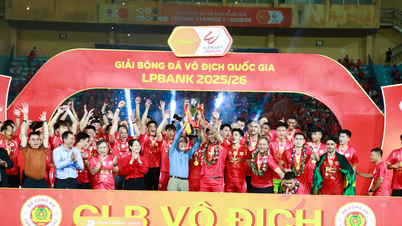
![[Image] Hanoi Police officially crowned champions of V-League 2025/2026](https://vphoto.vietnam.vn/thumb/1200x675/vietnam/resource/IMAGE/2026/05/31/1780244769054_ndo_br_039d561b692be875b13a-jpg.webp)
![[Photo] Admire the coral "masterpiece" amidst the million-year-old heritage of Dak Lak province.](https://vphoto.vietnam.vn/thumb/1200x675/vietnam/resource/IMAGE/2026/05/31/1780221235105_anh-man-hinh-2026-05-31-luc-16-53-27.png)
![[Photo] The General Secretary, President and his wife begin their state visit to the Philippines.](https://vphoto.vietnam.vn/thumb/1200x675/vietnam/resource/IMAGE/2026/05/31/1780230559452_anh-man-hinh-2026-05-31-luc-19-28-11.png)








![[Video] Sunset at Lap An Lagoon – Where the sun sets over the fishing nets](https://vphoto.vietnam.vn/thumb/340x192/vietnam/resource/IMAGE/2026/05/31/1780192137701_beach-landscape-sea-water-nature-grass-745871-pxhere-com.jpeg)
![[Image] Hanoi Police officially crowned champions of V-League 2025/2026](https://vphoto.vietnam.vn/thumb/402x226/vietnam/resource/IMAGE/2026/05/31/1780244769054_ndo_br_039d561b692be875b13a-jpg.webp)





























![[Photo] Admire the coral "masterpiece" amidst the million-year-old heritage of Dak Lak province.](https://vphoto.vietnam.vn/thumb/402x226/vietnam/resource/IMAGE/2026/05/31/1780221235105_anh-man-hinh-2026-05-31-luc-16-53-27.png)



























Comment (0)