

During a meeting with the telecommunications sector, Minister Nguyen Manh Hung stated that telecommunications infrastructure, from its inception until recently, has primarily served as basic communication infrastructure (making calls, sending text messages).
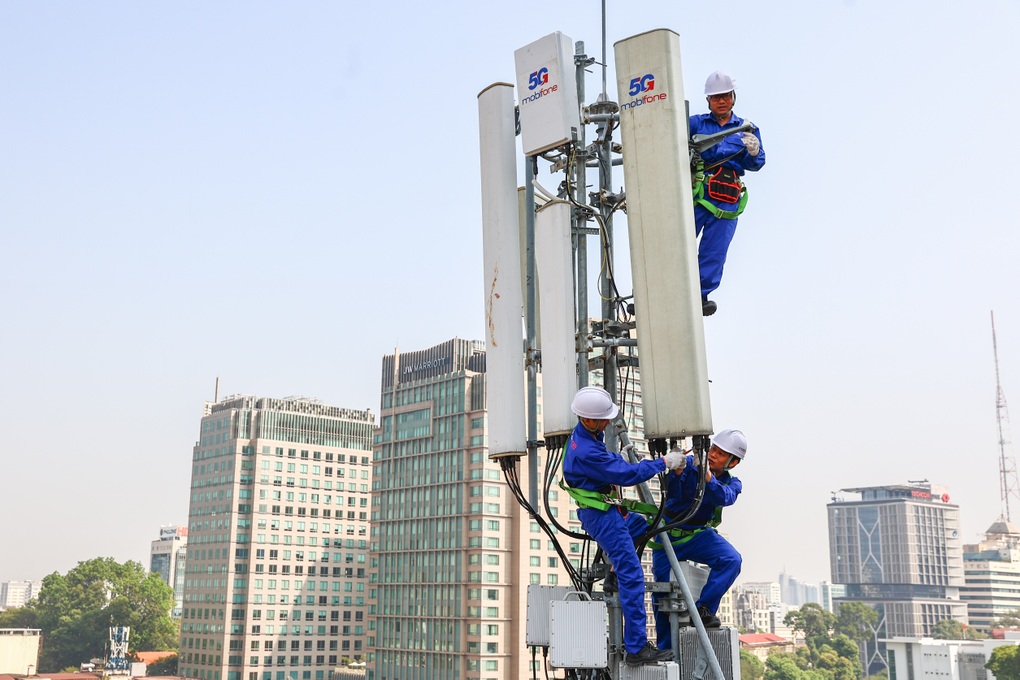
Telecommunications infrastructure has transformed into economic infrastructure (Photo: MobiFone ).
Now, telecommunications infrastructure has become the infrastructure of the economy . Without this infrastructure, it would be like having no electricity, no water. This is a very important transformation.
"Following the development trend, telecommunications infrastructure has transformed into digital infrastructure. The concept of digital infrastructure will be much broader. Above the telecommunications infrastructure is the Internet, and above the Internet is digital infrastructure. Above the digital infrastructure is also physical digital infrastructure, and above that are digital utilities," the Minister shared.
Minister Hung stated that Vietnam has opened its telecommunications sector for over 20 years but is still struggling with infrastructure competition. Network operators compete to see who has the wider network and more base stations. Now, instead of competing on infrastructure, it's time to share infrastructure.
Mobile network operators must share and cooperate to lower prices and focus on service. This requires forcing large network operators to share infrastructure with smaller ones. VNPT and Viettel must share their infrastructure with MobiFone.
According to the Minister, attention should be paid to promoting price competition in services. This has not been promoted, which is why telecommunication services in Vietnam are very limited. Promoting price competition is a strategic change, with the ultimate goal being service for the people, not just infrastructure.
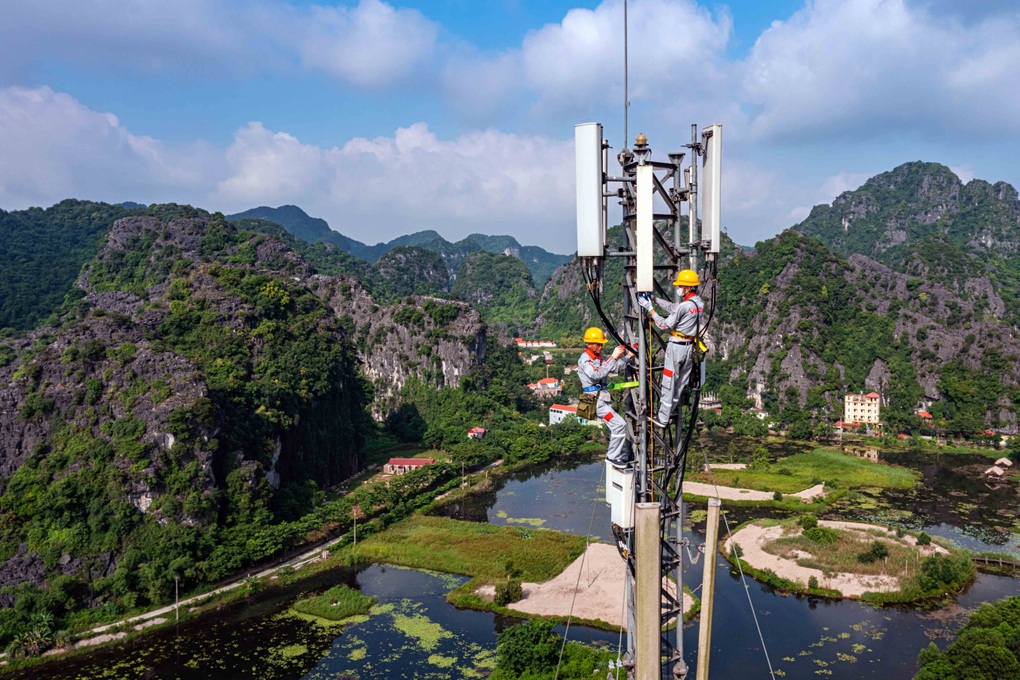
Viettel currently has the largest infrastructure, followed by VNPT in second place and MobiFone in third (Photo: Viettel).
At the same time, we must also promote virtual private networks in the true sense. We must wholesale capacity to smaller network operators so they can innovate, create services for people to enjoy, and compete in the service market. Therefore, promoting virtual mobile networks requires a strategy.
Currently, Viettel has the largest infrastructure, followed by VNPT in second place and MobiFone in third. The competitiveness of these network operators varies significantly, with Viettel holding approximately 50% of the mobile market share. The remaining 50% is mainly divided between VNPT, MobiFone, and a small portion by Vietnamobile.
If infrastructure sharing is implemented, MobiFone will reduce its infrastructure burden, allowing it to focus on new services. MobiFone is facing new opportunities and may be able to deploy services that other network operators have never offered in Vietnam.
Source: https://dantri.com.vn/cong-nghe/da-den-luc-cac-nha-mang-chia-se-ha-tang-vien-thong-20250730112028093.htm

![[Photo] Delegation attending the 14th Congress of the Vietnam Trade Union visits the Mausoleum of President Ho Chi Minh.](https://vphoto.vietnam.vn/thumb/1200x675/vietnam/resource/IMAGE/2026/06/03/1780451842301_ndo_br_img-3824-jpg.webp)









































































































Comment (0)