

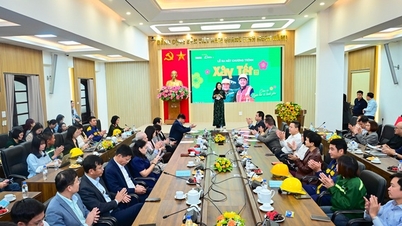
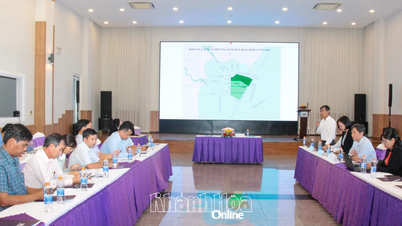
Speaking at the conference, Mr. Dang Quang Tu, Chairman of the People's Committee of Da Lat City (Lam Dong province), emphasized: "This scientific conference is to review the history of the development of a region, to recognize and evaluate the achievements made over the past 130 years; thereby fostering pride, love, and deep attachment to our homeland, while also outlining the future appearance of the city, creating new momentum to continue building and developing a modern, civilized, and prosperous Da Lat."
The inherent contradictions of Da Lat
What will the future of Da Lat look like? Will Da Lat become a multi-functional city, with new and innovative industries emerging such as entertainment, architecture, music , fashion, film, and culinary industries? Or will it be a smart city, a heritage city, or a low-carbon city? These are the issues discussed at the workshop.
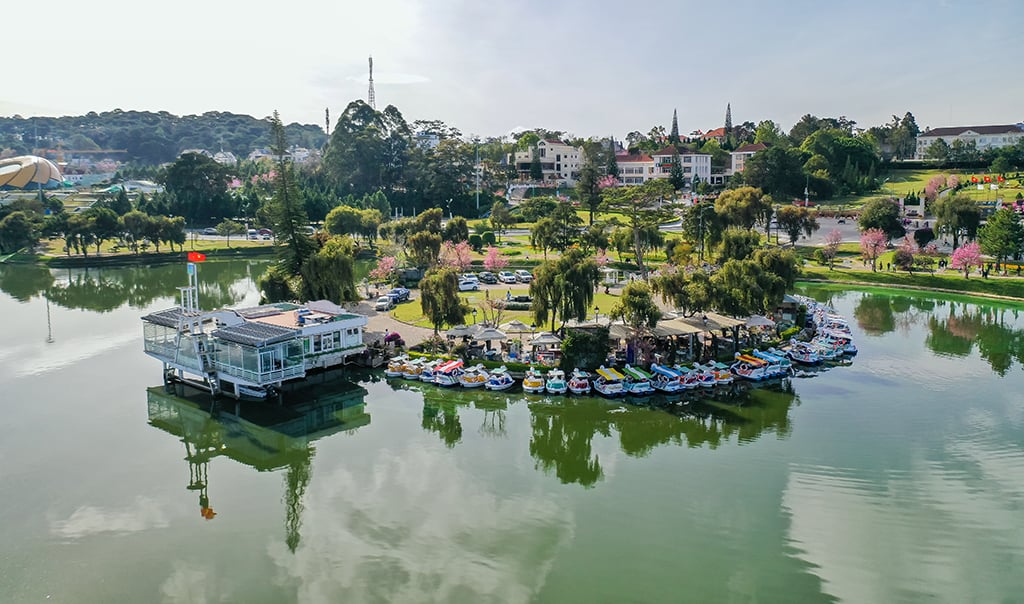
Xuan Huong Lake, a national scenic spot, is located in the heart of Da Lat city.
Associate Professor Bui Trung Hung (Dong Nai University of Technology) acknowledged Da Lat's development in recent years, but also frankly pointed out existing problems and some aspects that have deteriorated if judged by sustainable development criteria. Professor Hung argued that Da Lat is facing internal conflicts between conservation and development in exploiting its unique natural conditions: the inner-city forests are gone, many hills have been leveled, streams are silted up, and concrete buildings are densely covering the area; conflicts between developing modern agriculture and protecting the unique ecosystem, with greenhouses (plastic sheeting) covering the city, high levels of chemical residue in the soil, water pollution, and climate change diminishing its attractiveness to tourists. Furthermore, there is a conflict between tourists' expectations of a highly attractive tourist destination and the need to meet the essential living needs of local residents…
The transformation in lifestyles and living habits among Da Lat residents over the past nearly 30 years has raised many issues of concern. Da Lat City and Lam Dong Province have organized numerous workshops and developed regulations to define criteria for building a civilized urban lifestyle and preserving the traditional Da Lat lifestyle…; however, the results in practice have not met expectations. "Investing in creating new, attractive products for tourists, while also possessing real cultural and artistic value, usually requires time and alignment with policies and planning…," Mr. Hung shared.
Culture makes the difference.
Also at the workshop, Mr. Tran Thanh Hoai, Deputy Director of the Department of Culture, Sports and Tourism of Lam Dong province, said that Da Lat city has achieved many titles such as smart city, ASEAN clean tourism city, and UNESCO creative music city. Da Lat is stepping onto the world stage. To maintain these titles, it must rely on culture. Culture creates the difference for Da Lat; the people of Da Lat must be at the center of development. According to Mr. Hoai, the style and emotions of the people of Da Lat are the source of inspiration guiding the development of tourism in Da Lat.
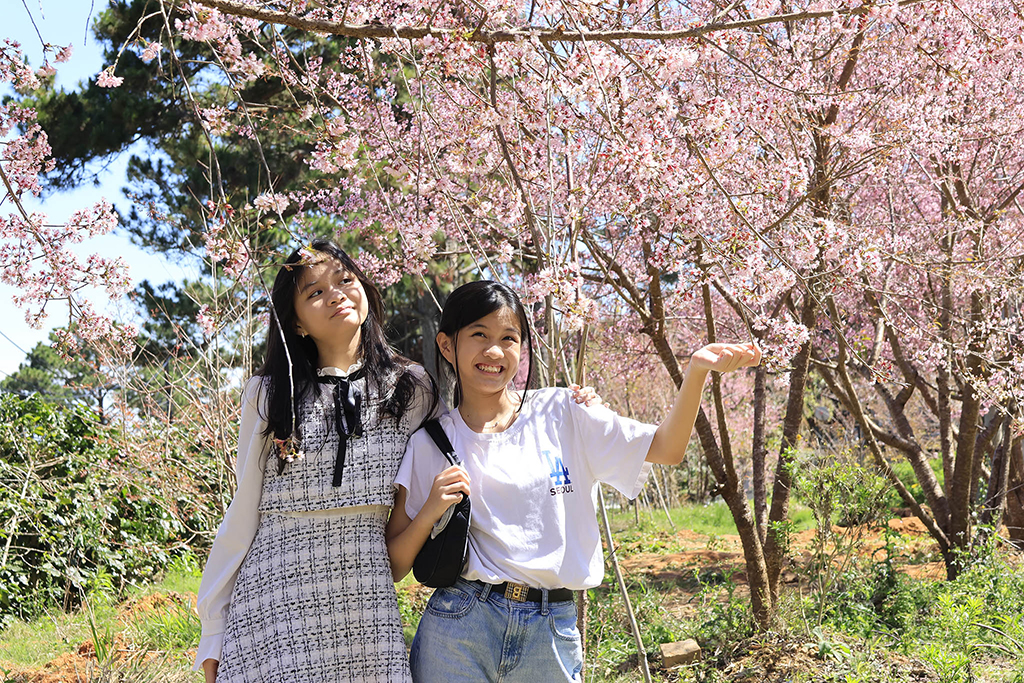
Tourists take photos with cherry blossoms - the signature flower of Da Lat.
Sharing the same viewpoint, Dr. Phan Van Bong (Da Lat College) believes that it is necessary to promote natural and cultural values in the sustainable development of Da Lat City. According to Dr. Bong, in recent years, with Da Lat's rapid tourism development and population growth, management in construction, agriculture, services, and tourism at the grassroots level has been weak, leading to serious consequences for Da Lat's natural and cultural values. "Promoting natural, cultural, and human values must be linked to conservation, thereby preserving the beautiful names that make up Da Lat's brand: The Cold Land, 'Little Paris,' the City of a Thousand Pine Trees, the City of Dreams…", Dr. Bong stated.
Dr. Nguyen Canh Chuong (Da Lat University) suggested building Da Lat into a science and innovation park, arguing that Da Lat possesses the elements and conditions to support scientific research and intellectual work. The goal of a science park is to create an environment for cooperation, investment, exchange, learning, research, and even entertainment for visitors. Building Da Lat into a science park requires significant investment in time, resources, and creative ideas; a successful science park can bring numerous scientific, economic, and educational benefits.
Thirteen years ago, on June 21, 1893, Dr. Alexandre Yersin and his expedition landed on the Lang Biang plateau, marking the beginning of the formation of Da Lat city. In 1923, Da Lat had only 1,500 inhabitants, but by 1944, it became the "capital" of the Indochina Federation when the Governor-General of Indochina and most important government offices moved there; at that time, Da Lat had over 25,000 inhabitants. Over more than 130 years of construction and development, from a barren land, Da Lat's appearance has gradually changed, with socio-economic development and a population of nearly 260,000.
Source link


![[Photo] Prime Minister Pham Minh Chinh attends the Conference on the Implementation of Tasks for 2026 of the Industry and Trade Sector](/_next/image?url=https%3A%2F%2Fvphoto.vietnam.vn%2Fthumb%2F1200x675%2Fvietnam%2Fresource%2FIMAGE%2F2025%2F12%2F19%2F1766159500458_ndo_br_shared31-jpg.webp&w=3840&q=75)



























































Comment (0)