

Hon Khoai is the name of an island cluster located southeast of Ca Mau Cape, more than 6 nautical miles (14.6 km) from the mainland. It holds a crucial position in terms of national defense and security, considered a forward outpost guarding the airspace, sea, and southwestern strip of land of the Fatherland.
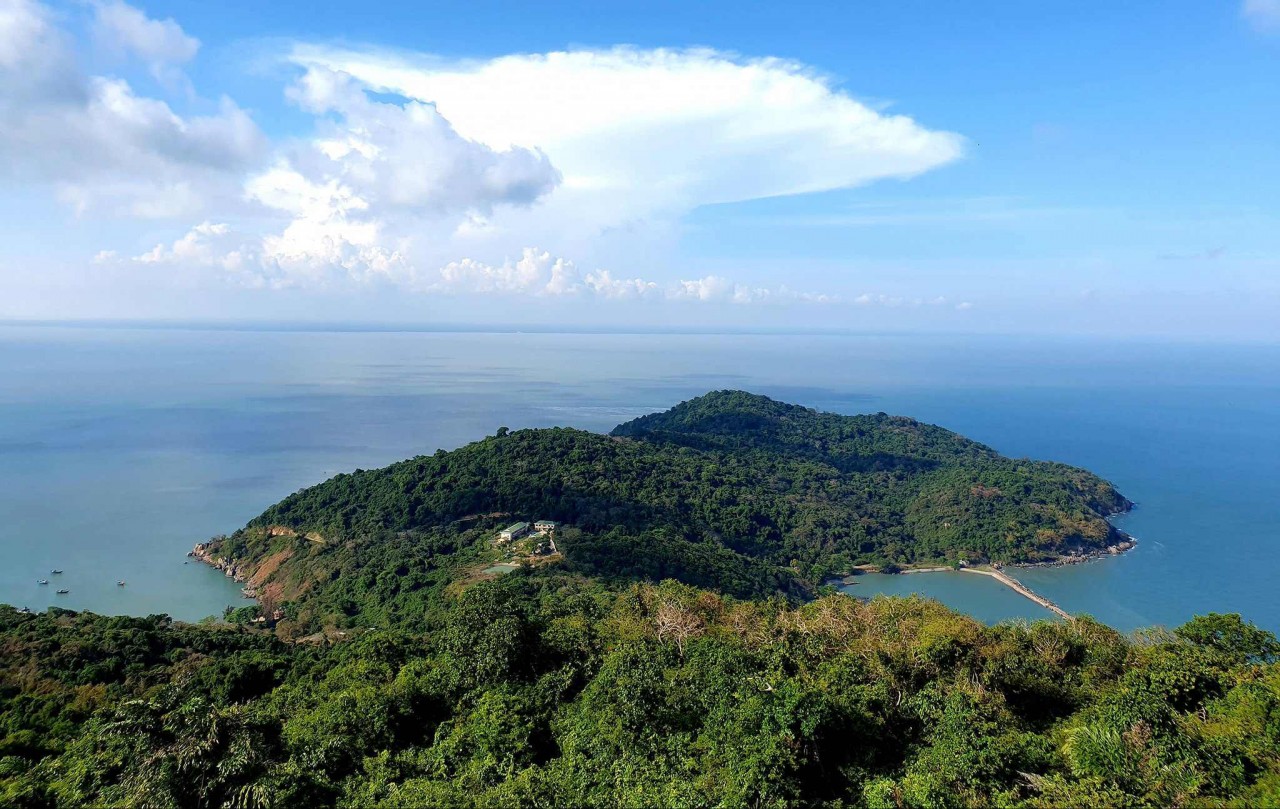 |
| Hon Khoai Island is famous for its pristine mountain and forest scenery, and the vastness of the sea. (Source: Mekong Exploration) |
Hon Khoai consists of several small islands: Hon Khoai, Hon Tuong, Hon Sao, Hon Doi Moi, and Hon Da Le. Of these, Hon Khoai is the largest, with an area of approximately 4 square kilometers, and also the highest island at 318 meters above sea level. In the past, this place was known by various other names such as Hon Giang Huong, Hon Doc Lap, or Poulop Island during the French colonial period. However, due to its shape resembling a giant potato, locals have continued to call it Hon Khoai to this day.
Here, we will be immersed in the pristine scenery of mountains and forests, and the vastness of the sea. Unlike the northern mountainous region, beautiful with its majestic roads and towering mountains, the southern islands possess a rustic, pure, and utterly original beauty.
Hon Khoai is an island of rocks, hills, and almost intact primary forest with many valuable timber species and a rich diversity of flora and fauna. The Hon Khoai flora comprises over 1,400 species, including fruit trees, timber trees, and medicinal plants. The animal life is also quite diverse, with monkeys, jungle fowl, pythons, monitor lizards, white-bellied squirrels, and over 20 rare bird species.
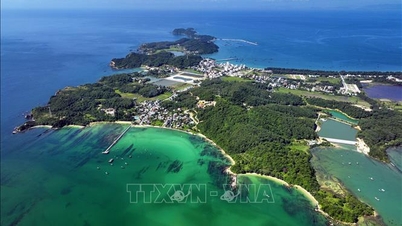
Hon Khoai Island, known as the pearl island of the southernmost tip of Vietnam, is surrounded by mountains and forests, boasts calm, clear blue waters, and historical relics steeped in history. The island has two beaches: the large beach in the southeast and the small beach in the north. The long, sheltered coastline serves as a safe haven for fishermen during storms and is a breeding ground and refuge for many marine creatures, from tiny plankton to economically valuable seafood such as squid, lobster, mantis shrimp, grouper, and snapper.
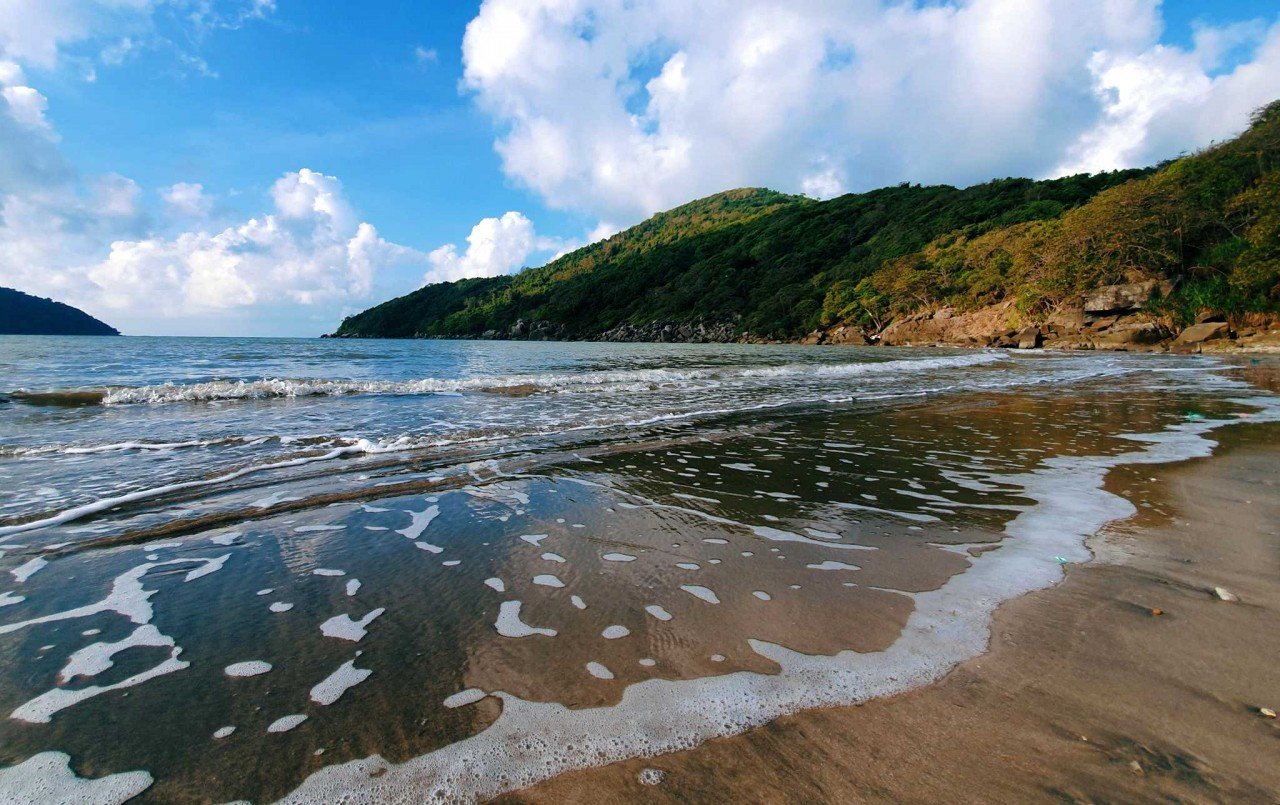 |
| The island has two beaches: the large beach in the southeast and the small beach in the north. (Source: Mekong Exploration) |
The island has a main road, about 3km long, paved and shaded by lush green trees, running from the large beach to the island's summit. Notably, the island has two streams that provide fresh water year-round, supplying the military unit stationed there and local fishermen.
Nestled amidst pristine nature are nearly century-old Western-style architectural structures, including a lighthouse built by the French in 1920 on the highest peak of Hon Khoai Island. This is considered one of the earliest lighthouses in Vietnamese waters.
Furthermore, Hon Khoai is also a famous revolutionary site in the Southwestern region of Vietnam. Here, on December 13, 1940, teacher Phan Ngoc Hien led the resistance army in an uprising to retake Hon Khoai, marking a glorious milestone in the history of the people's struggle against foreign invaders. In 1990, Hon Khoai was recognized as a National Historical and Cultural Monument.
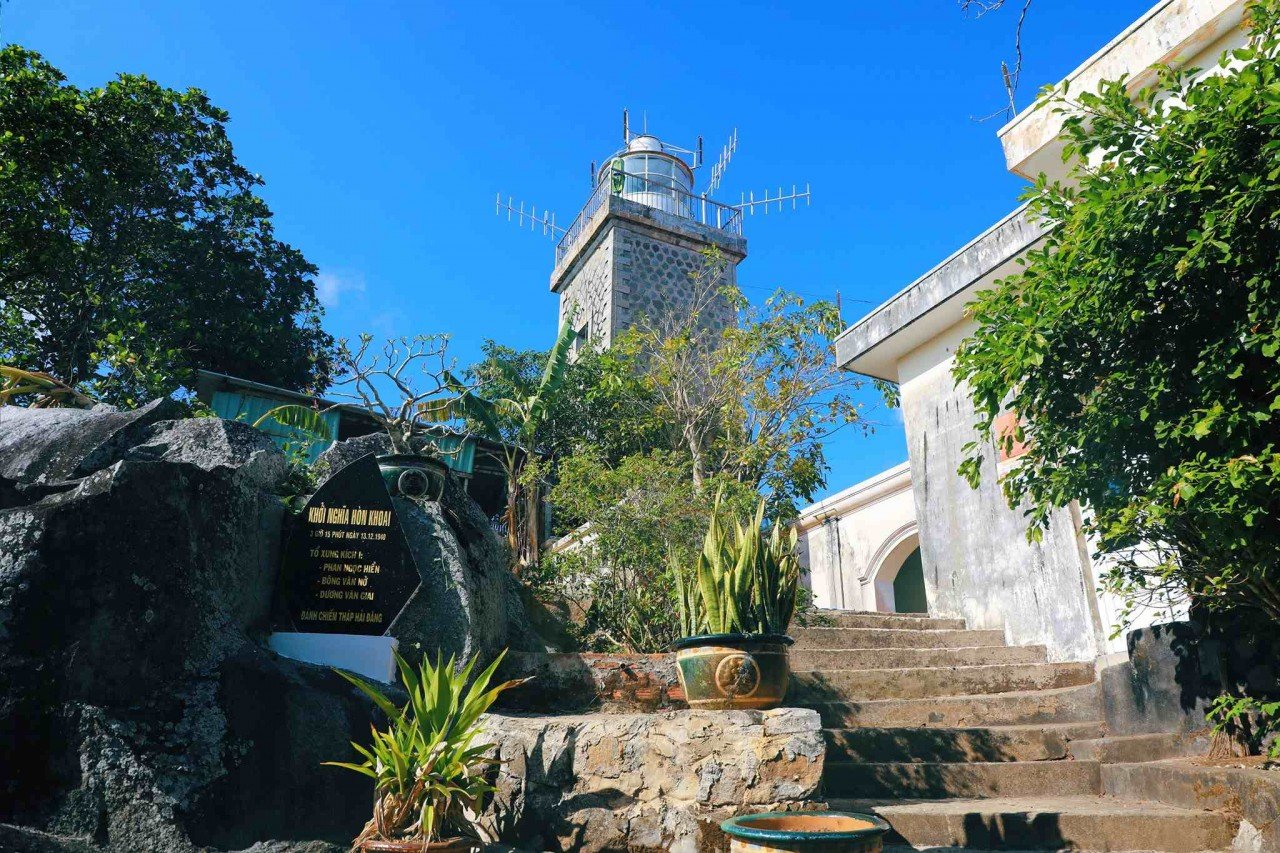 |
| On December 13, 1940, teacher Phan Ngoc Hien led the resistance fighters in an uprising to retake Hon Khoai Island, marking a glorious milestone in the history of the Vietnamese people's struggle against foreign invaders. (Source: Mekong Exploration) |
Hon Khoai Island also serves as a forward outpost guarding the sacred sovereignty of the Southwest of the Fatherland. Therefore, more than anyone else, the soldiers of Radar Station 595 (Regiment 551, Region 5 of the Navy), or Border Guard Post 700, are never negligent, on duty day and night.
With the sacred mission of a soldier, they are likened to "the shield of the Fatherland's border." The baggage they carry includes unwavering political resolve, iron will, and a belief in victory, forged by the Party and the army through difficult times.
Major Tran Van Khoi, Commander of Border Guard Post 700, shared: “The post is our home, the sea is our homeland, and the fishermen, officers, and soldiers on the island are like brothers and sisters.” Everyone on the island lives together in close-knit, friendly, and sincere relationships, like a family. When one unit needs help, another unit sends personnel to assist, and vice versa. When fishermen unfortunately encounter difficulties at sea, the soldiers mobilize personnel and resources to rescue them.
In the vast southern sea, despite the many hardships of life, the forces on duty at Hon Khoai island cluster remain courageous and steadfast day and night, ready to fight to firmly protect the sacred sea and islands of the Fatherland.
Source
![[Photo] General Secretary and President To Lam presides over a working session with the Central Policy and Strategy Committee on the development of the materials industry.](https://vphoto.vietnam.vn/thumb/1200x675/vietnam/resource/IMAGE/2026/05/21/1779359935432_a3-bnd-3129-1412-jpg.webp)
![[Photo] National Assembly Chairman Tran Thanh Man working with the Standing Committee of the Law and Justice Committee](https://vphoto.vietnam.vn/thumb/1200x675/vietnam/resource/IMAGE/2026/05/21/1779378929214_ndo_br_1-4610-jpg.webp)





![[Image] Paying tribute to the heroic martyrs who sacrificed their lives for the cause of protecting the sovereignty of the Fatherland's seas and islands.](https://vphoto.vietnam.vn/thumb/402x226/vietnam/resource/IMAGE/2026/05/05/1777998293200_ndo_br_1-2756-jpg.webp)














































Comment (0)