.png)
Students from the Academy of Journalism and Communication practice outdoor filming. Photo: LV
Gaps in training and practice
By 2025, the whole country will have 60 universities offering journalism and communication programs. At the Academy of Journalism and Communication and the University of Social Sciences and Humanities, subjects following digital trends such as audio and video production, social media, filming, and outdoor reality show hosting have been integrated.
Student Nguyen Quynh Trang (Journalism Department, Academy of Journalism and Communication) said: “To prepare for my internship, I updated my skills in video editing, podcasting, photography… and fast operation on my phone with supporting software like Canva, Cap Cut... These skills helped me a lot during my internship. Newspaper newsrooms nowadays all require articles that integrate images and video clips with real-life issues...”
Observations at workshops and seminars organized by the Faculty and Institutes of the University show that students from the Journalism, Multimedia Communication, and Public Relations departments participate. They take on roles such as scriptwriting, news writing, and photography. This is also a regular assignment for journalism students.
However, a challenge is emerging in many newsrooms: artificial intelligence (AI) is gradually becoming involved in the entire journalistic content production chain, from suggesting topics and writing drafts to editing language, optimizing for search engines, analyzing user data, and customizing content for specific target groups. Many journalism students share that this is a major challenge, as training in schools has not yet kept pace with the realities in newsrooms...
According to Mr. Le Quoc Minh, Member of the Central Committee of the Communist Party of Vietnam, Editor-in-Chief of Nhan Dan Newspaper, and President of the Vietnam Journalists Association , in the digital age, journalists must first and foremost possess strong political convictions, absolute loyalty to the Party, the Fatherland, and the People; and have impeccable professional ethics, unaffected by negative personal or group interests. Modern journalists must be proficient in their profession, capable of working across multiple platforms and media; mastering digital technology, data analysis, and producing engaging digital content… Thus, political convictions and ethics will not fade, enabling them to proactively face new challenges, along with technological capabilities and innovative thinking.
“There is a significant gap between the knowledge and skills acquired in school and the practical requirements of various media organizations. The curriculum is heavily theoretical, slow to update with new knowledge and technologies; teaching methods do not truly foster the proactive and creative participation of learners. Facilities and equipment for practical training are lacking and outdated, while the teaching staff needs regular training and updating of knowledge and skills… These are systemic issues that require comprehensive solutions and assessments to make strategic adjustments,” Mr. Le Quoc Minh emphasized.
.jpg)
The studio is equipped with fairly modern equipment at the Academy of Journalism and Communication. Here, students practice presenting news broadcasts, filming, and hosting talk shows. Photo: LV
Colonel Nguyen Hong Hai, Deputy Editor-in-Chief of the People's Army Newspaper, said that to bridge the gap between training and practice, the task over the next 3-5 years is to standardize and modernize the professional foundation. Training institutions need to upgrade traditional journalistic skills to suit the digital environment, from news writing, video editing, podcast production, data graphic design to content management on social media platforms…
Furthermore, it's impossible to discuss journalism in the 4.0 era without including content related to artificial intelligence, digital data, fundamental algorithms, information security, and professional ethics in a digital environment. Courses such as "Data Thinking," "Digital Media Ethics and Law," and "Combating Fake News and Information Manipulation" must become core curriculum content, not just extracurricular activities or specialized topics. In addition, practical training models need to be promoted. Incorporating courses like "simulated newsrooms," "digital content production," or "internships at newsrooms and technology companies" into the curriculum will not only familiarize students with real-world situations but also contribute to fostering a learning-by-doing culture, a crucial requirement in modern journalism training.
A chance for survival
The challenges facing newsrooms also present demands for training institutions. Dr. Phan Van Kien, Director of the Institute of Journalism and Communication Training, Faculty of Social Sciences and Humanities, Vietnam National University, Hanoi, believes that journalism and communication training is a unique field with dual standards. Universities must meet both the academic and scholarly requirements of undergraduate training and the demands of up-to-date, practical scientific and technological development. This is a major challenge for universities training in journalism and communication-related fields.
“To ensure sufficient academic rigor and to incorporate new technologies, knowledge, and trends into the teaching and training of journalists, journalism and media schools must constantly revise their curricula. This is a vital requirement for training journalism professionals in the context of digital technology and digital transformation permeating every aspect of life. Failure to adapt will lead to obsolescence,” added Dr. Phan Van Kien.
In this context, the Institute of Journalism and Communication Training, Faculty of Social Sciences and Humanities, Vietnam National University, Hanoi, must continuously update new trends, programs, and technologies in its teaching process for journalists.
.png)
The Academy of Journalism and Communication held the opening ceremony for the training course "Application of Artificial Intelligence (AI) in Teaching". Photo: LV
In 2023, the school introduced a Digital Technology program: Artificial Intelligence, Data, and Digital Communication, to provide students with a foundational knowledge base. Students at the Institute of Journalism and Communication use AI software for practical exercises in the classroom…
Associate Professor Pham Minh Son, Director of the Academy of Journalism and Communication, stated that the Academy has clearly identified that today's reporters and editors cannot be proficient in only one type of journalism. They need to become integrated journalists, capable of working with multiple formats, leveraging technology, skillfully using digital platforms, and possessing data-driven thinking. Therefore, the Academy has implemented a series of innovations in training, focusing on three key areas. Regarding the training program, the Academy has reviewed and updated the teaching content to integrate technology, multimedia, and digital thinking into each subject. Many new modules such as digital content production, data journalism, digital communication, and artificial intelligence in journalism have been introduced into the curriculum.
In April 2025, the Academy completed the accreditation of its journalism program with six specializations. Integrating modules such as "Data Journalism," "Digital Media Technology," etc., into the regular curriculum contributes to enhancing students' digital journalism skills. Simultaneously, many traditional modules have been updated to incorporate digital tools and new teaching methods such as blended learning, microlearning, and project-based learning.
In terms of training methods and models, the Academy emphasizes project-based learning, hands-on practice in a converged newsroom model, and the integration of theory with practical skills. Students experience an integrated journalistic production process from writing, editing, recording, livestreaming, to content distribution on digital platforms. Finally, the Academy strengthens cooperation with media agencies, technology companies, and international organizations to update new technologies and trends and provide students with opportunities to access professional practice while still in school.
“The school's goal is not only to train journalists who 'keep up' with the times, but also those who can 'lead' the changes in the field of digital media. That is the overarching spirit in the training innovation of the Academy of Journalism and Communication in recent times,” Associate Professor Pham Minh Son affirmed.
Le Van/News and Ethnic Groups Newspaper
Source: https://baotintuc.vn/thoi-su/dao-tao-bao-chi-truoc-con-loc-ky-nguyen-so-20250620135300440.htm


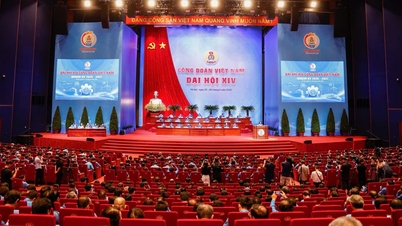
![[Photo] First session of the 14th Congress of the Vietnam Trade Union](https://vphoto.vietnam.vn/thumb/1200x675/vietnam/resource/IMAGE/2026/06/03/1780465947883_ndo_br_img-3852-jpg.webp)
![[Photo] General Secretary and President To Lam presides over a meeting with the Central Organizing Committee.](https://vphoto.vietnam.vn/thumb/1200x675/vietnam/resource/IMAGE/2026/06/03/1780482764658_a1-bnd-4741-3342-jpg.webp)
![[Photo] Secretary of the National Assembly Party Committee, Chairman of the National Assembly presides over the meeting of the Standing Committee and Executive Committee of the National Assembly Party Committee.](https://vphoto.vietnam.vn/thumb/1200x675/vietnam/resource/IMAGE/2026/06/03/1780480353201_ndo_br_bnd-2585-jpg.webp)

















































![[Video] Sunset at Lap An Lagoon – Where the sun sets over the fishing nets](https://vphoto.vietnam.vn/thumb/1200x675/vietnam/resource/IMAGE/2026/05/31/1780192137701_beach-landscape-sea-water-nature-grass-745871-pxhere-com.jpeg)






























Comment (0)