

Based on the spirit of "The people are the foundation," the speech opens up a new requirement for the Vietnam Fatherland Front : from uniting the people to building social consensus, from mobilizing movements to protecting the legitimate interests of the people, from speaking to the people to truly listening to the people, deeply understanding the people, and earning their trust.
The people's will - the source of Vietnam's strength.
Throughout the nation's history, there has been an unbroken source of strength: the people's will. It can be said that the history of Vietnam is the history of a nation that knows how to unite the people's will into strength, how to transform patriotism into action, and how to transform aspirations for independence, freedom, and happiness into extraordinary feats.
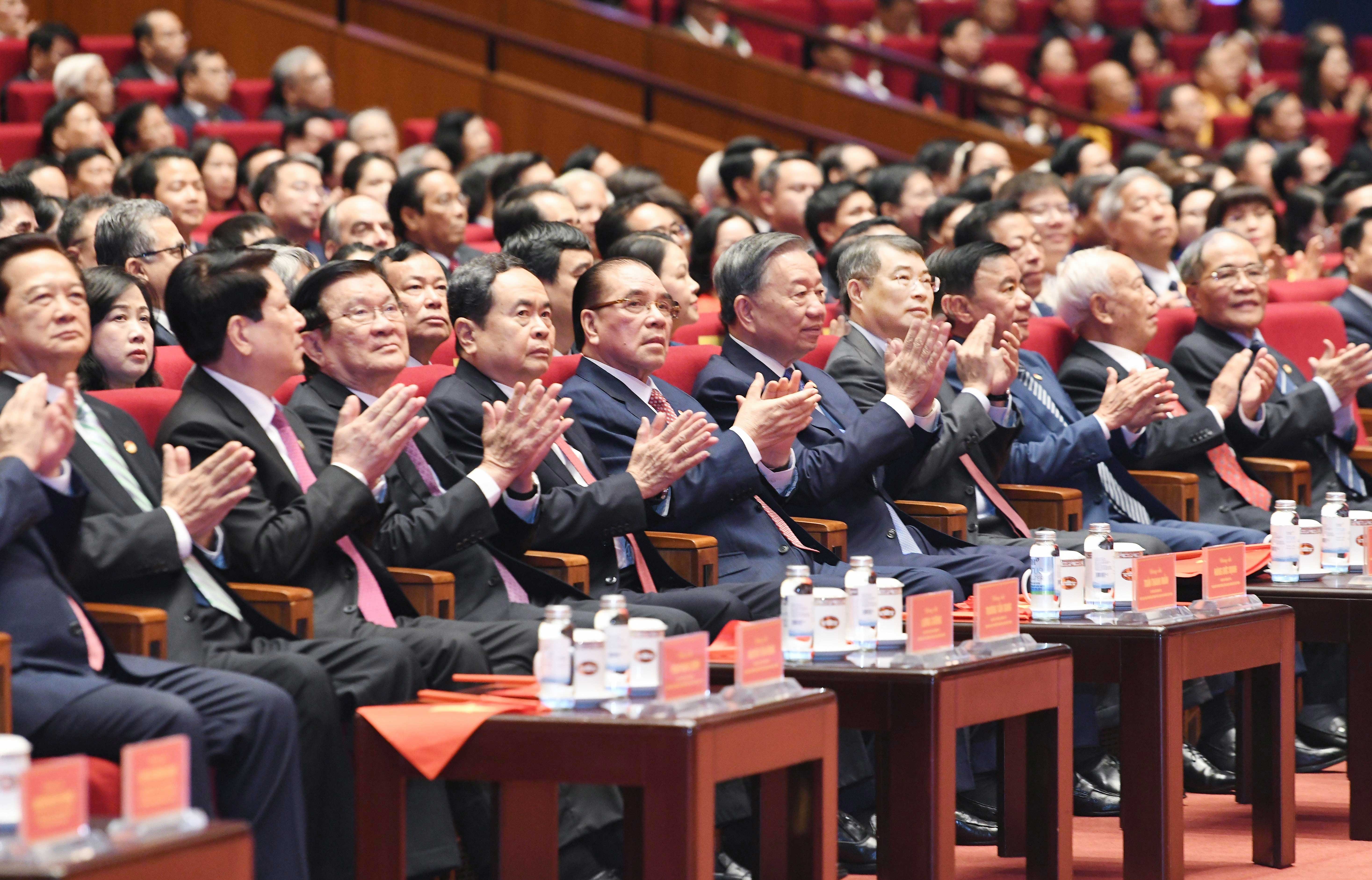
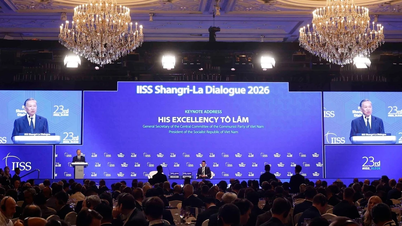
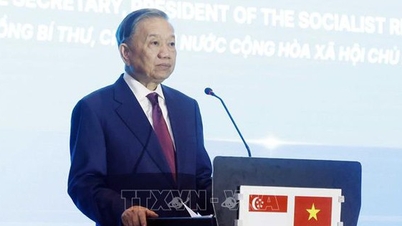
Therefore, when General Secretary and President To Lam emphasized that, "when our nation is united, the people's hearts are united, and the will of the entire nation is unified, the country will overcome all difficulties, defeat all enemies, and create miracles of lasting significance," it is not only a historical summary but also a truth of development.
A particularly noteworthy new point in the speech is that national unity is not only recognized as a precious tradition and spiritual heritage, but is also elevated to a national development capacity . This is a very modern approach. The people's will is not only the political foundation, but also a form of social capital, a soft resource, and an endogenous driving force that is crucial for sustainable development.
For a nation to achieve sustainable development, to navigate the unpredictable changes of the times, and to remain unaffected by external shocks, it needs social trust. This trust begins with the people. When the people trust, they will cooperate. When the people cooperate, all resources will be unlocked. When the people are respected, listened to, involved, and benefit, the creative power of society will be unleashed. That is why placing the people at the center is not only a moral requirement, but also a requirement for development.
Putting the people at the center - a measure of national governance.
One of the most profound points of the speech was the requirement to uphold the principle of "the people are the foundation" as a guiding principle throughout the activities of the Fatherland Front. In this, the spirit of "the people are the foundation" is concretized into very clear criteria: all Party guidelines, State policies and laws, and all programs, movements, and campaigns of the Fatherland Front must originate from the needs, aspirations, rights, and legitimate interests of the people; aiming to improve the material and spiritual lives and happiness of the people.

This is the crucial point. Placing the people at the center must be reflected in the policy-making process, in the way policies are implemented, in the attitude of officials, in the effectiveness of resolving specific life problems, and in the ability to protect the legitimate rights and interests of the people.
The General Secretary and President emphasized that "the effectiveness of the Fatherland Front's work should not only be measured by the number of meetings, documents, movements, and launching ceremonies, but also by the people's trust, satisfaction, level of participation, ability to protect the people's legitimate rights and interests, and concrete results in making the people's lives better and better." This represents a crucial shift in evaluation thinking. From prioritizing input and organizational forms, we must strongly shift towards evaluating output, results, impacts, and the genuine feelings of the people.
Putting the people at the center also means making democracy a daily practice. The motto "the people know, the people discuss, the people act, the people inspect, the people supervise, and the people benefit" needs to be implemented more substantively, concretely, and measurably. People knowing doesn't mean being informed only after decisions have been made. People discussing doesn't mean merely offering suggestions. People acting doesn't mean simply implementing predetermined plans. People inspecting and supervising shouldn't be just rights on paper. And people benefiting cannot be a distant promise, but must be concrete improvements in daily life: from employment, income, housing, healthcare, education, living environment to cultural and spiritual life, and a sense of being respected.
In this new era of development, national governance cannot rely solely on administrative orders, but must be based on social consensus. This consensus is not merely formal silence. It is built on dialogue, listening, harmoniously resolving conflicts of interest, protecting legitimate rights, and creating opportunities for the people to participate in the development process. When people feel they are the subjects, not outsiders, when they feel their voices are valued, when they feel their legitimate grievances are heard and addressed, social trust will be strengthened. This is the deepest foundation of political stability and sustainable development.
From uniting the people to building social consensus.
The speech by General Secretary and President To Lam set forth a new and very important requirement for the Vietnam Fatherland Front: not only to gather and mobilize the people, but also to build social consensus; not only to launch movements, but also to organize concrete implementation; not only to convey policies and guidelines to the people, but also to bring the voices, aspirations, initiatives, and legitimate concerns of the people to the Party and the State.
The speech emphasized that unity in the new era means respecting legitimate differences; harmoniously resolving conflicts of interest; taking the common goals of the nation and people as a point of common ground; and using the aspiration to build a peaceful, independent, democratic, prosperous, civilized, and happy Vietnam as the banner to unite all patriotic Vietnamese people.

This way of thinking is very modern, accurately recognizing the nature of a developed society. The more developed a society becomes, the more diverse its interests, the more varied its needs, and the more diverse its voices. Therefore, the role of the Front in the new era is not just to "call for unity," but to organize, nurture, and protect the conditions for unity to become a real strength.
To achieve this, the Fatherland Front must drastically innovate its social supervision and criticism work. Supervision must focus on issues of public concern, pressing social issues, and policies that significantly impact people's lives. Social criticism must be carried out early and proactively, right from the policy formulation process. In particular, criticism should not only be about wording, but also about policy objectives, social impact, feasibility, resources for implementation, and the interests of the people. This is a very high requirement, but also a very valid one. A good policy is not only correct in its intent, but must be feasible in practice; not only reasonable on paper, but humane in its impact; not only meeting management objectives, but also better protecting the legitimate rights of the people.
Here, the Fatherland Front can become a particularly important "social sensor." The Front is close to the people, understands them, has a wide network, and is capable of connecting many layers, sectors, and communities. If it plays this role well, the Front can help the political system identify problems arising from the grassroots early on, listen to voices that haven't yet reached official channels, detect policy bottlenecks, social grievances, and vulnerabilities of disadvantaged groups. But to do that, the Front must have the courage, data, experts, methods, and mechanisms to follow up on recommendations after monitoring and criticism. If recommendations only remain at the reporting stage, and if legitimate opinions of the people are met with silence, trust will be eroded.

Another very new point in the speech was the requirement to build a modern Fatherland Front , in which digital transformation must be substantive. Digital transformation in the work of the Fatherland Front must create new methods for the Front to be closer to the people, to listen to the people more broadly, to respond to the people faster, and to monitor the resolution of people's petitions more transparently. The General Secretary and President offered very noteworthy suggestions, such as: a 24/7 Fatherland Front portal, "Month of Listening to the People," and a set of provincial-level social trust indicators... If seriously implemented, this could be an important shift from movement management to data-driven management, from periodic listening to regular interaction, from individual reflection to systematic measurement of social thoughts, aspirations, and trust.
However, modernizing the Fatherland Front is not just about technology. The core remains the people. A modern Fatherland Front cannot be built by bureaucratic officials who are detached from the people, afraid of confrontation, lack dialogue skills, and dare not speak the truth from the grassroots.
Placing the people's will at the center of the new era of development is therefore not only the task of the Fatherland Front, but the responsibility of the entire political system. Party committees and governments at all levels must truly respect, listen to, coordinate with, and create conditions for the Fatherland Front to effectively perform its functions and tasks. The Fatherland Front's oversight, criticism, and recommendations must be considered an important channel for improving leadership, management, and administration. Party committees and governments must be responsible for receiving, explaining, and responding clearly. When the Fatherland Front speaks truthfully, accurately, and with basis, speaking for the common good and following up on the resolution process, then the voice of the Fatherland Front is the voice of the people, organized, refined, and transformed into a driving force for policy improvement.
Looking at it more broadly, the speech by General Secretary and President To Lam at the Congress sent a message with significance that transcends the scope of a single term: in the new era of development, the will of the people must become the center of all development strategies. When the people's hearts are at peace, the country is stable. When the people's hearts are in agreement, reforms have momentum. When the people's hearts are confident, the aspiration for development has a foundation. When the people's hearts are awakened, each citizen will not only be a beneficiary of the fruits of development, but also a contributor to those fruits. That is the profound meaning of placing "the will of the people" at the center of the new era of development.
Concluding his speech, General Secretary and President To Lam reiterated President Ho Chi Minh's admonition: "In the sky, nothing is more precious than the people. In the world, nothing is stronger than the united force of the people." In today's context, this teaching resonates even more strongly as a historical imperative and a guide for the future. Let unity become strength. Let democracy become the driving force. Let the people's trust become the solid foundation of the nation. And above all, let the people's will not only be mentioned in solemn moments, but be present in every policy, every decision, every concrete action, and every positive change in the lives of every Vietnamese citizen.
Source: https://daibieunhandan.vn/dat-long-dan-vao-trung-tam-cua-ky-nguyen-phat-trien-moi-10416696.html
![[Photo] Ba Lang An Lighthouse - the "eye of the sea" amidst the "rock museum" of Quang Ngai province.](https://vphoto.vietnam.vn/thumb/1200x675/vietnam/resource/IMAGE/2026/05/29/1780038698840_anh-man-hinh-2026-05-29-luc-14-10-42.png)

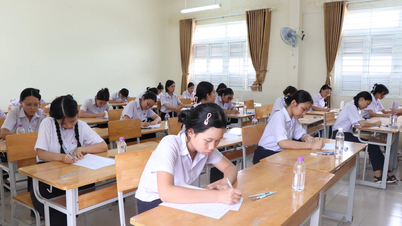
![[Image] Pleasant weather helps students enter the 10th grade entrance exam with confidence.](https://vphoto.vietnam.vn/thumb/1200x675/vietnam/resource/IMAGE/2026/05/29/1780034401612_ngay-1-thi-lop-10-minh-duy-8-5009-jpg.webp)






























































Comment (0)