


Historic decisions
Looking back at the 13th National Congress of the Party, Master Cao Hong Ky, Chairman of the Union of Science and Technology Associations of Tuyen Quang province, remarked that this was a period of historic decisions, demonstrating the Party's unwavering resolve in the face of all challenges. The most prominent mark was the reorganization of the country's development space, an unprecedented revolution often likened to "rearranging the nation."
Alongside the redefinition of administrative boundaries was a comprehensive reform of the political system aimed at building a streamlined, effective, and efficient apparatus. This revolution took place simultaneously from the central to local levels, encompassing the entire system, from the Party, the National Assembly, the armed forces, to the Fatherland Front. Agencies with similar functions were merged, eliminating overlaps.
According to Master Cao Hong Ky, the highlight of the past term was the work of ensuring social security, demonstrating the superiority of the people-centered approach. Master Cao Hong Ky pointed out that the resources saved from streamlining the administrative apparatus have been reinvested by the Party and State in the people. Humane policies such as tuition fee exemptions, school construction in border areas, improving healthcare capacity, and the roadmap towards free hospital services by 2030 have strengthened the people's absolute trust in the Party. In particular, the recent 80th anniversary of the August Revolution, the spiritual gift given to the entire nation to celebrate Independence Day, created excitement and profound gratitude towards the Party and Government.
Furthermore, digital transformation has become a powerful and widespread trend. With the decisive implementation of the Prime Minister's Project 06 on developing data applications on population, identification, and electronic authentication to serve national digital transformation in the period 2022-2025, with a vision to 2030, Vietnam has issued nearly 80 million chip-embedded citizen identity cards and activated tens of millions of VNeID accounts, providing thousands of convenient online public services. These advancements have boosted Vietnam's e-government ranking by 15 places according to the United Nations. Businesses are also actively applying AI, IoT, and Big Data to production, placing Vietnam among the leading countries in mobile application downloads.
Looking ahead to the 14th National Congress of the Party, Master Cao Hong Ky expressed high expectations for 2026, hoping for a strong breakthrough with a growth target of over 10%, accompanied by the greening of the economy, macroeconomic stability, handling of weak businesses, and stabilization of the real estate market. In particular, the people nationwide expect fairness and humanity, where children in disadvantaged areas have "hot meals and warm classrooms," and all citizens have the opportunity to rise up.
In particular, intellectuals in Tuyen Quang province hope that the Congress will propose specific mechanisms and a stronger decentralization of authority to the locality in managing and implementing science and technology projects, helping to narrow the development gap between Tuyen Quang and other provinces in the delta. They also hope that the Central Government will innovate the financial management mechanism for scientific research activities towards a "contract-based" approach, helping to reduce the burden of administrative procedures and create conditions for scientists to focus on their expertise.
"The Union of Science and Technology Associations of Tuyen Quang province also hopes that the documents of the 14th Party Congress will establish a clear roadmap to support Tuyen Quang in building a synchronous digital infrastructure, helping strong sectors such as high-tech agriculture and forestry economics to make a leap forward in productivity through the application of technology; building startup support centers right in the locality, connecting young intellectuals with capital resources and markets," emphasized Master Cao Hong Ky.
To make science and technology a direct driver of growth.
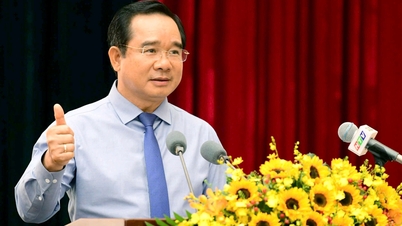
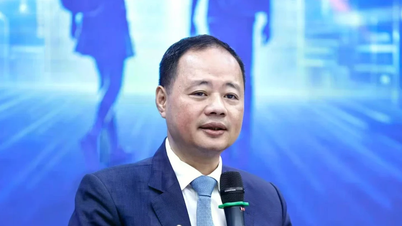
Based on his experience in legislative and administrative activities, Dr. Nghiem Vu Khai, former Vice President of the Vietnam Union of Science and Technology Associations, assessed that during the recent 13th National Congress of the Party, Vietnam's industrialization and modernization strategy has undergone significant transformations, not only focusing on building factories or industrial parks but also concentrating on depth, based on science, technology, and innovation.
After studying the Draft Document of the 14th National Congress of the Communist Party of Vietnam, Dr. Nghiem Vu Khai stated that Vietnam has taken a leap forward by establishing, for the first time, science and technology - innovation - and the digital economy as direct productive forces, as pillars for creating national productivity and competitiveness. This is a very fundamental shift in thinking, approaching the models of developed countries such as Japan, South Korea, and Germany.
This shift means that science and technology are no longer isolated but are directly linked to new growth pillars such as the digital economy, AI, data, semiconductor technology, and the green energy transition. However, Dr. Nghiem Vu Khai argues that instead of administrative management, the State needs to design institutions so that science and technology become a direct growth driver, closely linked to indicators reflecting total output (TFP) and labor productivity. This is a strong step from "administrative linkage" to "market linkage," where businesses lead technology demand while research institutions provide knowledge.
To perfect the institutional framework that transforms science and technology from a mere policy into a direct driving force to help Vietnam escape the middle-income trap, Dr. Nghiem Vu Khai proposed a comprehensive policy system encompassing training, employment, and remuneration for young scientists and intellectuals. In this system, training must be linked to the needs of businesses, value chains, and practical problems of the economy. Fields such as STEM, AI, data, and green technology will be top priorities in educational reform. Human resource utilization should maximize the autonomy of research institutes and universities in recruitment and salary management, implementing performance-based evaluations based on output and economic impact rather than seniority.
In particular, expanding the testing mechanism (sandbox) for new technologies and models will create a safe space for intellectuals to venture into risky breakthroughs. Dr. Nghiem Vu Khai argues that investing in intellectuals should be considered a long-term strategic investment in national infrastructure. Therefore, it is necessary to reform salaries based on contribution, expand ownership rights and benefits from intellectual property, and have specific mechanisms to attract talented experts both domestically and internationally.
With unwavering faith in the Party's leadership, intellectuals nationwide are determined to transform the policies and guidelines of the 14th Party Congress into concrete action programs. This is a crucial leverage point for science, technology, and innovation to truly become powerful driving forces, contributing to building a more prosperous and happy nation and enabling it to thrive in the new era.
Source: https://baotintuc.vn/thoi-su/dat-tron-niem-tin-vao-nhung-quyet-sach-chien-luoc-cua-dang-20260115181339989.htm



















![[Photo] Reception to welcome General Secretary and President To Lam and his wife on their State visit to the Philippines](https://vphoto.vietnam.vn/thumb/1200x675/vietnam/resource/IMAGE/2026/06/01/1780295488620_vna-potal-chieu-dai-chao-mung-tong-bi-thu-chu-tich-nuoc-to-lam-va-phu-nhan-tham-cap-nha-nuoc-toi-philippines-8798060-7855-jpg.webp)


























































Comment (0)