

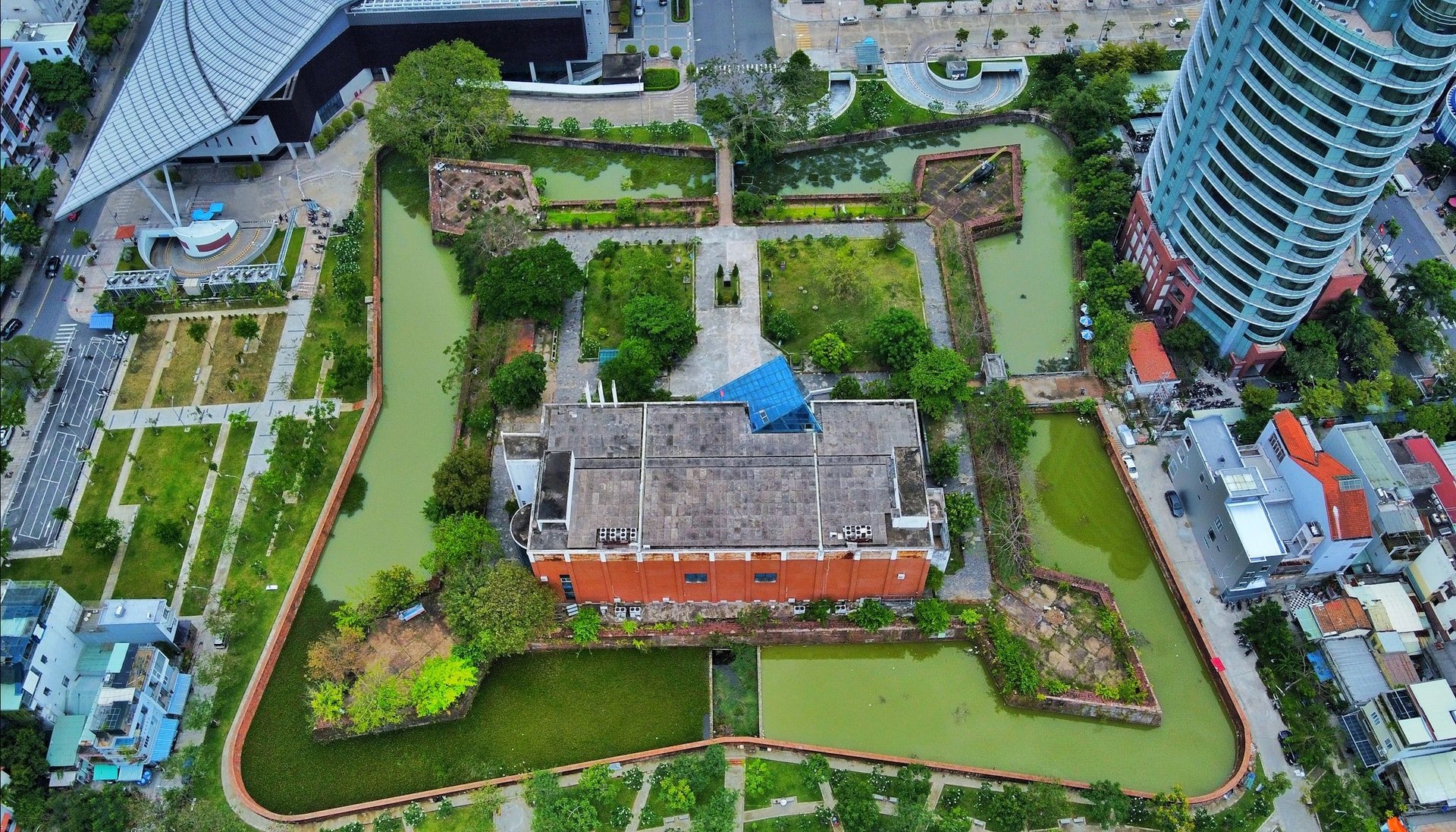
At a recent seminar, many researchers argued that it is time to view Cua Han not just as a historical landmark, but as a "space of memory" capable of shaping the future cultural identity of Da Nang city.
The "choke point" of the Thuan-Quang region.
According to Ms. Truong Thi Hong Hanh, Director of the Da Nang Department of Culture, Sports and Tourism, Cua Han has long been historically established as "a special geopolitical space," playing a crucial role in the defense structure of the Hue citadel under the Nguyen dynasty. Ms. Hong Hanh believes that the value of this area lies not only in its military significance or individual historical events, but also in opening up "an interdisciplinary research field," a place where history, archaeology, military architecture, strategic geography, and cultural memory intersect.
From a broader perspective, speaking at the seminar, Vice Chairman of the Da Nang City People's Committee Nguyen Thi Anh Thi stated that Cua Han is almost synonymous with the history of Da Nang's formation. From an international trading port to a defensive outpost against foreign invaders, this place has accumulated many layers of the city's memories.
Accordingly, the Han River estuary, or Cửa Hàn, holds immense significance for the people of Da Nang. The name "Da Nang" originates from the ancient Cham language meaning "large river" (Daknan), appearing on maps since the 16th century and officially recorded in 1835 during the reign of Emperor Minh Mạng under the name Cửa Hàn. During the French colonial period, it was called Tourane, also related to the name "Cửa Hàn".
The Nguyễn dynasty left its mark on Cửa Hàn with a series of defensive structures built along the Đà Nẵng estuary: Hải Vân Pass, Điện Hải Citadel, An Hải Citadel, Hải Châu fort, Phước Ninh, Thạc Gián… forming a continuous system protecting the eastern gateway to the capital Huế .
According to the discussions, it is noteworthy that the Nguyen dynasty recognized very early on the strategic role of Da Nang in the context of the ever-expanding international maritime routes. It was no coincidence that Emperor Minh Mang stipulated that Western ships could only trade in Da Nang. This was both a foreign trade policy and a way to control maritime security.
In his paper on the role of General Nguyen Tri Phuong, researcher Bui Van Tieng argues that the Cua Han defense system did not form instantly, but was the result of decades of construction under the reigns of Emperors Gia Long, Minh Mang, Thieu Tri, and Tu Duc. From the beginning of the 19th century, the Nguyen dynasty built the Da Nang sea fortress, Dien Hai fort, An Hai citadel, Hai Van Pass, and later the Dinh Hai and Phong Hai forts… creating a multi-layered defense system from the sea inland.
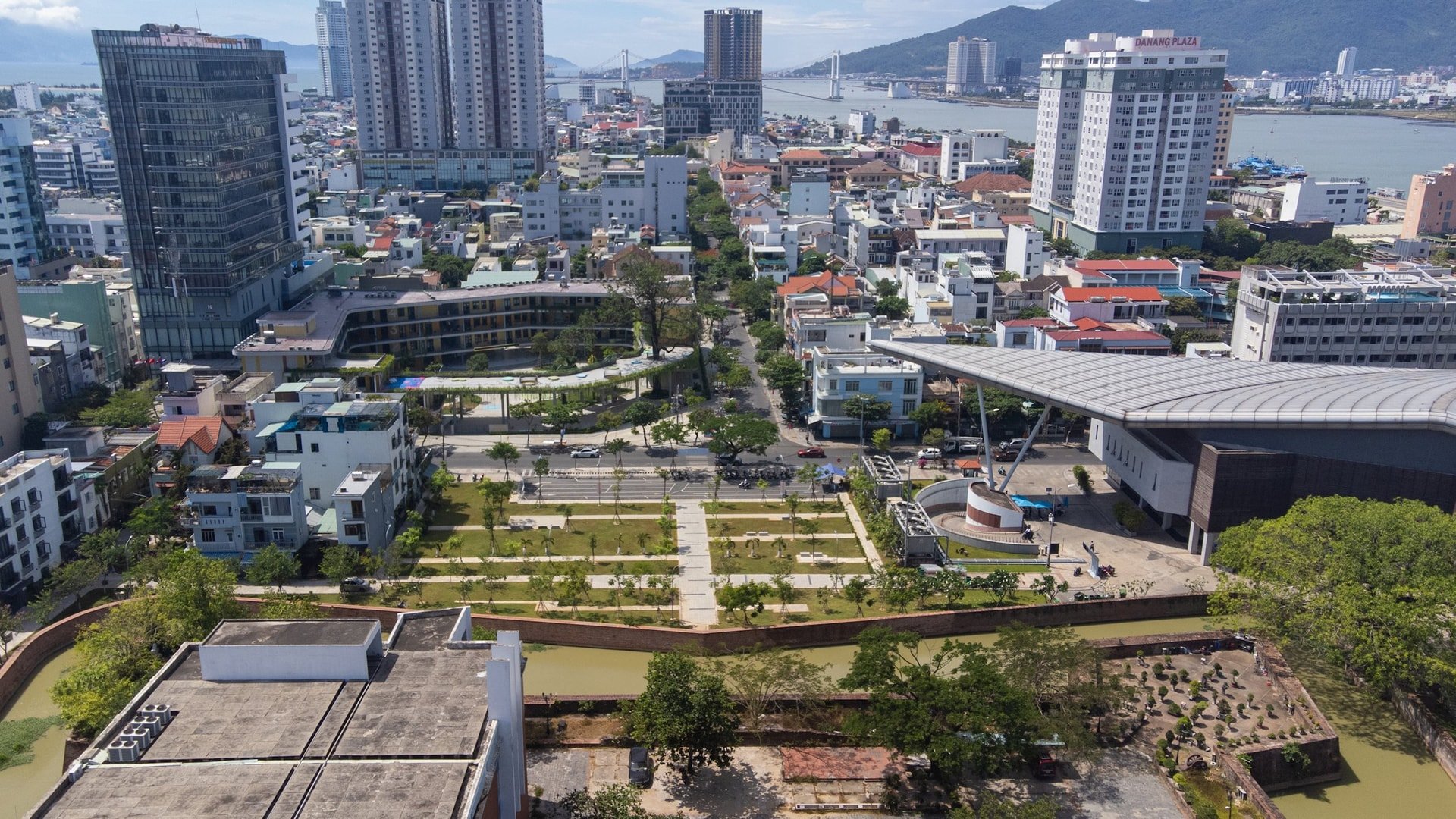
Creating a "memory heritage park"
Many participants at the seminar argued that the current value of Cua Han lies not in individual historical sites, but in the entire defense network and historical memory associated with the river-sea space of Da Nang.
According to historian Duong Trung Quoc, the 1858 Cua Han incident reveals the formation of a "national defense consciousness" in modern Vietnamese history. He argues that preservation should not be limited to restoring historical sites, but should aim towards creating "memory heritage parks"—places where history is retold through vivid experiences.
Professor Truong Quoc Binh, former Deputy Director of the Department of Cultural Heritage, stated that typical relics of the Nguyen Dynasty's coastal defense system in the Thua Thien Hue and Da Nang areas have been and are being studied to determine their value and for preservation.
Based on the valuable content of the relics and typical historical events, especially the Battle of Da Nang in 1858, Professor-Doctor Truong Quoc Binh proposed that the Ministry of Culture, Sports and Tourism support the proposal to add or expand the scope of relic sites related to the national relics that have already been ranked and the Dien Hai Citadel Special National Relic Site.
“The area surrounding Dien Hai Fortress is part of Da Nang's urban memory. Dien Hai Fortress was a defensive site, a battleground, and a symbol of resistance against invasion. Therefore, this area needs to be preserved as a historical space. If it is transformed into a purely landscaped park, the value of urban memory will be diminished. Da Nang could research and add other important relics and historical sites such as An Hai Fortress, the forts and ramparts in Son Tra, the French and Spanish cemeteries and burial grounds... At the same time, immediately implement promotional activities and organize tours focusing on these unique aspects,” Mr. Truong Quoc Binh shared.
Meanwhile, planning and conservation experts believe Da Nang is facing a rare opportunity to form a "historical memory axis" stretching from Son Tra estuary to Dien Hai Citadel. This is not just a tourist route, but an urban cultural structure connecting heritage, public spaces, and creative tourism.
One of the key topics of discussion at the seminar was the proposal to build the Sun and Moon Garden Cultural Park at the original site of the Dien Hai Tower from 1813. According to researchers, this could become a new cultural highlight of Da Nang if approached from the perspective of a "living heritage." Experts believe that, if implemented systematically, the Sun and Moon Garden Cultural Park could become a model combining the preservation of military heritage with sustainable cultural tourism development, a goal pursued by many heritage cities around the world.
Source: https://baodanang.vn/dau-an-cua-han-and-khong-gian-di-san-3336082.html


































































































Comment (0)