

Circular 29/2024/TT-BG&ĐT (Circular 29) of the Ministry of Education and Training, regulating tutoring and supplementary classes, officially came into effect on February 14th. This means that teachers providing tutoring at home are now required to register their businesses. However, a question that many teachers and citizens are wondering about is how taxes will be handled after registering their businesses.
Teachers are proactively registering their tutoring businesses.
In reality, many teachers who registered to run tutoring businesses have had to stop due to the regulation in Circular 29/2024/TT-BGDĐT stating that "Teachers in public schools are not allowed to participate in managing or operating extracurricular tutoring but may participate in tutoring outside of school." To avoid disruption to their tutoring activities, teachers have proactively sought information and asked others to register their businesses or household businesses. However, obtaining a tutoring license in a way that ensures compliance with the law and protects the rights of the teachers remains a pressing issue.
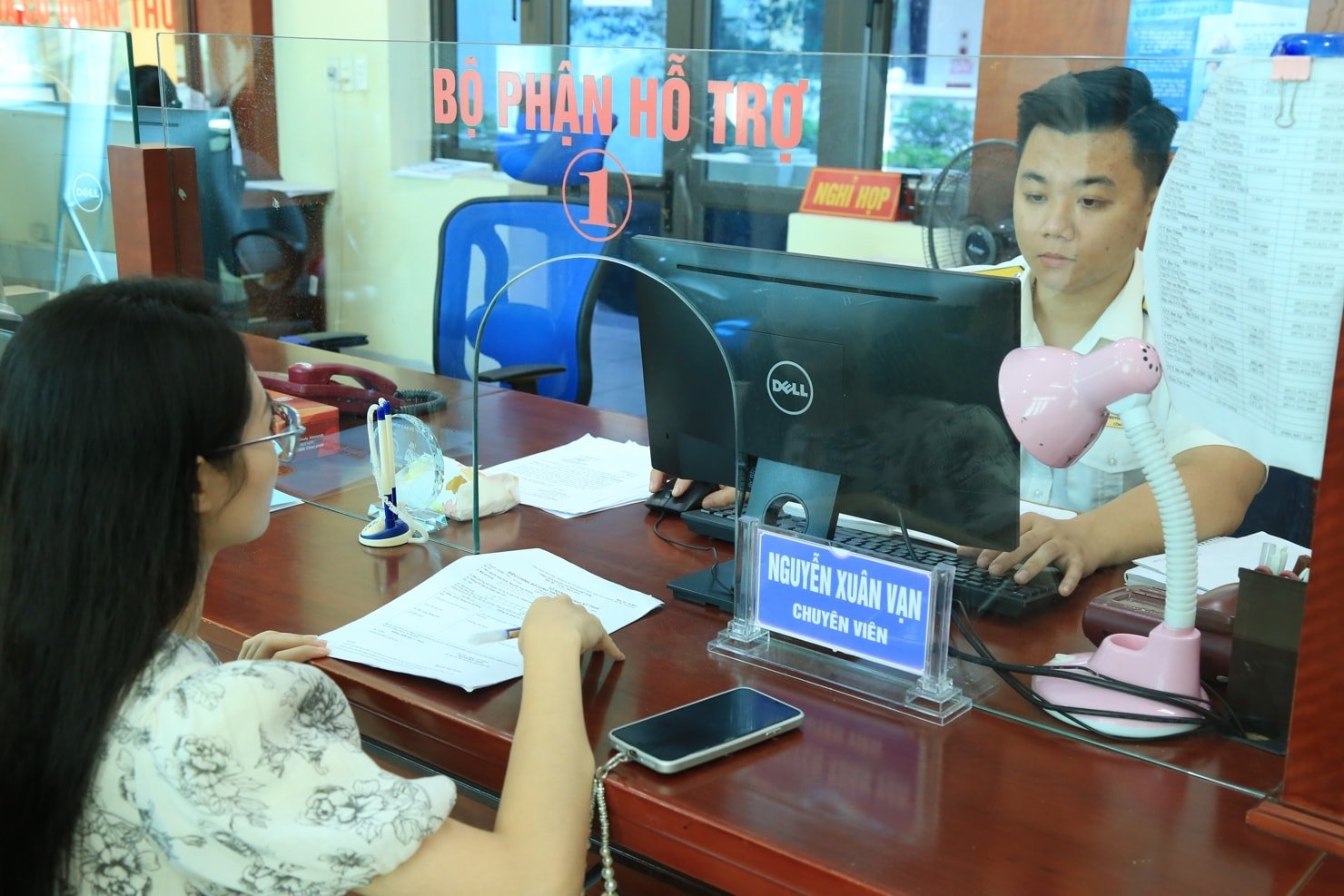
According to Circular No. 29/2024/TT-BGDĐT, in order to register for tutoring, teachers need to register their business, publicly display and post information, and report the content of their tutoring registration to the head of the school. Regarding business registration, they can register as a household business or other types of enterprises as stipulated in the Enterprise Law.
Mr. Nguyen Bach (Vinh City - Nghe An province), whose wife is an English teacher at a high school in Vinh City, shared that on February 18th, he proactively asked someone to submit his business registration application. He was then instructed that he needed to complete a few more documents to be eligible.
“The demand for tutoring is quite high. Besides students in general, relatives and acquaintances want to entrust their children or grandchildren to us for extra tutoring. Or even the children of teachers themselves send their children to us for tutoring. Therefore, it wouldn't be convenient for my wife to teach at tutoring centers, so my wife and I decided to register to teach tutoring according to Circular 29,” Mr. Bach said.
Ms. Nhat Anh, a math teacher at a private secondary school in Bac Tu Liem district, Hanoi, shared that she chose to provide tutoring services through a center. Her reason is that the number of students attending tutoring at her private school is small. Furthermore, her home doesn't have a large enough space to run a physical tutoring class. "I chose to work for a center to avoid any complications. The center handles all the procedures and tuition fees," Ms. Nhat Anh explained.
Information from several localities such as Hai Phong, Ha Tinh, Hanoi, etc., indicates that since February 14th, the number of business registration applications in the education sector has increased.
According to Deputy Minister of Education and Training Pham Ngoc Thuong, the demand for tutoring and supplementary classes is currently very high, but this is a complex activity, both inside and outside of schools. The Ministry of Education and Training issued Circular 29 to tighten management in this field, not to prohibit teachers from tutoring, but only to prohibit tutoring activities that do not comply with regulations. "Managing tutoring and supplementary classes is not just a policy issue, but a change in societal perception," Mr. Thuong said.
How do I pay taxes?
According to Circular 29/2024/TT-BGDĐT regulating extracurricular tutoring, effective from February 14, 2025, organizations or individuals organizing extracurricular tutoring outside of school with fees charged to students (collectively referred to as tutoring centers) must register their businesses in accordance with the law. The amount of tuition for extracurricular tutoring outside of school is determined by agreement between parents, students, and the tutoring center. The collection, management, and use of tuition fees must comply with the laws on finance, budget, assets, accounting, taxation, and other relevant regulations.
Returning to the story of Mr. Nguyen Bach in Vinh City, Nghe An province, he said that when researching information, he learned that if granted a teaching license, he would have to pay an annual business license fee, but the method of paying personal income tax was unclear. "I'm concerned about the basis for calculating revenue for personal income tax purposes," Mr. Nguyen Bach questioned.
And Mr. Nguyen Bach's concerns are also shared by many teachers who rely on relatives or register their own businesses to organize extra classes and tutoring.
Sharing his views on this issue, Mr. Nguyen Van Duoc, General Director of Trong Tin Accounting and Tax Consulting Company Limited, stated that tutoring is essentially a business activity and is subject to taxation.
According to Mr. Duoc, if teachers register to establish a household business, they will apply for a license from the People's Committee of the district or county where the household business is located. If they establish a company or enterprise, teachers will register the company, and this license will be issued by the Department of Planning and Investment, except in cases where they are prohibited from contributing capital, establishing, or managing businesses according to regulations.
Regarding business registration, Mr. Duoc said that business owners will have to go to the tax office to register, pay, and declare taxes in localities where there is no interconnected system. In other cases, they must declare and pay taxes. "Paying taxes under the lump-sum tax system is the most convenient option for business owners," Mr. Duoc said.
According to current regulations, the basis for calculating tax for households paying flat-rate taxes is taxable revenue and the tax rate applied to that revenue. Taxable revenue is the revenue including tax (if applicable) on all sales, processing fees, commissions, and service fees arising during the tax period from the production and business activities of goods and services. Accordingly, revenue from tutoring includes all tuition fees and other related income…
Household businesses and individual business owners with annual revenue from production and business activities of VND 100 million or less are exempt from Value Added Tax (VAT) and Personal Income Tax (PIT) according to the laws on VAT and PIT. Household businesses and individual business owners are responsible for accurately, truthfully, and completely declaring their taxes and submitting tax returns on time; they are legally responsible for the accuracy, truthfulness, and completeness of their tax returns as prescribed.
However, according to Mr. Nguyen Van Duoc, tutoring activities that meet the requirements of the Education Law are not subject to VAT, but tutoring businesses will be subject to personal income tax. The personal income tax rate for the education sector is 2%.
Regarding business license tax, business households paying tax using the lump-sum method are not required to declare business license fees because they have been notified of the lump-sum tax by the tax authority.
In cases where teachers do not directly open a business to organize tutoring but participate in tutoring activities through another organization to receive wages or salaries, Mr. Duoc stated that in such cases, personal income tax must be paid from wages and salaries and added to the teacher's total income at the schools, and the annual personal income tax settlement must be carried out according to regulations.
From January 1, 2026, the tax threshold for household and individual businesses is 200 million VND or more. Household and individual businesses with revenue from production and business activities that fall under the category of VAT and personal income tax payable are calculated according to the following formula:
VAT payable = Taxable revenue x VAT rate.
Personal income tax payable = Taxable income x Personal income tax rate
Source: https://daidoanket.vn/day-them-dong-thue-nhu-the-nao-10300377.html

![[Photo] General Secretary and President To Lam meets with National Assembly delegates from ethnic minorities.](https://vphoto.vietnam.vn/thumb/1200x675/vietnam/resource/IMAGE/2026/04/20/1776696701056_a1-bnd-8331-3342-jpg.webp)
![[Image] National Assembly discusses the implementation of the socio-economic development plan.](https://vphoto.vietnam.vn/thumb/1200x675/vietnam/resource/IMAGE/2026/04/20/1776696707422_ndo_br_img-20260420-185419-jpg.webp)




















































































Comment (0)