

Tutoring has existed since the 1980s. Many schools have conducted surprise inspections and disciplined teachers who violated regulations. However, over time, tutoring classes have become more numerous, sophisticated, and difficult to control. Some teachers conduct private tutoring, while some parents "sponsor" entire classes...
"Three musical notes" to become an excellent student.
A parent, a former student of mine whose child is in elementary school, recounted: "In my free time, I check my child's studies and find that they are doing well in reading, writing, and math. The teacher reports their grades as 5 or 6 out of 10. Every time I meet with the teacher, she always reminds me, 'Your child is still weak.'" However, after enrolling their child in extra classes with the same homeroom teacher, the results skyrocketed to 9-10 out of 10 in just a few sessions.
"If my child makes progress after one or two months of tutoring, that's fine. But to go from 'weak' to excellent in just 'three notes'—is that what extra tutoring is all about, teacher?", a parent asked with a sad smile. The question left me stunned and worried about the image of the teaching profession in the face of these alarming distortions.
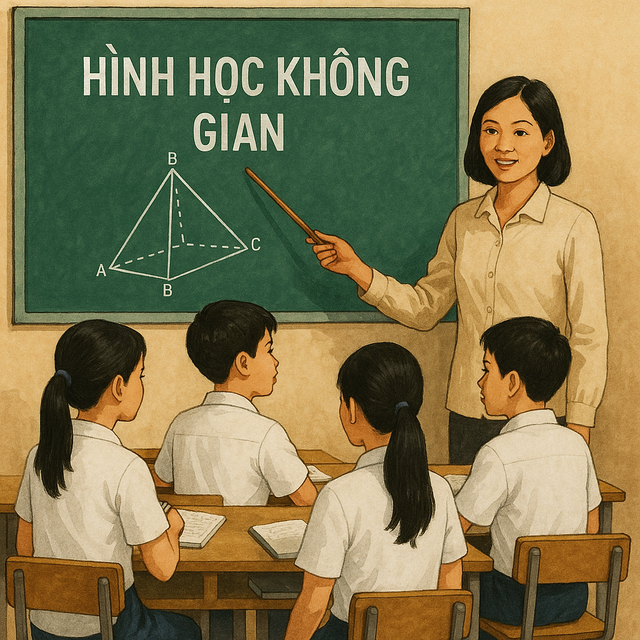
The landscape of tutoring and extra classes has many dark sides that shake faith in education.
Photo: ChatGPT
I'm tutoring my child myself because the school doesn't allow repeating a grade.
Another parent requested that her child repeat first grade because she felt her child still couldn't write their own name. However, the school refused, citing a "no-repeat-student quota." With no other option, she decided to keep her child home from school for over 45 days and teach them from scratch. The child practiced writing and math with her mother, gradually learning to read slowly and then faster, writing their own name neatly, and no longer struggling with addition and subtraction. As a result, the child made significant progress and caught up with the curriculum.
"Being a year behind in school is okay, as long as my child has a solid foundation," the parent said with tears of happiness. Now, the child is in 8th grade, behind their peers, but for this parent, a year behind in school is fine as long as their child has a solid foundation.
When grades are "linked" to extra classes.
One student recounted that in sixth grade, after attending extra tutoring sessions at the home of their regular school teacher, they discovered that the in-class test questions were identical to the practice questions from the tutoring session. Some students even scored only 5 points on the in-class test, but when they took another test at the tutoring session, their score was changed to 9.
When this student was in 12th grade, choosing a major and university, I suggested she study education. She remained silent. Later, she sent me a long text message, recounting her past trauma.
T.D., a 10th-grade student at a specialized high school, said she deliberately avoided taking extra classes with her regular teachers. "I want to be assessed fairly based on my abilities, without being influenced by teachers 'leading the questions' during tests. Furthermore, learning from two different teachers allows me to learn more diverse approaches," she said.
Some classmates made similar choices. However, some students chose to take extra classes with their regular teachers because of the continuity in the lessons, which facilitated learning and revision.
Student V. went to the board to solve a math problem by simplifying it using an inequality learned in an extra tutoring class. The teacher in the regular class didn't accept it, loudly asking, "Whose work is this?" The whole class fell silent. After solving it himself using a different method, the teacher arrived at the same result as the student, but with a more complicated approach.
Such situations cause psychological harm to students, create conflict between teachers, and affect the school's reputation. These "dark moments" on the podium tarnish the image of the teacher.
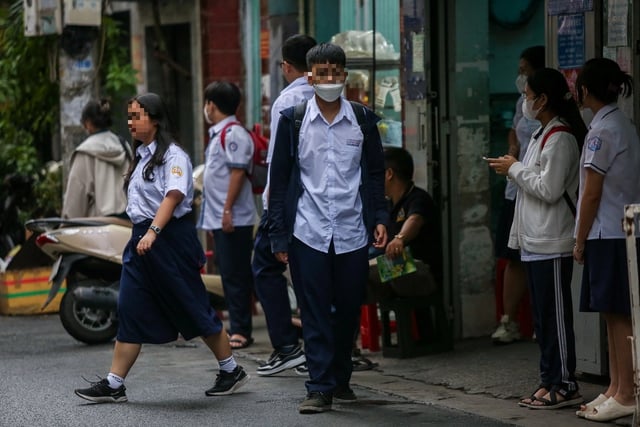
Tutoring and extra classes are not entirely negative, but if not properly controlled, they can distort the educational environment.
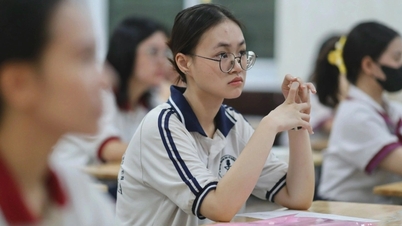
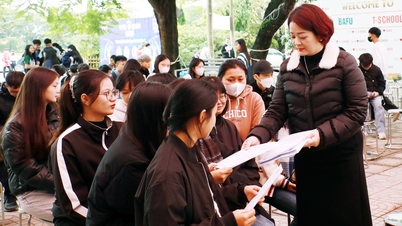
Illustration photo: Nhat Thinh
Separation is necessary.
Considering the overall picture of tutoring and supplementary classes, it is necessary to separate tutoring for students in regular classes.
Circular 29 of the Ministry of Education and Training prohibits teachers from giving extra tutoring to students they are teaching in their regular classes. This is a necessary boundary to protect fairness and objectivity in education.
To put an end to the widespread practice of private tutoring, multiple solutions are needed simultaneously: improving teachers' incomes, enhancing the quality of regular classroom teaching, reforming assessment methods, and building trust among students and parents.
Tutoring and extra classes are not entirely negative, but if not properly controlled, they can distort the educational environment.
Source: https://thanhnien.vn/day-them-hoc-them-nhung-gam-mau-sang-toi-185250616093324313.htm

![[Photo] Prime Minister Pham Minh Chinh attends the Conference on the Implementation of Tasks for 2026 of the Industry and Trade Sector](/_next/image?url=https%3A%2F%2Fvphoto.vietnam.vn%2Fthumb%2F1200x675%2Fvietnam%2Fresource%2FIMAGE%2F2025%2F12%2F19%2F1766159500458_ndo_br_shared31-jpg.webp&w=3840&q=75)
























































































Comment (0)