

According to the 2018 General Education Program, high school students are allowed to choose subjects that match their abilities to focus on developing their strengths, clearly define their goals, and build an optimal learning path. However, the current subject selection and examination process is often subjective and unbalanced.
ARE STUDENTS AFRAID OF SCIENCE DUE TO… INTEGRATED TEACHING METHODS?
A middle school science teacher in District 1, Ho Chi Minh City, said that many students are not interested in science. According to this teacher, the knowledge in science subjects (physics, chemistry, biology) is often theoretical and abstract, requiring logical thinking and memorization skills. If not taught in an engaging way, students may find it boring or difficult to understand.
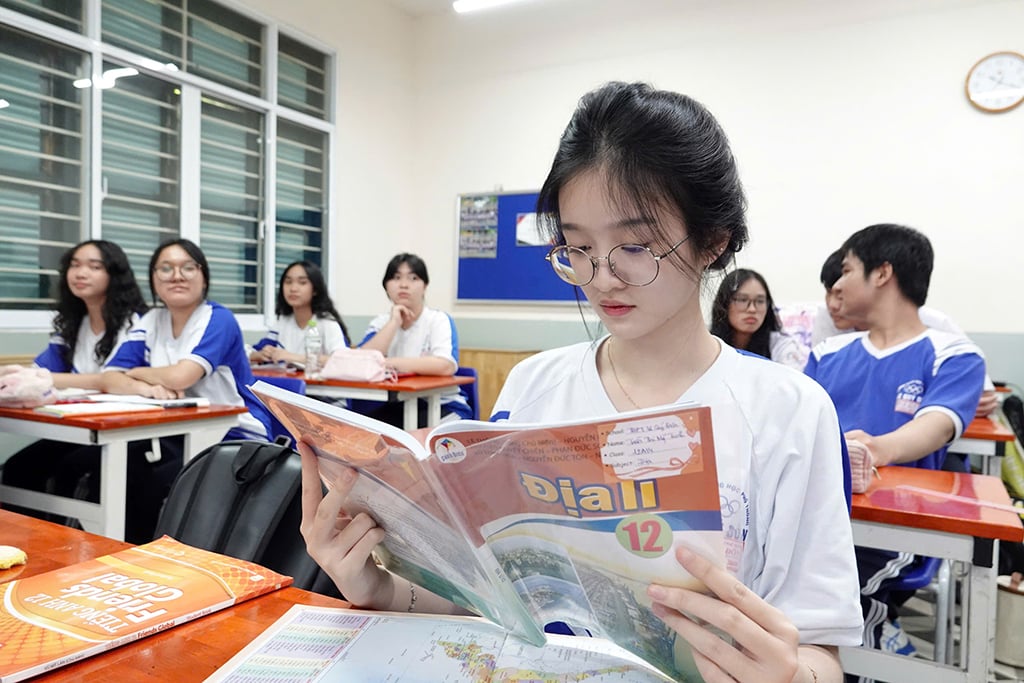
In many localities, high school students' choices of subjects and their graduation exams in 2025 are trending towards social science subjects.
PHOTO: DAO NGOC THACH
There are many reasons, such as: outdated teaching methods, limited use of practical experiments, and a lack of connection between knowledge and practical application, which prevents students from seeing the significance of the subject. In addition, because teachers from the old curriculum teach all three sub-disciplines of the new curriculum, there is still a tendency to "teach just for the sake of teaching" rather than teaching what they know. Furthermore, in some schools, three teachers are responsible for the three sub-disciplines, creating immense psychological pressure and causing students to fear learning science.
Many parents find the subject difficult, so they either don't encourage it or lack clear guidance on the role of natural sciences in life. This affects students' interest and understanding.
"When entering high school, students and parents tend to choose easy, less demanding subjects, so most lean towards social sciences. A small number, due to their dreams and family expectations, choose the natural science combination to study health, mechanical engineering, construction, etc.," this teacher stated, adding that when teaching physics, chemistry, and biology at the junior high school level, they discovered a significant knowledge gap in most students.
Ms. Pham Phuong Binh, Deputy Head of the Continuing Education Department of the Ho Chi Minh City Department of Education and Training, also believes that most science teachers receive training in a "stopgap" manner (physics teachers receive additional training in chemistry and biology, and similarly for chemistry and biology teachers). This approach cannot meet the program's objectives, which require teaching based on students' abilities. This creates a sense of apathy among students towards science because they cannot grasp, understand, and apply the knowledge. This "loss of fundamental knowledge" from the lower secondary level leads to students "fearing" physics, chemistry, and biology.
THE PSYCHOLOGY OF CHOOSING SOCIAL SCIENCES "FOR THE EASIER TIME"
Furthermore, according to Mr. Pham Phuong Binh, the uneven assessment across subjects is also a contributing factor. Some physics, chemistry, and biology teachers often include difficult concepts and challenging exam questions for gifted students in their lessons and tests. Students are more likely to receive lower scores compared to those studying social sciences. The majority of students who choose to study natural sciences have to attend extra classes to supplement their knowledge and practice with exercises and exam questions, which also creates stress and leads to a shift in their subject choices. When comparing natural sciences and social sciences, students find history and geography easier.
Furthermore, Mr. Binh stated that changes in university admission methods, with diverse approaches, have led many students to choose admission based on academic transcripts and participate in separate entrance exams, resulting in a shift away from traditional university admission combinations. The use of academic transcripts for admission at some universities forces students to carefully consider which subjects are easier to score high in.
Mr. Binh believes that this is also due to a change in parental behavior. While in the past parents imposed their children's academic goals, now they accompany, share, and accept their children's choices. Many parents only require their children to study well, with minimal pressure, and to be happy and joyful at school. This is also a reason for the trend of changing subject choices starting from grade 10.
According to many teachers, the practice of choosing social science subjects for easier learning is a temporary mindset, and this is understandable. The problem is that the range of natural science subjects required for university entrance exams is very diverse, so if students narrow their choices down to not studying natural sciences, they will miss out on many opportunities in fields that require high-quality human resources in technology and engineering – which are fundamental to the development of the nation's industry. Furthermore, high school teachers need to cultivate a passion for and nurture interest in natural sciences so that the proportion of students who enjoy both natural and social sciences is equal.
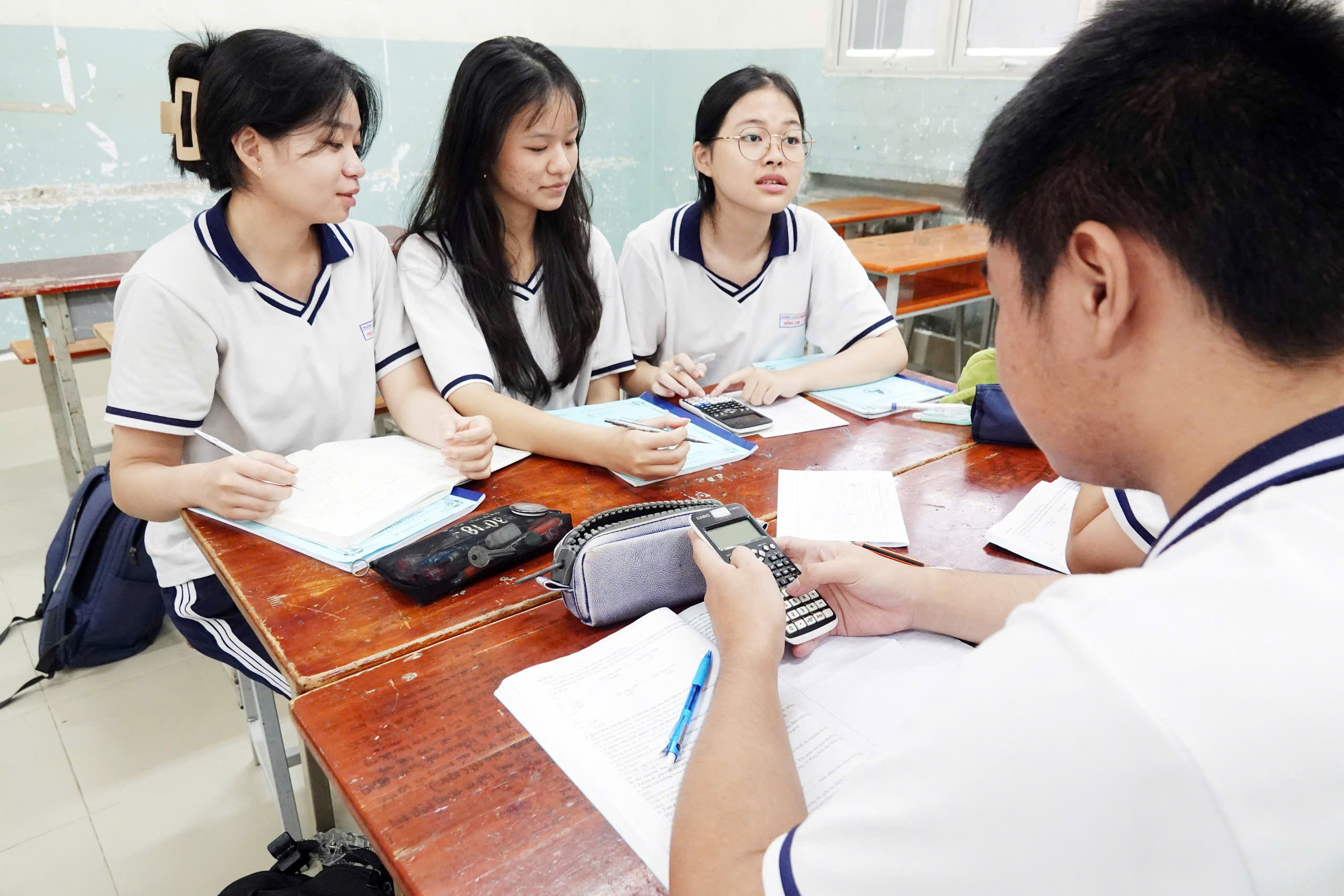
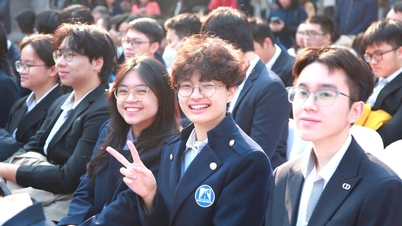
12th-grade students are currently considering their elective subjects for the upcoming high school graduation exam.
Photo: Jadeite
There is a need for reforms in testing, evaluation, and admissions.
According to the vice principal of a high school in Thu Duc City (Ho Chi Minh City), to eliminate the mentality of choosing social science subjects because they are easy and produce good academic records, it is necessary to address issues ranging from teacher training to the integration of curriculum implementation between junior and senior high schools, especially between the senior high school curriculum and university admissions. The core of the problem is that reforms in testing, assessment, and admissions must align with the goals of the 2018 General Education Program.
Regarding this issue, Master Pham Le Thanh, a teacher at Nguyen Hien High School (District 11, Ho Chi Minh City), suggested that the Ministry of Education and Training should soon provide guidance on the 2025 high school graduation exam and how the results will be used for university admissions. In reality, according to regulations, students taking the 2025 high school graduation exam will take four subjects: two compulsory subjects (mathematics and literature); and two elective subjects from a selection of foreign languages, history, geography, physics, chemistry, biology, economics and law, technology, and informatics. Therefore, the number of subjects tested does not cover all the traditional subject combinations used for university admissions.
Master Thanh analyzed that previously, although there were nearly 100 combinations of 3 subjects for admission, in reality, students only registered for admission based on traditional exam blocks such as A00 (mathematics, physics, chemistry), A01 (mathematics, physics, foreign language), B00 (mathematics, biology, chemistry), C00 (literature, history, geography), and D01 (mathematics, literature, English). Each major usually considered multiple combinations, a maximum of 4, and only around 5 traditional combinations.
"The Ministry needs to study the use of high school graduation exam scores for university admissions to ensure fairness if multiple subject combinations are used for admission to the same major. Currently, universities may use their own admission methods, but each institution has its own approach. Therefore, we hope that the Ministry of Education and Training will issue specific regulations on state management in the admissions regulations to ensure the quality of the exam and fairness for students," suggested teacher Pham Le Thanh.
The "3 Understandings" formula balances students ' choices.
Under the current general education program, students are allowed to choose subjects that match their abilities. Therefore, students and parents need to pay attention and have the right perspective to make the right choices and help students maximize their abilities, as well as avoid creating an imbalance in subject selection based on emotions.
To achieve this, Master Pham Le Thanh suggests that students need to grasp the "3 Understandings" formula when choosing subjects.
First and foremost, "Understanding Yourself" is crucial when choosing a combination of subjects. Students need to understand themselves. This includes exploring their personal abilities, strengths and weaknesses, hidden talents, and interests. Students should ask themselves: "What skills do I possess that I feel confident in? What activities do I enjoy? What do I want to do in the future?"
Next, it's crucial to "understand the profession," because during the process of choosing subjects based on career orientation, students need to learn about different professions, the necessary skills, and development trends. Parents, teachers, and schools need to support students in analyzing and predicting career trends and the necessary workforce in society so that they can make informed career choices.
And in particular, "Understanding the universities you wish to attend" will help you determine which admission/exam methods align with your strengths. What subjects do the individual entrance exams of these universities require you to excel in?
Source: https://thanhnien.vn/de-hoc-sinh-chon-dung-mon-hoc-mon-thi-tot-nghiep-18524120622195462.htm























































































Comment (0)