

From teaching staff and facilities to curriculum management and textbooks, localities have put forward recommendations and solutions to improve the effectiveness of the new curriculum implementation in the next phase.
A diverse "picture"
According to Ms. Vo Thi Minh Duyen, Deputy Director of the Dak Lak Department of Education and Training, over the past five years of implementing the 2018 General Education Program, the Dak Lak education sector has strived to overcome many difficulties and achieved significant results, contributing to the fundamental and comprehensive reform of general education in the province. The quality of education has improved positively, and the scale of schools and classes remains stable. The student enrollment rate is high, and universal education is maintained.
The teaching staff and management personnel have improved their qualifications and capabilities to meet the requirements of innovation. The socialization of education, promotion of learning, and talent development have been strengthened. The quality of mass education has been maintained stably, and the gap between regions has gradually narrowed. The quality of advanced education has continuously increased, especially in the 2024-2025 school year, when the province's achievements in advanced education reached their highest level ever.
However, practical implementation reveals numerous difficulties and limitations. Specifically, the physical infrastructure and teaching equipment in many areas do not meet the requirements; the percentage of primary school students attending two sessions per day remains low; there is a shortage of teachers in some subjects and new educational activities. Some local educational materials have not yet been printed and distributed; and the selection of textbooks is fragmented, hindering professional development activities within school clusters.
Investment resources for education are limited compared to actual needs. According to Ms. Vo Thi Minh Duyen, the main reasons are the difficulty in securing funding; the large number of primary school teachers retiring before replacements can be recruited; and the sometimes inconsistent mechanisms for decentralized management and coordination between different levels of government.
With considerable effort, Hue City has also achieved remarkable results in implementing the 2018 General Education Program. Highlighting some outstanding achievements, Mr. Nguyen Tan - Director of the Department of Education and Training, mentioned that the average score of the 2025 High School Graduation Examination in the locality reached 6.61, ranking 9th out of 34 provinces and cities, with 5 subjects in the top 10 nationwide.
Digital transformation has been accelerated, with the implementation of digital school records at all three levels of education, and the connection of educational data with national population data. Schools have been given increased autonomy, and many innovative models have emerged, linking education with heritage and STEM.
However, practical experience reveals bottlenecks that need to be addressed. According to Mr. Nguyen Tan, these include a shortage of teachers; a lack of standardized subject classrooms and teaching equipment; and cumbersome and lengthy procedures for purchasing equipment. In addition, local educational materials, although approved, are slow to be published and distributed. Furthermore, the socialization of education has not yet created a strong impetus to mobilize resources outside the state budget.
In Nghe An province , over the past five years, the education sector has seriously, creatively, and flexibly implemented the 2018 General Education Program and achieved many important results. Sharing the local experience, Mr. Vo Van Mai, Deputy Director of the Department of Education and Training, emphasized that first and foremost is the proactive, decisive, and persistent approach of the education sector in advising on the issuance of local mechanisms and policies, and coordinating to secure resources.
Simultaneously, the implementation of curriculum and textbook reforms should be closely and synchronously linked with reforms in school governance, state management at all levels, and the reform of teaching methods, assessment methods for each teacher, and a strong digital transformation in management and teaching.
Paying special attention to teacher development is also a crucial lesson. This attention needs to be synchronized across recruitment, placement, training, professional development, and reward and recognition programs; in particular, professional development should be closely aligned with teachers' needs. Furthermore, emphasis should be placed on strengthening digital transformation in education; and proactive and regular communication efforts should be undertaken to gain consensus throughout the sector and society as a whole.
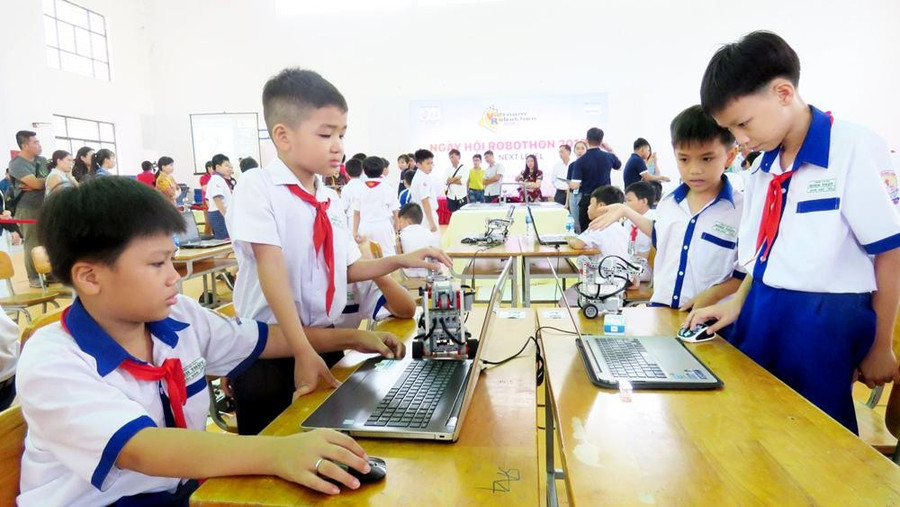
Ensuring the conditions for implementation in the new context.
In Ho Chi Minh City, according to Mr. Nguyen Bao Quoc, Deputy Director of the Department of Education and Training, the education sector has proactively reviewed the conditions and advised the City People's Committee to prepare and ensure sufficient staff, facilities, and funding for the implementation of the new curriculum and textbooks.
The reform of the general education curriculum and textbooks has been implemented according to schedule, closely following the educational reform guidelines and directives from all levels. The synchronized implementation, fostering initiative, creativity, and responsible coordination, has helped improve the effectiveness of the 2018 General Education Program…
Looking ahead, Mr. Nguyen Bao Quoc proposed the following: He suggested that the National Assembly should decide to implement a unified set of textbooks nationwide according to a roadmap to ensure the best possible preparation for administrators, teachers, students, and parents. He also suggested that the Government should specify regulations regarding the decentralization of management, inspection, and supervision of schools under higher education institutions; and pay attention to the retirement age of teachers to ensure it aligns with the unique nature of the work in the education sector.
Ministries and ministerial-level agencies need to issue specific mechanisms and policies on teaching two sessions per day for secondary school students; research and issue regulations on standards for specialized equipment, digital learning materials, and digital student records; specific policies on online learning and blended learning; and direct teacher training colleges to train and develop educational content to standardize teachers.
The implementation of the new program in Nghe An still faces many limitations, shortcomings, difficulties, and obstacles, and the locality is making efforts to overcome them step by step. Sharing this, Deputy Director Vo Van Mai suggested that the Ministry of Education and Training advise the Government to have a separate policy on the staffing of civil servants in the Department of Education and Training and the Department of Culture and Social Affairs (under the People's Committee at the commune level); ensuring the staffing of teachers in educational institutions; and not rigidly implementing the policy of reducing staff by 10%.
The Ministry of Education and Training continues to support and guide localities in implementing digital transformation and deploying STEM education; providing guidance on the roadmap for implementing a single set of textbooks nationwide, so that localities can proactively advise local Party committees and authorities to ensure the necessary conditions for implementation in educational institutions.
Entering the second cycle of curriculum and textbook reform for general education, in conjunction with the implementation of Resolution No. 71-NQ/TW of the Politburo, Mr. Nguyen Tan hopes that the Ministry of Education and Training will continue to propose to the Central Government a plan to supplement staffing and not implement the 10% staff reduction for the education sector. Along with that, he hopes for continued research and adjustment of the content and teaching methods of integrated subjects to suit the specific characteristics of each educational level, ensuring uniformity and consistency nationwide.
At the same time, review and adjust the regular training programs and regulations related to training in a systematic and effective manner to best promote the spirit of lifelong learning among the staff, and build a team of teachers and administrators with sufficient capacity to meet the requirements of improving the quality of education and training in the new period.
According to Vo Thi Minh Duyen, Deputy Director of the Dak Lak Department of Education and Training, the Ministry of Education and Training should continue to have special preferential policies for teachers working in remote areas, ethnic minority areas, mountainous regions, and border areas.
Regarding investment in infrastructure, continue allocating funds from national target programs for education; support minimum teaching equipment for all grade levels according to the roadmap of the 2018 General Education Program. Regarding the teaching staff, allow localities flexibility in recruiting teachers for new subjects; promote training and updating teaching skills in a way that develops students' qualities and competencies.
Ms. Vo Thi Minh Duyen hopes that the Ministry of Education and Training will soon advise the competent authorities to amend and supplement the Education Law and related legal documents on the compilation of local educational materials, in the direction of assigning the Provincial People's Committee to organize the compilation, appraisal, and approval of these materials for teaching in general education institutions.
The Ministry of Education and Training, in coordination with the Ministry of Finance, has revised and supplemented Circular 51/2019/TT-BTC dated August 15, 2019, to facilitate the compilation, printing, and distribution of local educational materials.
According to the Ministry of Education and Training's assessment, localities have been proactive and decisive in directing and issuing resolutions, projects, and plans when implementing the reform of the curriculum and textbooks. Although the implementation still varies between localities and educational institutions, it has basically met the goals and requirements of the reform.
Source: https://giaoducthoidai.vn/chuong-trinh-giao-duc-pho-thong-2018-tien-toi-chieu-sau-chat-luong-post754441.html












































































Comment (0)