

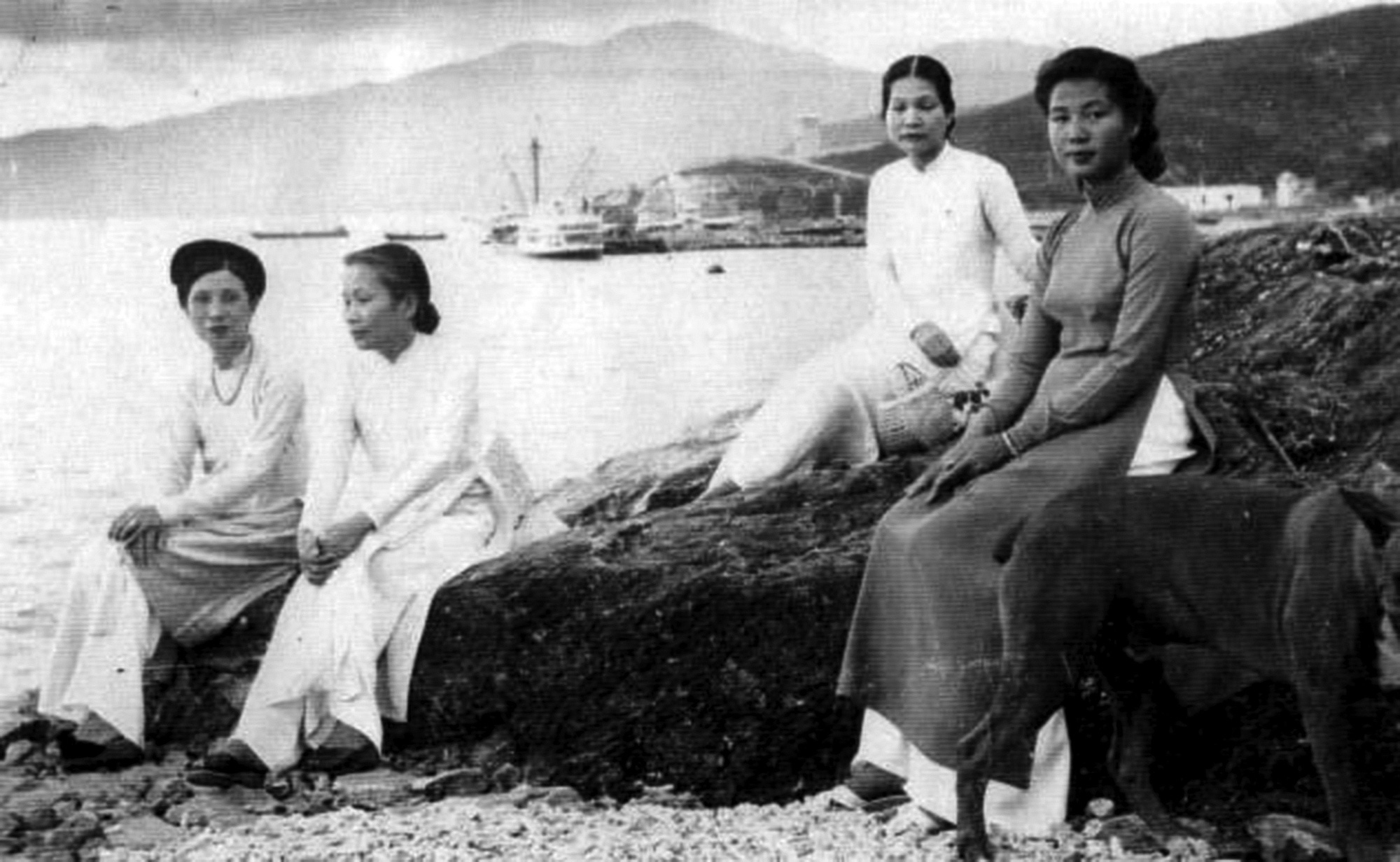
The wives of King Khai Dinh, Consort Tiep Du (second from the left) and Consort Tan Diem (third from the left), pictured with Concubine Mong Diep (right) of King Bao Dai in Nha Trang in 1951 - Archival photo.
"Sending a daughter into the royal household," meaning sending a daughter to become the king's wife, is often understood by people in Hue as "it's over," signifying despair and loss with no hope of ever seeing her again.
Life within the royal court, which was once like scattered fragments of history, has been painstakingly reconstructed by reporters under the reign of King Khai Dinh.
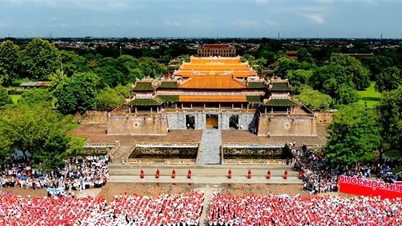
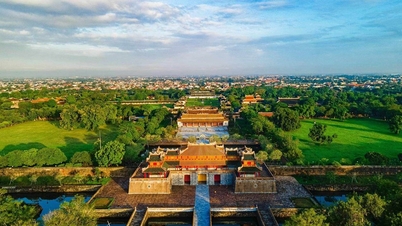
Along the brick path winding through the lush green lawns of the Hue Imperial Citadel, many tourists are surprised and delighted to learn that it was once the residence of the emperor's wives.
Within the confines of the imperial harem, the lives of the women were sometimes glorious, but also filled with endless pain and despair, perhaps most painful during the reign of Emperor Khai Dinh - an impotent king who never shared a bed with a woman...
12 beautiful
The book Dai Nam Thuc Luc, written during the reign of Khai Dinh, records the names and ranks of the king's five wives. The first wife: Ho Thi Chi, daughter of the high-ranking official Ho Dac Trung, entered the inner palace and was promoted to the first rank of An Phi in 1917.
The second consort: Hoang Thi Cuc (later Empress Dowager Doan Huy - Tu Cung), was promoted to third-rank Hue Tan in 1917, second-rank Hue Phi in 1918, and first-rank Hau Phi in 1923. The third consort: Pham Thi Hoai, fifth-rank Diem Tan in 1918, and third-rank Diem Tan in 1922.
The fourth consort: Võ Thị Dung, daughter of the high-ranking official Võ Liêm, entered the imperial palace in 1919 and was promoted to the fourth rank of Du Tần. The fifth consort: Nguyễn Đình Thị Bạch Liên, granddaughter of the high-ranking official Nguyễn Đình Hoè, was promoted to the fifth rank of Điềm Tần in 1922.
The book Khai Dinh Chinh Yeu, published in 1917 while the king was still alive, mentions two more women: Tran Dang Thi Thong, who was promoted to the seventh-rank Noble Lady, and Ngo Thi Trang, who was promoted to the ninth-rank Talented Lady.
The woodblock print of the Surangama Sutra from Dieu De Pagoda, carved in 1922 (the Surangama Sutra commentary from Dieu De Pagoda), which has not yet been printed and is currently stored at the Hue Buddhist Academy Archives, has been supplemented with four more women: Concubine Tran Thi Khue, Palace Lady Nguyen Thi Vinh, Lady Truong, and Talented Lady Mai.
In 1968, Mr. Vuong Hong Sen visited Hue and collected some verses that had circulated in the palace, listing the names and "characteristics" of the king's ten wives. When comparing them with the official history of the Nguyen dynasty and the woodblock prints of the Surangama Sutra at Dieu De Pagoda, we realized that this poem added another concubine named Bieu or Tao.
According to former Emperor Bảo Đại's recollection, there were 12 consorts in the imperial harem during the reign of Emperor Khải Định. In his memoir "The Dragon of Annam," former Emperor Bảo Đại recounts that in 1922, when his father left the palace to travel to France for the Marseille Exhibition and to "study to become a king," the 12 consorts, divided into two rows, prostrated themselves in the Forbidden City to see him off.
The former emperor wrote: "Upon arriving at Kien Trung Palace, I bowed before my father, the emperor, and no one spoke a word. The two of us went out to the right-hand corridor and were escorted to Can Thanh Palace, where a small farewell ceremony took place. Along the pink walls, the emperor's twelve concubines knelt in wait, according to their rank. No one dared to look up."
Among these women was my mother, a concubine, silently shedding tears. My father and I walked away nonchalantly, as if indifferent...
The royal palace was like a temple.
Many stories and books have been written about King Khai Dinh's impotence and his "colorful" life. However, the king filled all nine ranks of the imperial harem within the Forbidden City.
The practice of bringing women into the imperial harem was not solely at the behest of the king or the empress dowager, but also involved high-ranking officials offering their daughters to the palace in pursuit of fame, fortune, and power.
Many officials engaged in "double-dealing": they relied on the influence of the two Empress Dowagers. The King, unwilling to refuse and risk displeasing his mother and the high-ranking officials, agreed to the appointments depending on the officials' ranks and bestowed titles upon the women according to their fathers' positions in the court.
Officials offered their daughters to the palace in such large numbers that Emperor Khai Dinh once said: "My inner palace is like a temple; anyone who wants to become a monk can come in!"
The ladies' salaries were also very low, hardly worth anything. A comment made by the fourth-rank concubine Vo Thi Dung to her friends, which was directly heard and recorded by Mr. Vuong Hong Sen, was: "Marrying a king, receiving a silk robe is still worse than a poor girl in the South who marries the son of a landowner."
Every day, the ladies of the imperial palace were assigned to attend to the emperor at Kien Trung Palace, the emperor's main residence. Those of the third rank could pay their respects: they would usually be present to inquire about the emperor's health before he rested.
The sixth-ranking officials were often given special attention: they had to be present when the imperial kitchen served meals to arrange the dishes and stand in attendance while the emperor ate. This was also an opportunity to get a good look at the face of the "only man in the kingdom."
Mrs. Nguyen Phuoc Tuy Ha once asked her grandmother, former fourth-rank concubine Vo Thi Dung (also known as Tan Du): "Grandma, is it fun in the palace?"
- "It was fun, the sisters played together all day long, sometimes jumping rope, sometimes hopscotch, sometimes playing with sticks, all sorts of games. When they were laughing and making a lot of noise, the next morning when they went to pay their respects to His Majesty (referring to Emperor Khai Dinh), they would hear him ask, 'What did you ladies play yesterday that made you so happy?'"
Behind the city walls, beautiful young women lived together, finding joy in their talents. Those skilled in painting painted, those who played music played their instruments daily, and others embroidered and sewed... These exceptionally talented women had no opportunity to spread their beauty far and wide."
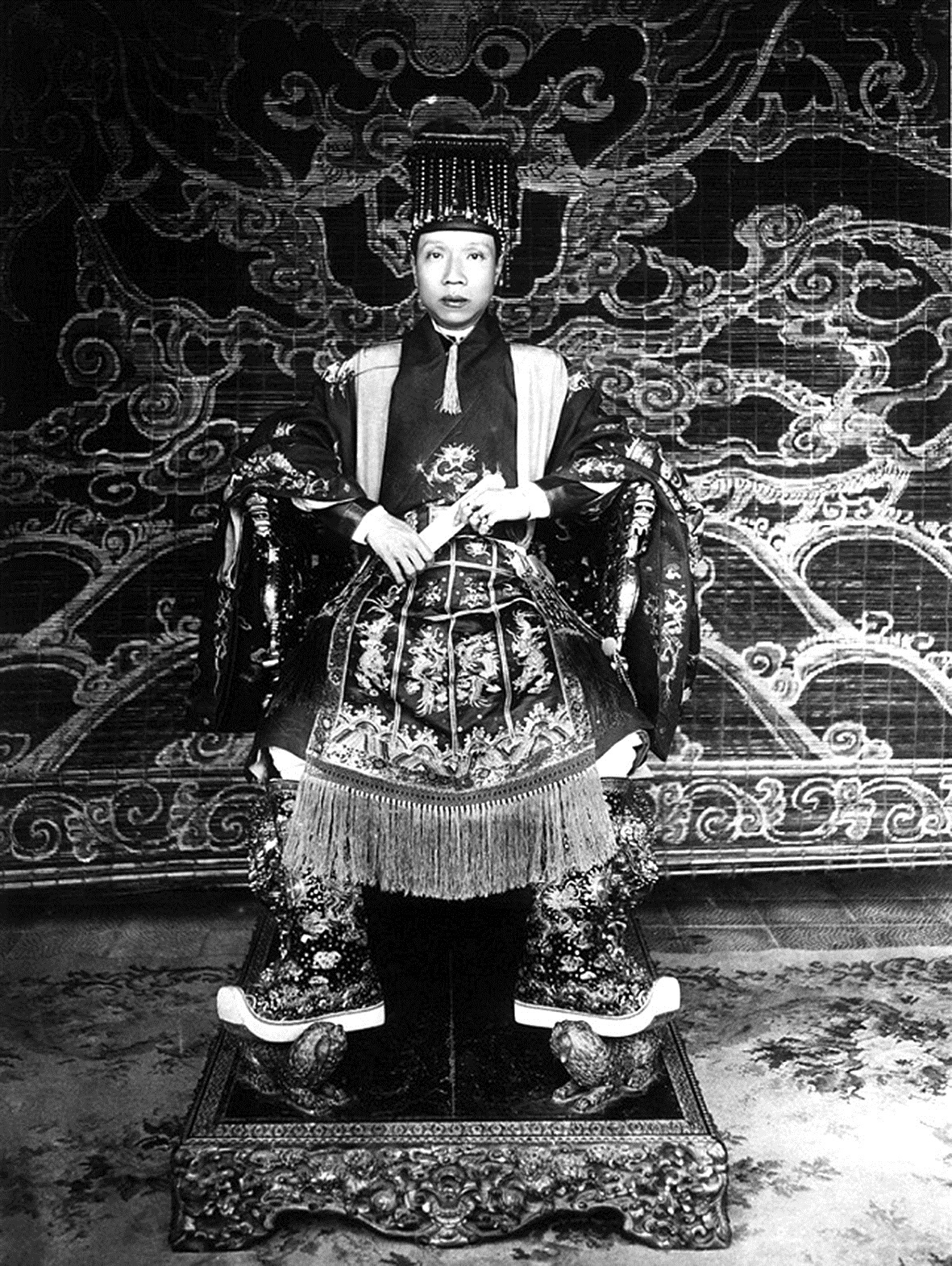
King Khai Dinh disliked and avoided women, even though he had 12 wives - Archival photo.
Call her into the palace to... string beads.
"His Majesty doesn't like picking flowers" - that was the clever way Mrs. Tan Diem Nguyen Dinh Thi Bach Lien responded to many newspapers during her lifetime regarding her husband's marital life. Mrs. Nguyen Huu Bich Tien, the niece of Empress Dowager Thanh Cung, had frequented the imperial palace and therefore knew many details of the inner court during the reign of Khai Dinh.
During her lifetime, she recounted to cultural researcher Tran Dinh Son that in early 1922, the imperial harem within the Forbidden City was suddenly in turmoil due to the emperor's apparent "need for intimacy." One night, the emperor summoned Noble Consort Ngo Thi Trang to Kien Trung Palace (where the emperor resided). The next morning, when Noble Consort Trang returned to her quarters, several other court ladies gathered around, asking about the previous night's "intimate encounters." Noble Consort Trang merely smiled and said nothing.
On the second night, the king again invited Quy Trang to his palace for the night. Returning early the next morning, Quy Trang looked haggard, and the palace ladies were waiting outside to question him. Their curiosity grew as they speculated further when Quy Trang merely smiled subtly, with a hint of arrogance and a haughty air...
On the third night, Quy Trang was also invited to the palace in a similar manner. It's unknown whether the other palace ladies managed to sleep all night. When she returned to the palace early in the morning, Quy Trang looked extremely tired, her face haggard and worn out.
Before the ladies could ask, Quy Trang burst into tears. It turned out that the three nights she had been invited to the palace weren't for attending to the emperor's health, but rather to... string beads for the emperor's robe until her eyes were blurry, her back was bent, and her limbs were exhausted.
The Emperor's attire at the time had many beads coming loose in places. Knowing that Quy Trang was skilled with her hands, the Emperor invited her into the palace to have them re-strung perfectly before he departed for France to attend the Marseille exhibition...
"The inner palace has many beautiful women."
Diem is calm, An is silent, Tiep is reckless, Hue is fierce.
Du and Diem are deceitful and manipulative.
Quy Trang and Cung Vinh are acting like they're crazy, like they're insane.
Talent and Performance are natural.
"Tai Tao is a rambling, nonsensical fool who easily laughs."
Vuong Hong Sen - from the book "On the Margins of Old Books"
(Temporary interpretation: Consort Diễm Phạm Thị Hoài is gentle and demure, Consort Ân Phi Hồ Thị Chỉ is taciturn, Consort Huệ Phi Hoàng Thị Cúc is aggressive, Consort Du Võ Thị Dung and Consort Điềm Nguyễn Đình Thị Bạch Liên are indecisive, Noble Lady Ngô Thị Trang, Palace Lady Nguyễn Thị Vịnh and two Talented Ladies named Biểu and Táo).
----------------
Before becoming king, Prince Bửu Đảo was addicted to gambling, accumulating massive debts and squandering his wife's family's money on endless gambling sessions. His first wife, unable to bear it any longer, divorced him and became a monk.
Source: https://tuoitre.vn/bi-an-my-nhan-noi-cung-vua-khai-dinh-ky-1-noi-cung-co-may-my-mieu-20231124233404199.htm

![[Photo] Prime Minister Pham Minh Chinh attends the Conference summarizing and implementing tasks of the judicial sector.](/_next/image?url=https%3A%2F%2Fvphoto.vietnam.vn%2Fthumb%2F1200x675%2Fvietnam%2Fresource%2FIMAGE%2F2025%2F12%2F13%2F1765616082148_dsc-5565-jpg.webp&w=3840&q=75)












































































Comment (0)