
The current Nhat Tru Pagoda is built in the Nguyen Dynasty architectural style, in the shape of the Chinese character "丁" (ding), comprising a triple gate, main hall, ancestral hall, and auxiliary structures. However, archaeologists have found many valuable traces and artifacts (such as wooden raft foundations made of ironwood, lotus-patterned bricks) that provide evidence of Buddhist architectural foundations from the 10th century.
One-Pillar Pagoda in Hoa Lu
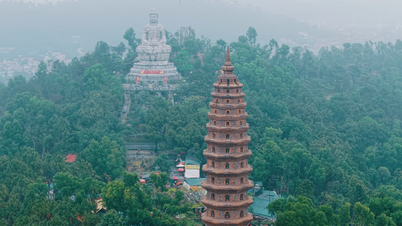
The temple is built on a stone pillar (formerly a wooden pillar), shaped like a lotus flower rising from the water. Most notable is the 4.16-meter-high stone Buddhist scripture pillar (Thạch Kinh), erected right in front of the temple courtyard. This pillar has been recognized as a National Treasure.
 Lê Vân•28/10/2025
Nhat Tru Pagoda is not only a historical relic but also a living testament to the prosperous Hoa Lu capital and the significant role of Buddhism in the royal court during the early period of national independence.
You may also like

The architecture of Ong Chu Pagoda and Ba Mu Pagoda as seen in historical documents.Quang Nam province boasts a magnificent architectural structure of exceptional historical, cultural, artistic, and architectural value, which was listed by the French School of Far Eastern Studies as one of the three representative relics of Hoi An in 1930, along with the Japanese Bridge and the Trieu Chau Assembly Hall.

Quan Cong Temple - Ancient architecture and outstanding spiritual valueThe Guan Gong Temple is a famous sacred site where visitors can learn about the worship of Guan Gong, combined with ancient architecture and unique cultural values.
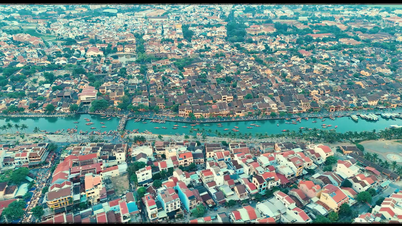
Hoi An village in Son Cam HaVillage culture is preserved amidst the hurried flow of time, ensuring that Hoi An, nestled in the heart of the mountainous Son Cam Ha region, will always be remembered. With ancient houses preserved for generations, and the unique Ky Yen festival held every Ancestor Commemoration Day, it allows those who have left their homeland to return and live within the roots of their native land.
Many researchers believe that when King Ly Thai Tong moved the capital from Hoa Lu to Thang Long and built the One Pillar Pagoda in Hanoi , he brought with him the spirit and ideas from the Buddhist architecture of the Dinh and Early Le dynasties in Hoa Lu, where the One Pillar Pagoda and other stone pillars were located.

Senior Party and State leaders send letters and telegrams congratulating the United States on its National Day.In congratulatory letters and messages on the US Independence Day, senior leaders of the Vietnamese Party and State reaffirmed that Vietnam considers the United States one of its strategically important partners.
Senior leaders of the Vietnamese Party and State send letters and telegrams congratulating the United States on its National Day.In congratulatory letters and messages on the US Independence Day, senior leaders of the Vietnamese Party and State reaffirmed that Vietnam considers the United States one of its strategically important partners.
Strengthening the friendship between Vietnam and the United States.On July 3rd, as part of the Pacific Partnership - Friends of the Pacific 2026 program, the U.S. Army Pacific delegation, led by Lieutenant General Joel Vowell, Deputy Commander of the U.S. Army Pacific, paid a courtesy visit to the Quang Tri Provincial Military Command.
![[Photo] General Secretary and President To Lam working with the Technical and Professional Center, Ministry of Public Security](https://vphoto.vietnam.vn/thumb/1200x675/vietnam/resource/IMAGE/2026/07/06/1783318005842_a1-bnd-1129-2263-jpg.webp)










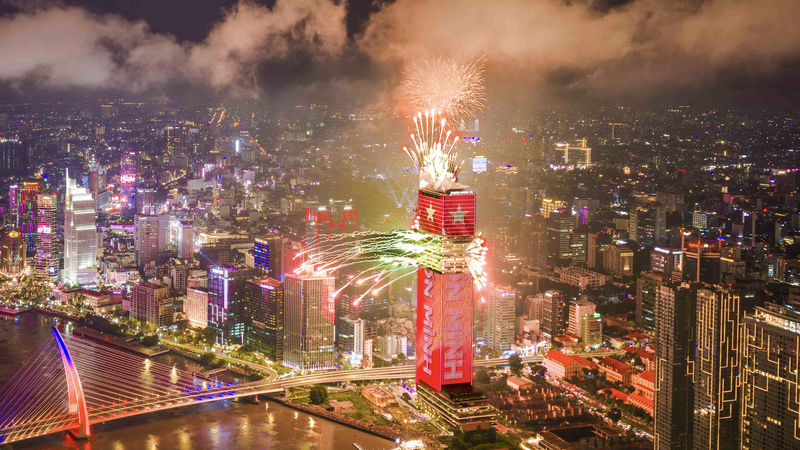




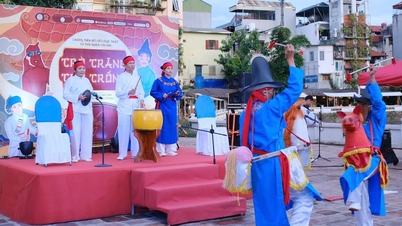

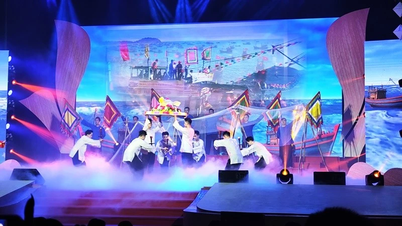

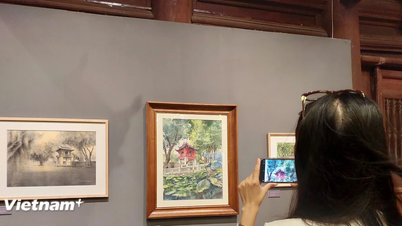









































Unicorns celebrate Vietnam's National Day.

Be Song Boi Village
