

In 1970, in the village of Taixi in Hebei Province (China), an old man stumbled upon ten strange pieces of iron while tending sheep in the mountains. Their surfaces were a beautiful green color. He thought he could earn some money selling them for scrap, so he took them home.
Surprisingly, the owner of the scrap metal shop, upon seeing these pieces of iron, strongly advised the old man against selling them. It turned out that the owner was also knowledgeable about antiques; a quick glance revealed that the green outer layer indicated they were antique bronze artifacts, not scrap metal. The old man believed the owner and took the "pieces of scrap metal" home.
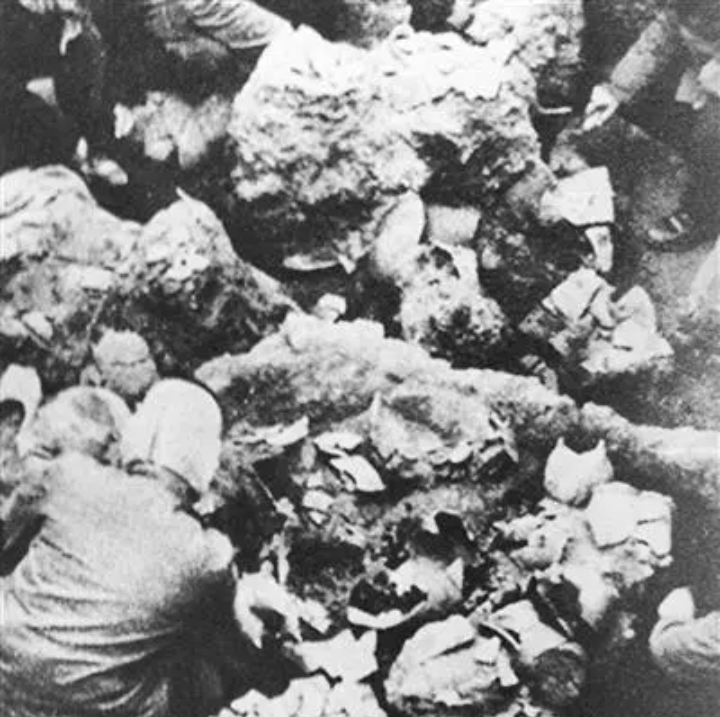
The old man never expected that finding his "pieces of iron" would bring him 7 world records. (Photo: Sohu)
A few days later, a group of experts came to the old man's house. They asked his permission to examine the strange "pieces of iron." Afterwards, they confirmed that the items the old man had found were ancient artifacts. The archaeologists happily asked the old man where he had found the treasure.
Guided by the old man, the experts discovered a large ancient tomb complex containing over 100 smaller tombs. This complex was determined to date back to the Shang Dynasty, more than 3,400 years ago. Fortunately, the complex was very well-constructed and had not been looted by any tomb robbers.
After many days and nights of excavation, the archaeological team found more than 3,000 ancient bronze artifacts, along with countless ceramics, gold jewelry, and lacquerware decorations.
At the time, this was one of China's most important archaeological discoveries . Simultaneously, the artifacts found by the old man and experts were recognized by the Guinness World Records organization with seven different records. The old man was shocked to hear this news.
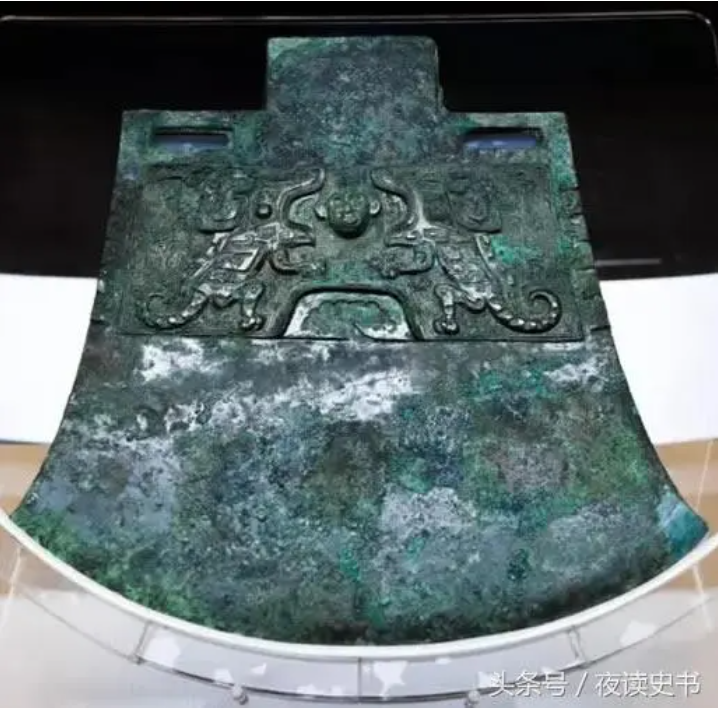
This is the world's earliest crafted axe blade. (Photo: Sohu)
Firstly, it holds the record for the world's oldest crafted axe blade. It dates back over 3,400 years.
Secondly, the world's oldest iron slag. These iron slags and iron ore were found during the excavation of this tomb. This proves that the ancient Chinese knew how to smelt iron as early as the Shang Dynasty.
Thirdly, the world's oldest surgical instrument. Inside a tomb, the archaeological team found a fragment of a scalpel called a "Biêm Liêm." Dating back over 3,000 years, it has been identified as the oldest known medical instrument.
Fourth and fifth, the yeast culture is the best-preserved in the world, and the site has the oldest known yeast production history. Inside ancient tombs, archaeologists found over 8 kg of yeast remains. These are considered to be the oldest and best-preserved yeast cultures in the world.
Sixth and seventh, the earliest plain-woven hemp and crepe fabrics in the world were found. These pieces of fabric were discovered in ancient tombs. Archaeologists have proven that, from the Shang Dynasty onwards, the level of weaving among ancient people was extremely developed.
Quoc Thai (Source: Sohu)
Source




























![[Photo] Prime Minister Pham Minh Chinh attends the Conference on the Implementation of Tasks for 2026 of the Industry and Trade Sector](/_next/image?url=https%3A%2F%2Fvphoto.vietnam.vn%2Fthumb%2F1200x675%2Fvietnam%2Fresource%2FIMAGE%2F2025%2F12%2F19%2F1766159500458_ndo_br_shared31-jpg.webp&w=3840&q=75)





















































Comment (0)