

Knowledge industry model
Initially, Huynh Thuc Khang planned to establish the headquarters of the Tieng Dan Newspaper in Hoi An. However, for security reasons, the French requested that the Tieng Dan Newspaper be moved to Hue. Throughout history, Hue transformed from a capital city into a former imperial capital, encompassing politics , culture, and economics.
From the beginning of the 20th century, the cultural exchange between Vietnam and France laid the foundation for the revival of heritage values and traditional crafts. As a result, national consciousness was strongly stimulated through the policy of "domestic products," similar to the current "Vietnamese people use Vietnamese goods" initiative.
Dr. Huynh Thuc Khang was a brilliant scholar of classical Chinese studies who rejected a career in government to pursue the reform movement. After years of hardship in Con Dao, he returned and realized that in a changing world , the press and parliament were the sharpest tools for enlightening the people.
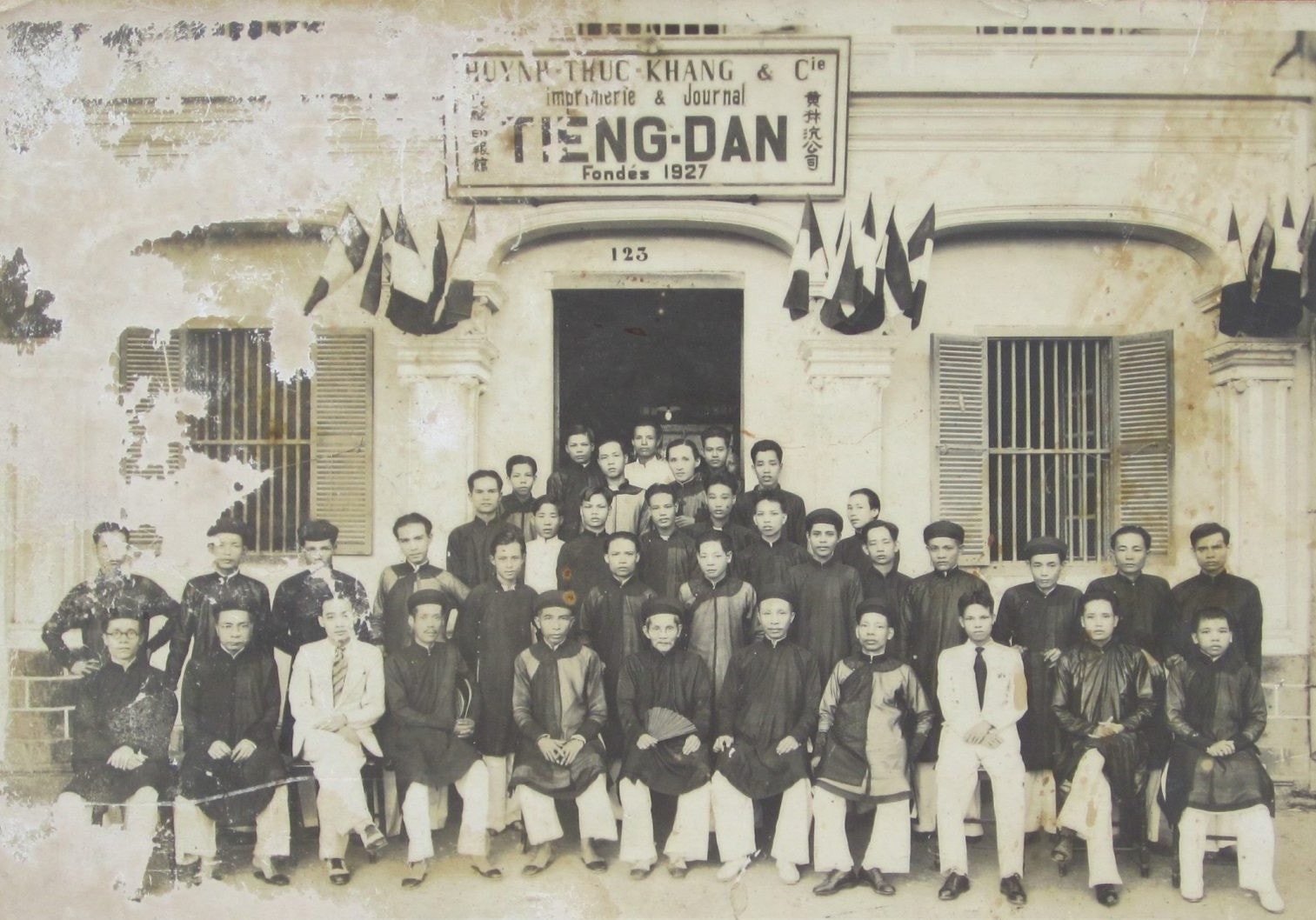
The establishment of Huynh Thuc Khang Company on April 10, 1927, marked a turning point in the practical thinking of intellectuals in Central Vietnam. It went beyond simply publishing newspapers and also operated its own printing house called Tieng Dan (Voice of the People). This clearly demonstrated the concept of "complete domestication"—a key element in the cultural industry: proactively managing everything from raw materials (ideas, articles) to production (printing) and distribution.
Today, the cultural industry is understood as the modernization of products imbued with historical value, operating them with modern management thinking to create stories rich in cultural identity. Looking back at history, the case of Tiếng Dân Newspaper and Huỳnh Thúc Kháng Company is a prime example of a rudimentary, yet resilient, "knowledge industry" model, where knowledge and information were produced, packaged, and distributed as a premium domestic product with the goal of national revival and democratic civilization.
"The Voice of the People" - the ultimate product
Tiếng Dân was positioned as the first national-language media outlet in the imperial capital of Hue. In a cultural market being encroached upon by Westernized ideologies, Tiếng Dân emerged as a high-end domestic "brand," aiming to educate character and shape the knowledge market.
It reflects a professional management and operational mindset, with the newspaper maintaining a stable production schedule of two issues per week (Wednesdays and Saturdays). All activities, from drafting to printing, are standardized to meet the strict French censorship process, requiring submission of French translations two days in advance.
The content strategy is strongly educational. Mr. Huynh established four golden principles for his writing: reflecting the aspirations of the people; transparently promoting common interests; supporting open political engagement; and providing comprehensive education in ethics, knowledge, and economics. This is similar to the mindset of creating products with "stories imbued with distinctive core values" in the modern cultural industry.
From his role as President of the Central Annam House of Representatives, Mr. Huynh connected the parliamentary arena with society as a whole through his newspaper. Tiếng Dân (Voice of the People) was not just a newspaper, but also an academic forum that brought together talented individuals, similar to the operational model of the Association for the Preservation of Ancient Capitals.
Mr. Huynh Thuc Khang once asserted: "To assess the intellectual level of a nation, one only needs to see how many newspapers its people read." This is precisely the market-building mindset for the cultural industry. By encouraging the habit of reading newspapers, the company has created a new class of "knowledgeable consumers" in Hue and throughout Central Vietnam.
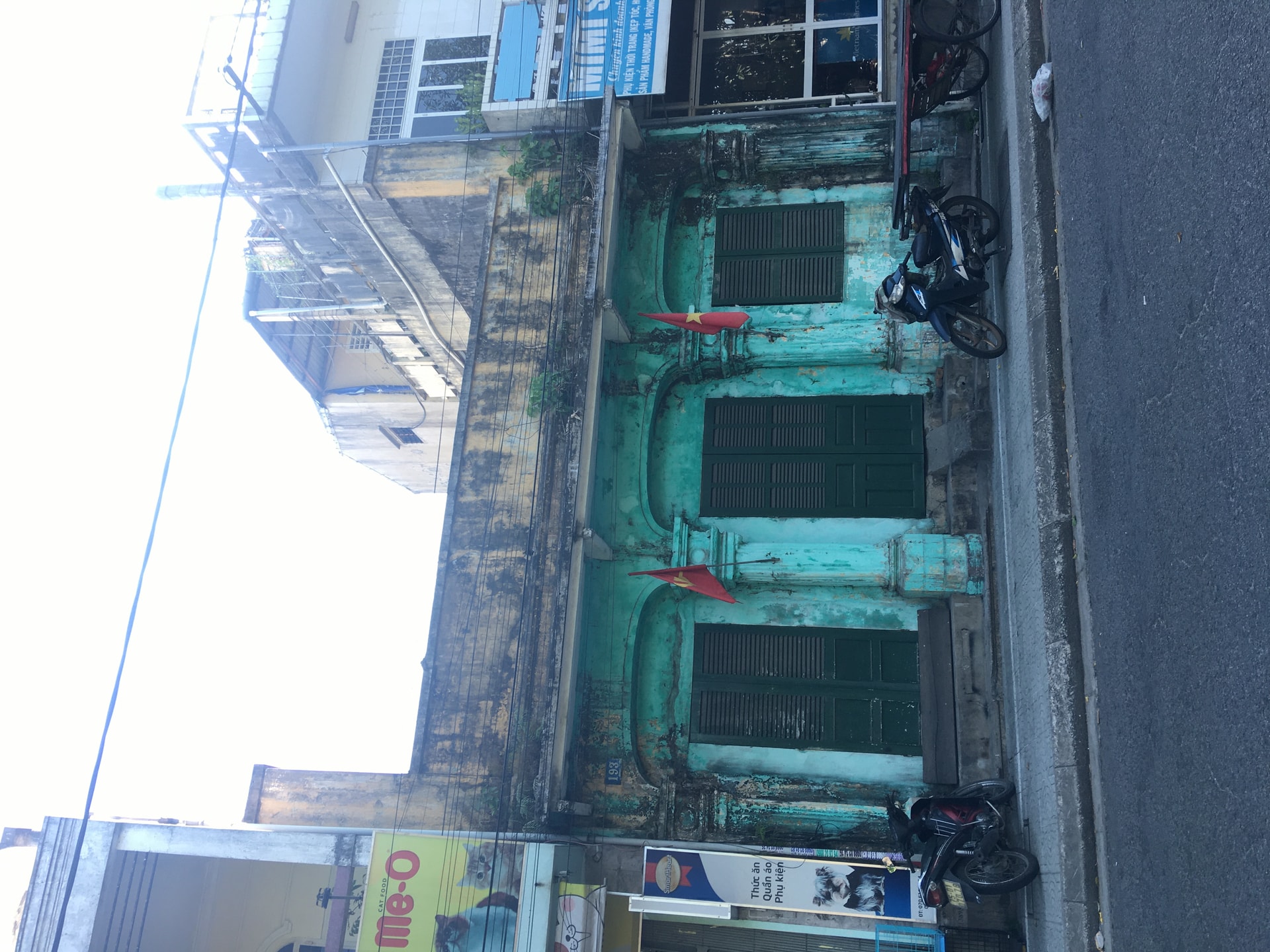
Establishing its editorial office at 123 Dong Ba Street (now 193 Huynh Thuc Khang Street, Hue) brought this intellectual product into the heart of the daily life of the people of Hue. Despite being under the direct supervision of the Security Department, Tieng Dan (Voice of the People) persevered for 16 years (1927-1943), becoming a testament to the resilience of Vietnamese cultural enterprises under the most challenging conditions.
***
Looking back at the 21st century, the model of Huynh Thuc Khang Company and Tieng Dan Newspaper in the early 20th century leaves profound lessons for the goal of cultural revival and civilization building upon heritage. Accordingly, knowledge, journalism, and printing are industries that can help "disseminate the finest achievements of our ancestors" and of humanity as a whole.
The success of Tiếng Dân lies in creating a unique product with its own distinct identity that no one else can replace. It also represents national pride expressed through a domestically produced product.
The journey of Mr. Huynh and the newspaper Tiếng Dân is a brilliant chapter in the history of Vietnam's cultural industry, where the "soul" of the country is scientifically and passionately conveyed onto the pages, contributing to the creation of unique products that always advance alongside human civilization.
Source: https://baodanang.vn/di-san-huynh-thuc-khang-tu-tieng-dan-3334782.html

![[Photo] The heat at the fireworks display site on the opening night of the Da Nang International Fireworks Festival 2026](https://vphoto.vietnam.vn/thumb/1200x675/vietnam/resource/IMAGE/2026/05/27/1779889741485_ndo_br_z7872039145157-fecaba5112f39e8352544099d7ef4738-5140-jpg.webp)

![[Photo] The courage of new recruits of Brigade 144 on the training ground.](https://vphoto.vietnam.vn/thumb/1200x675/vietnam/resource/IMAGE/2026/05/27/1779881651341_anh-man-hinh-2026-05-27-luc-18-32-52.png)










































![[Photo] The courage of new recruits of Brigade 144 on the training ground.](https://vphoto.vietnam.vn/thumb/402x226/vietnam/resource/IMAGE/2026/05/27/1779881651341_anh-man-hinh-2026-05-27-luc-18-32-52.png)



















Comment (0)