

This year's winter-spring crop season, Phu Gia Agricultural Cooperative (Phu Vang commune, Hue City) is implementing a model applying advanced techniques of "3 reductions and 3 increases," managing water and straw to produce rice with low emissions on a scale of 20 hectares.
Based on field observations, the rice plants grew healthily and uniformly, with fewer pests and diseases, resulting in higher yields compared to traditional farming methods. Ms. Le Thi Ngoc, a household participating in the model, said that her family has 0.5 hectares of rice, and previously, they sowed densely, wasting seeds and fertilizer, and requiring frequent spraying of pesticides.
“This season, everything feels completely different thanks to the ‘3 reductions, 3 increases’ model. Although this technical process is new to the local people, it is easy to implement and brings many benefits compared to traditional methods. Thanks to the application of advanced technical measures to care for rice plants and manage pests effectively, the amount of seed used has decreased significantly, the fields are more ventilated, resulting in fewer pests and diseases, reduced costs, and the rice still grows well, especially with a significant reduction in pesticide spraying. I, like the other farmers in the cooperative, am very pleased,” Ms. Ngoc shared.

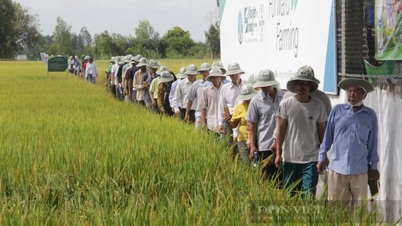
Farmers at Phu Gia Agricultural Cooperative are delighted to participate in the model applying advanced techniques of "3 reductions, 3 increases," managing water and straw to produce rice with low emissions. Photo: Van Dinh.
Mr. Dao Duc Toan, Director of Phu Gia Agricultural Cooperative, said that the model was supported by the Hue City Agricultural Extension Center and has initially proven very effective. The synchronized application of technical solutions not only helps reduce the amount of seeds sown, nitrogen fertilizer, and the number of pesticide applications, but also contributes to improving the quality of rice grains. Furthermore, the combination with rational water management and post-harvest straw treatment has helped reduce production costs, improve soil quality, and limit pollution.
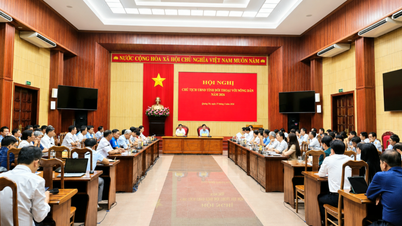
“Recently, the cooperative, in coordination with the Hue City Agricultural Extension Center, organized a field conference to evaluate the model. Farmers directly visited the fields and discussed the advantages and difficulties in the implementation process. Through practical inspections during the 2025-2026 winter-spring crop season, it was found that the rice in the model grew healthily, had fewer pests and diseases, and yielded higher productivity compared to the old farming methods,” Mr. Toan said.
The model simultaneously applies measures to reduce seed, fertilizer, and pesticide use, combined with alternating wet-dry irrigation (AWD) and straw management (no burning, plowing, or composting).
In recent years, the Hue City Agricultural Extension Center has implemented models (including the application of integrated pest management - IPM) on rice crops in many localities in Hue City to help farmers have the opportunity to access, change their perceptions, and apply new scientific and technical advancements to production.

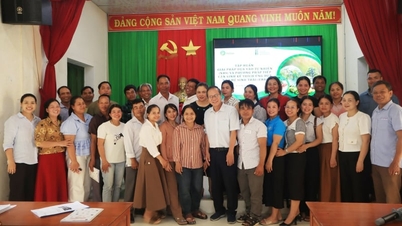
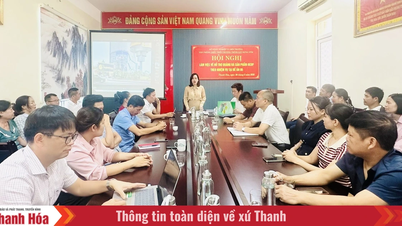
Training courses, workshops, and field conferences on the "3 reductions, 3 increases" technique are organized by the Hue City Agricultural Extension Center to help farmers access and apply new scientific and technical advancements in production. Photo: Van Dinh.
According to Mr. Chau Ngoc Phi, Director of the Hue City Agricultural Extension Center, this winter-spring season, the model is being implemented on a scale of 315 hectares across 18 cooperatives in the city.
Initial results show that the model is significantly more effective than traditional farming methods, reducing seed usage by approximately 20-30%, nitrogen fertilizer use by 15-20%, and the number of pesticide applications to 2-3 times per crop, thereby reducing input costs. Rice yield in the model during the winter-spring crop is estimated to increase by 5-10%, contributing to increased economic efficiency for producers.
Furthermore, the application of alternating wet and dry irrigation has contributed to reducing methane emissions from rice fields compared to traditional farming methods. Post-harvest straw management limits straw burning, improves soil quality, and reduces air pollution.
“By participating in the model, farmers receive 50% of the cost of purchasing straw baling machines; 50% of the cost of investing in rice transplanters, seeders, sprayers, drying and processing systems; and 50-70% of the cost of seeds and supplies in production linkage projects. Farmers also receive support for training, technology transfer, and the construction of demonstration models, thereby creating conditions for applying advanced farming methods and producing rice in a sustainable, low-emission manner,” Mr. Phi informed.

In the 2025-2026 winter-spring crop season, the "3 reductions, 3 increases" rice production model was implemented on 315 hectares across 18 cooperatives in Hue City, yielding high efficiency. Photo: Van Dinh.
According to the Hue City Agricultural Extension Center, the "3 reductions, 3 increases" technique is part of the Integrated Crop Management (ICM) system, combining nutrient management and integrated pest management (IPM). This involves the synchronized use of technical measures appropriate to ecological conditions to help crops grow healthily, limit pests and diseases, reduce the use of pesticides, and improve production efficiency.
The application of fundamental principles in IPM (growing and caring for healthy plants, regular field inspections, farmers becoming experts, pest management, and protecting natural enemies) is one of the scientific bases of the "3 reductions, 3 increases" model. The Department of Agriculture and Environment of Hue City has directed the simultaneous implementation of cultivation practices, biological and chemical measures within IPM to achieve the "3 reductions, 3 increases" in the model.
“In the coming time, we will strengthen the dissemination and promotion of the model's effectiveness so that people understand and proactively apply it. We will continue to build and expand low-emission rice production models tailored to the specific conditions of each locality. We will strengthen training and technology transfer through hands-on guidance, improving the ability to identify pests and diseases and use safe and effective materials.”
"At the same time, we need to promote the role of cooperatives and local authorities in mobilizing farmers to implement the correct technical procedures, especially managing and handling straw after harvest in an environmentally friendly way," said Chau Ngoc Phi, Director of the Hue City Agricultural Extension Center.
Source: https://nongnghiepmoitruong.vn/3-giam-3-tang-mo-duong-san-xuat-lua-phat-thai-thap-d810780.html
![[Photo] General Secretary and President To Lam presides over the meeting to approve the draft report on the results of the second inspection by the Politburo of the Standing Committee of the Hanoi City Party Committee.](https://vphoto.vietnam.vn/thumb/1200x675/vietnam/resource/IMAGE/2026/05/26/1779789811432_a2-bnd-4430-9620-jpg.webp)























































Comment (0)