

Convergence of cultural identities
With a history spanning over 325 years, Dong Nai province is home to a wealth of cultural values, distilled from the intermingling of various communities including Vietnamese, Chinese, Chơro, Ma, and S'tiêng. This cultural identity is further evident in over 120 classified historical sites, more than 1,500 inventoried common historical sites, and hundreds of traditional festivals that have been maintained and preserved, many of which have been listed as national intangible cultural heritage.
These cultural values are incredibly diverse and unique, ranging from gong music , traditional crafts like brocade weaving and basketry, and folk festivals… to historical landmarks from the time of territorial expansion such as Tran Bien Temple of Literature, Bien Hoa Ancient Citadel, or ancient riverside temples like Ong Pagoda, Nguyen Huu Canh Temple, and Tan Lan communal house… Notably, the locality is also home to the discovery of a set of stone musical instruments dating back over 3,000 years belonging to the S'tieng ethnic group, which is now considered a national treasure.
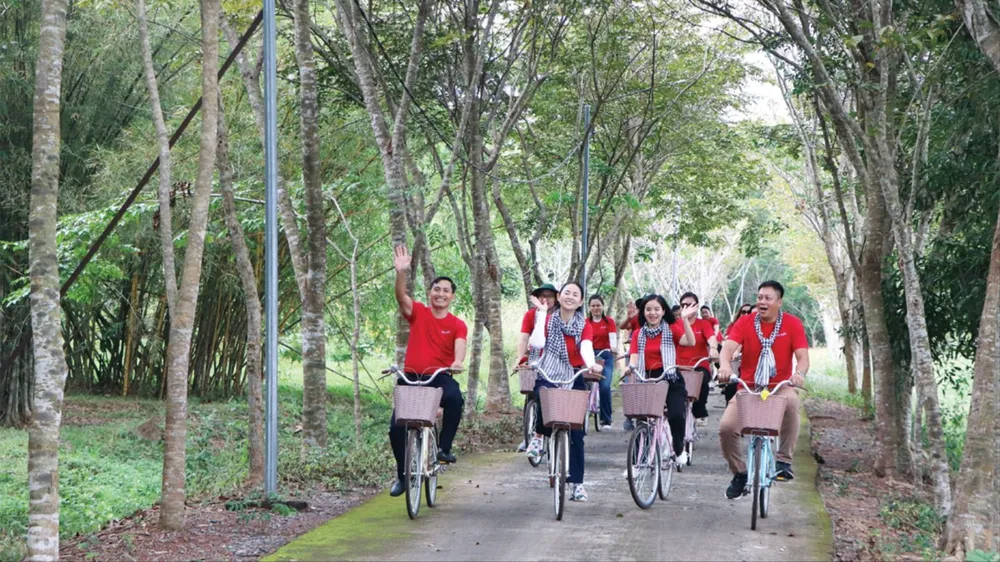
Along with cultural heritage, many famous historical sites such as the Eastern Southern Region Party Committee Base (Tri An commune), the Central Committee Base of the Southern Region (Phu Ly commune), the Headquarters of the Southern Vietnam Liberation Army (Ta Thiet Base, Loc Thanh commune), the Soc Bom Bo historical site (Bom Bo commune)... have formed a Dong Nai rich in identity, serving as a spiritual foundation, endogenous resource, and "soft power" for the development process.
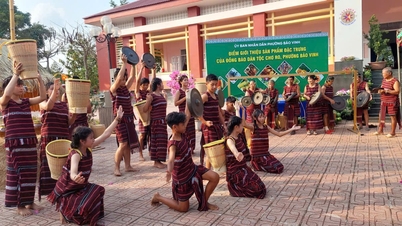
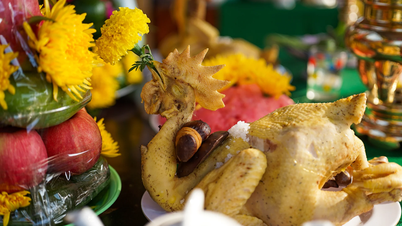
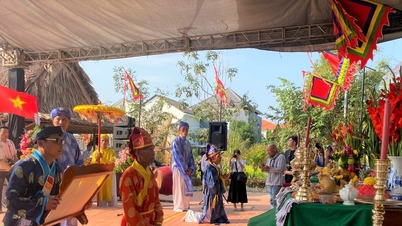
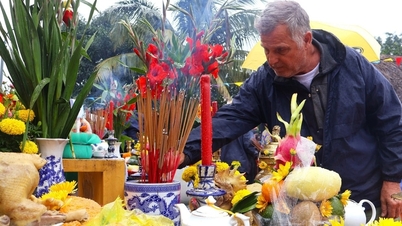
The blending of cultural values reflecting the distinct identities of the S'tieng, M'nong, Tay, and Nung people with the traditions of the Kinh, Hoa, Choro, and Cham people has created unique cultural spaces in Dong Nai. From folk songs and traditional musical instruments to festivals such as the Friendship Festival, the Breaking the Pond Festival, the Sayangva Festival, the Sayangbri Festival, and the commemoration of Lord Nguyen Huu Canh, all contribute to a continuous and vibrant cultural flow.
In 2025, the total number of tourists visiting Dong Nai is expected to reach over 5.2 million, including more than 139,000 international visitors; tourism revenue is projected to reach nearly 4 trillion VND. In the first three months of 2026, Dong Nai is expected to welcome over 1.5 million visitors for sightseeing and relaxation, an increase of nearly 8% compared to the same period in 2025; tourism revenue is projected to reach over 1.1 trillion VND, an increase of nearly 21% compared to the same period in 2025.
Unleash your inner potential.
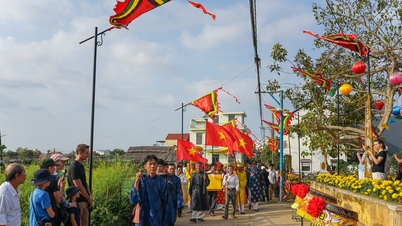
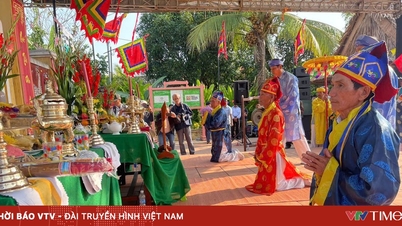
Thanks to historical and cultural similarities, after the merger of Dong Nai and Binh Phuoc provinces, these cultural identities have become important driving forces for the socio-economic development of Dong Nai City today. Famous historical sites such as Ta Thiet Base and the D War Zone have become popular historical tourism destinations attracting a large number of domestic and international tourists, especially young people. Alongside the development of historical tourism, many traditional festivals in the area are still maintained and organized annually: the Pha Bau Festival of the Khmer people (Loc Hung commune); the Ba Ra Temple Festival (Phuoc Long ward); the Cau Bong Festival of the Kinh people in many localities; the Ong Pagoda Festival (Tran Bien ward); the Sayangva Festival - worshipping the Rice God of the Choro people..., attracting a large number of participants and also being attractive events for international tourists who appreciate traditional culture and experiences.
Besides its rich history and culture, Dong Nai City also possesses a valuable natural ecosystem of forests, gardens, and lakes, including Bu Gia Map National Park, Cat Tien National Park, and Tri An hydroelectric reservoir. Its advantageous geographical location, with strategic transportation routes (such as the Dau Giay - Lien Khuong and Long Thanh - Dau Giay - Ho Chi Minh City expressways, Ma Da Bridge, and Long Thanh International Airport), will be a key advantage for the locality to effectively exploit and unleash the potential of its rich historical and cultural heritage.
However, along with the advantage of possessing diverse cultural identities, Dong Nai is also facing the challenge of preserving, promoting, and effectively exploiting its cultural and historical values in the new context. According to Ms. Le Thi Ngoc Loan, Director of the Department of Culture, Sports and Tourism of Dong Nai City, besides the growth figures, the development of tourism and culture in the locality in the new phase also aims to completely change Dong Nai's position on the national tourism map.
“Currently, Dong Nai City has two locations designated as national tourist areas: the Tri An Lake area and Ba Ra Mountain. Along with the connection to modern infrastructure, especially Long Thanh International Airport, we expect that the cultural and historical heritage values of Dong Nai will soon spread widely to domestic and international tourists,” shared Ms. Le Thi Ngoc Loan.
Source: https://www.sggp.org.vn/di-san-tro-thanh-nguon-luc-cua-do-thi-moi-post854129.html
![[Image] Hanoi's urban life under the challenge of a "scorching hot" environment](https://vphoto.vietnam.vn/thumb/1200x675/vietnam/resource/IMAGE/2026/05/25/1779706979265_nang-nong-t5-2026-minh-duy-7-4636-jpg.webp)




![[Image] Close-up view of the interchange connecting the two expressways and Long Thanh Airport.](https://vphoto.vietnam.vn/thumb/1200x675/vietnam/resource/IMAGE/2026/05/25/1779703378210_ndo_br_z7863716673926-224453a31600126cce10622af6290afd-4549-jpg.webp)










































































Comment (0)