

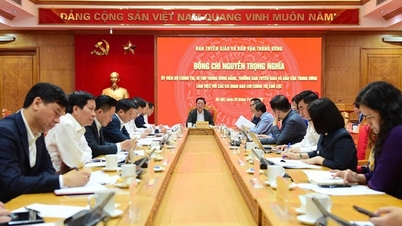
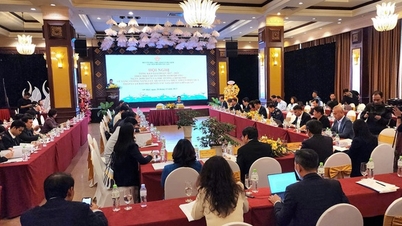
(To Quoc Newspaper) - On the morning of February 28th, the Ministry of Culture, Sports and Tourism organized a workshop titled "Contributing Opinions to the Draft Feasibility Study Report on the National Target Program for Cultural Development giai đoạn 2025-2035", held directly at the Ministry's headquarters and connected online with 63 locations in provinces and centrally-administered cities. Member of the Central Committee of the Communist Party of Vietnam, Minister of Culture, Sports and Tourism Nguyen Van Hung; and Deputy Minister Trinh Thi Thuy chaired and moderated the workshop.
Attending the workshop at the Ministry of Culture, Sports and Tourism headquarters were representatives from various ministries, government agencies, the Government Office , the Vietnam General Confederation of Labor, the Ho Chi Minh National Political Academy, central agencies, leaders of the Vietnam Union of Associations of Literature and Arts, and several specialized associations; leaders of departments, divisions, and units under the Ministry of Culture, Sports and Tourism; experts, scientists, etc.
Attending the workshop at various locations were the Chairpersons and Vice-Chairpersons of the People's Committees of provinces and centrally-administered cities; leaders of the Departments of Culture, Sports and Tourism, Departments of Culture and Arts, and other relevant departments and agencies…
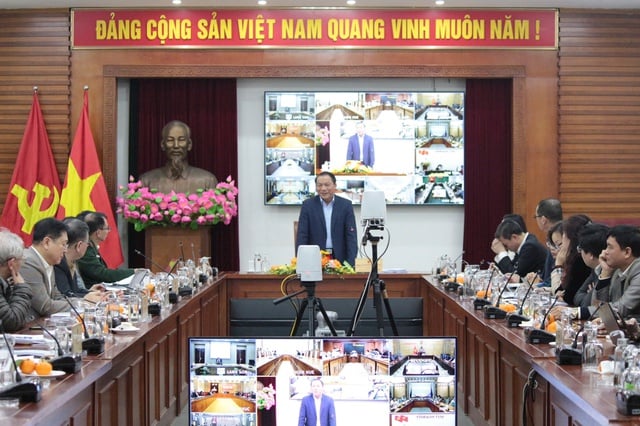
Minister Nguyen Van Hung delivered a speech at the seminar.
Expeditiously finalize the feasibility report.
In his keynote address at the workshop, Minister of Culture, Sports and Tourism Nguyen Van Hung stated that, after two sessions, the National Target Program on Cultural Development for the period 2025-2035 (the Program) has been approved by the National Assembly in principle for investment; as reflected in Resolution No. 162/2024/QH15 of the National Assembly.
The resolution marks a significant milestone after the National Assembly's careful consideration and approval of a responsible proposal from the Ministry of Culture, Sports and Tourism, with the desire for culture to develop strongly and become one of the important pillars in accordance with the Party's viewpoint and guidelines: Culture becoming a driving force in the sustainable socio -economic development of the country. The approval of the investment plan for the Program also demonstrates the timely attention and institutionalization of the Party's viewpoint on cultural development.
The Minister stated that the program's approval was the result of a painstaking process of research and lobbying to gain consensus, given the country's need for significant resources to invest in various sectors. To overcome obstacles, the lead agency persistently campaigned, persuaded, and even used scientific evidence to support its claims.
Following the National Assembly's resolution, the Central Committee meeting of the Communist Party of Vietnam, discussing the socio-economic plan for 2025, concluded that the National Target Program on Cultural Development for the period 2025-2035 should be implemented immediately. The total investment for the program is over 122 trillion VND.
Following this conclusion, the Government included it in its annual work resolution, assigning the Ministry of Culture, Sports and Tourism to take the lead and coordinate with relevant agencies, departments, and localities to focus on finalizing and submitting to the Prime Minister a feasibility study report for nationwide implementation.
The Minister emphasized that the National Target Program on Cultural Development for the period 2025-2035 is a public investment program, therefore requiring practicality. The theoretical aspects have been reflected in the viewpoints, objectives, and presentations to the National Assembly from the outset. Consequently, the feasibility report must also adhere to the standards of the Law on Public Investment.
"The issue of public investment here is quite comprehensive, encompassing two sources of capital: investment capital and operational capital. This ensures that cultural development focuses on caring for people; ensuring that the benefits from this public investment are for the benefit of people. The beneficiary groups are divided into two categories: artistic and scientific workers, focusing on carrying out their work, and the general public," the Minister clarified.
According to the Minister, preparing the feasibility study report is a task that needs to be completed urgently; it must adhere closely to regulations related to public investment, and at the same time have an overall view of cultural development in the past, achievements, difficulties, and future goals… To do this, criteria for evaluation and regulations on principles and standards for resource allocation are needed.
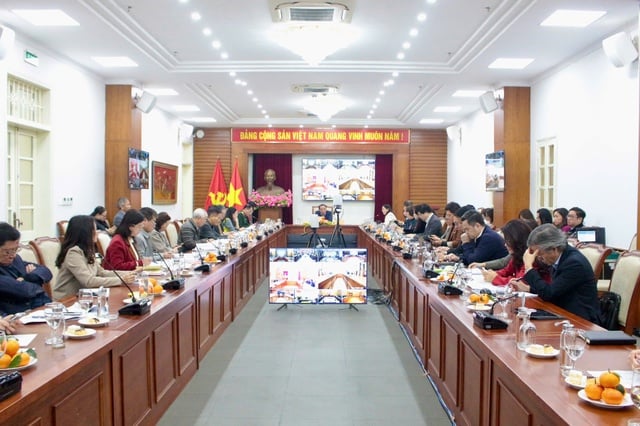
Overview of the Conference
To ensure the workshop yields significant results, the Minister requested that delegates focus their contributions on refining the feasibility study report, concentrating on practical aspects so that when the Program is implemented, it will be effective, differentiated, and address the shortcomings of the three previous Programs.
The stated principle is decentralization: localities know, localities do, and localities are responsible. For the 10 component projects, localities need to submit proposals and assume their responsibilities. The Minister wishes to hear proposals regarding specific policies and guidelines.
Another issue that was also clearly stated is the criteria for establishing norms, on the basis of which the Ministry of Culture, Sports and Tourism, as the lead agency, will coordinate with other ministries to promptly submit to the Government a list of items and data so that localities have a basis for implementation. The Ministry of Culture, Sports and Tourism will play an advisory and reporting role to the competent authorities for resource allocation. At the same time, the Ministry will also play a role in monitoring the implementation.
The Minister also expects that localities will actively participate in implementing and coordinating efforts to remove bottlenecks and effectively carry out the major and important tasks assigned by the Party and the State.
At the workshop, Mr. Le Hong Phong, Director of the Planning and Finance Department, presented a summary report on the content of Resolution 162/2024/QH15 of the National Assembly approving the investment policy and issues to be implemented in the feasibility study report of the National Target Program on Cultural Development for the period 2025-2035.
The National Target Program on Cultural Development for the period 2025-2035 aims to create strong and comprehensive changes in cultural development and to build and perfect the personality, moral standards, identity, character, and value system of Vietnamese people and families. It seeks to improve the spiritual life, access to and enjoyment of culture, and the needs for training and entertainment of the people, narrowing the gap in cultural enjoyment between regions, social classes, and genders, thereby increasing labor productivity and work efficiency.
Mobilize the participation of organizations, individuals, and communities in managing, protecting, and promoting the cultural heritage of the nation. Mobilize resources and focus investment on key areas, ensuring quality and efficiency in cultural development, directly contributing to socio-economic development, and promoting cultural industries to become an important component of the national economy.
Building a professional, high-quality workforce in culture and arts with strong political convictions to serve domestic needs and meet the demands of foreign markets. Promoting the national character, scientific approach, and popular appeal of culture through investment in preserving traditional national culture, building a grassroots cultural environment where the people are the creative subjects, and intellectuals and artists play a crucial role.
Focus on international integration and absorbing the finest aspects of human culture, building an advanced culture rich in national identity, and promoting the soft power of Vietnamese culture.
The program has 18 specific objectives, of which 9 are targeted for achievement between now and 2030; and 9 groups of specific objectives are targeted for achievement by 2035.
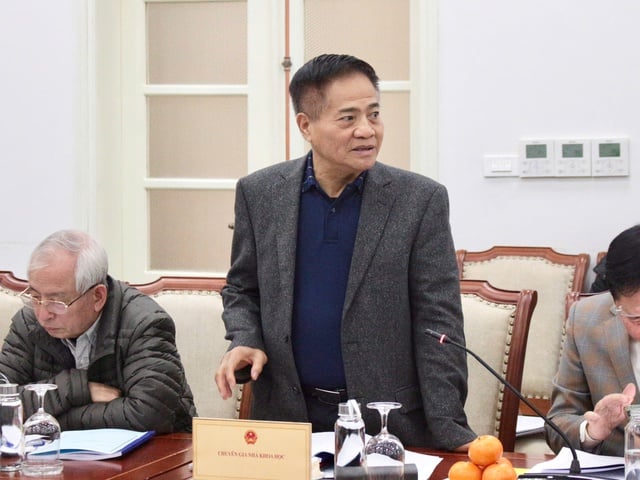
Associate Professor Dr. Dao Duy Quat delivered a speech at the conference.
Investment in human resources is crucial.
At the workshop, many participants agreed with the content of the draft feasibility study report; they also offered suggestions and proposals that were appropriate to the practical situation.
Ms. Au Thi Mai, Director of the Department of Culture, Sports and Tourism of Tuyen Quang province, requested that the Ministry of Culture, Sports and Tourism take the lead in developing and promptly issuing general guidance documents so that localities have a basis for implementation. At the same time, she suggested decentralizing the program to the maximum extent possible for local authorities.
Expressing her hope that the Program would soon be implemented, Ms. Mai stated that, in the current context of most localities, the allocation of resources must be focused and targeted, ensuring that it initiates the implementation of tasks; creates breakthroughs in cultural development; and promotes innovation in literary and artistic creation. At the same time, to use resources effectively, there must be policies to encourage social resources.
According to Nguyen Thi Thanh Thuy, Deputy Director of the Department of Culture and Sports of Ho Chi Minh City, the Feasibility Study Report ensures consistency, synchronicity, and overall comprehensiveness; affirming that the goal of building culture truly becomes a solid spiritual foundation and an important intrinsic strength for development.
Regarding the Strategy for the Development of the Cultural Industry, linking investment in the cultural industry at a strategic level, the leaders of the Ho Chi Minh City Department of Culture and Sports emphasized several specific points: Building a brand for the cultural industry; the support and investment from the state and other economic sectors to promote the comprehensive development of cultural industries need to be synchronized with the system of mechanisms and policies; obstacles in implementing investment projects under the public-private partnership method, and in the management and use of public assets need to be thoroughly assessed in the feasibility report.
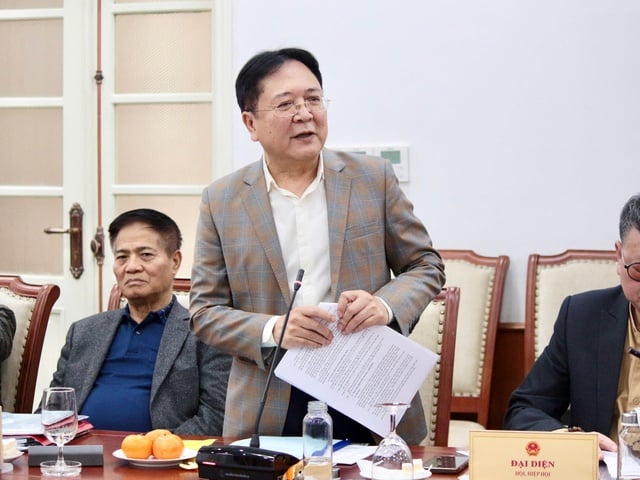
People's Artist Vuong Duy Bien speaks at the seminar.
Ms. Nguyen Thi Thanh Thuy also mentioned the current shortage of professional, high-quality human resources commensurate with the tasks, including management staff, professional staff, and artists, in the context of the development of the cultural industry.
Sharing the same view, Associate Professor Dr. Dao Duy Quat believes that the core issue is training people and developing high-quality human resources for the industry.
According to Associate Professor Dr. Dao Duy Quat, a team of talented experts and managers is needed. Effective management of cultural institutions and organizations requires not only a strong "hardware" but, crucially, a strong "software." "To build this team, it's not enough to just set targets; the training process needs to be emphasized. We need to bring creative individuals and artists to the 'cutting-edge' areas of practice so they can experience reality firsthand, not just superficially. Along with that, we must ensure creative freedom for artists," Associate Professor Dr. Dao Duy Quat stated.
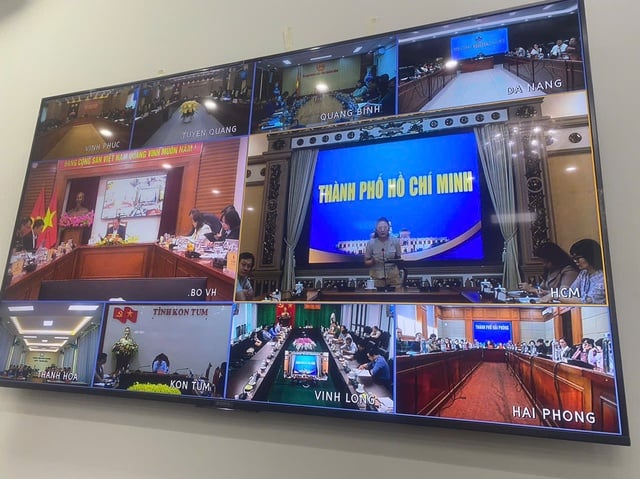
Localities provided feedback at the workshop.
Affirming that the National Target Program has a strategic vision and is significant in revitalizing culture in the new era with many opportunities and challenges, Associate Professor Pham Duy Duc noted that this program involves many stakeholders and requires the full mobilization and utilization of their roles. Emphasis should be placed on researching and addressing "bottlenecks" such as investment, public-private partnerships; international cooperation; and supplementing and emphasizing indicators such as innovation in culture, and cultural projects linked to sustainable development…
In particular, Associate Professor Pham Duy Duc emphasized that in order to innovate and improve the quality of human resources for culture, investment in reforming education and training programs is necessary. This is a key issue.
Sharing the view on the necessity of investing in human resources to have a talented and high-quality workforce for the culture, sports, and tourism sector, People's Artist Vuong Duy Bien, Vice President of the Vietnam Union of Literature and Arts Associations, said that the National Assembly's approval of the National Target Program on cultural development is a major step forward, creating momentum for the development of culture in the new situation.
People's Artist Vuong Duy Bien believes that the school system must proactively identify and invest in talent, along with investing in art troupes and creative works. However, it is also necessary to consider mechanisms for investing in talented artists who work independently, because their contributions are ultimately contributions to the national arts and culture, even if they are not affiliated with associations, sectors, or state-employed.
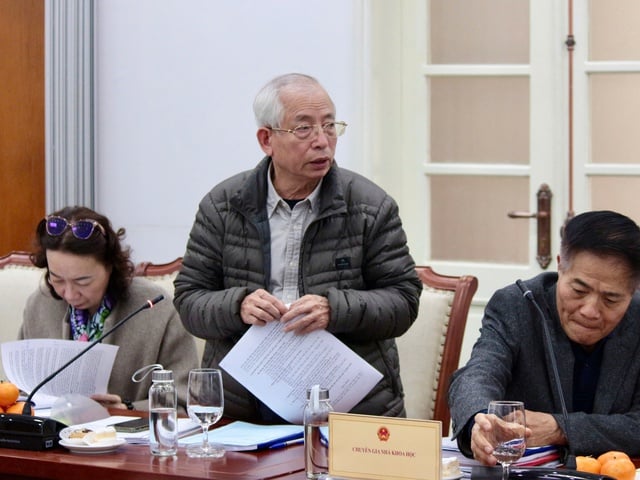
Associate Professor Pham Duy Duc contributed his opinions at the conference.
Promoting decentralization, local autonomy, and accountability.
In his concluding remarks at the workshop, Minister Nguyen Van Hung stated that, within a short period, the Ministry of Culture, Sports and Tourism had urgently implemented the preparation of the Feasibility Study Report and draft decisions of the Prime Minister to be submitted to the Government for consideration in May. To ensure the highest quality of the report, organizing the workshop was crucial, as it allowed for gathering opinions from scientists, beneficiary units and localities, and those directly involved in the implementation.
The Minister stated that the workshop had listened to 12 opinions from localities and experts, and the Ministry of Culture, Sports and Tourism will incorporate them to further refine the report.
Reviewing some issues, Minister Nguyen Van Hung once again emphasized that the National Target Program on Cultural Development for the period 2025-2035 is essentially public investment. Public investment must strictly comply with the provisions of the Investment Law and other legal regulations.
Therefore, the feasibility study report must also be based on these regulations, avoiding content that reflects the viewpoints and guidelines initially submitted to the competent authorities. The process of building and developing culture always adheres to the principles of Party leadership, State management, the people as the creative subjects, and the artists and writers playing a crucial role.
With 10 component projects, the Minister emphasized that all projects aim to build a civilized society and cultured people. "It's not just that much money that can build a civilized society. But it's a resource to enrich our cultural identity, strengthen regional cultural traditions. At the same time, it promotes positive elements and shapes the cultural environment, giving people the opportunity to train and contribute to building a civilized society," Minister Nguyen Van Hung stated.
Based on that understanding, the Minister stated that the 10 component projects still need further research and adjustments to ensure suitability. The Politburo has also requested that the Program's implementation must focus on key areas and prioritize specific sectors, while also carefully considering crucial aspects.
In developing the norms and criteria for resource allocation, the Minister requested that the drafting agency only prepare one document, but it must include two criteria: allocation and matching funds. Simultaneously, while awaiting the Government's approval, they must expedite the development of a guiding document for the Program's implementation.
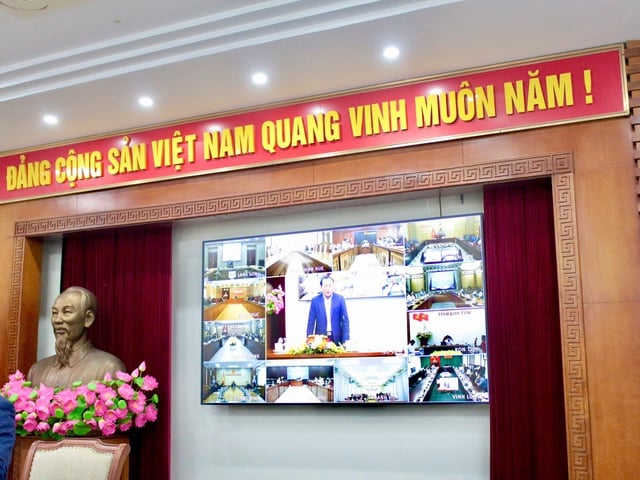
The workshop was connected online with 63 local locations.
The Minister also affirmed that the set of criteria is the "foundation" for calculating the allocation. The most important aspect is using the current commune-level administrative units as the basis for calculating criteria and allocating resources. While the criteria are based on the commune level, they must still strictly adhere to the Politburo's Resolution on socio-economic development of regions. Within those regions, it is necessary to identify key areas and prioritize areas for cultural development, forming axes and focal points for those areas.
Furthermore, when calculating criteria and allocating resources, it is necessary to base them on local conditions. Difficult localities, those lagging behind in cultural development, must receive due attention and priority. Even localities with resources need careful planning to ensure rational allocation. In public investment, state resources should be understood to play only a guiding role; alongside this, the strengths of other economic sectors must also be mobilized.
Taking the construction of cultural institutions as a specific example, the Minister stated that in the capital city or some developed localities and tourist centers, the State does not need to concentrate investment resources. Therefore, careful consideration is needed in resource allocation.
In the field of cultural heritage, in reality, it is very difficult to socialize the restoration and preservation of historical and revolutionary relics; while purely cultural and spiritual relics such as temples and pagodas are much more readily socialized. This is an issue that the State's investment resources must recognize and address in order to contribute to educating about revolutionary traditions and preserving heritage values for future generations.
Over the next five years, based on this discussion, the Minister proposed selecting six of the ten most urgent components for priority implementation. These should focus on the preservation of historical sites and heritage; the cultural industry; and the development of cultural institutions to create a cultural environment. Furthermore, there should be a focus on international cooperation, establishing international cooperation centers abroad – key locations for Vietnamese expatriates overseas, serving as platforms for promoting Vietnamese culture.
The Minister also noted the need for planning in training as well as creating some exemplary literary and artistic works; focusing on training programs to discover talent; aiming for training facilities that meet international standards…
The Minister stated that, based on the contents of the Workshop, localities will closely follow and list investments, identifying key priorities, giving priority to urgent issues, and setting out a specific implementation roadmap for each item; closely adhering to the issued criteria.
At the same time, calculations should be made and reports and recommendations submitted to the Government in the direction of granting localities autonomy, initiative in implementation, and accountability.../.
Source: https://toquocweb.dev.cnnd.vn/du-thao-bao-cao-nghien-cuu-kha-thi-chuong-trinh-muc-tieu-quoc-gia-ve-phat-trien-van-hoa-dia-phuong-tu-chu-chu-dong-thuc-hien-va-chiu-trach-nhiem-20250228152843511.htm


![[Photo] Prime Minister Pham Minh Chinh presides over a meeting on private sector economic development.](/_next/image?url=https%3A%2F%2Fvphoto.vietnam.vn%2Fthumb%2F1200x675%2Fvietnam%2Fresource%2FIMAGE%2F2025%2F12%2F20%2F1766237501876_thiet-ke-chua-co-ten-40-png.webp&w=3840&q=75)























































Comment (0)