

New rhythm of life
Seventy-five years ago, from February 11th to 19th, 1951, amidst the fierce resistance war against French colonialism, the Second National Congress of the Party was held in Kim Binh commune. The Congress held special significance, laying down the correct strategic guidelines and strengthening the faith, will, and determination of the entire Party, people, and army towards the ultimate victory of the resistance and national reconstruction.
 |
| The Kim Binh National Special Historical Site has become a significant landmark for those seeking to connect with the historical roots of Vietnam. |
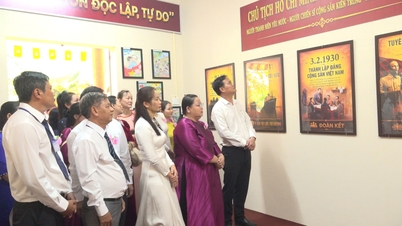
Today, the Kim Binh National Special Historical Site has become a "red address" in the work of educating revolutionary traditions for cadres, Party members, and all strata of the people. The stilt houses, small paths, and lush green hills still quietly bear witness to a glorious historical era, reminding us of the important decisions made from this land.
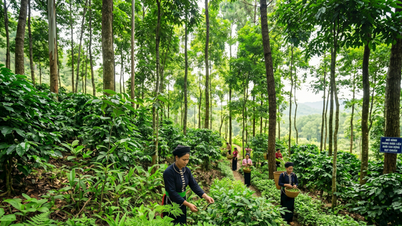
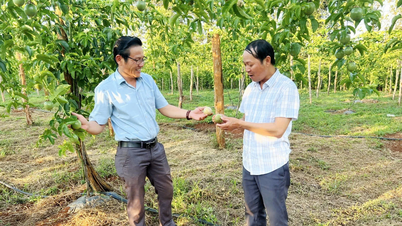
Bo Cung village – the site of a momentous historical event – is now strong and resilient, adapting to the changes in the commune and province. Deputy Secretary of the Party Branch and Head of Bo Cung village, Dang Thi Kim, is quick-witted and resourceful. Born in Bo Cung and having served as village head for eight years, she has witnessed firsthand the transformation of the village. From humble farmers who spent their lives tending their fields, the people of Bo Cung have quickly shifted their crop structure and diversified their occupations to increase their income. Forestry models generating hundreds of millions of dong per year, such as the forest planting model of Mr. Ma Van Toan's family, the guinea pig farming model of Mr. Tran Van Tam, or the buffalo breeding model of the village head Dang Thi Kim's family, have emerged. The people of Bo Cung have also converted nearly 30 hectares of unproductive mixed orchards to cultivate pomelos and year-round lemons. Currently, only four households in Bo Cung remain poor due to exceptional circumstances.
Along both sides of the road leading to the Special Historical Site are neat and well-maintained stilt houses. Ms. Kim said: In Bo Cung, seven families have renovated their houses to serve as homestays for tourists visiting the historical site.
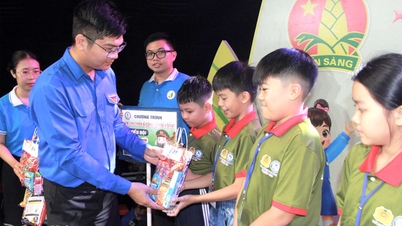
Ms. Nong Thi He, a native of Kim Binh, has been a tour guide at the Kim Binh National Special Historical Site for six years. Ms. He said: "Every year, the number of visitors to Kim Binh increases, with more meaningful activities. While in the past, sightseeing activities only took place on commemorative days, now they are almost year-round. From activities like joining the Youth Union and the Youth Pioneer Organization to thematic activities of Party branches and committees, the site receives approximately 10,000 visitors annually."
Aspiration to reach further
After the merger, Kim Binh commune encompasses the three former communes of Vinh Quang, Binh Nhan, and Kim Binh. Along with the urgent reorganization and streamlining of its structure, the commune has focused on exploiting its potential and strengths, replicating exemplary models of economic development, and increasing people's income. People have boldly transformed their economic structure, developing agriculture in conjunction with tourism, trade, and services. Kim Binh's distinctive products are gradually establishing their brand in both domestic and international markets.
According to La Van Thang, Vice Chairman of the People's Committee of Kim Binh commune: "The glorious past is the driving force and an endless source of inspiration for Kim Binh today. All programs, plans, and tasks are aimed at improving the quality of life for the people and, more importantly, preserving and promoting the cultural and historical values that have shaped the identity of this revolutionary land."
 |
| The production model of green mung bean tea in tea bags by Hong Phat Cooperative. |
Currently, the average per capita income of the commune reaches 62 million VND/person/year, achieving 108.77% of the plan; the entire commune has eliminated 255 temporary and dilapidated houses; created jobs for 721 laborers; and 100% of villages have achieved the title of cultural village. In 2025, the Kim Binh Commune Party Committee will focus on comprehensively leading all aspects of Party building work, ensuring continuity after the merger; maintaining the stability of grassroots Party organizations and the Party member contingent. The work of managing Party members, organizing branch activities, and developing Party membership has been implemented in an orderly manner; 20 new Party members have been admitted (achieving 150% of the target); 100% of Party member data has been updated on the 3.0 software… Kim Binh is also a commune that consistently ranks among the Top 20 communes and wards with the highest digital transformation scores in the province.
Examples include the rabbit farming model of Mr. Luc Van Thuy in Deo Lang village, raising 500 rabbits and selling approximately 1,000 annually, generating a profit of nearly 80 million VND. Another example is the model of growing four-season lemons and super-sized pumpkins by Mr. Ma Vinh Tich in Pac Chai village. Similarly, Mr. Ma Dinh Tuyen in Dong Cot village converted 1,000 m2 of unproductive fish and rice farming land to snail farming, earning 80 to 100 million VND per year. Other examples include the model of growing cantaloupe in greenhouses using drip irrigation technology by Mr. Luc Van Hoang in Pac Keo village; and the model of raising free-range chickens by Ly Tien Long, a Dao ethnic minority in Khuoi Pai village, with a scale of over 3,000 chickens...
Thanh Dat Agricultural, Forestry and Service Cooperative has affirmed its position with a closed-loop chicken farming model, raising over 43,000 chickens and generating annual revenue exceeding 5 billion VND. Hong Phat Organic Agricultural Cooperative has made its mark with its tea bags made from green mung beans, achieving OCOP 4-star certification and reaching international markets. Kim Binh Agricultural and Forestry Cooperative's greenhouse-grown cantaloupe has also been recognized as an OCOP 4-star product. In addition, the commune proactively approaches projects and production development linkages, implementing them among the people, receiving enthusiastic support. The integrated farming chains for cucumber cultivation (over 3 hectares), tomato grafting onto eggplant stems (over 2 hectares), along with pig farming models and citrus fruit cultivation such as four-season lemons (over 12 hectares), Soi Ha pomelo, and green-skinned pomelo (over 15 hectares) have been bringing practical economic benefits and creating stable jobs for the people…
From Bo Cung, the changing pace of life spread to many communes and wards in the province. After the first Provincial Congress following the reorganization and merger, Tuyen Quang is on track to join the rest of the country in entering a new era. The Tuyen Quang - Phu Tho expressway has been completed, creating momentum for the local economy to accelerate. The Tuyen Quang - Ha Giang expressway is being expedited, connecting the border region to the center of the country. The province inaugurated and commenced 12 major projects to celebrate the Party Congress; ranking 3rd out of 34 provinces and cities in the progress of implementing Resolution 57-NQ/TW. The province's tourism sector is flourishing with many prestigious awards. The province has also completed the demolition of more than 15,000 houses for poor and near-poor households, allowing them to celebrate the Lunar New Year warmly…
From Kim Binh – a place that bears witness to the Party's historic decisions – the revolutionary spirit continues to flow silently through every aspect of life today. The sacred values of the past are not only cherished and preserved, but are also instilling faith and inspiring aspirations for progress in every citizen of Tuyen Quang. With innovative thinking, creative approaches, and strong political determination, Tuyen Quang is gradually realizing its goal of rapid and sustainable development, worthy of being the Capital of the Liberation Zone and the Capital of the Resistance in the new era – an era of self-reliance, confidence, and unwavering progress.
Nguyen Dat
 |
| Assoc. Prof. Dr. Nguyen Danh Tien Director of the Institute of Party History, Ho Chi Minh National Political Academy |
The Party's courage, wisdom, and strategic vision.
In the history of the Vietnamese revolution, Kim Binh commune, Tuyen Quang province, holds a special position, being a place where the strategic decisions of the Party during the resistance war against French colonialism converged, crystallized, and spread, clearly demonstrating the thinking, political acumen, and revolutionary leadership art of our Party.
In particular, the Second National Congress of the Party, held from February 11 to 19, 1951, in Vinh Quang commune (now Kim Binh commune), was a pivotal historical milestone. This was the first Party Congress held domestically and the only one to date held outside the capital, Hanoi. The Congress finalized and developed the national democratic revolutionary line; decided to bring the Party into open operation under the name Vietnam Labor Party; established a suitable Party organizational model in the three countries: Vietnam, Laos, and Cambodia, creating a solid political and ideological foundation that led the resistance war to victory.
The historical, theoretical, and practical value of the Second Congress at Jinping continues to be inherited and creatively applied in the process of building and rectifying the Party, consolidating the people's trust, and leading the country towards sustainable development in the current revolutionary period.
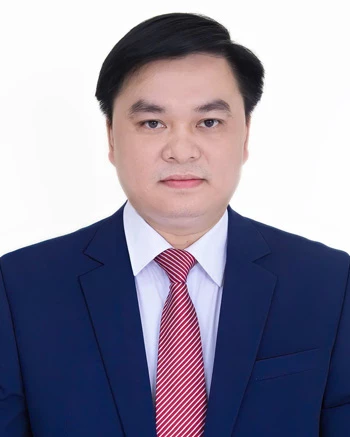 |
| Comrade Le Thien Quang Secretary of the Party Committee of Kim Binh Commune |
Building a more prosperous and beautiful Kim Binh homeland.
Kim Binh is a revolutionary land rich in tradition, honored to have been chosen by the Central Committee of the Party to host the Second National Congress of the Party 75 years ago. This glorious tradition is both a source of pride and a driving force for the Party Committee, government, and people of all ethnic groups in the commune to continuously strive to build a more developed homeland.
Over the years, with the attention of the Party and the State, and the consensus of the people, Kim Binh has achieved many important results in building new rural areas. Basic infrastructure such as transportation, irrigation, and culture has been invested in comprehensively; the rural landscape is increasingly beautiful, the environment has improved; and political security and social order have been maintained.
The Party Committee of Kim Binh commune clearly defines that building a new rural area and sustainable development must be linked to preserving and promoting revolutionary traditions, building a strong political system, and achieving high social consensus. The Party Committee of Kim Binh commune will continue to unite, innovate, and concretize the Resolution of the 14th National Congress of the Party through practical actions, building a more prosperous and beautiful Kim Binh homeland.
 |
| Master Bui Huu Them Head of the Party Building Department, Tuyen Quang Provincial Political School |
A milestone in strategic thinking innovation.
The Second National Congress of the Party was a particularly significant milestone when the Party decided to change its name to the Vietnam Labor Party. This decision marked a crucial shift for the Party from clandestine to open operation, separating it from the Indochinese Communist Party, in line with the demands of reality and the context of the resistance war against French colonialism.
The name Vietnam Workers' Party clearly affirms the Party's nature as the vanguard of the working class, and at the same time the vanguard of the working people and of the Vietnamese nation. Through this, it contributes to strengthening national unity, creating a solid political and ideological foundation to lead the resistance war to victory, implement a new democracy, and prepare the conditions for advancing towards socialism. The renaming of the Party also clearly demonstrates the proactive, independent, and self-reliant nature of the revolutions in the three Indochinese countries, facilitating propaganda and coordination, and supporting the revolutions in Laos and Cambodia.
From the innovative spirit and groundbreaking decisions of the Second Party Congress, to the current policy and direction of implementing a two-tiered local government system, our Party has also made a breakthrough in the new era of development. This is a continuation and development of the spirit of innovation, creativity, and the aspiration for national development. This policy aims to streamline the administrative apparatus, enhance the effectiveness and efficiency of management, meet the requirements of development in the new era, and contribute to the goals of national independence and advancement towards socialism.
 |
| Ms. Cao Thi Diep A respected person in Ngoc Quang village, Kim Binh commune. |
Proud of the revolutionary traditions of our homeland.
I was born and raised in Kim Binh, witnessing countless changes in my hometown. What makes every citizen most proud is that this land was honored to be chosen as the venue for the Second National Congress of the Party, a momentous historical event marking a crucial turning point in the Vietnamese revolution.
Over the years, Kim Binh has changed a great deal. Village roads and alleys are more spacious and well-maintained, and the lives of the people have gradually improved. As a respected figure, I clearly understand my responsibility as a bridge between the Party committee, the government, and the people; actively promoting and encouraging people to comply with the Party's guidelines and policies, and the State's laws; maintaining national unity; and motivating people to develop the economy and preserve the historical and cultural values of the locality.
I hope that all levels and sectors will continue to pay attention to investing in infrastructure, promoting the value of historical relics, and linking them with tourism development. This will both educate about revolutionary traditions and create livelihoods, contributing to sustainable socio-economic development.
Source: https://baotuyenquang.com.vn/xa-hoi/202602/dien-mao-moi-tren-vung-dat-lich-su-d7134e2/














![[Photo] Reception to welcome General Secretary and President To Lam and his wife on their State visit to the Philippines](https://vphoto.vietnam.vn/thumb/1200x675/vietnam/resource/IMAGE/2026/06/01/1780295488620_vna-potal-chieu-dai-chao-mung-tong-bi-thu-chu-tich-nuoc-to-lam-va-phu-nhan-tham-cap-nha-nuoc-toi-philippines-8798060-7855-jpg.webp)












































Comment (0)