

 |
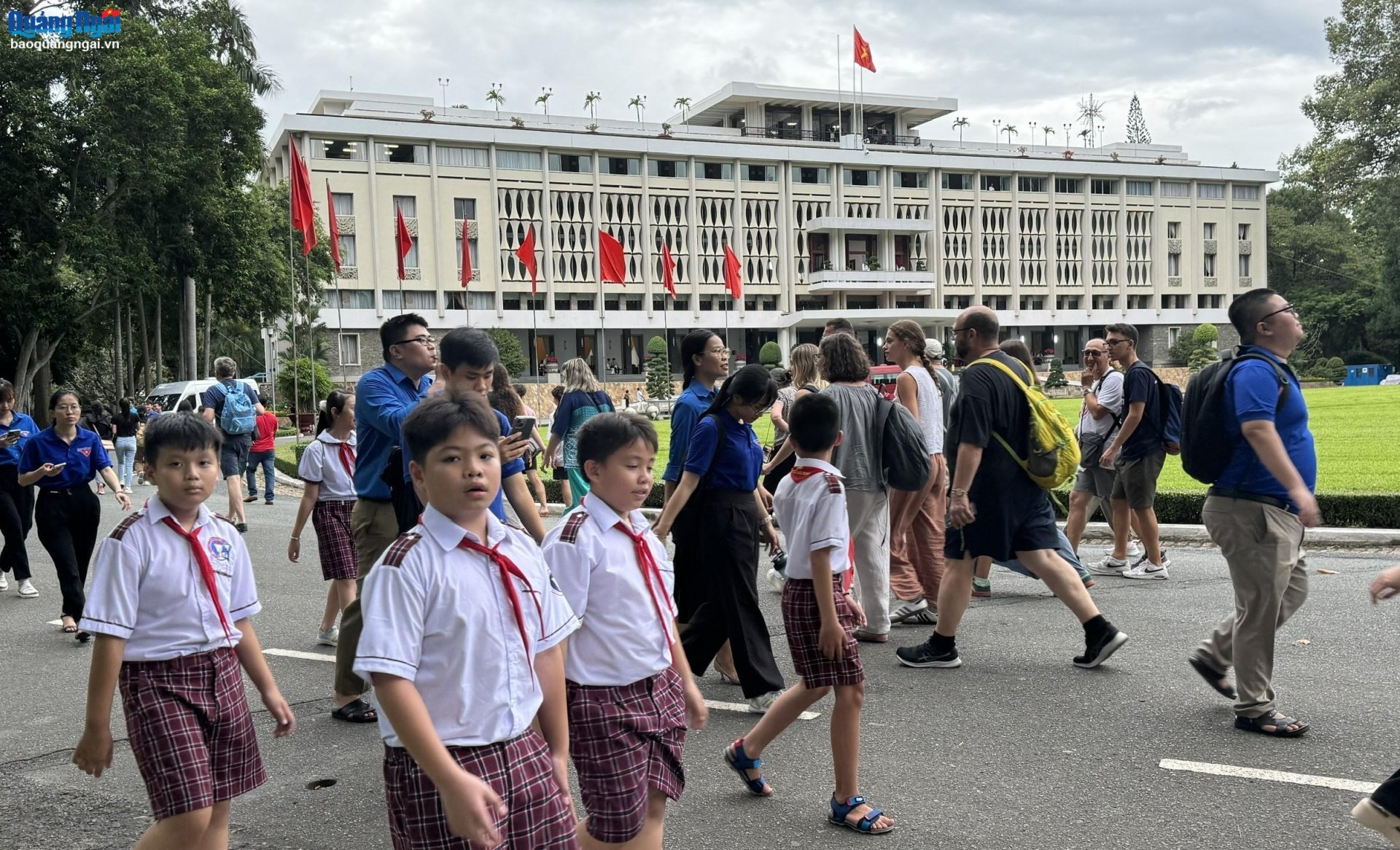
| Independence Palace has been and continues to fulfill its function of educating the younger generations of Vietnam about traditional values. |
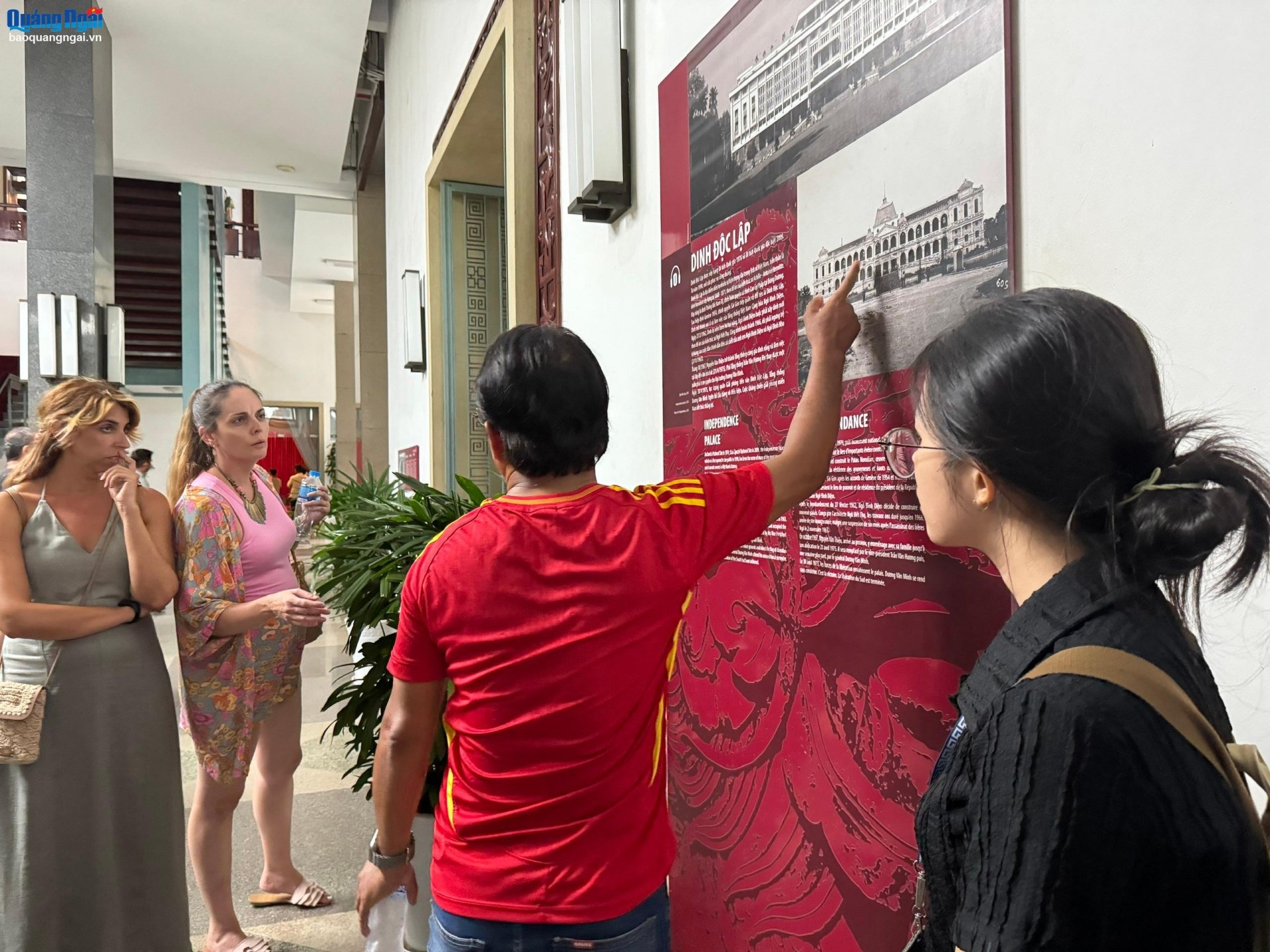 |
| International tourists visiting the Independence Palace. |
After 1954, when Ngo Dinh Diem became President, he renamed it the Independence Palace. In 1962, most of the palace was destroyed after a bombing by the opposition party. Ngo Dinh Diem then had a new palace built on the same site according to the design of architect Ngo Viet Thu. During the construction of the new palace, President Ngo Dinh Diem moved to the nearby Gia Long Palace (now the Ho Chi Minh City Library) to live and work. In early November 1963, a coup d'état occurred, and President Ngo Dinh Diem was assassinated, so the construction was interrupted for a period, only being completed in 1966. From then until before April 30, 1975, this was the residence and workplace of successive presidents of the Saigon puppet regime, and also a symbol of the regime's power.
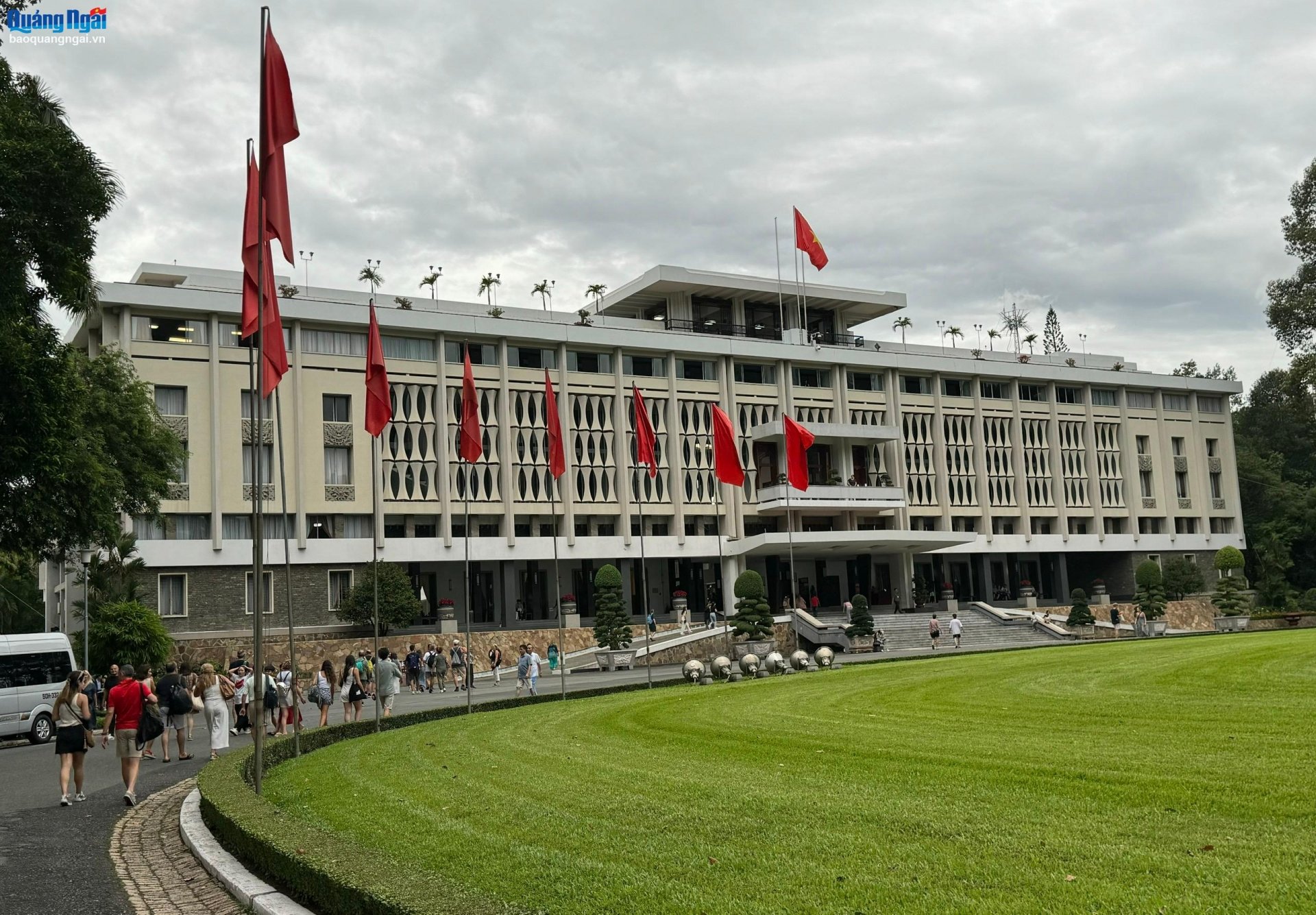 |
| Independence Palace not only possesses architectural beauty but is also a symbol of peace and national unity. |
The Independence Palace is 26 meters high, with a construction area of 4,500 square meters; the usable area reaches 20,000 square meters, including a basement, ground floor, 3 main floors, 2 mezzanines, and a rooftop with more than 100 rooms decorated in different styles. The building has several sections: the working area for the president and government, the living area for the president's family, auxiliary areas (warehouses, kitchens, staff), and a system of bomb shelters along with information and combat rooms in case of direct hostilities involving the palace.
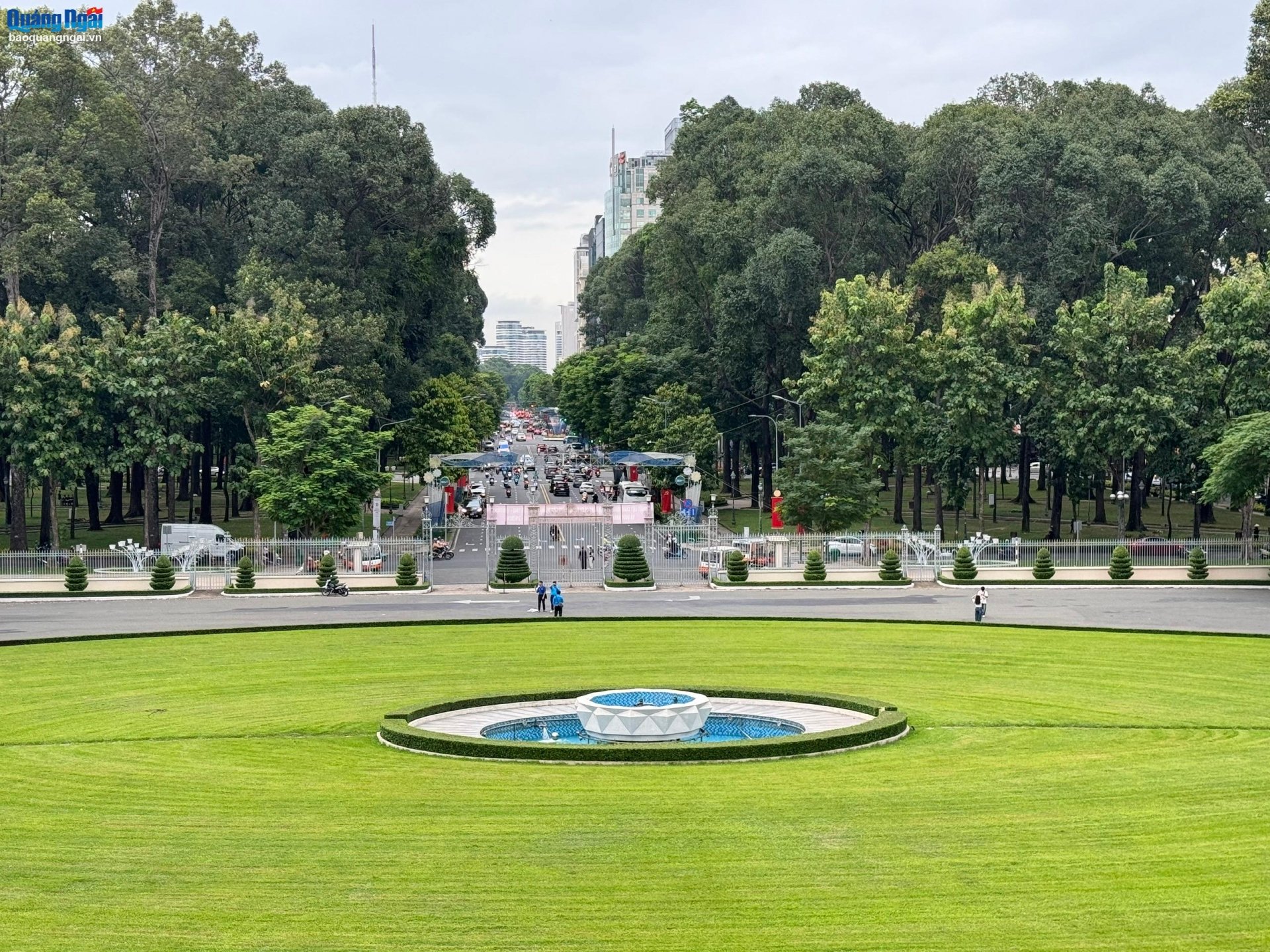 |
The architecture of the Independence Palace is notable for its blend of modern and traditional styles. Built as the workplace and residence of the president, the palace has clearly defined functional areas: the president's and government's offices, the family's living quarters, auxiliary areas, and a robust system of bomb shelters. These shelters not only protected the family and government leaders in case of war but were also fully equipped with communications and operational rooms, capable of withstanding heavy artillery and bombs.
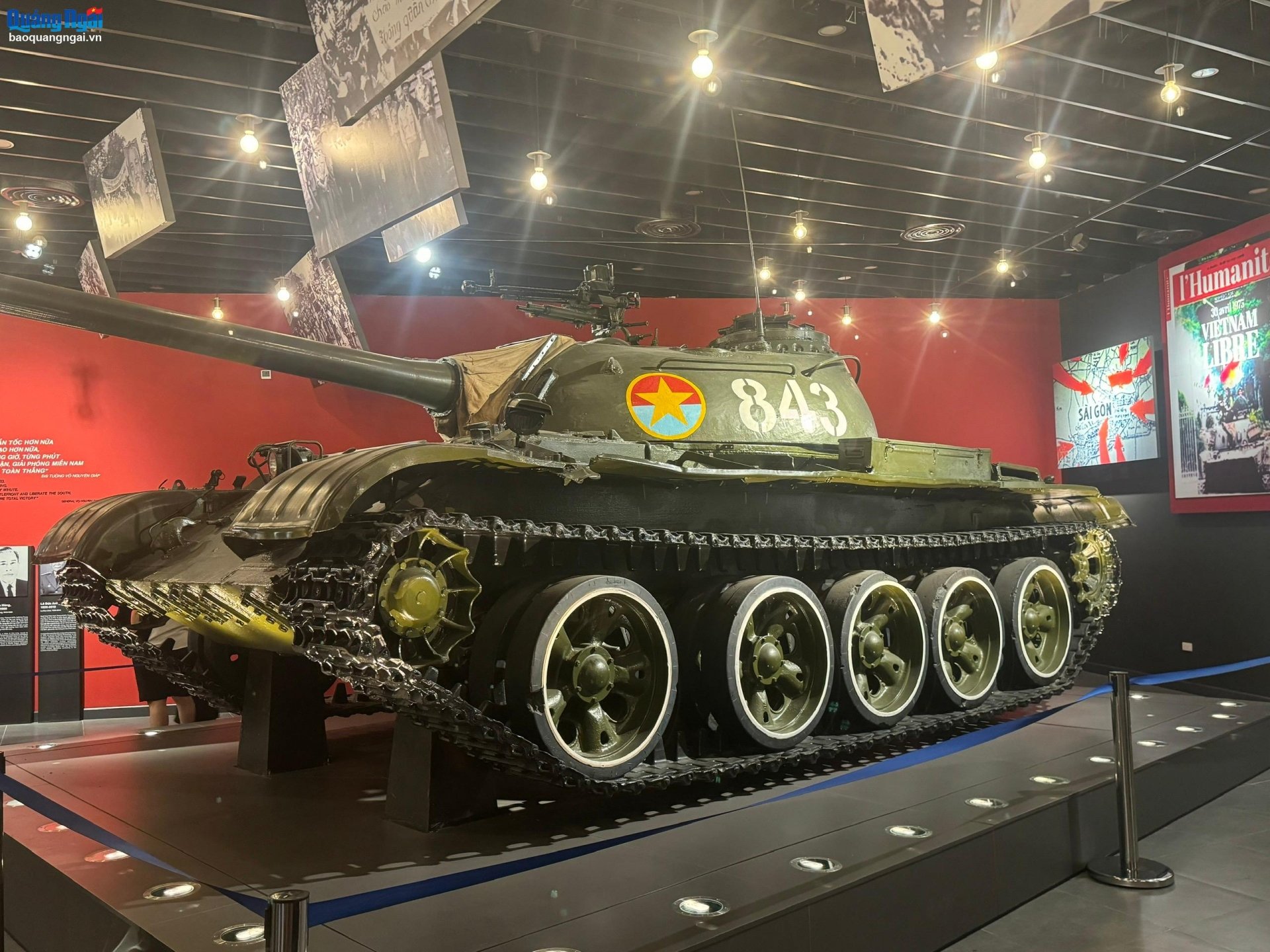 |
| Tank T-54B, number 843, belonging to Company 4, Battalion 1, 203rd Armored Brigade, 2nd Corps, was one of the first two tanks to advance and ram into the Independence Palace on the afternoon of April 30, 1975. It is currently on display at the Vietnam Military History Museum. |
Half a century has passed since April 30, 1975 – a momentous milestone in the history of the Vietnamese nation. The Independence Palace is not only a historical "witness," a place that preserves this glorious milestone, but also a symbol of national harmony and unity, as its current name suggests – the Hall of Reunification.
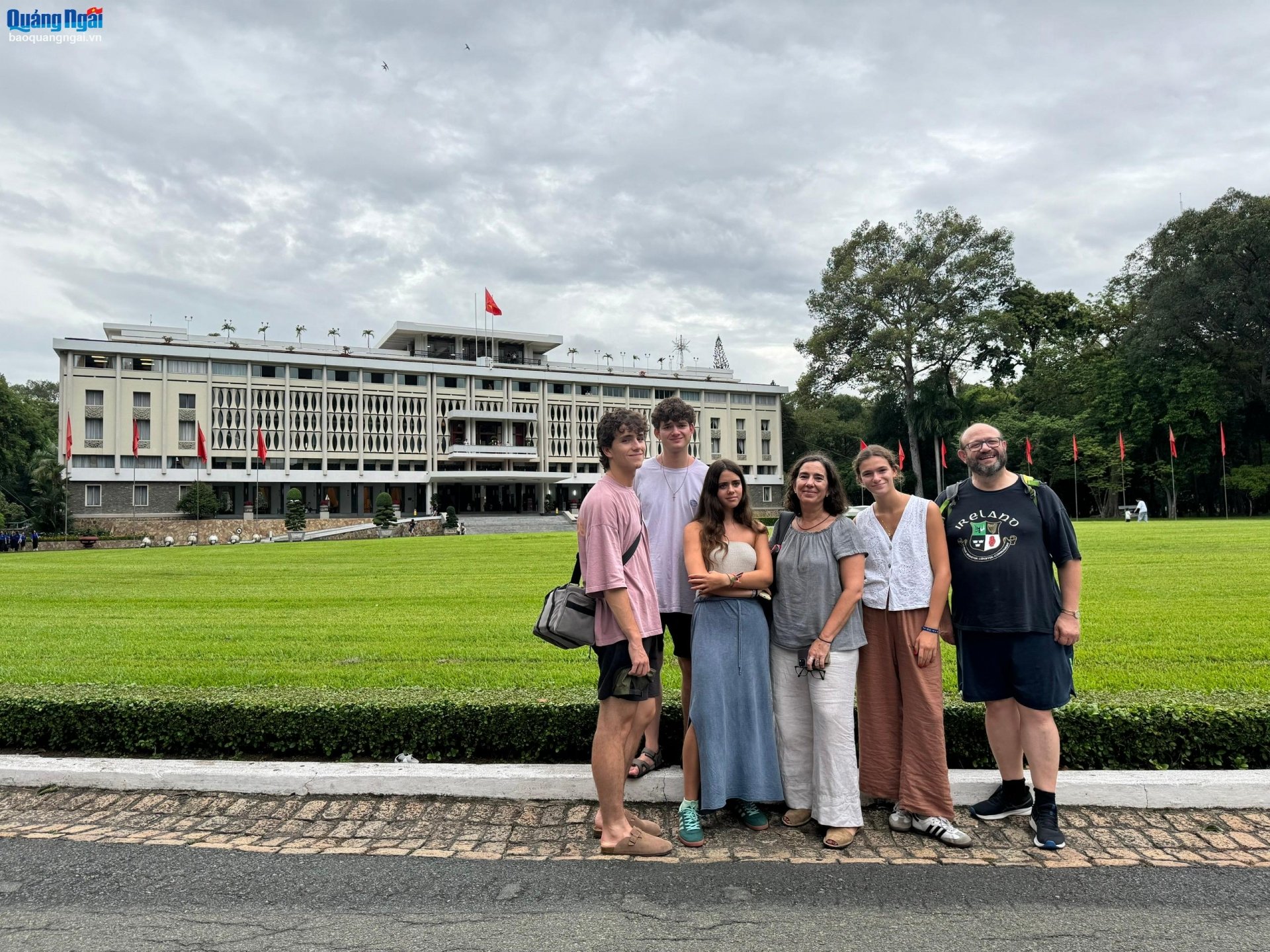 |
| International tourists take souvenir photos in front of the Independence Palace. |
Independence Palace has been fulfilling its function of educating the younger generations of Vietnamese people about traditions and serving as a bridge between Vietnam and other countries around the world. It is a destination for most tour groups and one of the most visited sites and museums in Ho Chi Minh City.
In 1976, the Independence Palace was recognized as a National Historical and Cultural Monument. In 2009, the Prime Minister ranked the Independence Palace as one of Vietnam's first 10 special national monuments. Currently, the Independence Palace houses approximately 6,800 artifacts, many of which are of historical and artistic value. This historical site attracts millions of visitors annually. Visitors not only witness a magnificent architectural masterpiece but also gain a deeper understanding of Vietnam's history through the stories and artifacts displayed at the palace.
Text and photos : THANH THUAN
Source: https://baoquangngai.vn/van-hoa/202505/dinh-doc-lap-chung-nhan-lich-su-giua-long-tphcm-feb0031/


![[Photo] Prime Minister Pham Minh Chinh attends the Conference on the Implementation of Tasks for 2026 of the Industry and Trade Sector](/_next/image?url=https%3A%2F%2Fvphoto.vietnam.vn%2Fthumb%2F1200x675%2Fvietnam%2Fresource%2FIMAGE%2F2025%2F12%2F19%2F1766159500458_ndo_br_shared31-jpg.webp&w=3840&q=75)






















































Comment (0)