

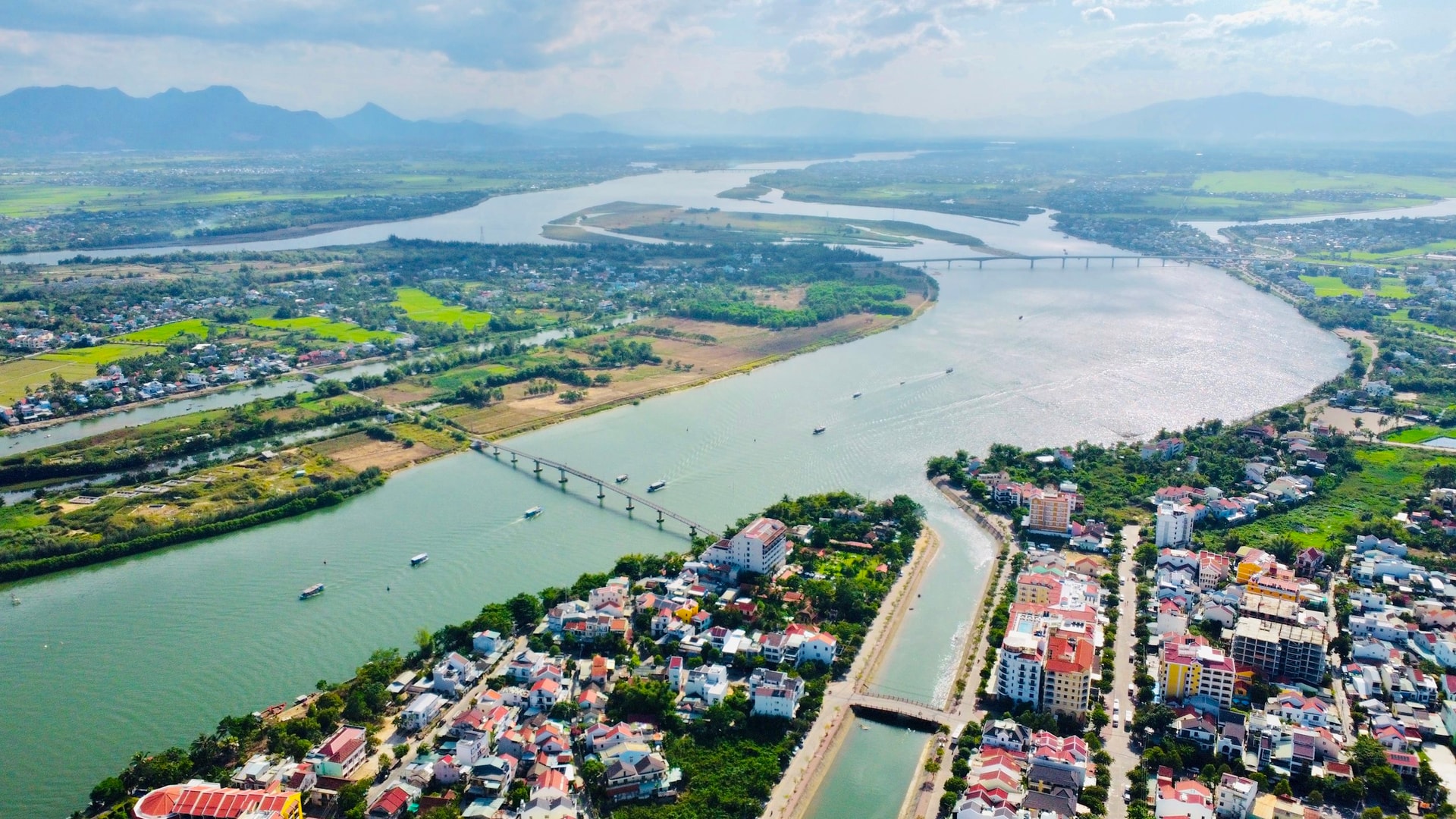
Adapting to trends
For many years, urban development has typically followed a model of integrated urban areas, centered around a multi-functional, multi-purpose zone that expands horizontally.
This approach contributed to rapid growth, but also revealed limitations such as overloaded infrastructure, increased population pressure, and failure to fully exploit the potential of areas outside the urban core. In the new context, Da Nang's planning identifies a shift towards spatial organization based on thematic urban models, opening up a more flexible and sustainable approach.
According to experts, Vietnam is actually moving towards the second phase of urbanization, which means shifting from physical expansion to improving urban quality. Therefore, Da Nang has the opportunity to pioneer models such as ecological cities, smart cities, and cities that integrate culture and heritage.
Mr. Nguyen Cuu Loan, Vice Chairman and General Secretary of the Da Nang City Urban Planning and Development Association, believes that the reorganization of urban space after the administrative boundary merger is not just a planning adjustment, but a strategic process aimed at restructuring the entire urban system on the basis of a balance between development, preservation, and adaptation.
The core of the thematic urban model is the formation of specialized development hubs, where each urban area focuses on a key economic sector, instead of spreading functions thinly as before. Urban space is therefore no longer limited to administrative boundaries or the central area, but extends to rural, hilly, and mountainous regions, forming a linked whole within the development value chain. This also represents a shift from the mindset of "rural urbanization" to "regional spatial reorganization," where each area has its own role but is closely interconnected.
The shift to a thematic urban model also places higher demands on development management. Authorities will have to simultaneously control population distribution, regulate temporary resident populations in accordance with infrastructure capacity, and avoid a recurrence of overcrowding in the central area.
Many cities are waiting.
In fact, during the urban planning process prior to the merger, local authorities had already considered the option of forming specialized urban areas, clearly defining urban functions. Therefore, the City People's Committee decided to inherit the urban organization method based on function and regional hubs.
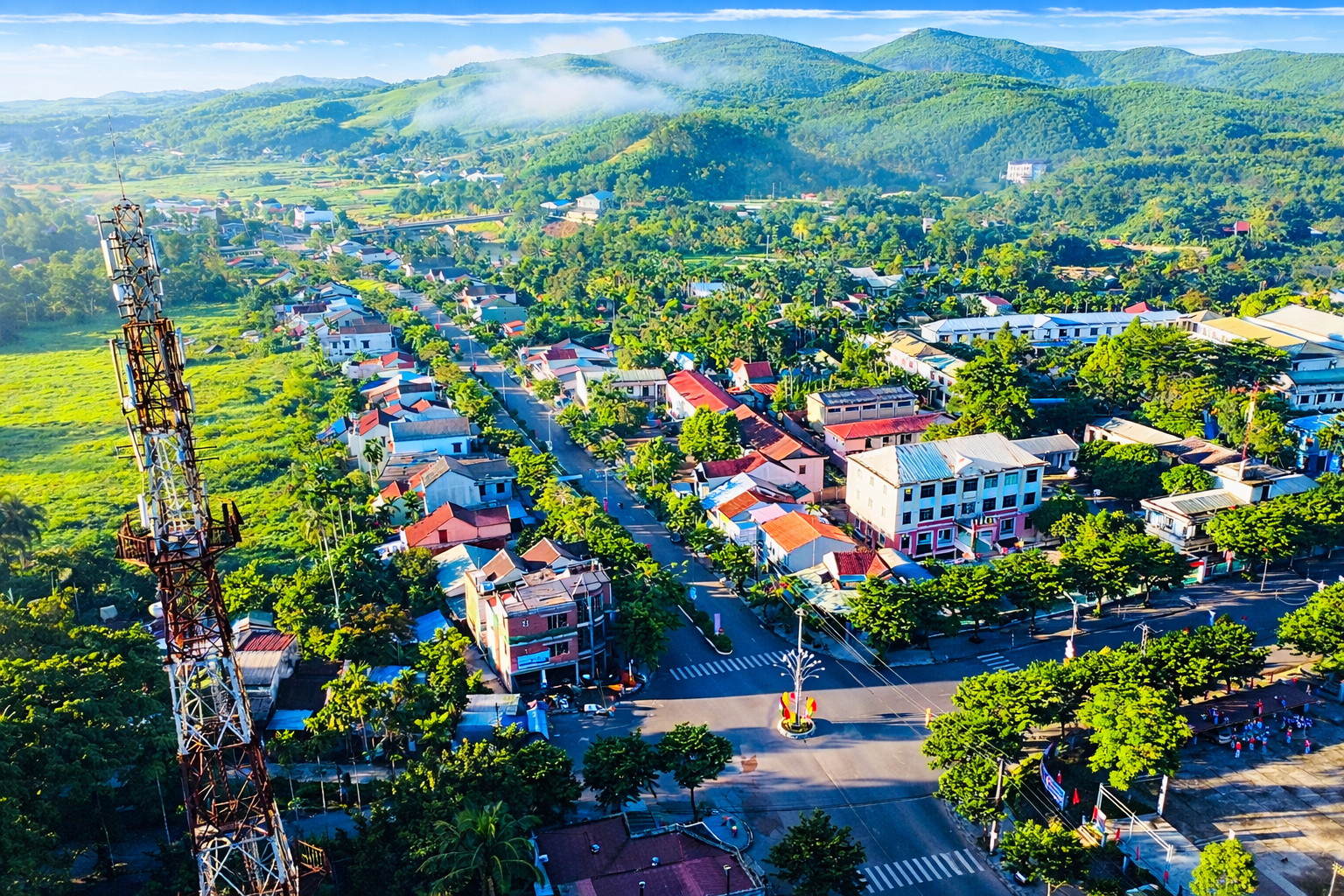
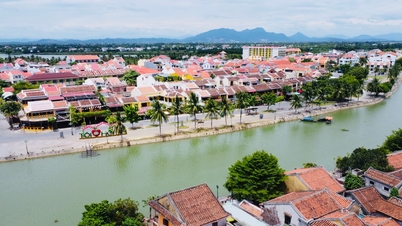
Some areas have developed prominent functions, such as Hoi An, associated with an ecological, cultural, and tourism urban area; and Nui Thanh, associated with an industrial and service urban area. Mr. Nguyen Cuu Loan noted that the existing core urban areas of Hai Chau, Son Tra, and Ngu Hanh Son will continue to play the role of a high-end administrative, financial, and service center. However, new development hubs need to be more clearly defined to help share functions and reduce pressure on the central area.
In the Northwest, the Lien Chieu - Ba Na area is being developed into a high-tech industrial hub, linked with logistics centers and supporting industries. This is considered a new dynamic space, creating a foundation for the development of a knowledge-based economy and high-tech manufacturing.
Meanwhile, the coastal area of South Hoi An is gradually revealing opportunities for the formation of a chain of themed urban areas focusing on high-quality tourism and services, as well as green industries, with many key projects being developed consecutively in recent times.
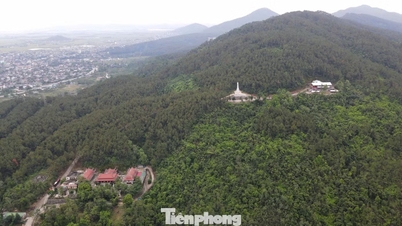
As for the western mountainous region, the focus is on developing medium-sized ecological urban areas, closely linked to the medicinal plant economy, nature conservation, and the cultural identity of ethnic minorities. Through this, the region will gradually integrate more deeply into the city's economic value chain.
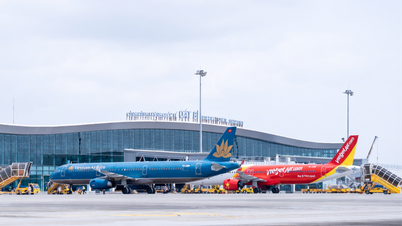
With thematic urban development linked to technical infrastructure, the development orientation of airport cities in Da Nang and Chu Lai continues to be promoted, aiming to strengthen inter-regional and international connectivity. According to the City People's Committee, planning to increase the capacity and upgrade the infrastructure of Da Nang International Airport is an important task to create momentum for socio-economic development, linked to the orientation of a free trade zone and the airport city model.
Regarding the strategic infrastructure in the southern part of the city, Associate Professor Dr. Tran Dinh Thien, former Director of the Vietnam Institute of Economics, said: “The Ky Ha port, connected to Chu Lai airport, should be considered a priority location for the formation of a port-airport city. Especially the Chu Lai airport city, which must be promoted soon to seize the opportunity because, as has been discussed for a long time, this area will have a special position.”
Another highlight in Da Nang's thematic urban development plan is the Da Nang National University urban area in the North. According to the revised Da Nang planning for the period 2021-2030 with a vision to 2050, this urban area is projected to cover approximately 558 hectares, located in Ngu Hanh Son and Dien Ban Dong wards, and is expected to become a center for training, research, and innovation. The adjustment of the area's scale and function is expected to contribute to the formation of an educational city, a knowledge-based development hub, complementing Da Nang's multi-centered urban structure.
Source: https://baodanang.vn/dinh-hinh-do-thi-chuyen-de-3330733.html
![[Photo] National Assembly Chairman Tran Thanh Man working with the Standing Committee of the National Assembly's Delegation Affairs Committee.](https://vphoto.vietnam.vn/thumb/1200x675/vietnam/resource/IMAGE/2026/05/20/1779294340023_ndo_br_1-1691-jpg.webp)
![[Image] "Journey of Hope" promotes the organ and tissue donation movement in Vietnam.](https://vphoto.vietnam.vn/thumb/1200x675/vietnam/resource/IMAGE/2026/05/20/1779294400833_1-8910-jpg.webp)
![[Photo] General Secretary and President To Lam works with the Party Committee of the Ministry of Health on the work of Vietnamese traditional medicine.](https://vphoto.vietnam.vn/thumb/1200x675/vietnam/resource/IMAGE/2026/05/20/1779294323718_a1-bnd-2978-3319-jpg.webp)






















































Comment (0)