


The era of leniency towards pirated content is over.
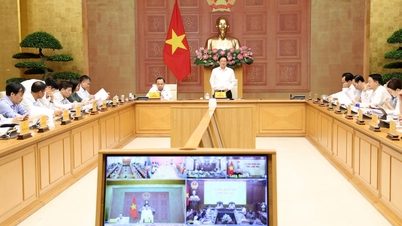
In early May, Deputy Prime Minister Ho Quoc Dung signed and issued Prime Minister's Directive No. 38/CD-TTg on focusing on decisively implementing solutions to combat, prevent, and handle acts of intellectual property infringement. The document requires functional forces nationwide to concentrate resources to strictly handle all violations in the spirit of "no exceptions."
Immediately after the information was widely publicized, a series of websites offering pirated movies and entertainment programs, as well as translation groups, began displaying messages indicating they had ceased operations or were inaccessible. What's noteworthy about this "wave of closures" is its simultaneous and widespread nature. Previously, when a pirated website was shut down, a similar domain would almost immediately spring up to replace it, ensuring users didn't experience any disruption to their entertainment. But this time, many pirated sites disappeared without a trace.
Many people who frequently watch, listen to, or read copyrighted content are asking: Where can I watch it now? Some have started paying for subscriptions to services like Netflix,FPT Play, VieON, or Galaxy Play. But most are still in the "exploratory" phase.
Mr. Ngo Huu Minh (34 years old, Gia Dinh Ward, Ho Chi Minh City) shared: “For almost ten years, I haven't missed a single Korean drama on a website that specializes in providing movies. Now that website is inaccessible, I don't know where else to watch them. Someone recommended paid websites, but some sites have certain films while others don't, so I haven't been able to choose one yet.”
Develop a habit of using licensed digital entertainment.
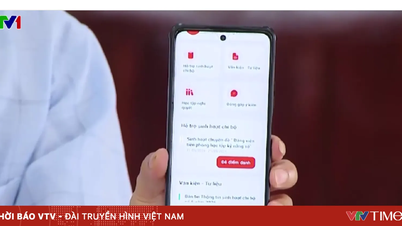
While searching for suitable copyrighted websites, audiences are increasingly accessing diverse forms of enjoying digital cultural products. Accordingly, some websites allow viewers to watch copyrighted films without direct payment, attracting numerous advertisements. Others offer a free trial of the first few episodes, with viewers paying to watch subsequent episodes if they find them enjoyable.
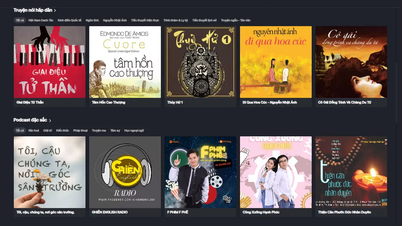
In the realm of books and stories, for many years, Vietnamese readers have been accustomed to reading for free on numerous informal online translation forums. Recently, when these groups ceased operations and closed their pages, many readers were disappointed. However, a new model has emerged, with many translators proactively contacting foreign sources to purchase book and story rights, translating them into Vietnamese, and then reselling them to readers chapter by chapter on domestic platforms.
Ms. Tran Thi Mai Phuong (28 years old, residing in Ban Co Ward, Ho Chi Minh City), a reader of many Chinese romance novels following this model, said: "With many free translations, translators work out of passion, so their ability is unstable, not to mention that if they get busy or bored and stop translating, the story is interrupted. Now they have an income, the quality of the translations and stability are more assured."
Addressing copyright infringement is an essential step in the development of the cultural industry. For audiences and readers, the habit of using legitimate products will gradually develop over time. For content producers and official distributors, this is also an opportunity to improve service quality, retain and persuade the public to pay for valuable products, thereby contributing to building a healthy and sustainable digital content market.
For many people, paying for digital entertainment services is still a foreign concept, while most paid platforms lack sufficient content to entice potential customers to "click the payment button."
Source: https://www.sggp.org.vn/dinh-hinh-thi-truong-noi-dung-so-lanh-manh-post853135.html


![[Image] Hanoi's urban life under the challenge of a "scorching hot" environment](https://vphoto.vietnam.vn/thumb/1200x675/vietnam/resource/IMAGE/2026/05/25/1779706979265_nang-nong-t5-2026-minh-duy-7-4636-jpg.webp)
![[Image] Close-up view of the interchange connecting the two expressways and Long Thanh Airport.](https://vphoto.vietnam.vn/thumb/1200x675/vietnam/resource/IMAGE/2026/05/25/1779703378210_ndo_br_z7863716673926-224453a31600126cce10622af6290afd-4549-jpg.webp)



















































































Comment (0)