

The country is entering a stage of development with very high demands: double-digit growth, digital transformation, innovation in the national governance model, and building a more efficient, effective, and effective operational system.
However, these goals are difficult to achieve if the system continues to operate with outdated management thinking, outdated and overly formalistic methods of evaluating officials, and mechanisms for implementation lacking clear accountability.
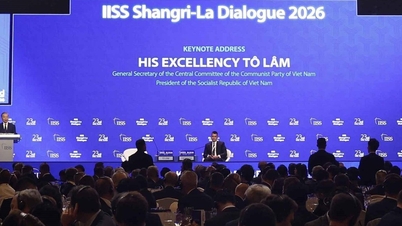
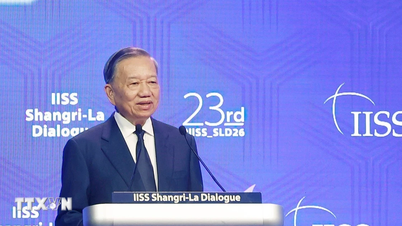
In recent working sessions with the Standing Committee of the National Assembly Party Committee and the Standing Committee of the Hanoi City Party Committee, General Secretary and President To Lam repeatedly emphasized the need to continue shifting strongly from a management mindset to a development-oriented mindset; from "if you can't manage it, ban it" to creating a legal framework to promote innovation, unleash productive forces, and mobilize resources for development.
Notably, this requirement is not only applied to legislative work or administrative reform, but is also directly linked to the implementation capacity of the apparatus and the quality of the staff.
The reality over the years has shown that many correct policies and guidelines are slow to be implemented at the grassroots level. In some places, procedures are lengthy, processing is slow, and documents have to go through many intermediate layers. Some matters within the authority of officials are met with hesitation and fear of responsibility. In some areas, there is a tendency towards a one-size-fits-all approach in terms of organization, structure, and staffing. In some places, the capacity for implementation has not kept pace with the demands of greater decentralization.
That is why General Secretary and President To Lam has requested continued review and removal of major institutional bottlenecks; acceleration of amendments to laws related to investment, land, finance, science and technology, data, and digital transformation; and strengthening supervision of implementation to ensure that policies, once enacted, are truly put into practice.
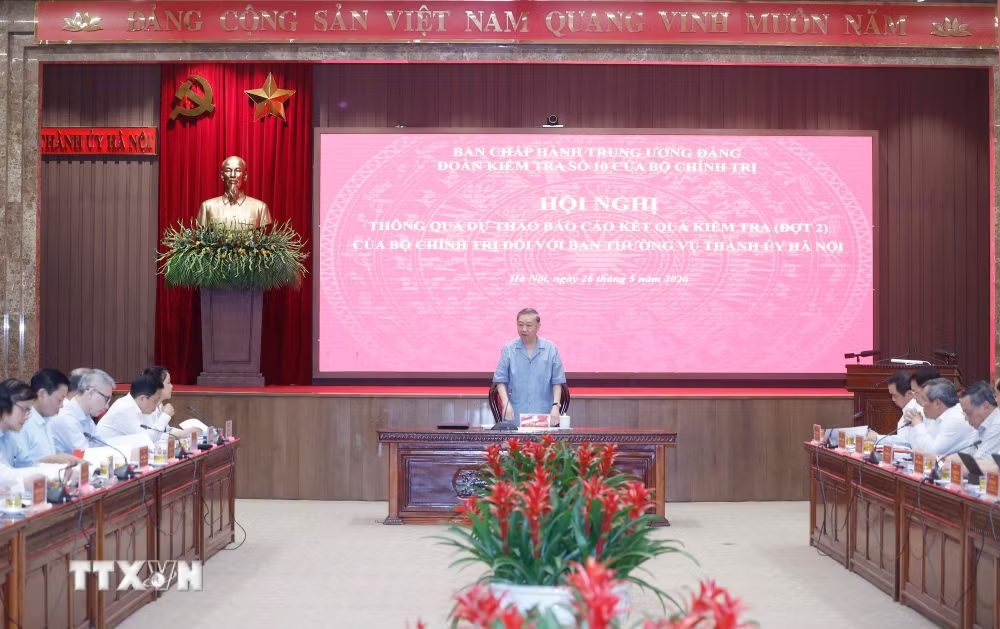
In the context of new development requirements, institutions are not only management tools but are also recognized as a crucial resource for development. If institutions are slow to innovate, still heavily reliant on bureaucratic thinking, and burdened with numerous barriers and overlapping procedures, it will be very difficult to create new drivers of growth.
An economy that wants to develop rapidly cannot operate with a protracted system of granting permits or a cumbersome, slow-moving bureaucracy.
However, for institutions to truly become a driving force for development, it cannot simply be a matter of amending regulations or cutting administrative procedures. It is crucial to improve the effectiveness of the system's implementation, clearly defining the responsibilities of each stage, level, and individual official in the process. This is also why the need to improve institutions always goes hand in hand with the need to reform personnel management, decentralize power, and enhance implementation capacity.
That spirit is being concretized through numerous policies and administrative documents. Decision No. 282/QD-TTg of the Prime Minister on the promulgation of the Plan for key state administrative reform for the period 2026-2030 continues to emphasize the need to review and reduce administrative procedures and improve the effectiveness and efficiency of public service delivery.
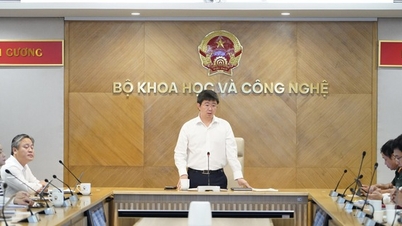
In Official Document 412/TTg-TCCV, the Prime Minister requested the acceleration of decentralization and delegation of power, coupled with improved capacity of officials and accountability in implementation.
But more importantly, the need for innovation in the evaluation of officials is being clearly emphasized. The evaluation of officials cannot be merely a formality; it must be substantive, specific, and measurable through results, products, work efficiency, and the level of satisfaction of citizens and businesses.
And good officials must be recognized and valued, while those who do not meet requirements must be promptly adjusted or replaced appropriately; we cannot set very high development standards while being content with a team of officials who lack ambition, innovation, are afraid of responsibility, and work half-heartedly.
During a meeting with the National Assembly Party Committee, General Secretary and President To Lam requested that cadre evaluations be "closely linked to work results," emphasizing that situations where "evaluations are very good but work is stagnant and inefficient" cannot be allowed; and that a egalitarian evaluation mechanism that diminishes motivation for striving, innovation, and creativity cannot be permitted.
This request is particularly noteworthy because, for a long time, the evaluation of officials in many places has been heavily based on averages. In some areas, the percentage of those deemed "performing their duties well" is very high, but the processing of tasks remains slow; citizens and businesses still have many concerns about the quality of service.
The Ministry of Interior's Satisfaction Index on Public Administration Services 2025 (SIPAS 2025) report shows that the level of public satisfaction with the services of state administrative agencies is 83.09%, a slight decrease compared to before.
This result shows that although administrative reforms have brought about many positive changes, a segment of the population is not yet truly satisfied with the quality of service and the efficiency of the administrative apparatus in handling their affairs.
Even in Hanoi, a locality consistently ranking among the top in the country for administrative reform, the plan for 2025 must simultaneously improve three indicators: the SIPAS index, the Public Administration Reform Index (PAR INDEX), and the Provincial Public Administration and Governance Performance Index (PAPI), with 9 indicators aimed at improving SIPAS and 28 indicators aimed at improving PAPI.
This shows that the current bottleneck lies not only in regulations or procedures, but also in the implementation capacity and accountability of the staff. Therefore, that is also why evaluating staff based on output results is being promoted more strongly.
Decree No. 335/2025/ND-CP, effective from January 1, 2026, stipulates that the evaluation of civil servants shall be conducted regularly on a monthly or quarterly basis, linked to their duties and work performance.
Some localities have begun to concretize this approach. In Da Nang, the evaluation of officials, civil servants, and public employees is carried out on a 100-point scale with two main groups of criteria, in which the group of criteria on the results of task performance accounts for up to 70 points. This represents a change in the perspective on public service responsibility.
When work results are quantified and linked to individual responsibility, it becomes difficult for general, indiscriminate evaluations or the perception that "everyone does a good job" to exist.
The requirement that "if performance is unsatisfactory, adjustments and replacements must be made" also shows that the spirit of personnel screening is being emphasized more clearly. In a context of a more streamlined organizational structure, stronger decentralization and delegation of power, and higher development demands, the mindset of working half-heartedly and avoiding responsibility cannot continue.
At the same time, decentralization must go hand in hand with improving implementation capacity, strengthening inspection and supervision, and clearly defining responsibilities. We cannot allow a situation where decentralization is carried out without sufficient resources, personnel, or capacity to implement it.
Ultimately, the effectiveness of institutional reform must be measured by the results in serving the people and the actual development results. As the demands of national development increase, the way cadres are evaluated and utilized must also change accordingly.
We cannot allow a situation where officials are highly evaluated but their work remains stagnant and inefficient; nor can we allow a egalitarian evaluation mechanism to diminish the motivation for innovation, creativity, and accountability within the system.
Source: https://www.vietnamplus.vn/do-luong-chat-luong-can-bo-bang-ket-qua-cong-viec-post1113495.vnp

![[Image] Nearly 125,000 Hanoi students completed the Literature exam for the 10th grade entrance exam.](https://vphoto.vietnam.vn/thumb/1200x675/vietnam/resource/IMAGE/2026/05/30/1780117233041_ndo_br_thiet-ke-chua-co-ten-2-png.webp)




















![[Photo] Admire the coral "masterpiece" amidst the million-year-old heritage of Dak Lak province.](https://vphoto.vietnam.vn/thumb/1200x675/vietnam/resource/IMAGE/2026/05/30/1780107638639_y25-jpg.webp)





































































Comment (0)