

Emphasize the importance of transparency.
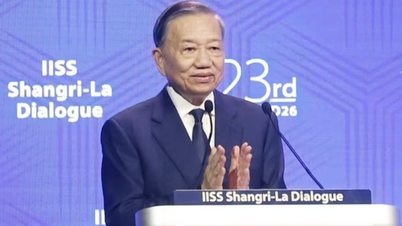
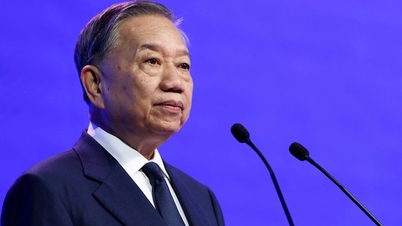
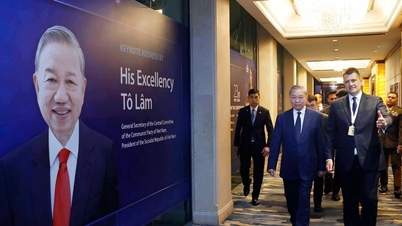
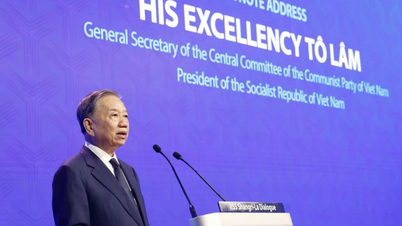
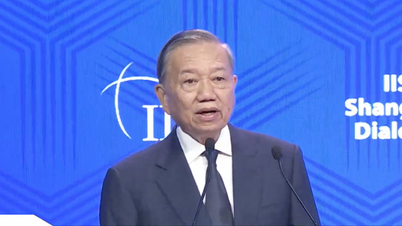
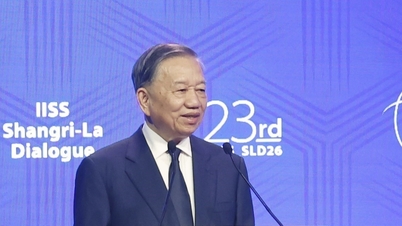
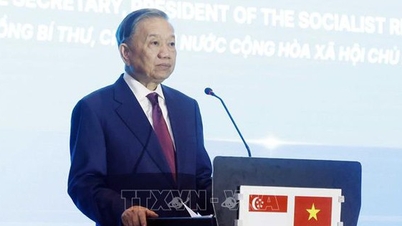
General Secretary and President To Lam's speech addressed not only traditional security issues and focused on the nation, but also broader aspects of security, including socio- economic development and strategic trust. General Secretary and President To Lam identified three crises – the crisis of international order, the crisis of the development model, and the crisis of strategic trust – as the main sources of current international instability.

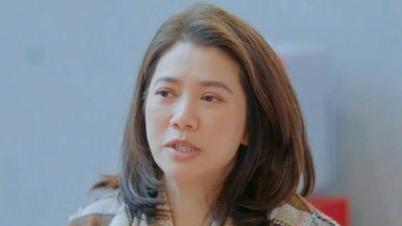
Professor Kei Koga (Programme on Global Issues and Public Policy, School of Social Sciences , Nanyang Technological University, Singapore)
PHOTO: PROVIDED BY THE SUBJECT
To address these challenges, General Secretary and President To Lam has put forward several recommendations for peace and prosperity in the Asia-Pacific region, including maintaining the rules-based order established in the United Nations Charter, upholding ASEAN's central role, developing standards for emerging and advanced technologies, and maintaining open channels of communication.
However, the main message of General Secretary and President To Lam focused on the dangers of "uncontrolled competition" in the international arena, which risks pushing the world towards a "might makes right" logic and making the world more susceptible to escalating conflicts. To avoid this outcome, General Secretary and President To Lam emphasized the importance of transparency, inclusiveness, and a regional structure centered on ASEAN. I largely agree with General Secretary and President To Lam's assessment.
However, a point that needs further discussion is that if unchecked competition truly becomes an increasingly prominent feature of international life, the crucial question is how to persuade major powers to shoulder greater responsibility in fostering mechanisms of strategic trust. Perhaps ASEAN could play a key role in this. If so, ASEAN itself needs to shoulder greater responsibility in maintaining unity and strengthening its influence in shaping regional and international rules and norms.
Professor Kei Koga (Programme on Global Issues and Public Policy, School of Social Sciences, Nanyang Technological University, Singapore)
Opportunities and challenges intertwined.
In his speech, General Secretary and President To Lam emphasized the erosion of the rule of law, the global economic order – a key factor guiding the country's development model – and the lack of trust between nations.
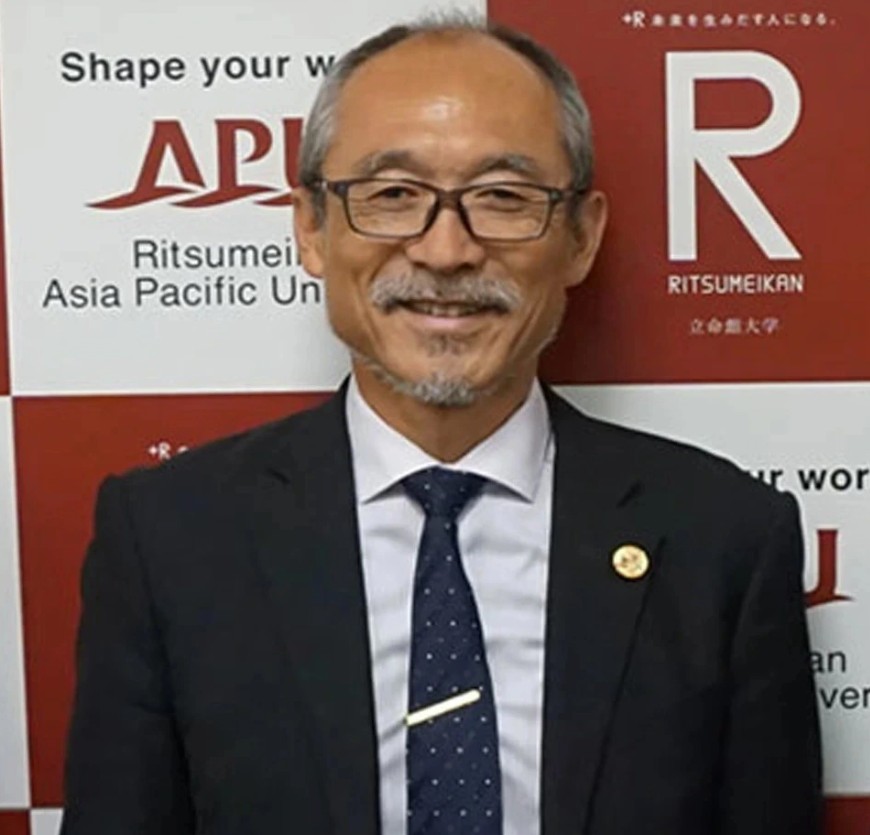
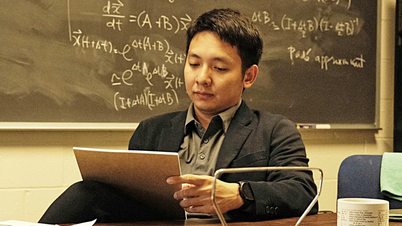
Professor Yoichiro Sato (expert in international relations, Ritsumeikan University Asia-Pacific, Japan)
PHOTO: PROVIDED BY THE SUBJECT
Risk mitigation strategies are facing greater challenges in the current global situation. The US's efforts to contain China are not only increasing but are also taking many forms, going beyond simply balancing military power. While some US actions, such as tariffs on Chinese goods, have opened up new opportunities for some countries, escalating US-China tensions are putting pressure on all Asian countries, potentially forcing them to "choose sides." This tension also challenges ASEAN's unity.
With the erosion of the liberal economic order centered around multilateral free trade under the WTO, access to large markets for some countries, including China and the US, is increasingly tied to their national security relationship with either the US or China.
Stable economic growth is a crucial source of legitimacy for many Asian nations. The careful balancing act between multiple policy objectives makes choosing between China and the US a difficult one. Vietnam's more likely path is to continue reviewing and refining its risk mitigation strategy to cope with the new external environment.
Professor Yoichiro Sato (expert in international relations, Ritsumeikan University Asia-Pacific, Japan)
Vietnam is the center of the Indo-Pacific.
The International Institute for Strategic Studies (IISS) – the organizer of the Shangri-La Dialogue – wanted to meet with the Vietnamese leader at this forum because Vietnam is crucial as a key player in the Indo-Pacific region. The security fate of Southeast Asia depends on Vietnam because it is located at the heart of this region. This is because Southeast Asia is at the center of the Indo-Pacific. Therefore, Vietnam is the center of the Indo-Pacific.

Dr. Satoru Nagao (Hudson Institute, USA)
PHOTO: PROVIDED BY THE SUBJECT
When the Shangri-La Dialogue discusses Indo-Pacific security, Vietnam is at the center. On the other hand, this event is also a valuable opportunity for Vietnamese leaders to meet with many partners. The Shangri-La Dialogue is a special forum that attracts the participation of many defense ministers, especially from the US and Southeast Asian countries. The participation of Vietnamese leaders and their presentation of their country's policies is very important and beneficial. Vietnamese leaders are currently very proactive and have recently met with leaders from many countries such as China, Japan, and India. Now, at Shangri-La, the presence of the General Secretary and President of Vietnam is even more prominent.
Dr. Satoru Nagao (Hudson Institute, USA)
Recognition of importance
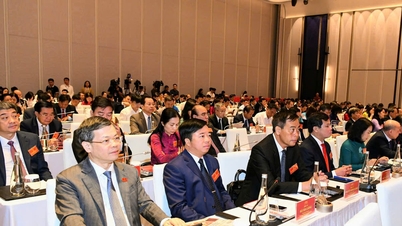
The keynote address by General Secretary and President To Lam at the Shangri-La Dialogue demonstrates recognition of Vietnam's importance to ASEAN, developing countries, and all small and medium-sized powers striving to maintain strategic autonomy in the face of increasingly fierce strategic competition between the US and China.

Professor Stephen Robert Nagy (International Christian University - Japan, scholar at the Japan Institute for International Studies)
Photo: Provided by the interviewee
For a long time, the Shangri-La Dialogue has almost exclusively focused on messages from the two superpowers, the United States and China. Typically, speeches from Washington representatives criticize Beijing and concentrate on security issues. Conversely, speeches from the Chinese side are primarily aimed at domestic public opinion. But this time, Vietnam sent a message that focused on and clearly outlined the regional security challenges it faces, as well as the efforts of small and medium-sized powers to ensure their strategic autonomy.
Professor Stephen Robert Nagy (International Christian University - Japan, scholar at the Japan Institute for International Studies)
Source: https://thanhnien.vn/dau-an-viet-nam-tai-doi-thoai-shangri-la-185260530001327404.htm
![[Photo] Ba Lang An Lighthouse - the "eye of the sea" amidst the "rock museum" of Quang Ngai province.](https://vphoto.vietnam.vn/thumb/1200x675/vietnam/resource/IMAGE/2026/05/29/1780038698840_anh-man-hinh-2026-05-29-luc-14-10-42.png)




































































Comment (0)