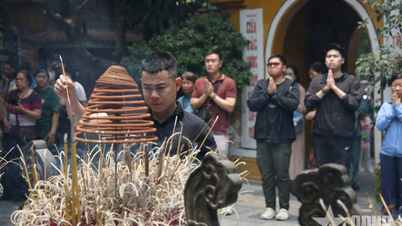
Through its philosophy of "Compassion, Joy, Selflessness, and Altruism" and the spirit of "Buddhism accompanying the nation," Buddhism has truly become a solid foundation, a source of healing energy, and a guide helping people move towards a life of truth, goodness, and beauty.

Buddhism has truly become a solid foundation, a source of healing energy, and a guide helping people move towards a life of truth, goodness, and beauty. Photo: Tinh Le
Buddhism plays a role in nurturing and maintaining good morals and character in people.
All genuine religions in the world guide people towards virtuous values, love, and mutual assistance, but Buddhism has a special emphasis on love – or compassion – as its first and most fundamental principle. The Buddha taught that morality is the core of a person's character, and within that core, love holds the highest position. However, love in Buddhism is not merely an emotion; it requires expression through actions, through concrete deeds connected with joy, equanimity, selflessness, and altruism.
First and foremost, the mind of "joy" (happiness) is a positive attitude towards life, knowing how to rejoice in the joy and success of others. In a society where envy and fierce competition are increasing, a joyful mind helps people break down the boundaries of jealousy. Furthermore, joy is also about acceptance and tolerance. When others make mistakes or do things that don't meet our expectations due to a lack of understanding rather than intentional wrongdoing, we should also show a joyful mind to understand and empathize instead of judging or punishing.
Letting go means releasing, not clinging to resentments or grudges towards others, and even towards oneself. The ancients rightly observed that when people learn to let go, free from hatred and anger, life becomes much lighter and more peaceful. In the modern context, where people are easily overwhelmed by pressure and stress, letting go is an effective remedy for healing psychological wounds and reducing unnecessary conflicts and violence.
The Buddhist philosophies of "non-self" and "altruism" serve as a guiding principle for communal living. "Non-self" is deeply understood as the realization that there is no independent, isolated "self." It advises people not to think only of their own interests, not to cling to what belongs to them, but to recognize that everything they possess is a contribution from the community and society. Never think of yourself as the best, that you must benefit the most. Understanding "non-self" naturally leads to "altruism"—that is, forgiveness and tolerance for the mistakes of others.
The combination of "compassion, generosity, selflessness, and altruism" creates a complete system of ethical values. These values stem from fundamental morality, helping people to love, share, and live together peacefully. This philosophy is concrete and practical, educating people through real-world actions, helping to reduce individual selfishness and prevent the seeds of violence in modern society.
Buddhism preserves and promotes the national cultural identity.
One of the greatest roles of Vietnamese Buddhism, contributing to its enduring vitality in Vietnam, is its ability to integrate and preserve the national cultural identity. Throughout human history, many religions have been extremist; upon arriving in a new land, they tend to reject indigenous cultures and dismantle traditional customs. But Buddhism has chosen a completely different path: the path of cultural adaptation, integration, and respect for indigenous cultures.
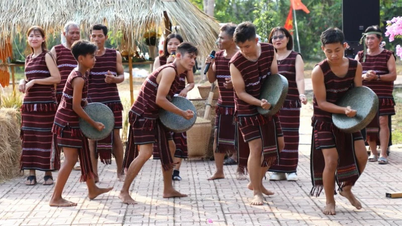
Wherever it goes, Buddhism accepts and respects the traditional cultures of the local people. Buddhism does not destroy but rather seeks to preserve and promote the positive values of the existing culture, and through this, to spread its teachings. Through this process of interaction, the local people gradually absorb the progressive and humane ideas of Buddhism to adjust their own culture: retaining and promoting the good aspects, eliminating outdated customs and limitations, thereby making traditional culture even more vibrant and beautiful.
Because of this characteristic, Buddhism is recognized worldwide as a religion that preserves the cultural identity of its indigenous people. For the Vietnamese, this blending is so profound that Venerable Thich Giac Man (Huyen Khong) exclaimed: "The temple roof shelters the soul of the nation / The way of life of our ancestors for generations ." The temple roof is not only a place of religious activity but has become a place that preserves the essence, way of life, and the most sacred spiritual values of the homeland.
The role of Buddhism in preserving and developing cultural identity is clearly demonstrated through three main aspects:
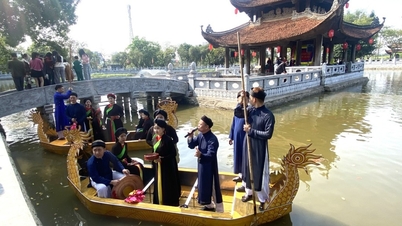
Firstly, regarding architecture: Ancient temples, especially in the North, with their soaring curved tiled roofs nestled under banyan trees and by the water's edge, always evoke a feeling of warmth, peace, and profound sacredness. They are an inseparable part of the Vietnamese countryside landscape.
Secondly, regarding rituals: Buddhist rituals are not rigid but always strive to integrate with the rituals of the indigenous people. This intermingling creates rituals that are both respectful and solemn, reflecting the religious values, yet also gentle and close to the customs and traditions of the ethnic group.
Thirdly, regarding ethics and lifestyle: Buddhism offers a profound humanistic quality, honoring lofty moral values. These values permeate the thinking and way of life of the Vietnamese people, becoming prominent cultural characteristics compared to many other religions in preserving national identity in the modern era.
Vietnamese Buddhism, a testament to the close relationship between "the Dharma and the nation."
The role of Buddhism in society extends beyond lectures in lecture halls; it is also vividly present through social, charitable, and humanitarian activities. These activities stem from the core essence of Buddhism: the combination of "compassion" and "enlightenment."
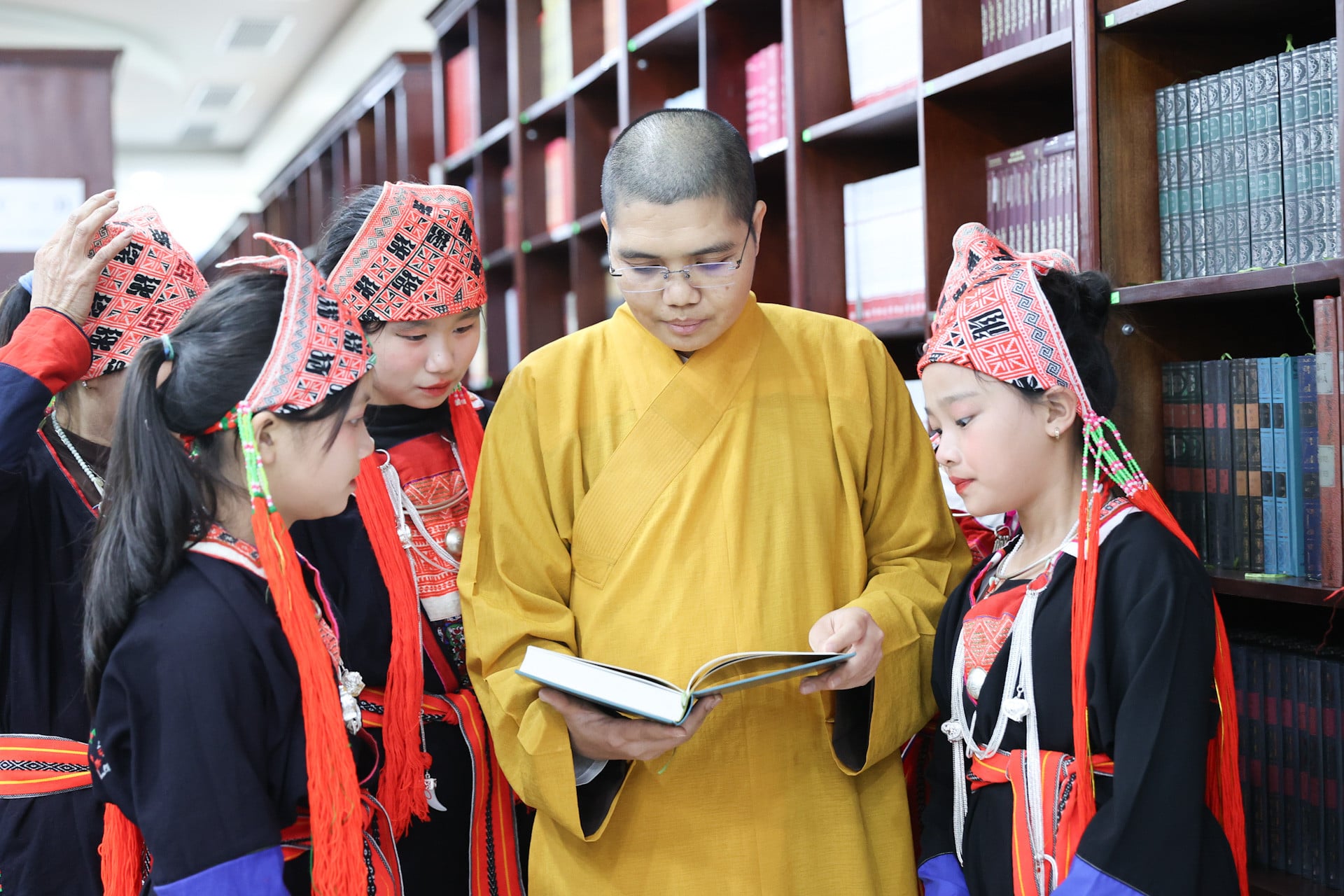
The movement to promote learning and talent through the establishment of the "Buddha Light Library" for students is an excellent example of Buddhism's constant concern for future generations. Photo: Le Anh Dung
Compassion motivates people to love, care for, and help one another. Enlightenment helps people understand the law of cause and effect, realizing that no individual can exist alone on this planet, but must rely on society, on the sustainability of nature and the environment. From this profound understanding, wherever Buddhism goes, compassion and wisdom spread, most clearly manifested through humanitarian work and social welfare.
Throughout history, and especially in the present context, Buddhist organizations have made tireless contributions to the community. Buddhism has always been at the forefront of helping the vulnerable in society, the sick and infirm, and the elderly who are alone.
When the country faces natural disasters, storms, floods, or major catastrophes like the Covid-19 pandemic, Buddhism, through individuals and religious organizations, quickly mobilized resources and directly participated in the epicenters of the outbreaks and floods to provide relief and share the difficulties with the people. Furthermore, Buddhism actively expanded its sustainable activities such as opening schools for children and libraries.
In particular, the spirit of "Buddhism accompanying the nation" is further concretized through practical programs that meet the needs of the times. Building temples for the poor not only provides them with a spiritual refuge but also serves as a cultural and spiritual anchor amidst hardship.
The movement to promote learning and talent through the establishment of the "Buddha Light Library" for students is an excellent example of Buddhism's constant concern for future generations. Buddhism encourages people from a young age to strive for learning and intellectual development so that when they grow up they can contribute their talents to the country and society. Caring for the intellectual foundation of the younger generation is the most sustainable way to contribute to national development.
All these humanitarian, charitable, and educational activities of Buddhism are of immense significance. They contribute to improving social welfare, especially in circumstances where state and local government policies have not yet been able to fully cover or provide sufficient resources to address the needs.
The proactive and sustainable actions of Buddhism demonstrate the profound civic responsibility of Buddhist followers towards their nation. These activities embody both the compassionate nature of Buddhism and the embodiment of humanistic and virtuous values within the community.
Looking back at its deep connection with the nation, it can be affirmed that Buddhism is not just a philosophical ideology or a path to personal liberation, but a tremendous social resource.
By cultivating noble moral qualities such as compassion, generosity, selflessness, and altruism, Buddhism has provided an invaluable spiritual "vaccine," helping people resist selfishness, indifference, and violence.
Through its flexible cultural adaptation, Buddhism has become a steadfast protector of the soul and way of life of the nation under the roofs of ancient temples. And through countless charitable, educational, and humanitarian relief activities, Buddhism has realized the ideal of "the Dharma walking hand in hand with the nation."
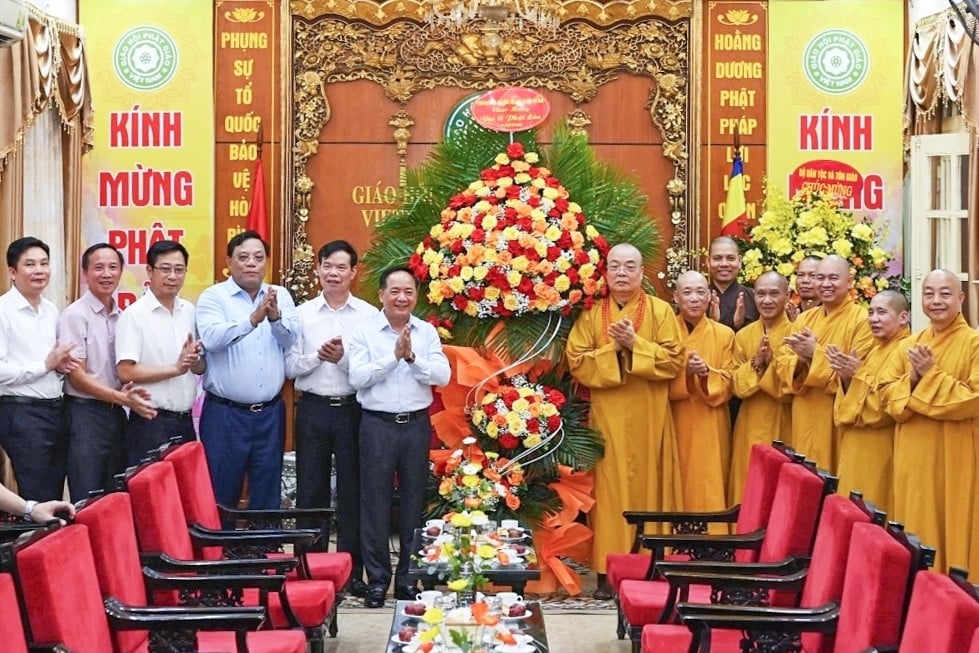
Continuing to uphold the tradition of protecting the nation and ensuring peace for the people of Vietnamese Buddhism, on the occasion of the Buddha's Birthday celebration in the Buddhist calendar year 2070, a delegation of leaders from the Party, State, and the Central Committee of the Vietnam Fatherland Front, led by Mr. Trinh Van Quyet, Head of the Central Propaganda and Mass Mobilization Department, visited and congratulated the Venerable leaders of the Vietnam Buddhist Sangha on the afternoon of May 22nd.
Source: https://vietnamnet.vn/dao-phat-trong-doi-song-viet-giu-hon-dan-toc-gieo-mam-thien-lanh-2520455.html



































































































Comment (0)