

The delegation included Comrade Nguyen Cao Son, Provincial Party Committee member and Vice Chairman of the Provincial People's Committee; and leaders from several provincial departments, agencies, and organizations, as well as Tam Diep city.
South Korea is one of Vietnam's leading economic partners. Between 2019 and 2022, South Korea consistently ranked among the top three countries with the highest amount of foreign direct investment (FDI) in Vietnam. As of May 2023, South Korea was Vietnam's largest foreign investment partner, with 9,666 active projects and a total registered investment capital of over US$81.56 billion, primarily concentrated in the processing and manufacturing industries, electronics, high technology, logistics, and construction.
Korean projects are often large-scale, making a significant contribution to the gradual development of strategic supply chains in Vietnam.
Over the past 30 years since the establishment of diplomatic relations, bilateral trade between Vietnam and South Korea has consistently experienced strong growth. Vietnam's main export items to South Korea include textiles, telephones and electronic components, seafood, wood and wood products, and leather footwear. Vietnam imports items such as computers, electronic products and components, telephones and telephone components, machinery and equipment, petroleum products, and raw plastics.
South Korea also has a rich historical and cultural tradition, sharing many similarities with Vietnam. In recent years, South Korea has made breakthroughs in preserving and promoting cultural heritage, building a heritage economy, developing cultural industries, and fostering innovation. South Korea's cultural industries have not only made their mark regionally but also have a global influence, contributing to building the national brand and affirming cultural strength in economic, cultural, and social development, as well as international integration.
South Korea's successes offer valuable lessons for Vietnam in general and for localities in particular in building and developing culture as a resource and driving force for economic, cultural, and social development, as directed by General Secretary Nguyen Phu Trong at the 2nd National Cultural Conference. 2021.
With the desire to successfully implement the strategy of developing Ninh Binh province into a centrally-governed city with the characteristics of a millennium heritage city, based on cooperation agreements between the two countries as well as between Ninh Binh province and provinces and cities of South Korea, the delegation from Ninh Binh province visited and worked in South Korea this time, holding working sessions in the cities of Asan, Ansan, Busan, Gyeongju, Suncheon, and Jeollanam province; and paying a courtesy visit to the Vietnamese Ambassador to South Korea.
During the working sessions, Comrade Doan Minh Huan, Member of the Central Committee of the Party, Secretary of the Provincial Party Committee, and Head of the working group, along with other members of the delegation, exchanged information on the socio-economic situation, development perspectives, and major orientations for attracting investment and socio-economic development of the province, especially the policy of promoting tourism and trade development. They also expressed their desire to continue strengthening linkages and cooperation in the development of the automotive assembly industry, automotive supporting industries, electronics, etc., with the Hyundai automotive joint venture and Thanh Cong Group as the driving force; promoting economic growth, improving labor productivity, competitiveness, production efficiency, reducing carbon emissions, and moving towards a green and circular economy.
Collaboration in event organization, performing arts, media and advertising, film studio and cinema construction, photography, handicrafts, creative design, entertainment software… linked to the restoration and exploitation of the value of Hoa Lu Citadel - "The Millennium Capital". Cooperation in the construction and investment in the development of high-tech zones, semiconductor chip production; investment in the development of technologies using artificial intelligence (AI) and big data.
Building and developing models of innovation and startup support centers; mobilizing, exploiting, linking, and optimizing local and neighboring region resources; cooperating with and introducing Korean Startup Investment Funds to invest in startup and innovation models in the province.
Promoting cooperation in the field of sports medicine, building sports rehabilitation hospitals, establishing factories or distribution agencies for sports nutritional supplements; promoting sports tourism (golf, football, etc.); creating favorable conditions for Korean sports fashion and sports accessory brands and distributors to operate in the province; cooperating in research in the field of archaeological excavation, carrying out in-situ conservation of archaeological sites, aiming at academic development, sharing experiences and supporting the application of modern science and technology in heritage preservation, especially in-situ conservation of archaeological sites; promoting cooperation and sharing experiences in the preservation, restoration, reconstruction, and display of ancient documents, materials, and artifacts.
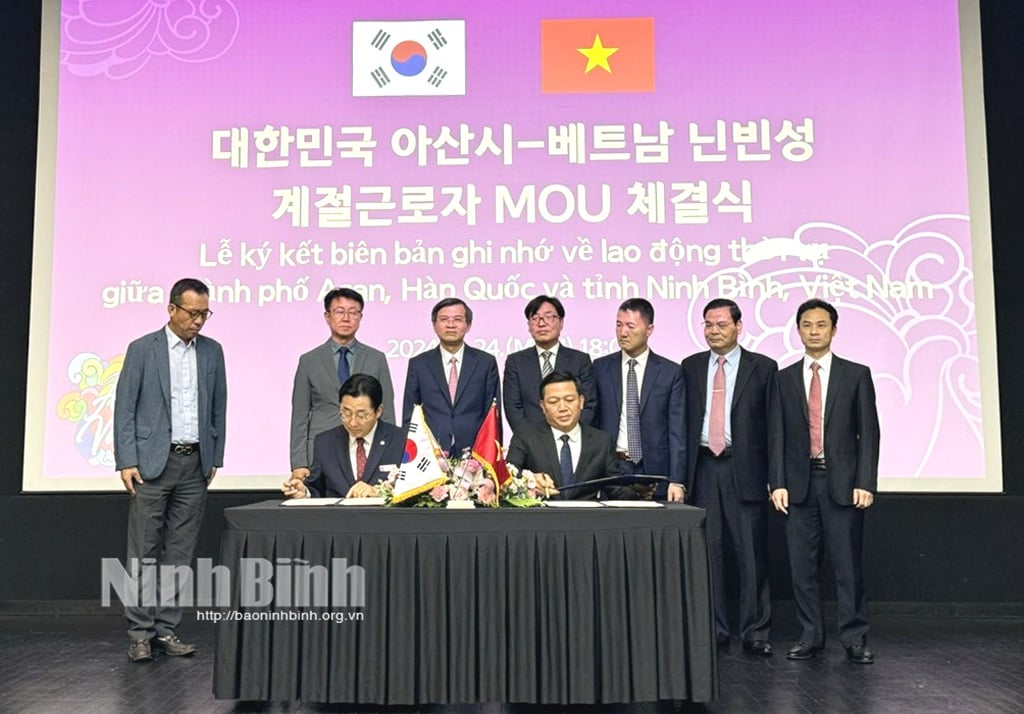
The Korean side also shared information, exchanged ideas, and suggested appropriate methods and solutions to promote bilateral cooperation between Vietnam and Korea in general, and between Ninh Binh province and Asan, Ansan, Busan provinces and other partners and investors in particular. This aims to enhance the effectiveness of friendly cooperation, focusing on key areas and specific markets; especially promoting cooperation in sectors where Korea has strengths and which align with the province's development goals, such as automobile manufacturing and assembly, supporting industries, cultural industries, tourism and service development, and science and technology.
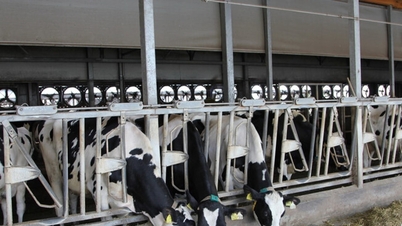
During the trip, the delegation conducted on-site surveys at Oeam Folk Village and Yonsei Milk Factory. They also visited and worked at the Hyundai Motor Factory in Asan City. The delegation held discussions with Mr. Park Gyung-gi, Mayor of Asan City, to assess the results of cooperation between the two sides over the past period and to discuss future cooperation. Notably, the two sides signed a Memorandum of Understanding on the dispatch and reception of seasonal agricultural workers from Ninh Binh province to work in Asan City.
Accordingly, Ninh Binh will annually send seasonal workers to work in Asan for a period of 6 to 8 months per shift. Both sides commit to ensuring the quality of human resources and working conditions that guarantee the best results for both parties.
The delegation visited and worked at K-Unicorn Academy, an entrepreneurship and innovation academy under the Korea Startup Support Organization KOSME, in Ansan city; learning about the development of a knowledge-based economy, innovation, and the mechanisms and policies supporting entrepreneurship in South Korea.
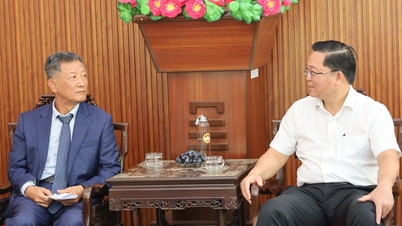
During the working visit, the delegation met with Mr. Joo Nak-Young, Mayor of Gyeongju City, and his colleagues at the Gyeongju government to learn about the unique management mechanisms of a heritage city - the ancient capital, models for the restoration and preservation of cultural heritage, and experiences in building and managing heritage cities.
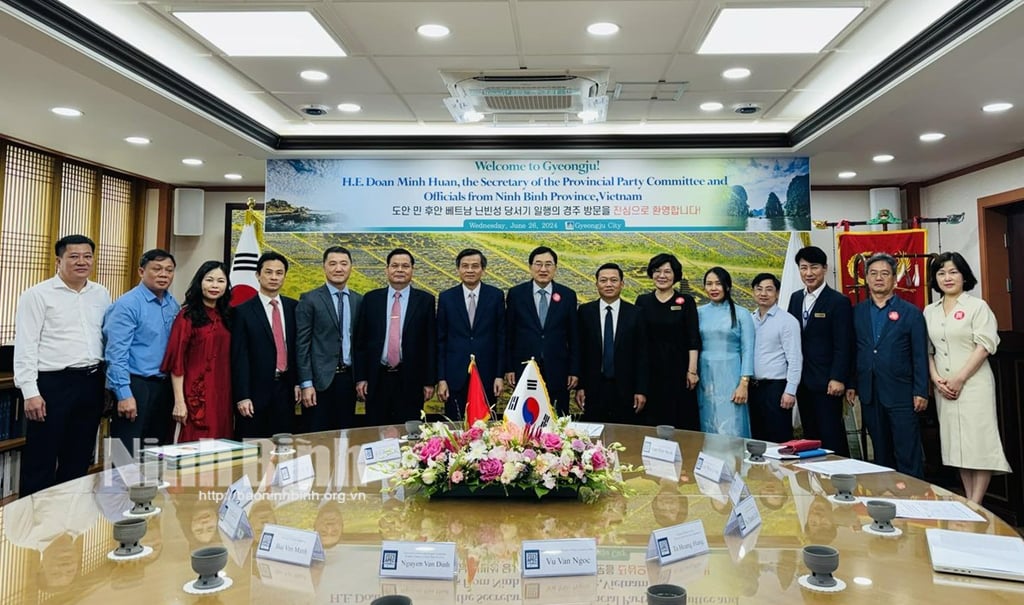
Gyeongju City is not only known as the capital of the Silla dynasty, a kingdom that existed on the Korean peninsula for a thousand years (from 57 BC to the 10th century), but also as the cultural cradle of the Korean people. The Gyeongju Historic Area is like a vast, open-air living history museum, encompassing a complex of heritage sites and relics including temples, palaces, pagodas, mausoleums, and castles, reflecting the customs and Buddhist traditions of the unified Silla dynasty. Currently, Gyeongju boasts the largest number of cultural heritage sites in South Korea, with 4 World Heritage sites and 161 National Heritage sites. These heritage sites are preserved and their value promoted, contributing positively to the construction and development of Gyeongju city.
During the meeting, Mayor Joo Nak-Young shared the city's experience in building heritage cities and historical cities, as well as mechanisms and policies to resolve conflicts between preservation and development; in particular, mechanisms and policies for preserving and restoring these valuable heritage sites and assets, contributing positively to the development of the heritage economy, cultural industry, and tourism. The Provincial Party Secretary expressed his hope that after this meeting, Ninh Binh province and Gyeongji would build a close, long-term, and sustainable bilateral cooperation relationship, contributing to building and strengthening the relationship between the two countries.
During the working visit, the delegation also held a meeting with the management of Suncheon Film Studio in Jeollanam Province. Established in 2006, Suncheon Film Studio has been the filming location for over 100 famous feature films, documentaries, and promotional and investment programs. The delegation visited the studio to learn about its investment and construction mechanisms, management and operation methods, and gain experience in building and developing the cultural industry in general, and film studios in particular, in Ninh Binh.
The working visit to South Korea by the Provincial Party Secretary and the delegation concluded successfully with many practical and effective activities; contributing to elevating the relationship between Ninh Binh and Korean localities and businesses; promoting investment cooperation, creating a strong impetus for socio-economic development, and laying the groundwork for Ninh Binh to successfully implement the Resolutions of the Party Congress at all levels and Resolution No. 30-NQ/TW dated November 23, 2022 of the Politburo on socio-economic development and ensuring national defense and security in the Red River Delta region until 2030, with a vision to 2045, and the Ninh Binh Provincial Planning until 2030, with a vision to 2050.
Continuing their overseas work program, on June 28th and 29th, the delegation visited and worked with partners in Japan.
Text and photos: Hai Minh
Source: https://baoninhbinh.org.vn/doan-cong-tac-tinh-ninh-binh-tham-lam-viec-tai-han-quoc/d20240625154219177.htm













![[Photo] Reception to welcome General Secretary and President To Lam and his wife on their State visit to the Philippines](https://vphoto.vietnam.vn/thumb/1200x675/vietnam/resource/IMAGE/2026/06/01/1780295488620_vna-potal-chieu-dai-chao-mung-tong-bi-thu-chu-tich-nuoc-to-lam-va-phu-nhan-tham-cap-nha-nuoc-toi-philippines-8798060-7855-jpg.webp)







































Comment (0)