


Lessons learned from the 2025 crop season disaster.
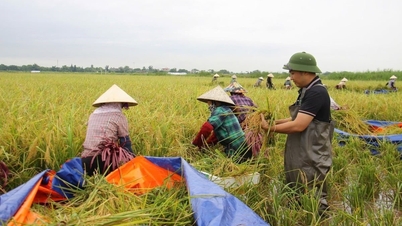
Looking back at the 2025 crop season, Ninh Binh province faced a series of extreme challenges caused by natural disasters. At the beginning of the season, the impact of Typhoon No. 3 (July 21-23, 2025), coinciding with the peak planting season, caused widespread flooding, forcing farmers to replant 15,300 hectares of rice and thin out an additional 23,702 hectares. Furthermore, Typhoon No. 5 and the remnants of the floods at the end of August continued to devastate over 11,360 hectares of rice, nearly 1,000 hectares of vegetables, and many areas of fruit trees and ornamental plants. Towards the end of the season, although not making direct landfall, Typhoons No. 9 and No. 10 still formed tornadoes that swept through coastal communes such as Quy Nhat, Kim Son, Quang Thien, and Yen Khanh, flattening large areas of rice fields that were ready for harvest.
Besides the harsh weather, pest outbreaks with a density of small leaf-rolling caterpillars 5-7 times higher than the previous year, coupled with persistently high prices for agricultural inputs, created a "pincer" situation for farmers. However, thanks to the decisive leadership and flexible management of Party committees and authorities at all levels, and the efforts of cooperatives and farmers to overcome difficulties, the 2025 crop season still yielded commendable results: Average rice yield reached 54.13 quintals/hectare (an increase of 2.67 quintals/hectare compared to the 2024 crop season), total production reached 686.1 thousand tons, and the estimated value of production reached 8,159 billion VND.
The telling figures and losses from the 2025 crop season serve as vivid evidence, helping the agricultural sector to more clearly identify potential risks and proactively develop response plans for the 2026 crop season.

According to forecasts from the National Center for Hydro-Meteorological Forecasting, the ENSO state has an 80-90% probability of shifting to El Nino. This means that temperatures will generally be 0.5-1.5°C higher than the multi-year average, with more intense heat waves. Worryingly, total rainfall will also be 5-20% higher than the multi-year average, with heavy rains concentrated in June, July, and August. This is a particularly sensitive period as localities are focusing on planting, and young rice plants are still small and short, making widespread flooding a significant risk.
Along with natural disasters, the agricultural sector faces potentially dangerous diseases, especially rice black stripe dwarf disease and the increasing prevalence of "wild rice" (ghost rice). The growing shortage of rural labor and the constant fluctuations in input prices are also significant obstacles affecting people's investment sentiment.
Determined to avoid being caught off guard, the Department of Agriculture and Environment has set specific targets for the 2026 crop season: The entire province aims to plant 124,500 hectares of rice, ensuring an average yield of 53.5 quintals/hectare or more, with a total production exceeding 677,000 tons (of which high-quality rice accounts for over 70%). Simultaneously, it plans to plant 17,600 hectares of vegetables and other crops during the summer-autumn season and prepare land for at least 22,500 hectares of winter crops.
"Avoiding the storm" by following seasonal schedules.
From a professional perspective, Mr. La Quoc Tuan, Deputy Head of the Provincial Department of Crop Production and Plant Protection, assessed that the 2026 Summer crop has a huge advantage that previous years did not have: “The 2026 Spring crop went relatively smoothly. Farmers accelerated the rice harvest quickly and efficiently, and it is highly likely that it will be completely finished before June 10th, about 10 days earlier than in previous years. The early land clearance creates ideal conditions for the agricultural sector to proactively direct and guide the planting schedule for the Summer crop, helping crops grow healthily and reach a safe flowering time to minimize the risk of heavy rains causing flooding at the beginning of the season and extreme storms and floods at the end of the season.”

Taking advantage of this, the agricultural sector is orienting the 2026 rice crop structure in a highly scientific and flexible manner. Specifically, for the early rice crop (accounting for 30-40% of the area): The focus is on completing planting before July 5th to ensure harvesting before September 30th. This is a strategic rice crop aimed at freeing up land early, creating land for warm-weather winter crops with high economic value.
Mid-season rice (occupying 50-60% of the area): This is the main rice crop of the entire province. Because the land is prepared early and in small plots, after harvesting, it is used to plant cold-tolerant winter crops.
Late-season rice (occupying 10-11% of the area): Separate planning for traditional specialty rice varieties (Nếp cái hoa vàng, Nếp hạt cau, Tám xoan...), sowing seedlings in mid-June and completing transplanting before July 20th.
Mr. Tuan also emphasized that the core objective of the entire province is to mobilize all forces and machinery to complete the planting and finishing before July 20th.
Shifting farming methods: The optimal solution for protecting production.
To cope with the forecast of heavy rains and floods, Ninh Binh's agricultural sector has called for drastic changes in farming practices. Rice varieties are being strictly controlled, prioritizing short-day, high-quality purebred varieties with good waterlogging tolerance and pest and disease resistance (such as LT2-KBL, Dai Thom 8, TBR97, BT7 varieties resistant to bacterial blight, ST24, ST25...) to gradually replace the Bac Thom No. 7 variety, which is heavily infected with bacterial blight and has poor lodging resistance.
Specifically regarding planting methods, Mr. La Quoc Tuan clearly stated his viewpoint: “Local authorities need to resolutely minimize the area of direct seeding. The reality of the 2025 crop season shows that when heavy rains arrive, areas of free-seeding in low-lying areas are completely wiped out. This season, the province does not encourage direct seeding, only allowing it in high-lying fields where water can be controlled and farmers have experience. Conversely, we require the rapid expansion of the tray seedling - machine transplanting model. The application of machine transplanting not only saves seeds and reduces labor costs, but more importantly, helps rice plants take deep root, become stronger, increase their resistance to flooding, and limit weed outbreaks.”
For low-lying rice fields, it is mandatory to use the method of sowing seedlings densely to ensure the height of the seedlings when transplanted, minimizing the risk of flooding.
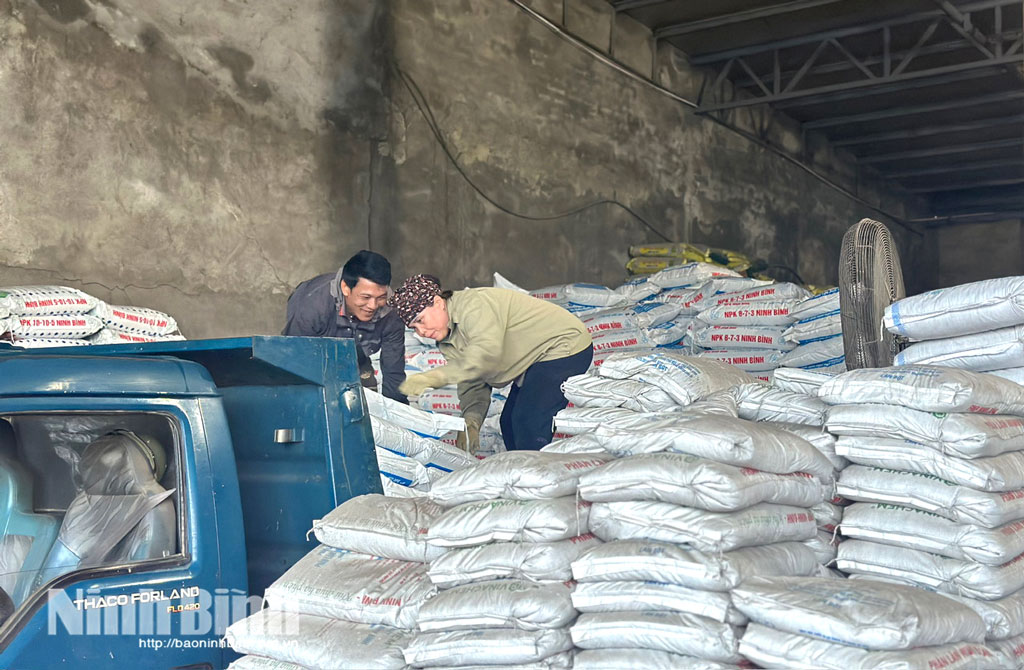
Simultaneously, due to the extremely short transition period from spring to summer (less than a month), fresh rice straw is very susceptible to rotting in the fields under hot weather conditions, causing organic poisoning of young rice plants. The agricultural sector advises farmers to urgently apply lime powder (20-25 kg/acre) or proactively use biological preparations to decompose rice straw directly in the fields. This solution not only protects the rice roots from suffocation but also helps improve soil, reduce greenhouse gas emissions, and contribute to the development of a low-emission, sustainable rice production chain.
Regarding fertilizers, the lesson learned from last year's prolonged application of hybrid fertilizers and excessive nitrogen, which caused rice crops to collapse before the storm, has been rectified. For the 2026 crop season, the specialized agencies and localities need to guide farmers to implement the principle of "balanced fertilization, early fertilization, and efficient fertilization," focusing on deep basal fertilization and the first topdressing, and absolutely avoiding late nitrogen fertilization. The province is also stepping up a campaign to eradicate field rats en masse from the beginning of the season using manual methods, and strictly managing counterfeit and substandard agricultural supplies to protect the fruits of farmers' labor.
The 2026 crop season production has begun with urgent, proactive, and scientific steps. Drawing on lessons learned from the past, combined with flexible and creative thinking in applying current scientific and technical advancements, we are confident that Ninh Binh province's agricultural sector will overcome all weather obstacles, achieve another bountiful harvest, and create a solid foundation for a successful winter crop production plan.
Source: https://baoninhbinh.org.vn/vu-mua-2026-nhan-dien-thach-thuc-chu-dong-ung-pho-260531124201309.html













































































![[Photo] Hanoi residents on the first day after the official cessation of E5 RON 95 gasoline sales.](https://vphoto.vietnam.vn/thumb/402x226/vietnam/resource/IMAGE/2026/06/02/1780370815909_666523_thumb_1780357660_06474202.jpeg)


![[Infographic] Market starts June 2026 with negative sentiment, VN-Index drops nearly 19 points.](https://vphoto.vietnam.vn/thumb/402x226/vietnam/resource/IMAGE/2026/06/02/1780370839687_666534_thumb_1780357795_06495602.jpeg)






Comment (0)