

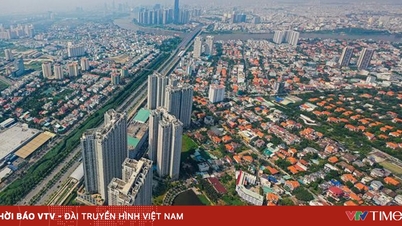
Many businesses that have land use rights but lack residential land are grappling with the question of whether and how they can implement commercial housing projects after the Land Law comes into effect.
Mr. Dang Van Khai, Deputy General Director of Constrexim Housing Development Investment Joint Stock Company, left the seminar "New Driving Forces, Opportunities, and Challenges from the 2024 Land Law and Related Laws" on the morning of August 15th with high hopes.
 |
| Mr. Dang Van Khai, Deputy General Director of Constrexim Housing Development Investment Joint Stock Company. |
“Mr. Dao Trung Chinh, Director of the Department of Land Planning and Development ( Ministry of Natural Resources and Environment ), mentioned the National Assembly's pilot resolution on implementing commercial housing projects through agreements on land use rights or existing land use rights where the land is not residential land, which will be discussed in the upcoming October session. We will have further proposals regarding our case, as currently we are only relying on the pilot options,” Mr. Khai shared on the sidelines of the seminar organized by Business Magazine, under the sponsorship of the Vietnam Association for Consumer Goods Development (ACOD) and the Hanoi Business Association (HBA).
Previously, Mr. Khai's question at the seminar further heated up the issues that need to be discussed after the Land Law comes into effect on August 1, 2024, as it is a typical case where a business has land use rights but does not have residential land, and therefore cannot apply to convert it into a commercial housing project as desired.
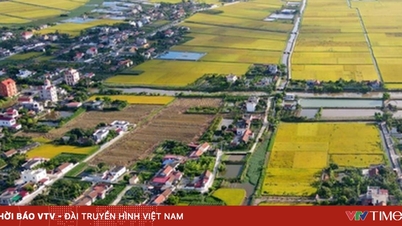
The company's project in Hai Duong , whose planning was approved in 2017, includes residential and commercial land plots. The commercial land, located far from the residential and community areas, has been leased for 50 years by the company and has been granted land use rights certificates, but it lacks any residential land area.
“We are very worried because if we continue to build commercial and service buildings, approved for 9 floors, to ensure the project progresses as required, they will likely have to be left vacant and cannot be rented out because there are no residents around, so who would rent them for services? This would be a great waste. We want to ask if it is possible to adjust the planning to include both commercial and residential services, and whether we will have to re-tender or re-auction them since we already have land ownership certificates?…”, Mr. Khanh said after listening to Mr. Phan Duc Hieu, Standing Member of the National Assembly's Economic Committee, and Mr. Chinh present the new points of the Land Law.
The problem is that neither the current Land Law nor the Housing Law provides a mechanism for businesses with the right to use land without residential zoning to build commercial housing, allowing them to carry out the project themselves.
Regarding this issue, Mr. Phan Duc Hieu acknowledged that this is a concern for many investors, but he also emphasized that these issues were discussed and debated thoroughly when the Land Law was passed.
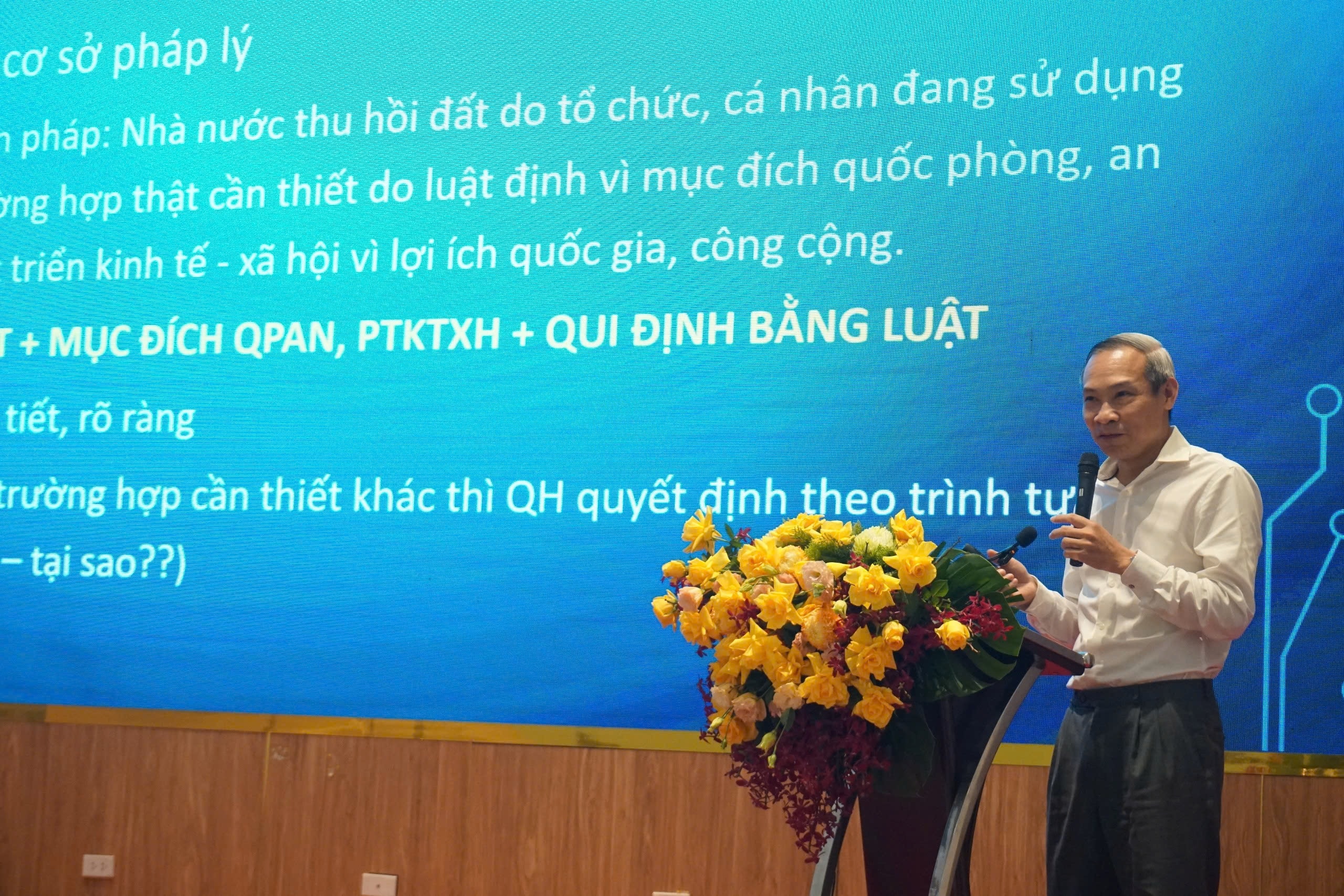 |
| Mr. Phan Duc Hieu, Standing Member of the National Assembly's Economic Committee. |
“This is not an issue that arose after the Law was passed, but has been considered based on the benefits and costs, strengths and weaknesses. The Government is drafting a pilot Resolution to address cases where land is available but cannot be used for commercial housing development, to be submitted to the National Assembly.”
"I believe that piloting is necessary to assess the impact before deciding whether or not to enact legislation. Because the goal of the Land Law is not only to develop commercial housing, but to develop a comprehensive and balanced real estate market, rather than prioritizing any particular segment or type," Mr. Hieu shared with businesses regarding the content of the Land Law which came into effect on August 1, 2024.
Regarding this matter, Mr. Chinh stated that there are several issues that need clarification. Firstly, projects prior to the 2015 Housing Law (which began regulating other types of land). Secondly, non-agricultural land that needs to be relocated out of the inner city due to requirements, but there is no available residential land. Thirdly, new projects.
 |
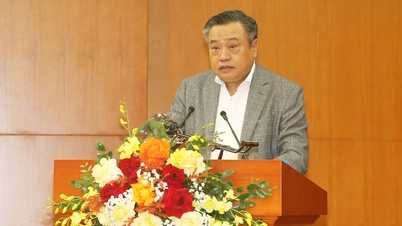
| Mr. Dao Trung Chinh, Director of the Department of Land Planning and Development (Ministry of Natural Resources and Environment). |
“This is something that will require further study. Our view is that for cases existing before 2015, non-agricultural land projects due to relocation… that have been stalled there must have a solution. Restrictions should probably only apply to new projects,” Mr. Chinh said, and requested that businesses continue to provide feedback so that the agencies can synthesize and consider proposed solutions to submit to the Government.
Currently, the draft Resolution on piloting the implementation of commercial housing projects through agreements on acquiring land use rights or existing land use rights where the land is not residential land is being reviewed by the Government.
The draft proposes two options for the criteria used to select pilot projects.
Option 1 involves piloting commercial housing projects through agreements on land use rights or existing land use rights (where the land is not residential land), not exceeding 30% of the number of projects and 20% of the total area of housing development projects approved in the housing development program and plan until 2030.
Priority will be given to cases where the land is located in urban areas or areas with approved urban development plans; businesses with real estate business functions that are using land allocated by the State with land use fees or leased land with a one-time lease payment for the entire lease period; and cases where the facility must be relocated due to environmental pollution or incompatibility with construction plans or urban planning.
Option 2 is a pilot program for cases where investors have received written approval from the provincial People's Committee for the implementation of commercial housing projects through land use right agreements before the effective date of the Land Law No. 31/2024/QH15; cases where investors currently hold land use rights originating from land allocated by the State with land use fees or leased land with a one-time lease payment for the entire lease period; and cases where investors currently hold non-agricultural land use rights for facilities that must be relocated due to environmental pollution, or facilities that must be relocated according to construction or urban planning.








































































Comment (0)