

70% reduction in fees for converting agricultural land to residential land starting in 2026.
One of the most notable points in the Resolution is that people will only have to pay 30% of the difference when converting agricultural land to residential land, instead of 100% as is currently the case.
Specifically, according to the Resolution, in cases where garden land, pond land, or agricultural land within the same plot of land as residential land is identified when land use rights are recognized, and the land use purpose is changed to residential land; or when land originally intended as garden or pond land attached to residential land is separated by the land user for transfer of land use rights; or when the surveying unit, during cadastral mapping before July 1, 2014, independently surveyed and separated the land into separate plots for residential land, the land use fee shall be calculated at a rate equal to: 30% of the difference between the land use fee calculated according to the price of residential land and the land use fee calculated according to the price of agricultural land at the time of the decision allowing the change of land use purpose (hereinafter referred to as the difference) for the area of land whose use purpose is changed within the local residential land allocation limit.
The fee is 50% of the difference for land area exceeding the limit, but not exceeding one time the local residential land allocation limit. The fee is 100% of the difference for land area exceeding the limit but exceeding one time the local residential land allocation limit.
The land use fee mentioned above is calculated only once for each household or individual (per plot of land).
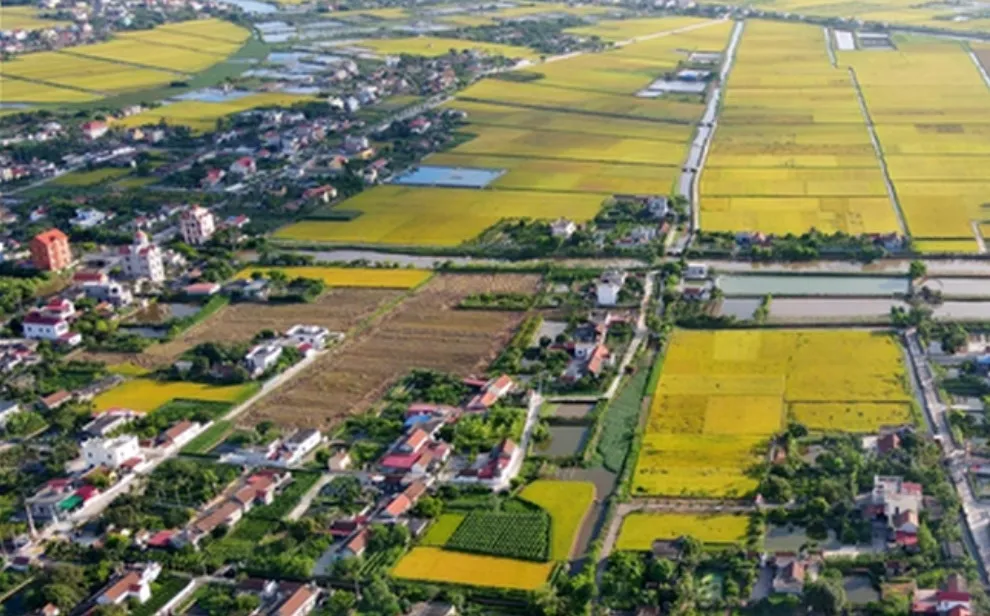
The fee for converting agricultural land to residential land will be reduced by 70% starting in 2026.
According to Lawyer Nguyen Van Dinh ( Hanoi Bar Association), based on the above regulations, for example, if a person owns 1,000m2 of agricultural land within the same plot as residential land in a residential area and wants to convert the land use purpose to residential land in Province X, the local land allocation limit for residential land is 200m2. If the person wants to convert 1,000m2 of agricultural land to residential land: For the first 200m2, the person only has to pay 30% of the difference between the land use fee calculated according to residential land prices and the land use fee calculated according to agricultural land prices; for the next 200m2, the person has to pay 50% of the difference; and for the last 600m2, the person has to pay 100% of the difference.
Mr. Dinh assessed this as a necessary solution to address the issue of excessively high land use fees that people have to pay when changing land use purposes (a consequence of the increase in land prices), in order to ensure social welfare.
At the same time, the regulation stipulates that the preferential land use fee is calculated only once per household or individual and per plot of land, and the reduction in land use fees applies to a maximum of twice the allocated residential land limit. According to Mr. Dinh, this regulation also ensures strict control and prevents policy abuse. It avoids cases where individuals take advantage of the preferential treatment to buy up numerous plots of land, change their land use purpose, and then "sell" them for profit.
People may be able to get a refund.
In addition, the new Resolution passed by the National Assembly also stipulates transitional provisions for cases where households and individuals have already been permitted by competent state agencies to change the land use purpose.
Specifically, in cases from August 1, 2024, until the effective date of this Resolution, where a household or individual has been granted permission by a competent state agency to convert land use from garden land, pond land, or agricultural land within the same plot of land containing residential land, or from land originally garden land or pond land attached to residential land but separated by the land user for transfer of land use rights, or where the surveying unit independently separated the land into separate plots when surveying cadastral maps before July 1, 2014, the following procedures shall apply:
In cases where households or individuals have not paid land use fees as notified by the tax authority, the tax authority shall recalculate the amount of land use fees payable in accordance with the provisions of this Resolution and adjust the notification of the amount of land use fees payable in accordance with the law on tax administration. Households and individuals must pay late payment penalties for land use fees (if any) in accordance with the law on tax administration.
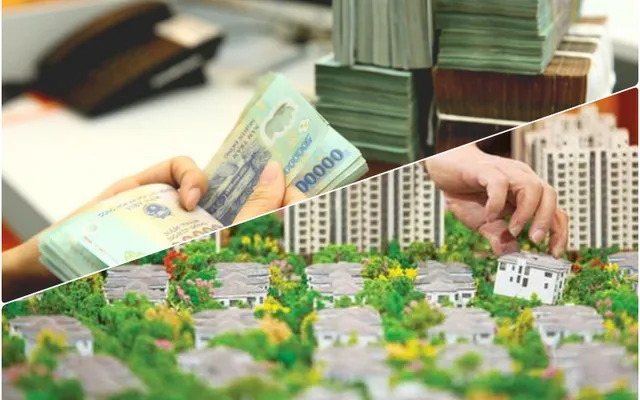
In cases where households or individuals have already paid land use fees as notified by the tax authority, they may request the tax authority to recalculate the land use fees in accordance with the provisions of this Resolution; the tax authority will recalculate the land use fees and notify the land users.
If the recalculated land use fee is lower than the amount already paid, the land user will be reimbursed by the State by deducting it from their land use fee or land rent obligations; if no land use fee or land rent obligations arise, it will be deducted from other financial obligations as prescribed by the law on tax management; if there are no other financial obligations to deduct, the reimbursement will be in cash as prescribed by the law on the state budget or other relevant laws.
Commenting on this, lawyer Nguyen Van Dinh said that this regulation is very humane and ensures fairness between those who have paid and those who have not yet paid the land use conversion fee.
The Resolution stipulating certain mechanisms and policies to remove difficulties and obstacles in the organization and implementation of the Land Law will take effect from January 1, 2026.
Source: https://vtv.vn/giam-70-tien-chuyen-doi-dat-nong-nghiep-sang-tho-cu-nguoi-dan-co-the-duoc-hoan-tien-su-dung-dat-100251212164650852.htm


![[Image] Close-up of the newly discovered "sacred road" at My Son Sanctuary](/_next/image?url=https%3A%2F%2Fvphoto.vietnam.vn%2Fthumb%2F1200x675%2Fvietnam%2Fresource%2FIMAGE%2F2025%2F12%2F13%2F1765587881240_ndo_br_ms5-jpg.webp&w=3840&q=75)

































































Comment (0)