


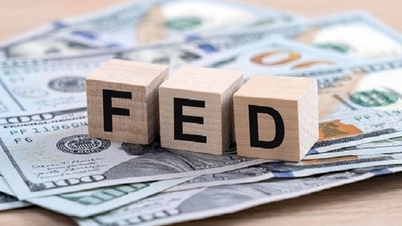
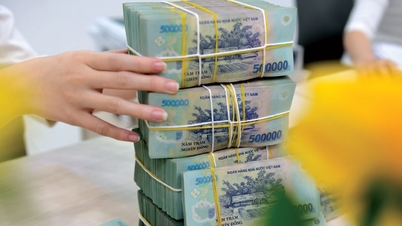
The US dollar. (Photo: AFP/VNA)
Deutsche Bank, Goldman Sachs, and many other major Wall Street banks predict that the US dollar will continue to depreciate next year as the Federal Reserve maintains its interest rate reduction path.
Strategists believe the US dollar will weaken further in 2026, as the Fed continues its monetary easing policy while many other central banks maintain or move closer to a cycle of interest rate hikes. A weaker dollar will have a ripple effect on the economy : pushing up import prices, increasing overseas profits for US businesses when converted to dollars, and supporting exports.
The US dollar has stabilized over the past six months, after experiencing its sharpest decline since the early 1970s in the first half of this year due to the trade war initiated by President Donald Trump, which rattled global markets.
However, analysts predict that the US dollar will weaken again in 2026, due to interest rate differentials between the Fed and the rest of the world . When US interest rates fall while other markets maintain or raise rates, investors will be incentivized to sell US bonds and shift capital to markets with higher yields.
According to consensus estimates compiled by Bloomberg, the US dollar index – a measure of the dollar's value against a basket of major currencies – will fall by about 3% by the end of 2026. Many major banks forecast the dollar to weaken against the yen, euro, and British pound.
David Adams, head of G10 foreign exchange strategy at Morgan Stanley, commented: "The market still has plenty of room to price in deeper interest rate cuts." The bank forecasts the US dollar could fall by 5% in the first half of next year.
However, the decline in the US dollar in 2026 is projected to be less severe and less widespread than this year, when the currency lost nearly 8% according to the Bloomberg Dollar Spot Index – its deepest decline since 2017. This outlook also depends on whether the US labor market weakens as predicted – something that remains uncertain given the resilience of the post-pandemic economy.
The market is expecting the Fed to cut interest rates two more times, each by 0.25 percentage points, in 2026. Additionally, the new Fed chairman – who will be appointed by Trump to replace Jerome Powell in 2026 – may face pressure from the White House to cut rates more aggressively. Meanwhile, the European Central Bank (ECB) is projected to keep interest rates unchanged, while the Bank of Japan (BoJ) may continue to raise rates slightly.
A weaker dollar would push up import prices, increasing the value of profits American businesses generate overseas, and supporting exports – a trend that could be welcomed by the Trump administration, especially given his constant complaints about the trade deficit. A weaker dollar could also encourage capital flows into emerging markets due to higher interest rates, making them more attractive to investors.
This development has helped carry trades in emerging markets – borrowing where interest rates are low to invest where yields are high – record their strongest returns since 2009. Both JPMorgan and Bank of America believe that the carry trade trend has further potential for growth, especially with the Brazilian real and some Asian currencies such as the South Korean won and the Chinese yuan.
Conversely, banks like Citigroup and Standard Chartered are forecasting the US dollar to appreciate against several other major currencies, arguing that the US economy remains too strong. The boom in artificial intelligence (AI) is attracting large capital flows into the US, helping to boost the dollar's value.
Source: https://vtv.vn/cac-ngan-hang-pho-wall-nhan-dinh-bi-quan-ve-dien-bien-dong-usd-nam-2026-100251213070202167.htm


![[Image] Close-up of the newly discovered "sacred road" at My Son Sanctuary](/_next/image?url=https%3A%2F%2Fvphoto.vietnam.vn%2Fthumb%2F1200x675%2Fvietnam%2Fresource%2FIMAGE%2F2025%2F12%2F13%2F1765587881240_ndo_br_ms5-jpg.webp&w=3840&q=75)


















































































Comment (0)