

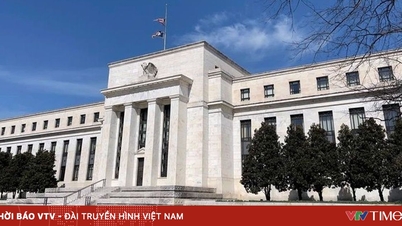
Following a two-day policy meeting, the Federal Open Market Committee (FOMC) lowered the overnight interest rate by another 0.25%, to a range of 3.5-3.75%.
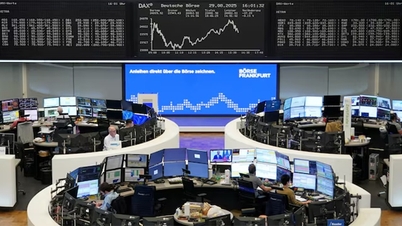
Following the Federal Reserve's latest announcement, major US stock indices rose across the board. The DJIA gained 1.05%, the S&P 500 edged up 0.67%, while the Nasdaq Composite remained virtually unchanged. In the precious metals market, the spot price of gold increased by $30, reaching $4,237 per ounce.
Notably, the interest rate decision was passed with 9 votes in favor and 3 against, a level of disagreement rarely seen since September 2019. This further reflects the deep differences in opinion between the "hawks" and "doves".
Specifically, Governor Stephen Miran wants a more aggressive interest rate cut, to 0.5%, while the two regional Fed presidents, Jeffrey Schmid (Kansas City) and Austan Goolsbee (Chicago), want to keep interest rates unchanged.
Observers note that this is also the third consecutive time Miran has voted against the measure, just before he is scheduled to leave the Fed in January. Schmid also opposed it at the agency's two most recent meetings.
Experts predict that 2026 will be a turbulent period as the Fed prepares for significant personnel changes. US President Donald Trump will nominate a new Fed Chairman to replace Jerome Powell when his term ends in May 2026. The agency also faces a major challenge to its independence amid increasing legal and political pressure.
President Trump is expected to announce Powell's successor early next year. Following that, the Senate Banking Committee will hold confirmation hearings and proceed with a vote of approval. In his two previous confirmations, under Presidents Trump and Joe Biden, Powell overwhelmingly won the nominations in his favor.
In its statement following the meeting, the FOMC said the extent and timing of further adjustments to the federal funds rate would be carefully assessed based on new economic data, the changing outlook, and the balance of risks.
Fed Chairman Jerome Powell said the new rate cut puts the Fed in a more "breathable" position. "We are in a good position to watch how the economy develops, but the next decisions for January have not yet been made," he said.
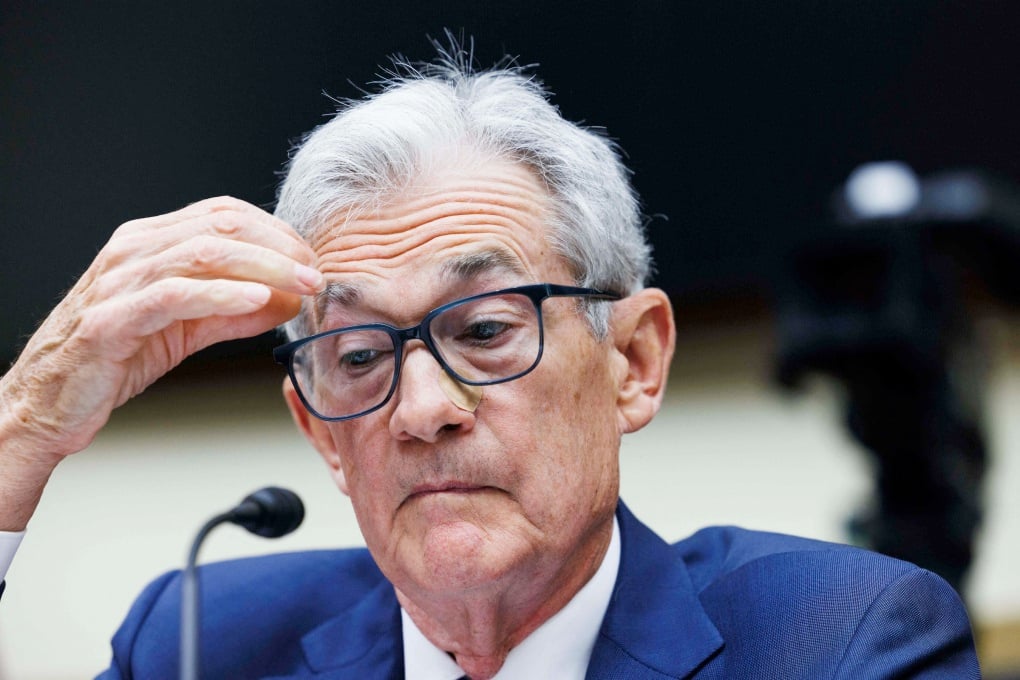
Federal Reserve Chairman Jerome Powell (Photo: Reuters).
With three consecutive rate cuts, the market continues to question the FOMC's future direction. The "dot plot" chart, which shows interest rate expectations for each official, suggests only one more cut in 2026 and another in 2027 before the federal funds rate returns to its medium-term level of around 3%. While unchanged from September, this chart continues to reflect the divisions within the Fed.
Besides the two dissenting votes from the "dovish" faction, four non-voting members also expressed opposition, and seven other officials did not want to lower interest rates in 2026. The FOMC has 19 members, 12 of whom have voting rights. However, Powell emphasized that monetary policy does not follow a fixed path and the Fed will make decisions at each meeting.
However, these moves are seen as taking place at a sensitive time as Powell is trying to maintain internal consensus as his second term nears its end. The Fed chairman has only three meetings left before he hands over to President Donald Trump's nominee.
President Donald Trump said he would choose a candidate based on the criteria of aggressively lowering interest rates to even lower levels, rather than focusing solely on stabilizing the Fed's dual objectives.
Economically, the Fed raised its 2026 GDP growth forecast by 0.5% to 2.3%. The agency still expects inflation to fall below its 2% target only after 2028.
However, the Fed stated that this policy statement and forecast is not based on updated employment and inflation data, but rather on readily available indicators such as internal surveys, public feedback, and private data. The most recent official figures, released in September, showed the unemployment rate rising from 4.3% to 4.4%, while the Fed's preferred measure of inflation increased from 2.7% to 2.8%, according to Reuters.
The Fed's inflation target is only 2%, but the rate of price increases has been steady from 2.3% in April, largely due to the impact of increased import tariffs on consumers, and this is also a major factor causing division within the Fed regarding policy direction.
Source: https://dantri.com.vn/kinh-doanh/song-ngam-am-tham-thoi-bung-su-chia-re-chua-tung-co-o-noi-bo-fed-20251211085049645.htm
![[Photo] Closing Ceremony of the 10th Session of the 15th National Assembly](/_next/image?url=https%3A%2F%2Fvphoto.vietnam.vn%2Fthumb%2F1200x675%2Fvietnam%2Fresource%2FIMAGE%2F2025%2F12%2F11%2F1765448959967_image-1437-jpg.webp&w=3840&q=75)

















































![[OFFICIAL] MISA GROUP ANNOUNCES ITS PIONEERING BRAND POSITIONING IN BUILDING AGENTIC AI FOR BUSINESSES, HOUSEHOLDS, AND THE GOVERNMENT](https://vphoto.vietnam.vn/thumb/402x226/vietnam/resource/IMAGE/2025/12/11/1765444754256_agentic-ai_postfb-scaled.png)

















































Comment (0)