

 |
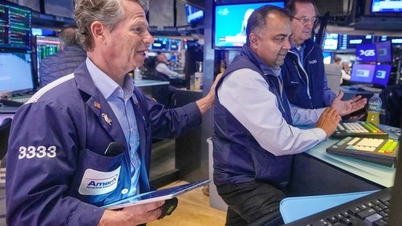
| US stock market moves sideways ahead of Fed interest rate decision |
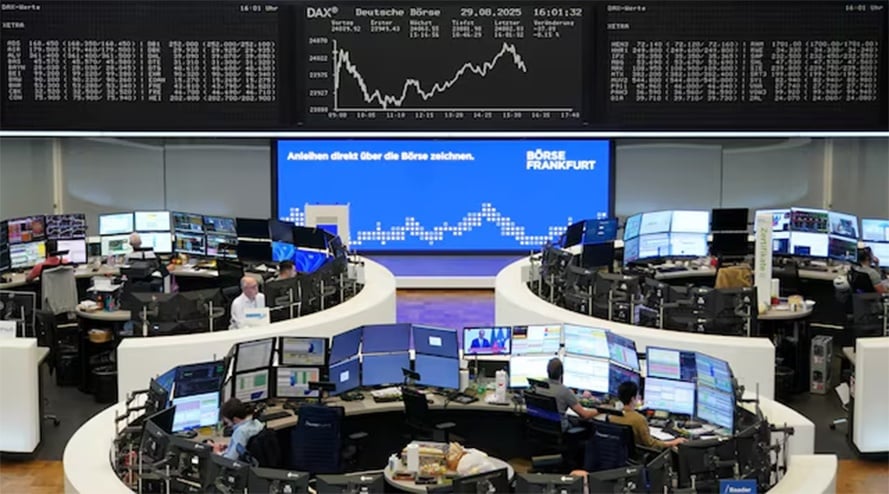
At the close of trading, the Dow Jones fell 179.03 points, or 0.38%, to 47,560.29. The S&P 500 edged slightly lower, losing 0.09% to close at 6,840.51, but remained near its all-time high. Conversely, the Nasdaq Composite rose 0.13% to 23,576.49, reflecting the stability of technology stocks.
The Dow Jones' decline was partly due to a sharp drop in JPMorgan Chase shares after the bank's operating costs could rise as much as 9% next year, a development that has put pressure on the entire financial group, one of the main pillars of the index.
At the same time, US Treasury yields rose again after new labor market data showed hiring demand remained steady. The rise in yields put more pressure on cost-sensitive stocks, especially industrials and financials.
Meanwhile, the technology group, which is the main listed capital on Nasdaq, continues to maintain its appeal. Money flows to growth stocks help Nasdaq maintain its green color despite the unfavorable general context.
Data from LSEG Lipper showed US investors pulled back from equities in the week ending December 3 to hedge against the risk of the Fed's new policy, with money market funds attracting $104.75 billion, the highest in nearly a month.
In contrast, US equity funds saw a net outflow of $3.52 billion, marking the second consecutive week of outflows. Mid-cap, small-cap and large-cap funds all saw outflows. However, sector funds continued to attract money, especially in the industrial, gold and precious metals sectors.
This shift shows that investors are leaning strongly towards a “safer” strategy, waiting for the Fed's policy message.
The majority of the market agrees that the Fed is likely to cut interest rates by 0.25 percentage points, bringing the benchmark rate to the 3.50%–3.75% range. However, what is attracting more attention is the assessment by strategists at Bank of America regarding the possibility of the Fed implementing a Treasury bill purchase program of approximately $45 billion per month.
If implemented, this program, described as Reserve Management Purchases (RMP), would aim to stabilize liquidity in the financial system, rather than support growth like previous quantitative easing (QE) packages. Combined with approximately $15 billion reinvested from MBS, the Fed's total purchases could reach $60 billion per month.
However, the Fed may face criticism that this move is nothing more than a new round of "money pumping", creating the risk of increasing inflation, even though the main purpose is to ensure the banking system operates smoothly.
The December 9th trading session is seen as a "warm-up" for more significant volatility following the Fed meeting. If the Fed shows a dovish stance, the market is highly likely to surge, especially in the technology sector. Conversely, even a cautious signal could cause major indices to experience sharper corrections.
With the Dow Jones under pressure and the Nasdaq remaining stable, investors are advised to closely monitor bond yield developments and consider restructuring their portfolios, reducing the proportion of interest-rate sensitive sectors and increasing allocation to safe assets.
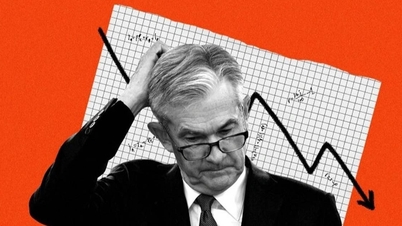
Wall Street is at a critical juncture as all eyes are on the guiding message from Chairman Jerome Powell. The tug-of-war on December 9th reflected the market's "holding its breath" state, awaiting an answer to the question: Will the Fed lean towards growth stimulus or continue to maintain a cautious stance?
The outcome and message from the Fed next Wednesday will not only create short-term waves, but could shape the direction of the US market for the rest of 2025 and early 2026.
Source: https://thoibaonganhang.vn/pho-wall-nin-tho-cho-fed-chung-khoan-my-phan-hoa-nhe-174890.html

















![[Infographic] Cross-exchange rates for determining taxable value from December 11-17](https://vphoto.vietnam.vn/thumb/402x226/vietnam/resource/IMAGE/2025/12/11/1765413245543_infographic-ty-gia-tinh-cheo-de-xac-dinh-tri-gia-tinh-thue-tu-11-1712-20251211021920.jpeg)







































































Comment (0)