

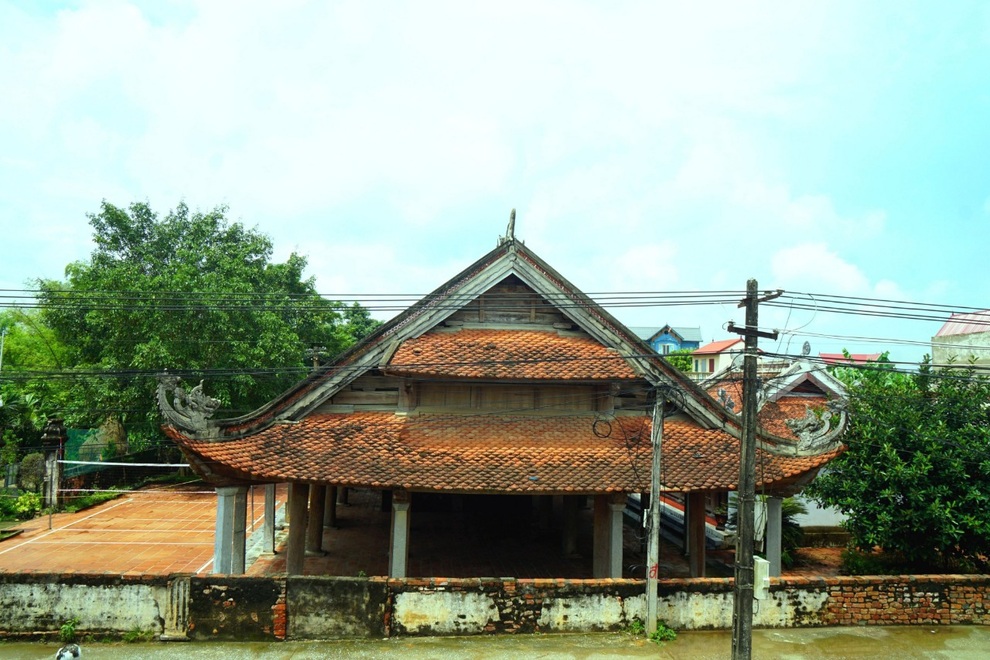
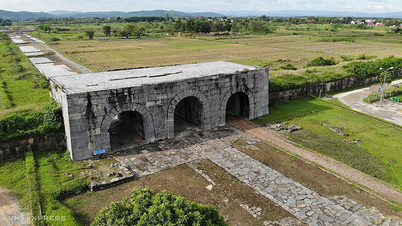
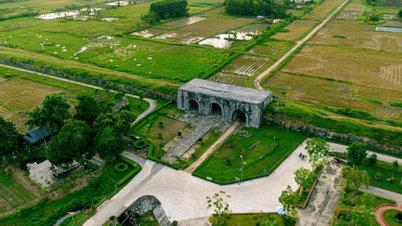
 Located in a prime location, Dong Mon communal house, in Dong Mon village (Vinh Long commune, Vinh Loc district, Thanh Hoa province), is situated approximately 70 meters from the eastern gate of the Ho Dynasty Citadel World Heritage Site. According to the Ho Dynasty Citadel Heritage Conservation Center, this is one of the largest ancient village communal houses in Thanh Hoa (Photo: Thanh Tung).
 The temple was originally built of thatch and bamboo during the reign of Lord Trịnh Tùng (1570 - 1623). Although it was a Trịnh family estate, it was managed by a high-ranking official of the Vũ family, Mr. Vũ Khắc Minh. Mr. Vũ Khắc Minh was a descendant of the Vũ family, who made great contributions to the Lê family and Lord Trịnh. He moved from Hà Nam Ninh to Thanh Hóa and was granted a Trịnh family estate. He recruited descendants of the Vũ family and people to establish the Trịnh family estate and restore Đông Môn village. Mr. Vũ Khắc Minh passed away on April 15, 1680, and was revered by the people as the village's guardian deity. Later, this place became a community center for the entire village. Over the centuries, the temple roof has been renovated many times to protect the pillars and beams inside from rain and sun damage (Photo: Thanh Tùng).
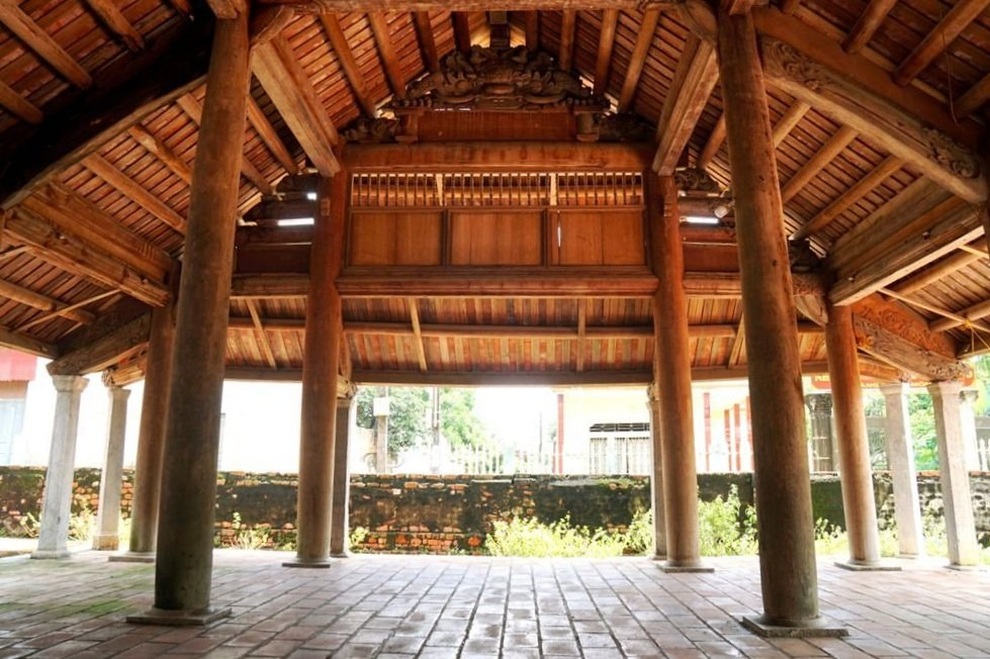 In the 15th year of the Canh Hung era of King Le Hien Tong's reign (1753), Dong Mon village communal house was rebuilt with wood (Photo: Thanh Tung).
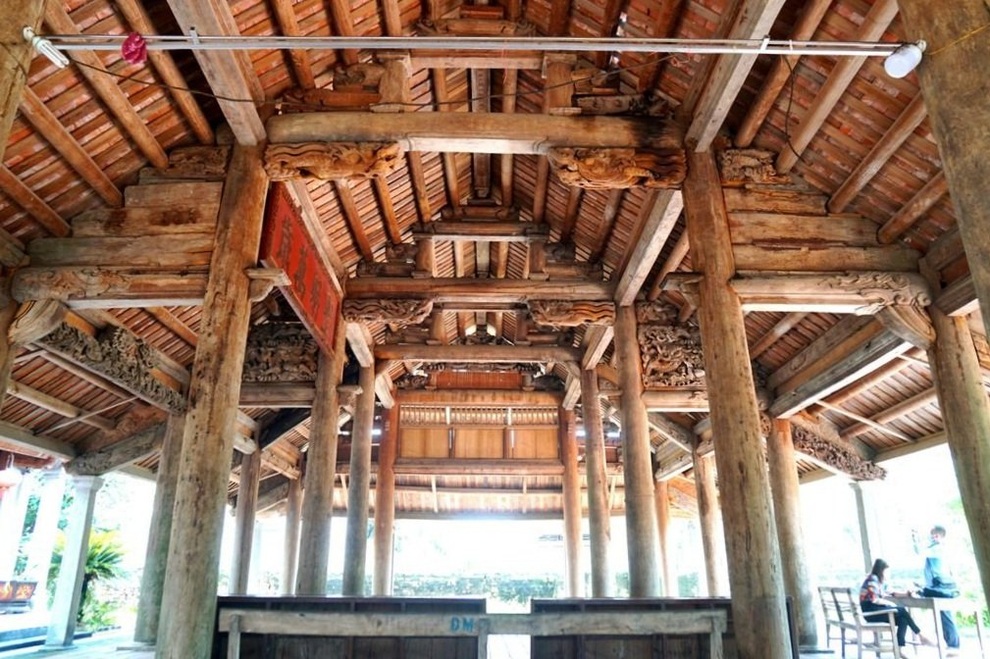 The temple has a structure consisting of 5 bays, 2 wings, and 4 roofs. The inner temple adjoins the outer temple, creating a structure in the shape of the letter J (Photo: Thanh Tung).
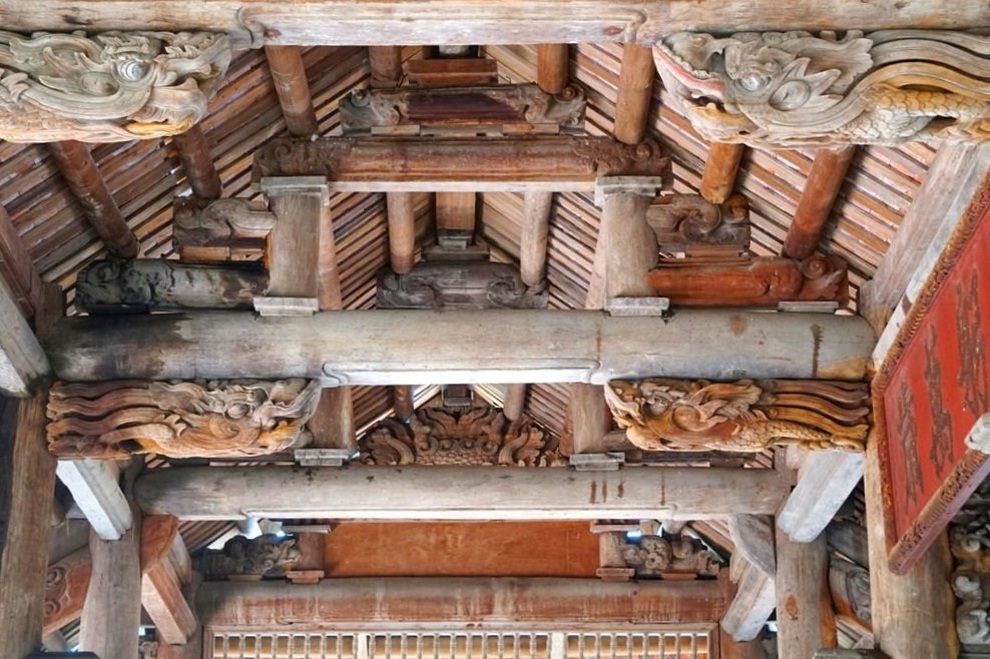 The temple's truss structure is very unique; the two central trusses are elaborately carved, and the upper structure follows the "gong stand, stacked beam" style, with grooved and carved lines. The two trusses feature dragon heads carved with meticulous detail (Photo: Thanh Tung).
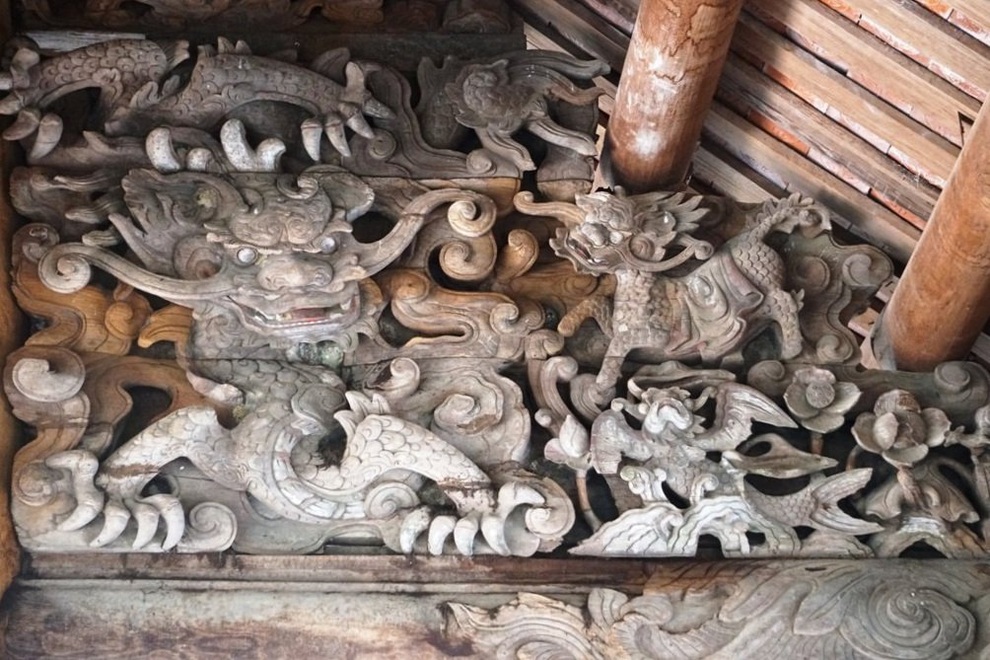 The armpits of the two altars are carved with images of the four mythical creatures (dragon, lion, turtle, and phoenix) with delicate and graceful lines (Photo: Thanh Tung).
 A wooden roof beam is carved with the four auspicious plants (pine, chrysanthemum, bamboo, and plum blossom) (Photo: Thanh Tung).
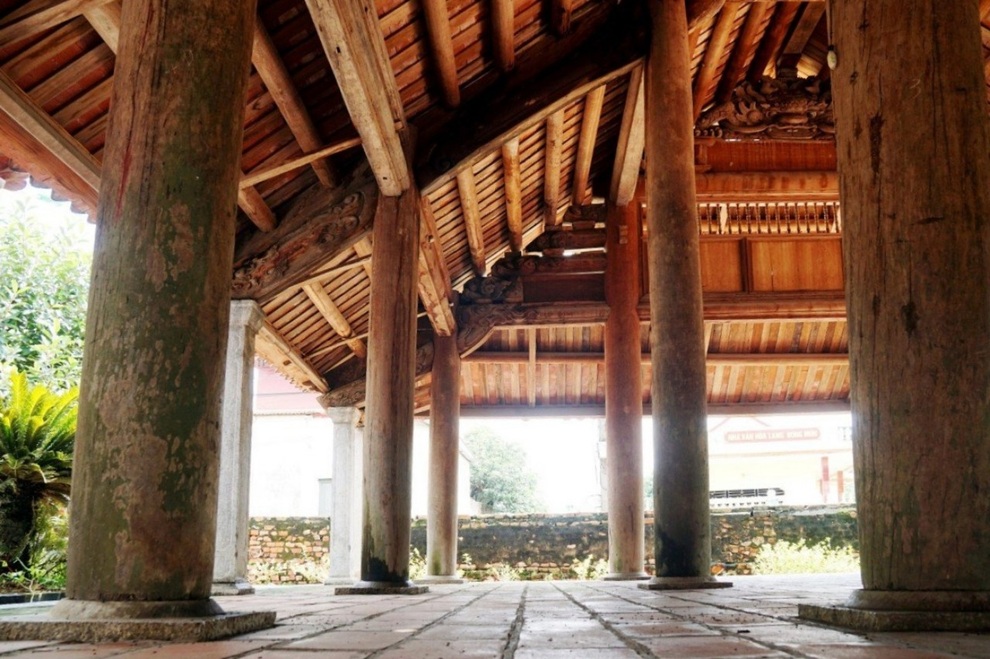 The temple was built with 24 large wooden pillars. To this day, these wooden pillars remain quite sturdy (Photo: Thanh Tung).
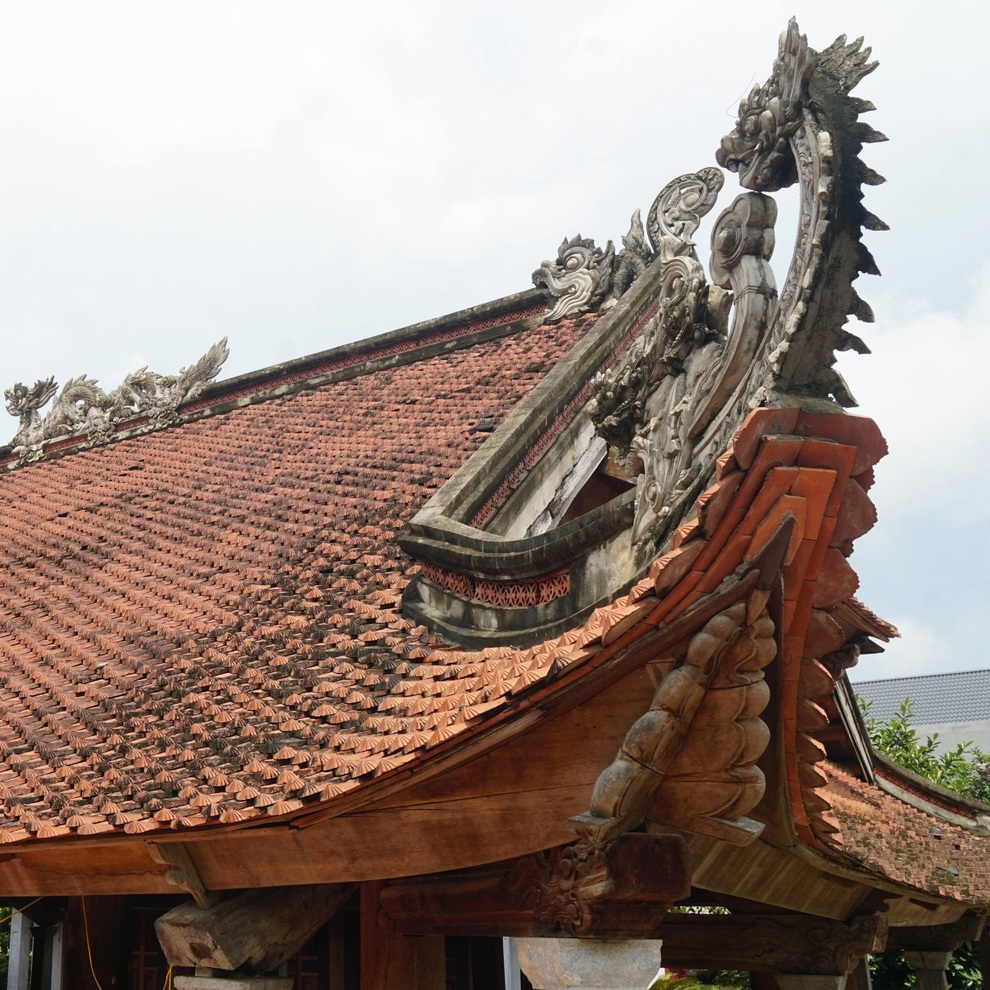 The four-roof structure has created a unique and ancient charm for the communal house. The photo shows a section of the communal house roof with an exquisite design (Photo: Thanh Tung).
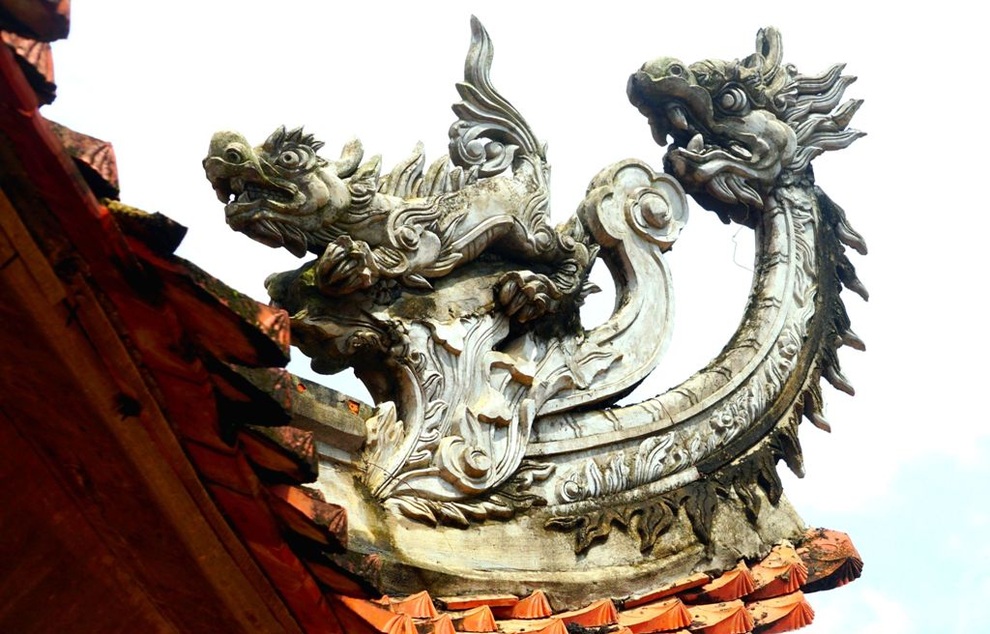 To preserve the cultural features of the ancient communal house's architecture, many decorative patterns and architectural elements have been restored and renovated over the years (Photo: Thanh Tung).
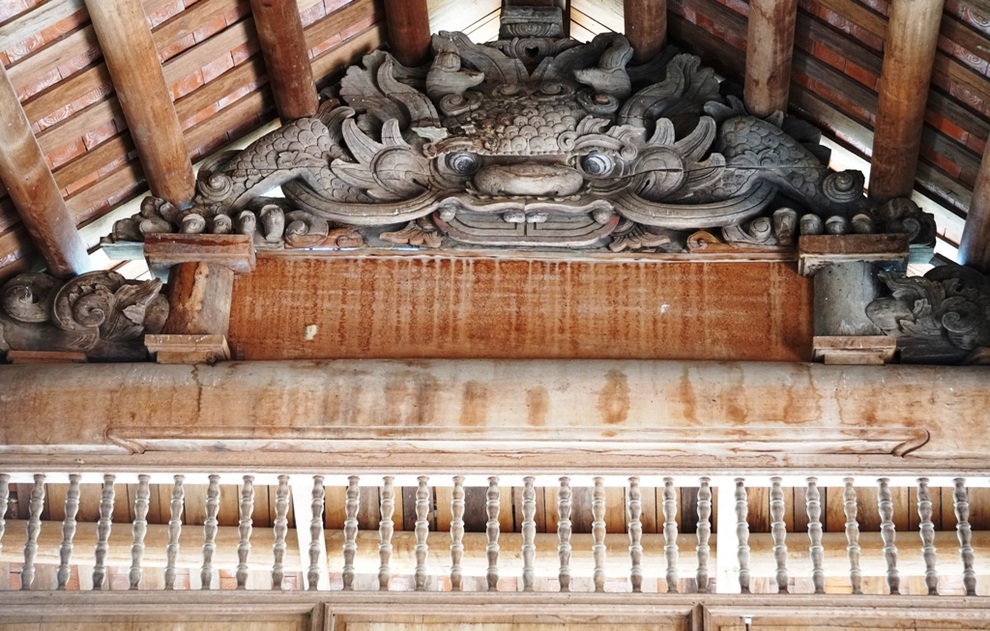 A roof truss decorated with a tiger face, also known as the Rahu demon (Photo: Thanh Tung).
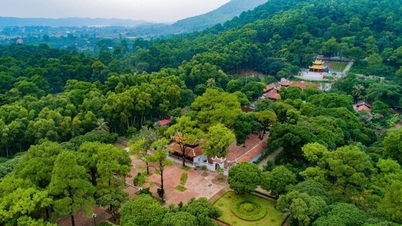
 Overall view of Dong Mon village communal house and the rear area dedicated to the village's tutelary deity Vu Khac Minh (Photo: Thanh Tung).
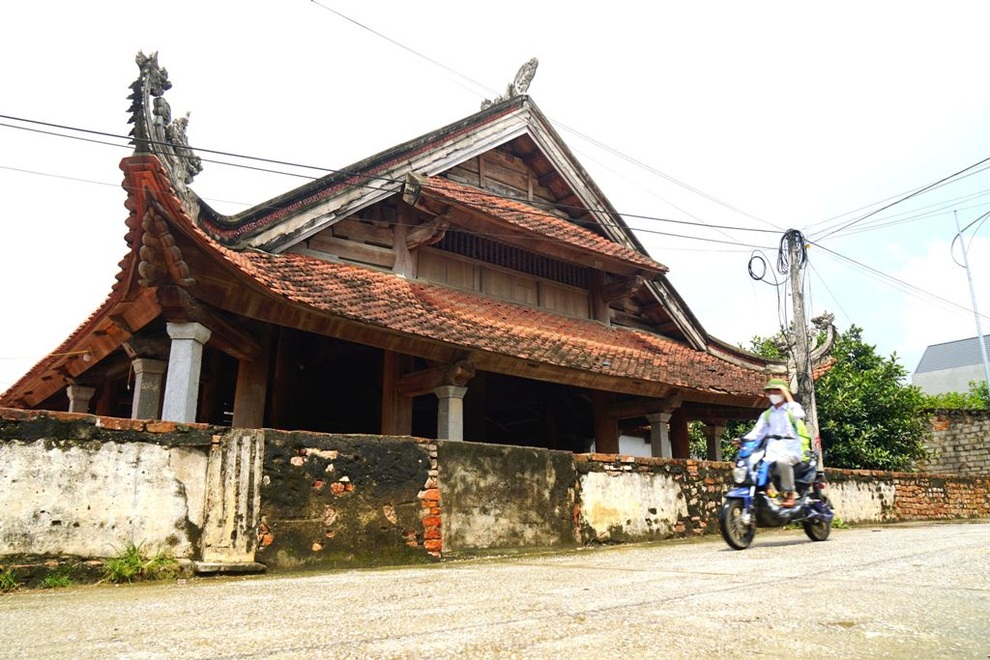 In 1995, Dong Mon village communal house was classified as a national historical and cultural relic by the State. Every year on the full moon of the first lunar month, Dong Mon village organizes the village's tutelary deity festival at this communal house with cultural and religious activities that attract a large number of local people and visitors from all over (Photo: Thanh Tung).
Source: https://dantri.com.vn/van-hoa/doc-dao-kien-truc-cua-mot-trong-nhung-dinh-lang-co-lon-nhat-xu-thanh-20210928111409733.htm


![[Photo] Prime Minister Pham Minh Chinh attends the Conference on the Implementation of Tasks for 2026 of the Industry and Trade Sector](/_next/image?url=https%3A%2F%2Fvphoto.vietnam.vn%2Fthumb%2F1200x675%2Fvietnam%2Fresource%2FIMAGE%2F2025%2F12%2F19%2F1766159500458_ndo_br_shared31-jpg.webp&w=3840&q=75)



























































Comment (0)