

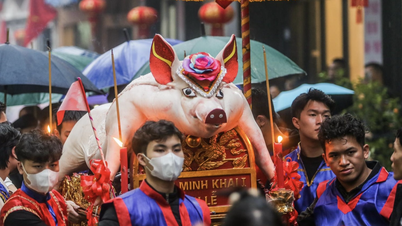
Every year, on the night of the 13th and the early morning of the 14th of the first lunar month, the people of La Phu village (An Khanh commune, Hanoi ) hold a procession to carry the "pig god".
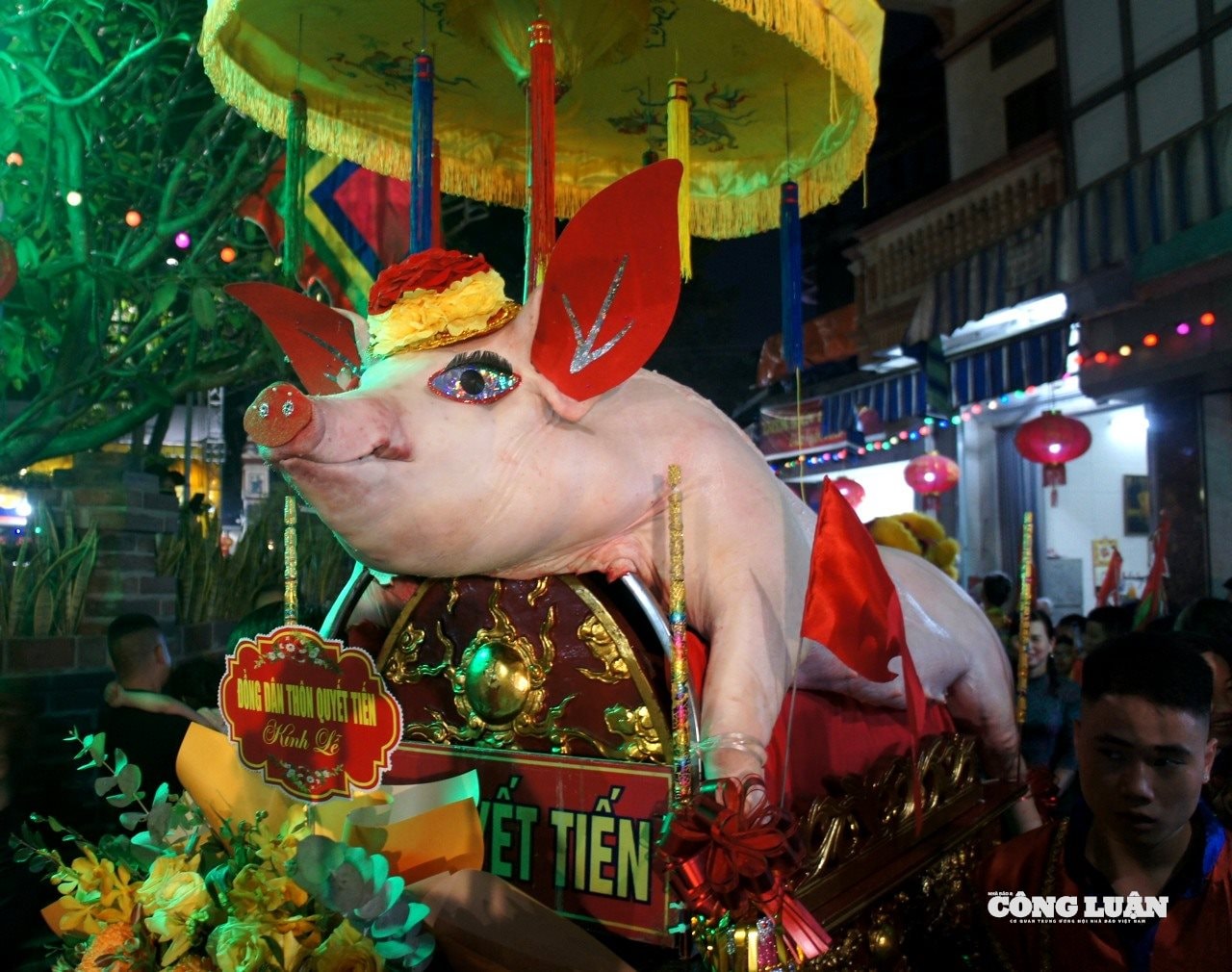
The procession of the "pig" in La Phu village is a long-standing cultural and spiritual tradition aimed at commemorating and expressing gratitude for the merits of the village's tutelary deity, Tinh Quoc Tam Lang, during the reign of King Hung Due Vuong VI, who successfully repelled foreign invaders and preserved the country's borders.
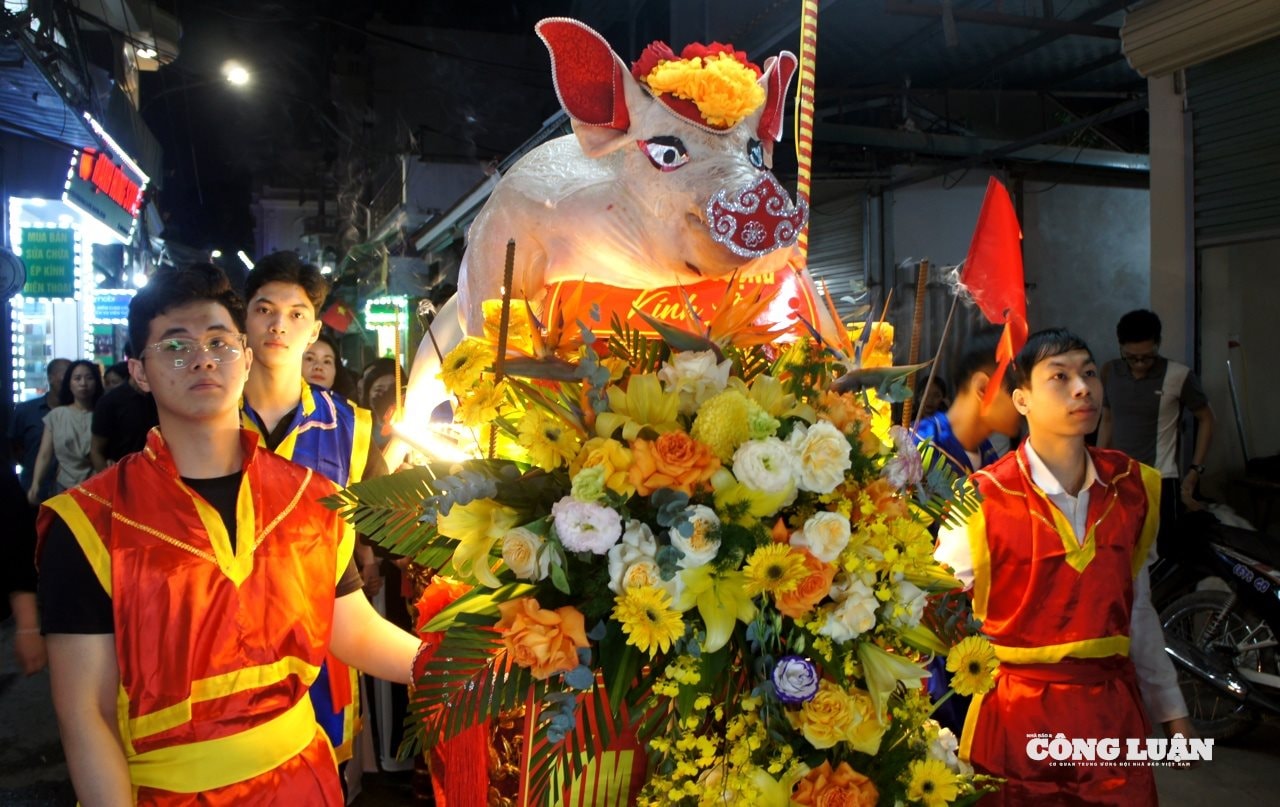
Legend has it that whenever Tinh Quoc Tam Lang gathered his soldiers to go to war, he would slaughter pigs and cook sticky rice to feast them. The villagers would often bring pigs as offerings. After his death at midnight on the 13th, or early morning of the 14th of January in La Phu village, the people revered him as the village's guardian deity.
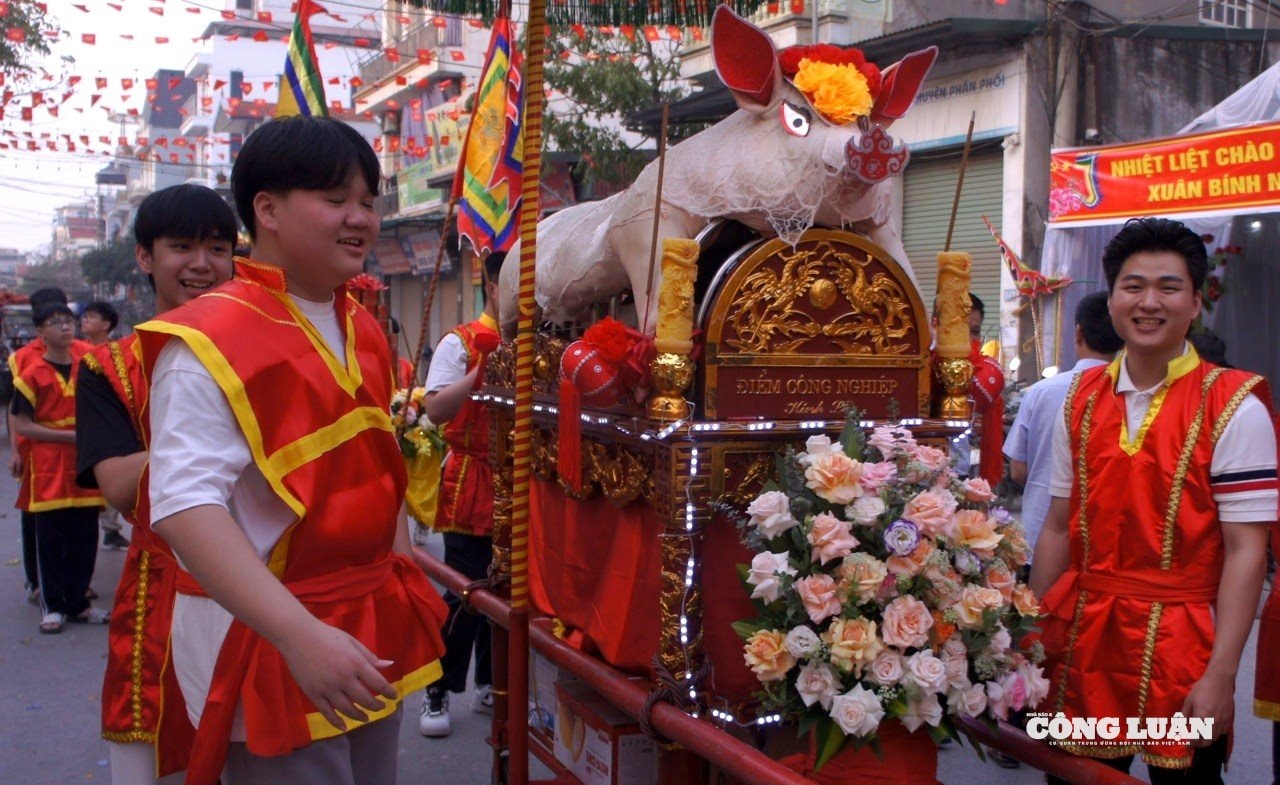
Since then, every year, on the 13th day of the first lunar month, the people of La Phu organize a pig procession festival to reenact the scene of Tinh Quoc Tam Lang feasting his troops and to commemorate his great contributions.
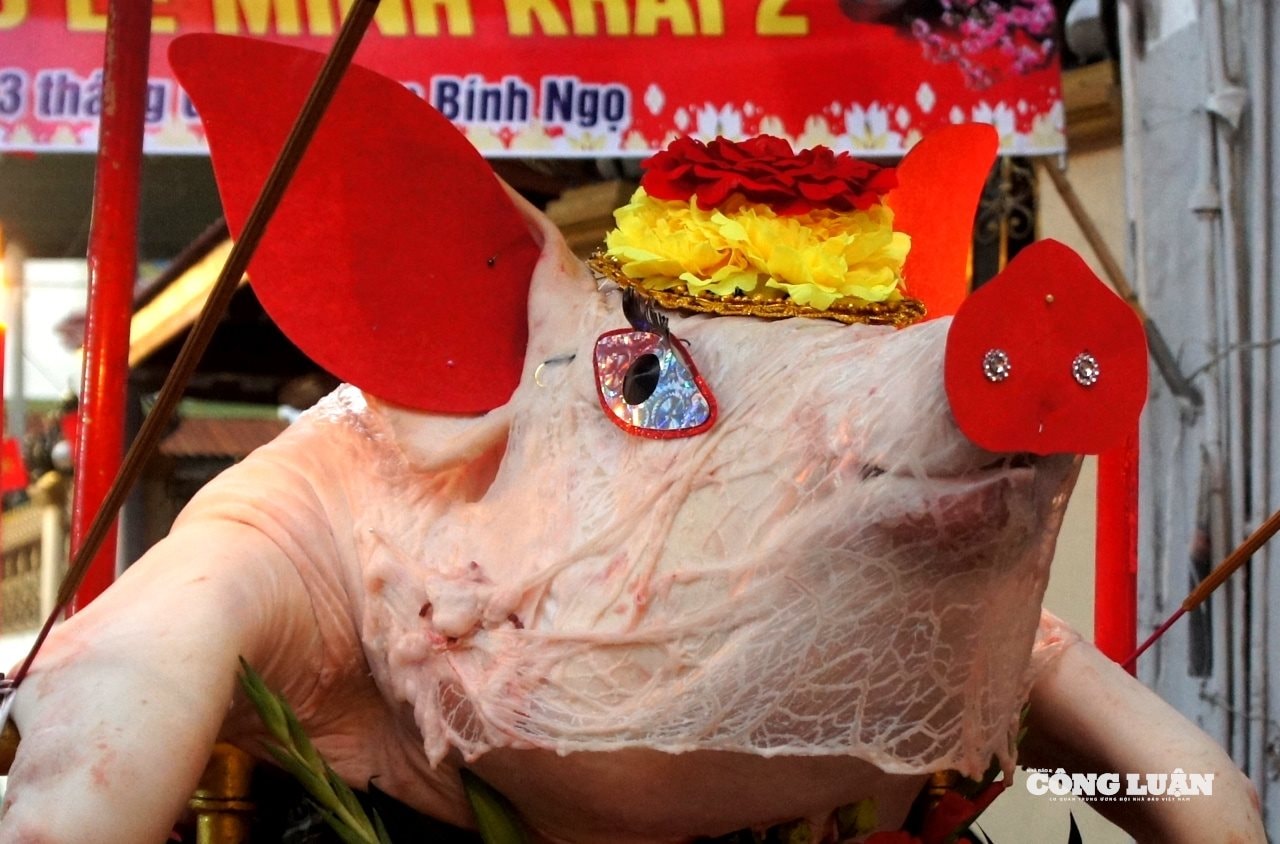
According to ancient tradition, the pigs offered as sacrifices are carefully selected and raised by each village for a whole year beforehand. Each village is allowed to choose only one "sacrificial pig," which is meticulously cared for. The pig is fed rice, bran, eggs, fresh vegetables, and, importantly, the farmer must keep a mosquito net over the pig year-round for it to sleep under. By the festival day, a "sacrificial pig" weighing approximately 250-270 kg is considered sufficient.
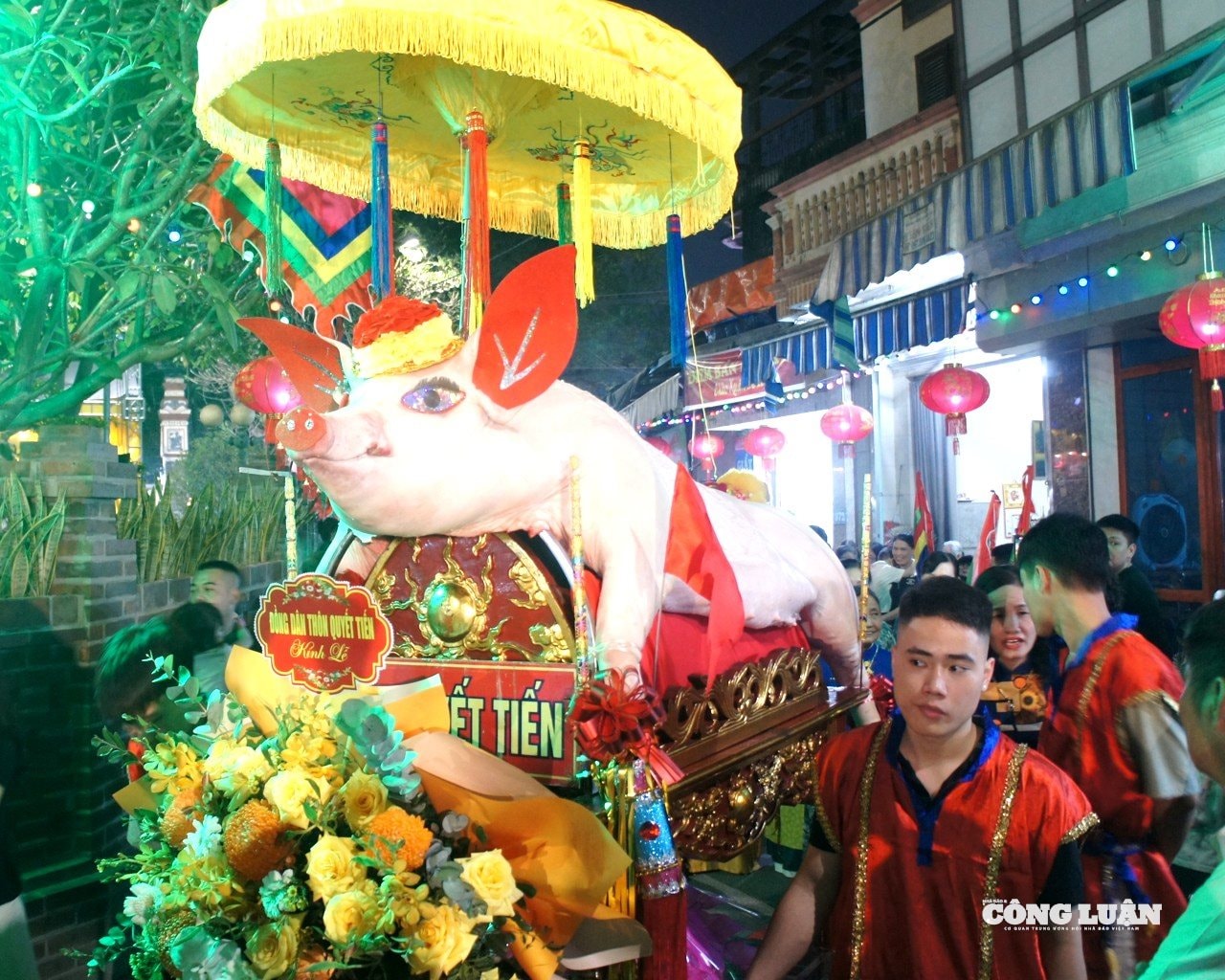
The households selected to raise the pig must have clean, well-maintained houses and no recent deaths in the family. Before the ceremony, the village elders, along with Mr. Dam's family (the family hosting the procession of the "pig" for the village), ask for permission to bring the "pig" home to slaughter.
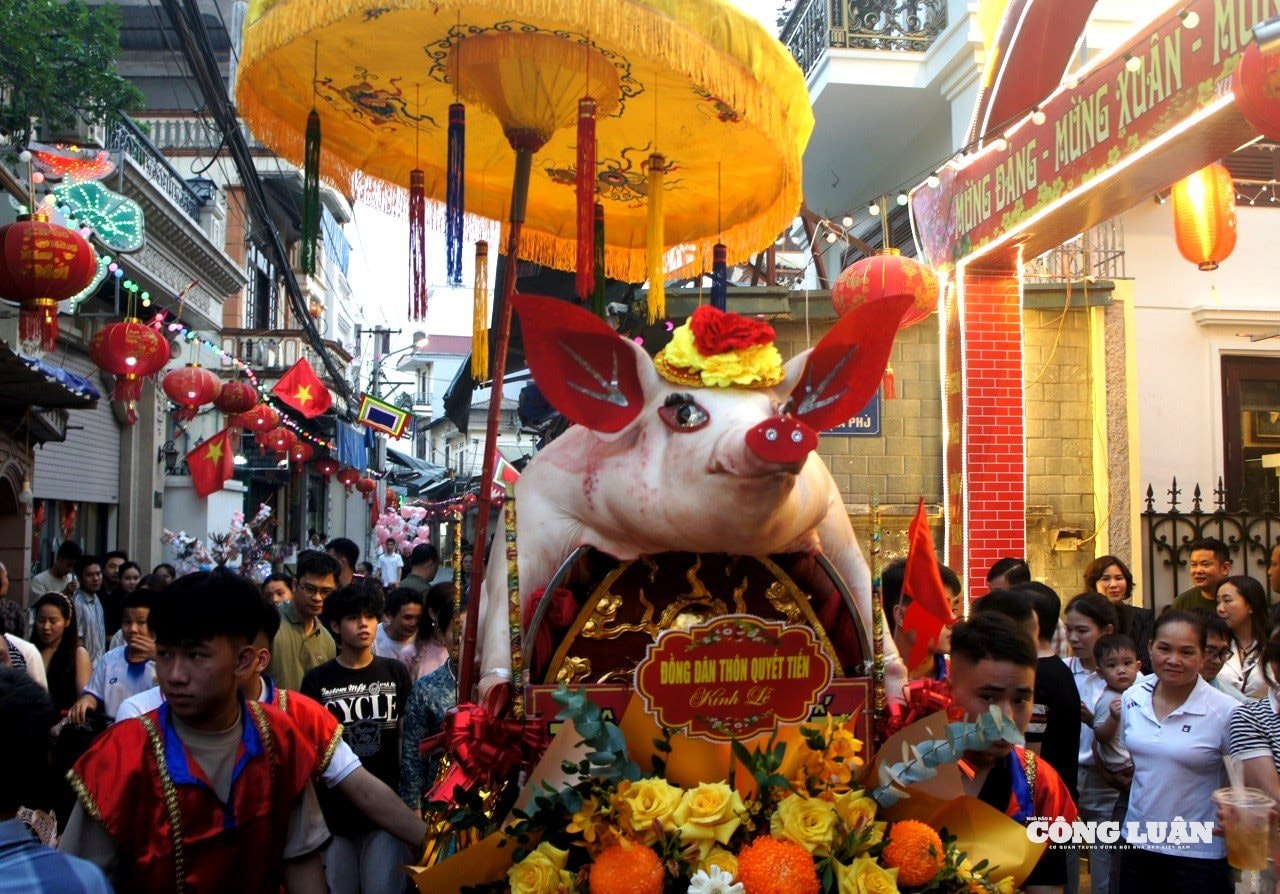
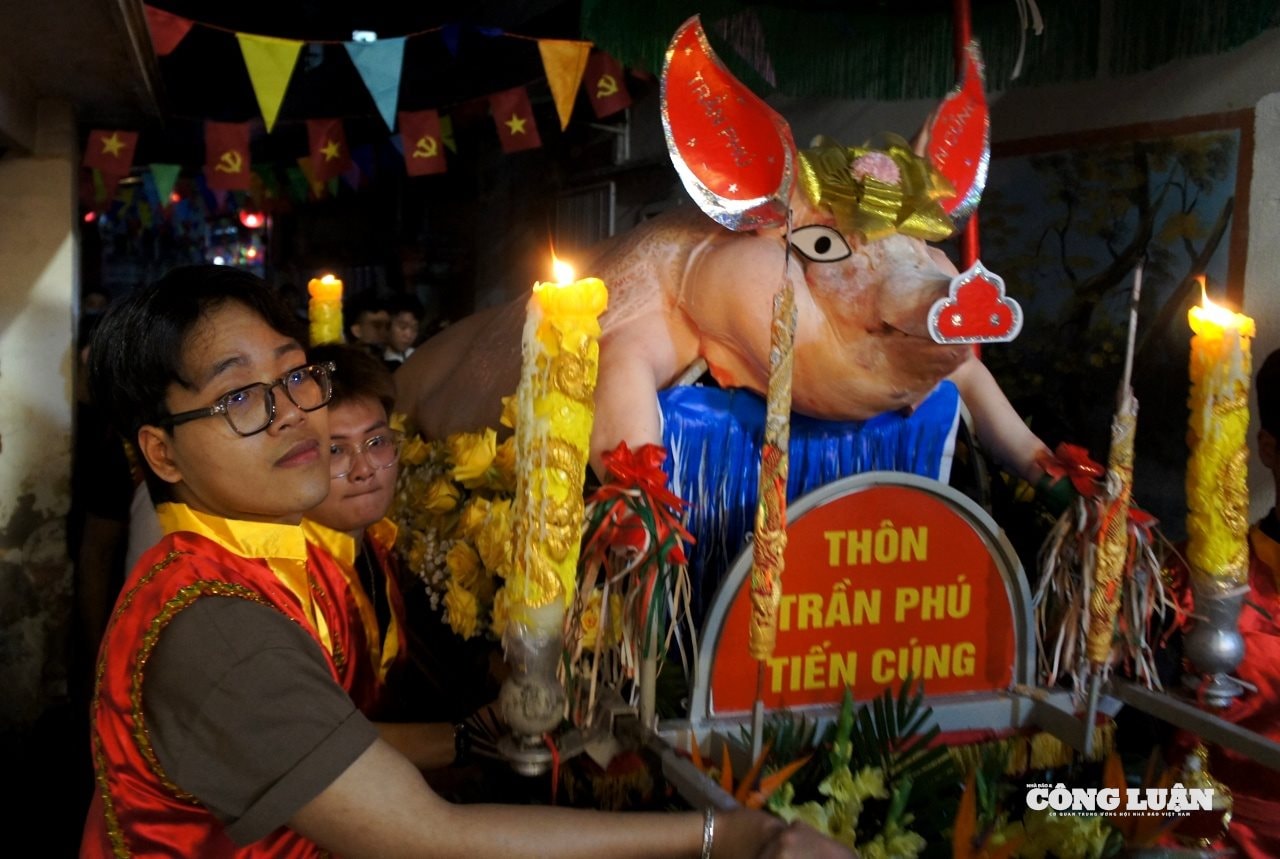
Before being placed on the palanquin, the pig is cleaned and decorated. Those who slaughter the "sacrificial pig" are not allowed to tie it with ropes but must hold it with their hands, then place it on the palanquin and pose it as if it were still alive. When slaughtering the "sacrificial pigs," the layer of fat must be carefully removed to make cloaks for the pigs when offered as sacrifices.
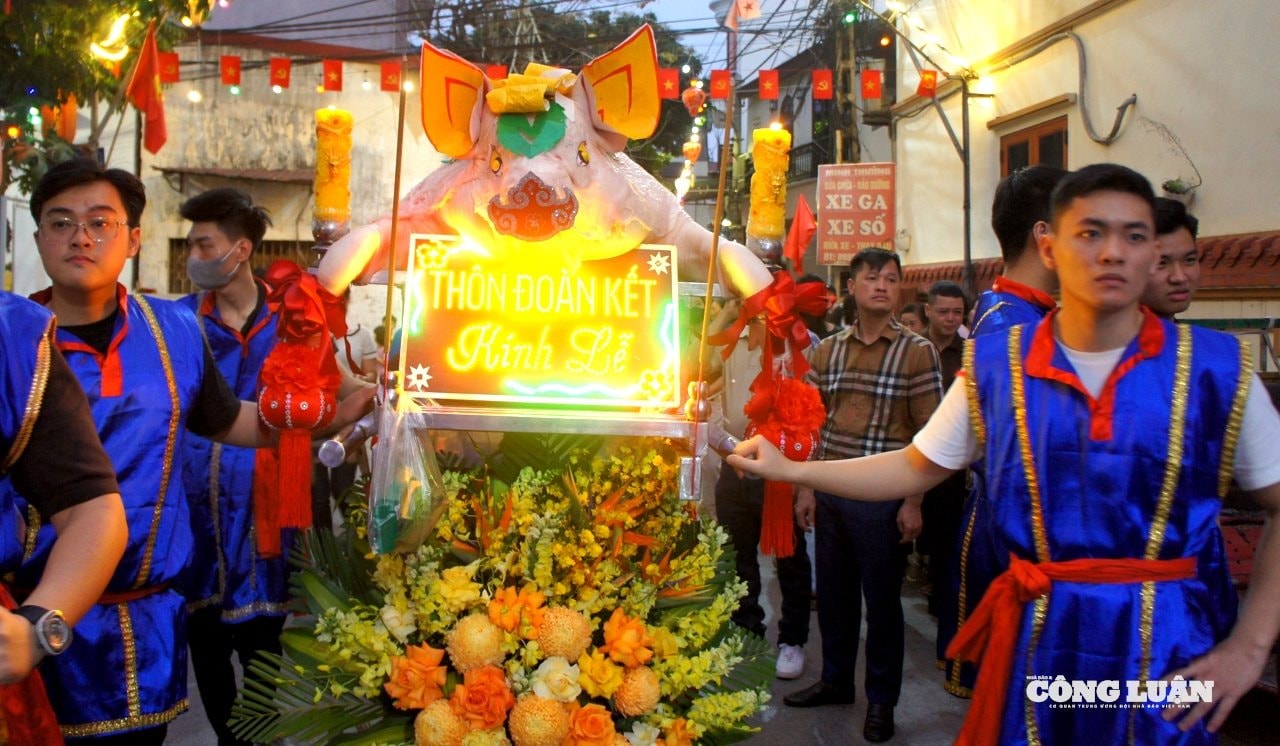
Each hamlet in La Phu village decorates its "pig" in a different way, but it must be the most majestic and beautiful in the hope of winning the village prize.
The villagers believe that the more beautiful the shape and skin of the pig offered as a sacrifice, the more prosperous the year will be. Therefore, all stages from selecting, caring for, and beautifying the pig are done meticulously and with great dedication. The largest, most majestic, and most beautifully decorated pig will win the village prize.
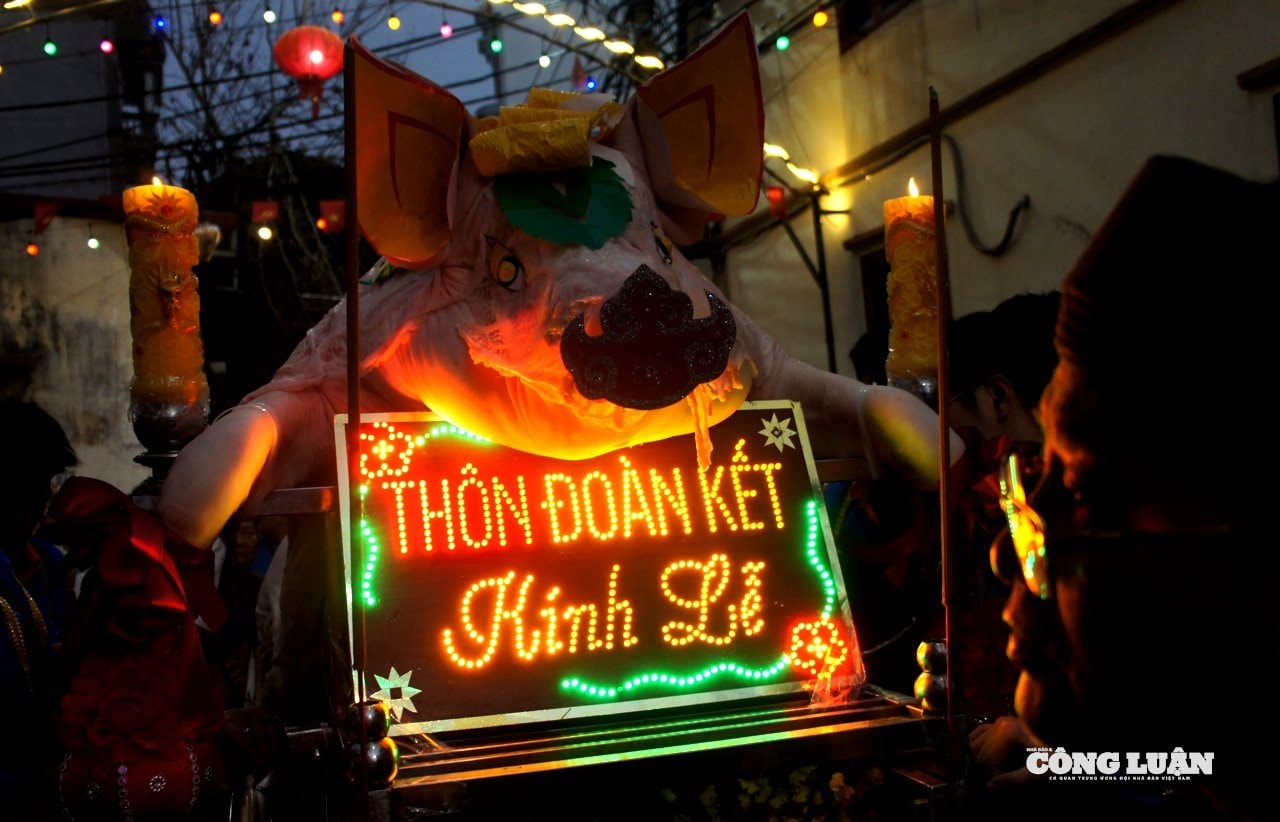
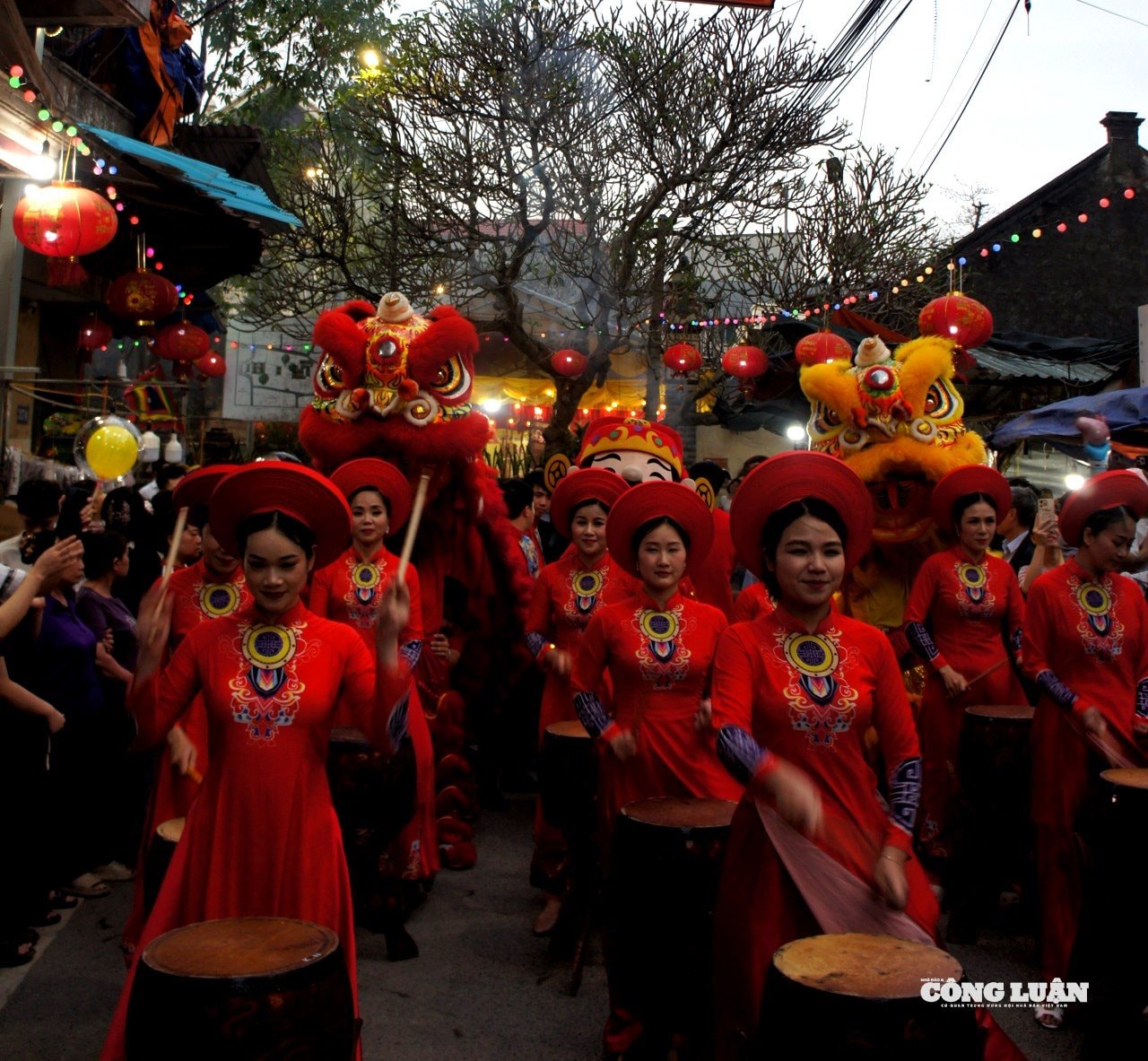
Around 6 PM on the 13th day of the first lunar month, the procession of the "pig god" from 17 villages escorts the palanquin to the village temple. Participating in the procession are handsome, strong young men selected from each village.
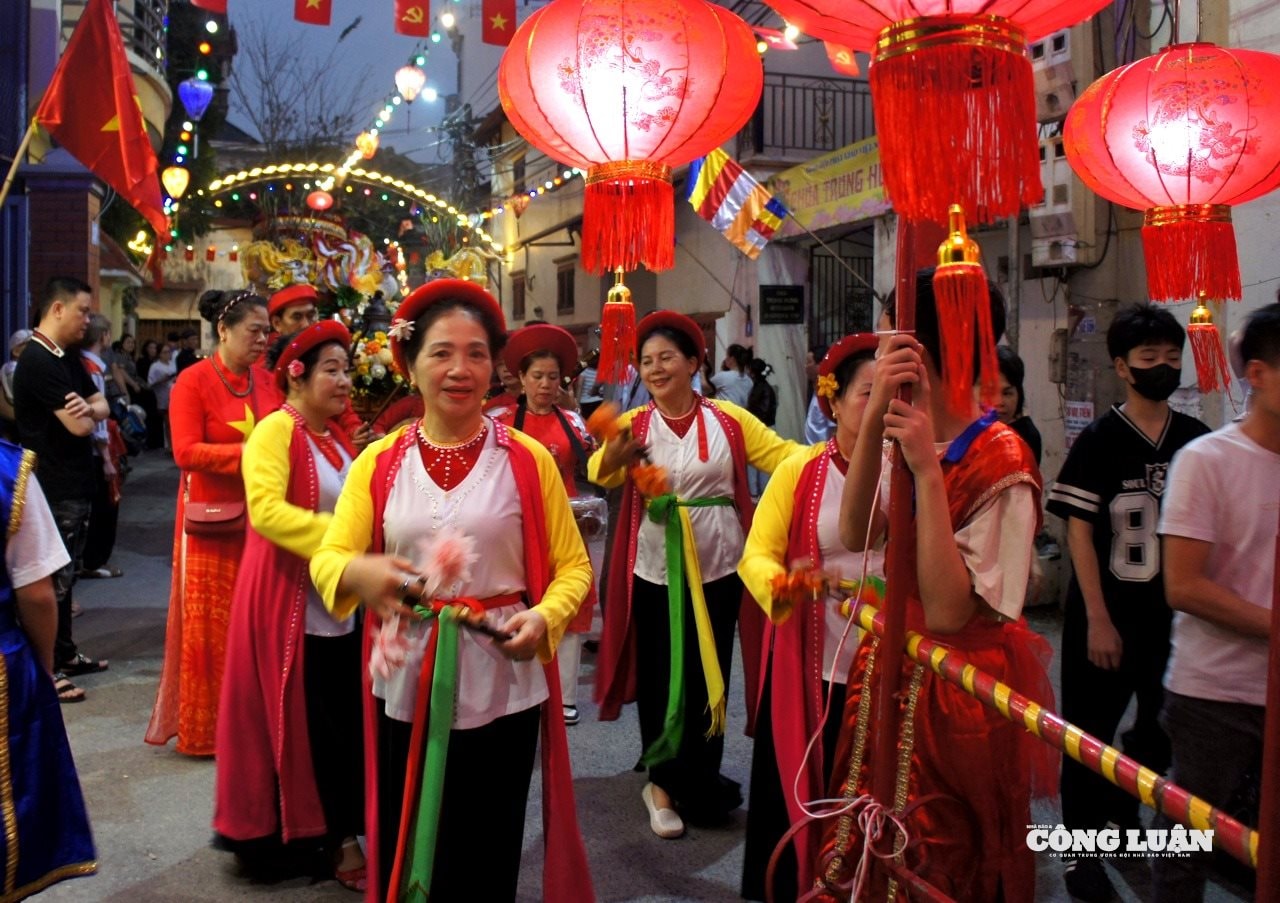
The procession of the "pig effigies" lasts approximately two hours. Each procession consists of three main palanquins: a table of offerings, a tray of sticky rice, and the palanquin carrying the "pig effigies." At 9 PM, the "pig effigies" are carried into the temple for the sacrificial ceremony. Six of the most beautiful "pig effigies" are selected to be taken to the sanctuary.
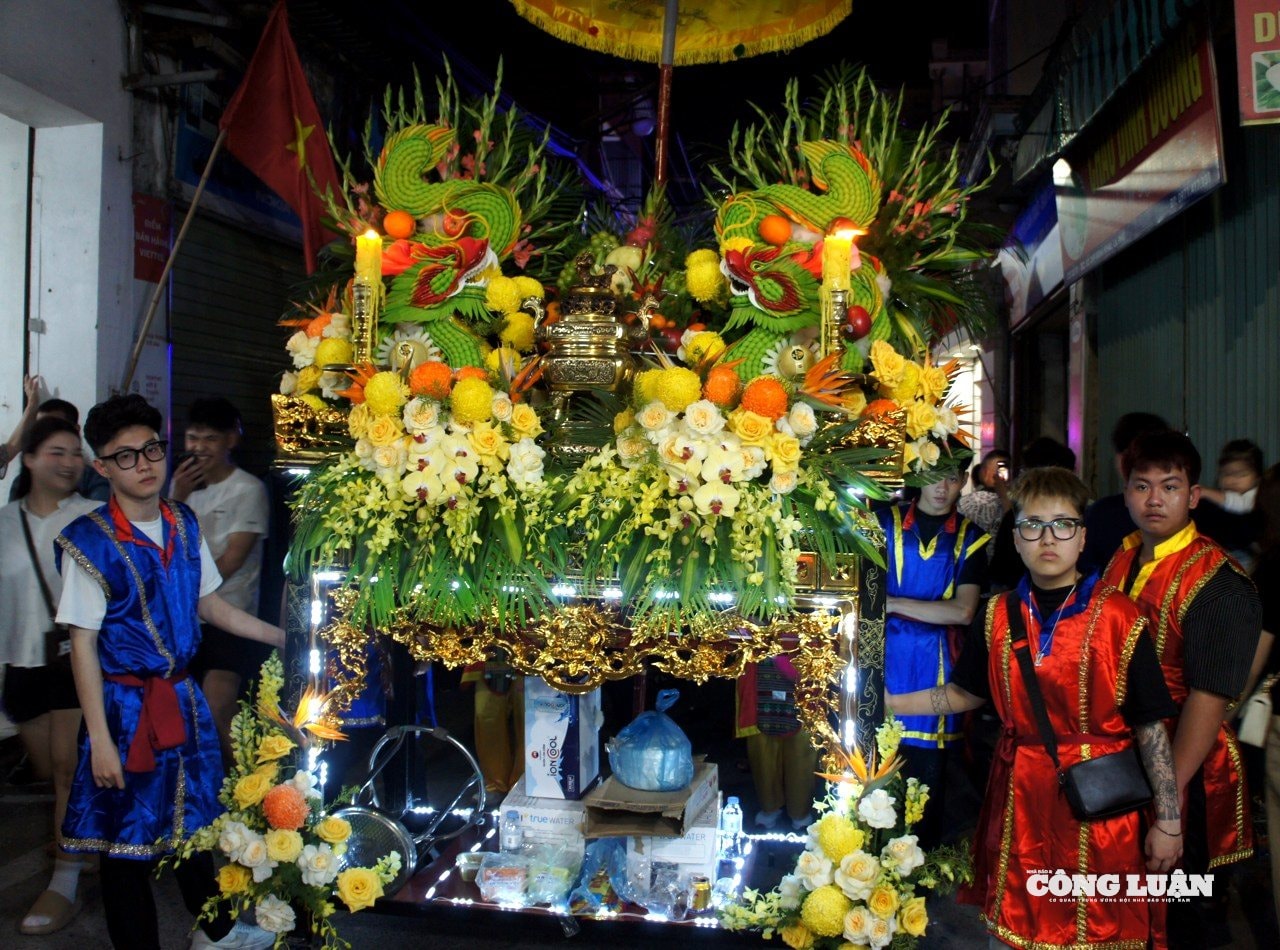
The sacrificial ritual takes place from the night of the 13th of January until around 2:00 AM on the 14th of January. After the ceremony, the villages will carry the "sacrificial pig" back to Mr. Dam's house and distribute the offerings to the families.
The La Phu "pig procession" festival is deeply rooted in folk culture, providing an opportunity for the people of La Phu and visitors alike to gain a deeper understanding of traditional cultural values; at the same time, it awakens patriotism and commemorates the merits of our ancestors.
In 2025, the La Phu village festival was inscribed by the Ministry of Culture, Sports and Tourism on the list of National Intangible Cultural Heritage.
Source: https://congluan.vn/doc-dao-le-hoi-ruoc-ong-lon-lang-la-phu-10331893.html
![[Photo] General Secretary and President To Lam presides over a meeting with the Central Organizing Committee.](https://vphoto.vietnam.vn/thumb/1200x675/vietnam/resource/IMAGE/2026/06/03/1780482764658_a1-bnd-4741-3342-jpg.webp)

![[Photo] First session of the 14th Congress of the Vietnam Trade Union](https://vphoto.vietnam.vn/thumb/1200x675/vietnam/resource/IMAGE/2026/06/03/1780465947883_ndo_br_img-3852-jpg.webp)
![[Photo] Secretary of the National Assembly Party Committee, Chairman of the National Assembly presides over the meeting of the Standing Committee and Executive Committee of the National Assembly Party Committee.](https://vphoto.vietnam.vn/thumb/1200x675/vietnam/resource/IMAGE/2026/06/03/1780480353201_ndo_br_bnd-2585-jpg.webp)

![[Photo] Procession of a giant "pig" weighing over 200kg at the La Phu Village Festival](https://vphoto.vietnam.vn/thumb/402x226/vietnam/resource/IMAGE/2026/03/02/1772444501339_anh-man-hinh-2026-03-02-luc-16-40-20.png)































![[Video] Sunset at Lap An Lagoon – Where the sun sets over the fishing nets](https://vphoto.vietnam.vn/thumb/1200x675/vietnam/resource/IMAGE/2026/05/31/1780192137701_beach-landscape-sea-water-nature-grass-745871-pxhere-com.jpeg)






















Comment (0)