

(To Quoc) - A 10-hectare salt field located on a rocky slope in Go Co village (Pho Thanh ward, Duc Pho town, Quang Ngai province), recently discovered and dating back 2,000 years, proves the salt-making techniques of the ancient Sa Huynh people.
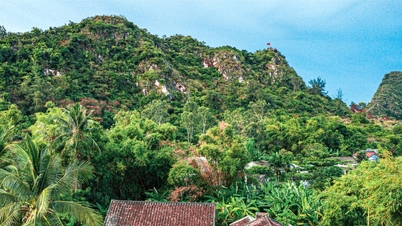
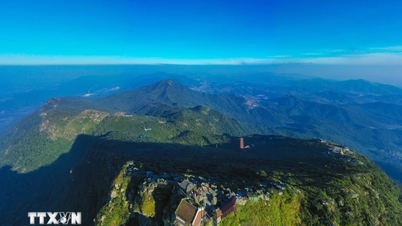
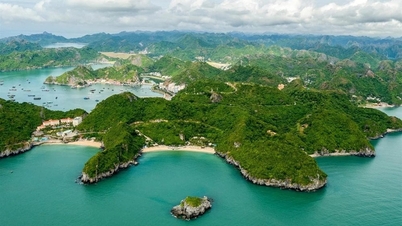
The Sa Huynh region, located in the southernmost part of Quang Ngai province, is associated with a renowned culture dating back approximately 3,000 years. Here, mountains extend into the sea, creating a picturesque landscape that captivates visitors.
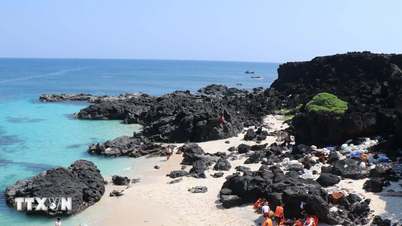
Looking from the sea inland, one sees picturesque beaches and majestic mountains, beautiful like a painting. Among them is the rocky area near the Go Co community tourism village (Pho Thanh ward, Duc Pho town), submerged in water, holding many wonders. The rocky area, known as Trang Muoi, is nestled between the lush green forest and the vast ocean.
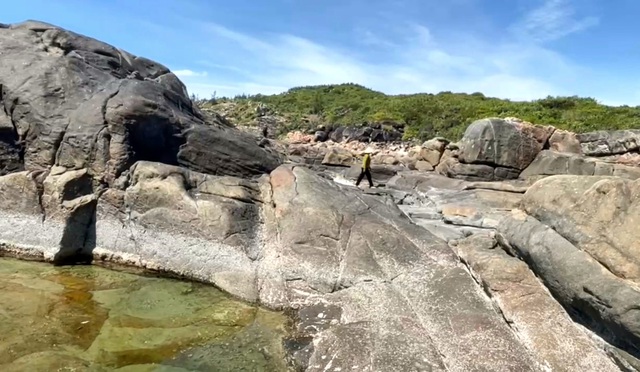
The salt flat is situated between the sea and the mountains. This area is about 800 meters from the ancient Sa Huynh settlement and 500 meters from the burial site.
Thousands of years ago, the ancient Sa Huynh people utilized the rocky terrain and readily available seawater to produce salt for daily use. When the tide rose, seawater flowed into natural reservoirs along the coast. Sunlight caused the water in the reservoirs to evaporate, increasing the salinity of the remaining water.
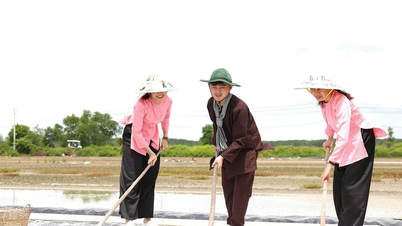
Later, the ancient Sa Huynh people took water from the reservoir and poured it into the salt fields. The salt fields were small plots on the rock surface, which were either natural depressions or areas that the locals had built up by embanking them with clay.
About three days later, the seawater in the rock formations evaporates and crystallizes, creating white salt. On average, each rock formation yields 2-3 kg of salt. The ancient salt field is estimated to cover about 10 hectares, bordered by the sea on one side and mountains on the other, and is located within the Sa Huynh National Special Cultural Heritage Site.
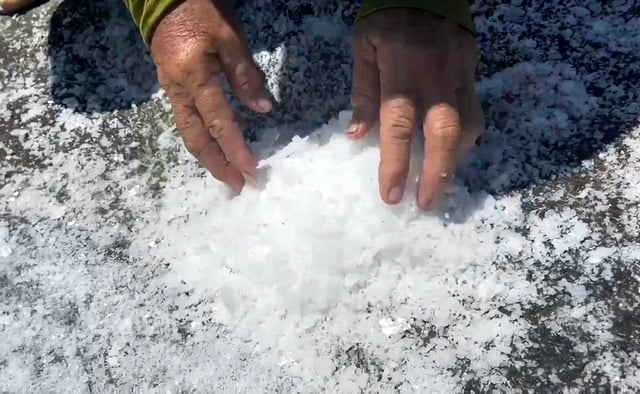
At this salt field, the ancient Sa Huynh people utilized the rocky terrain and readily available seawater to produce salt.
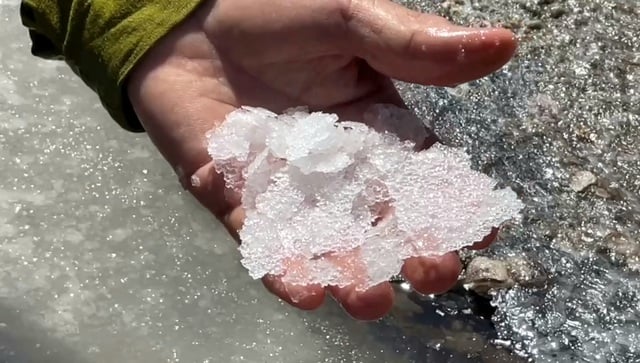
The salt fields are located 800 meters from the ancient Sa Huynh settlement and about 500 meters from the Sa Huynh burial ground. When tourists visit Go Co village, they will have the opportunity to visit this ancient salt-making site.
"According to what my grandparents told me, the method of making salt on rocks here has been around for a very long time. When I was little, my great-grandmother did it, then my grandmother. Later, my mother did it, and then me...", said Mrs. Bui Thi Van (Go Co village).
The people of Gò Cỏ skillfully prepare seafood after catching it by adding salt to water and then boiling it in a large pan. Anchovies and mackerel are washed clean, arranged in bamboo baskets, then boiled until cooked and removed to drain.
The fish, processed in the manner described above, are carried by the people of Gò Cỏ on foot for hundreds of kilometers to mountainous districts such as Ba Tơ and Minh Long (Quảng Ngãi) without spoiling.
"Making salt on rocks doesn't yield high productivity, but the salt is of very good quality. We keep some for our family, and only sell the surplus to customers. This salt also makes delicious fish sauce. Now, many people are buying it at thirty thousand dong per kilogram, but we don't have enough salt to sell...", Mrs. Van said.
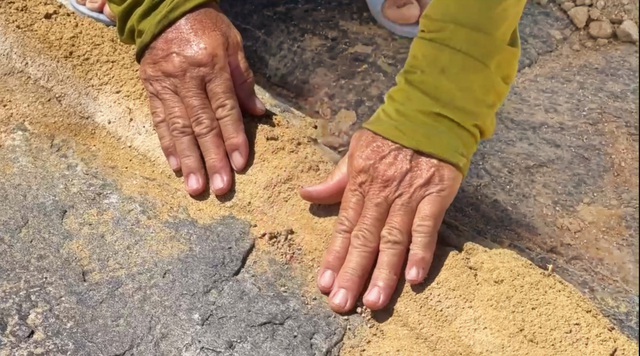
Salt fields are small ponds on the surface of rocks, either in natural depressions or formed by people using clay to create embankments.
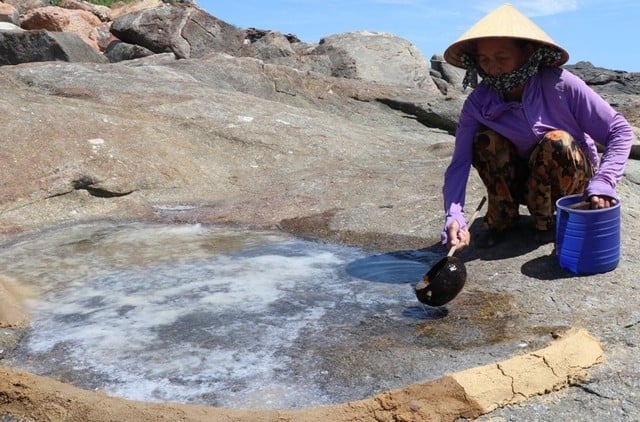
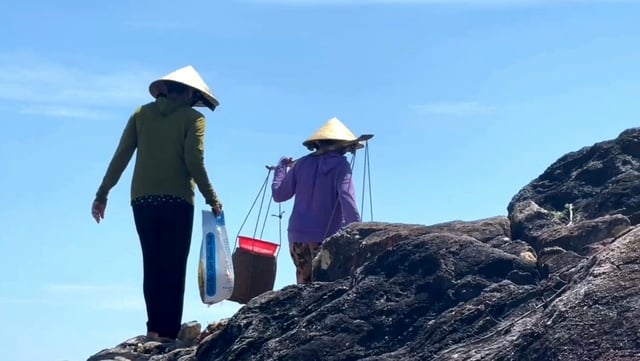
To this day, the people of Go Co still make salt on rocks, continuing the tradition of their ancestors.
Dr. Doan Ngoc Khoi, Deputy Director of the Quang Ngai Provincial Museum, noted that the method of salt production on rocks in Trang Muoi is similar to the ancient Yangpu salt fields in Hainan, China (dating back to approximately 800 AD). This also demonstrates that the culture of the ancient Vietnamese people existed and flourished in many aspects, just like many other civilizations around the world .
"The Sa Huynh salt village is located within the Sa Huynh Culture National Special Monument area and is an inseparable component of this archaeological culture. The tradition of sea salt production has continuously spanned from Sa Huynh - Champa - Dai Viet without interruption. Therefore, it is necessary to study and plan the salt field site within the Sa Huynh Salt Cultural Heritage Park," Mr. Khoi said.
Source: https://toquoc.vn/doc-dao-vung-lam-muoi-tren-da-20241120153318612.htm






































































Comment (0)